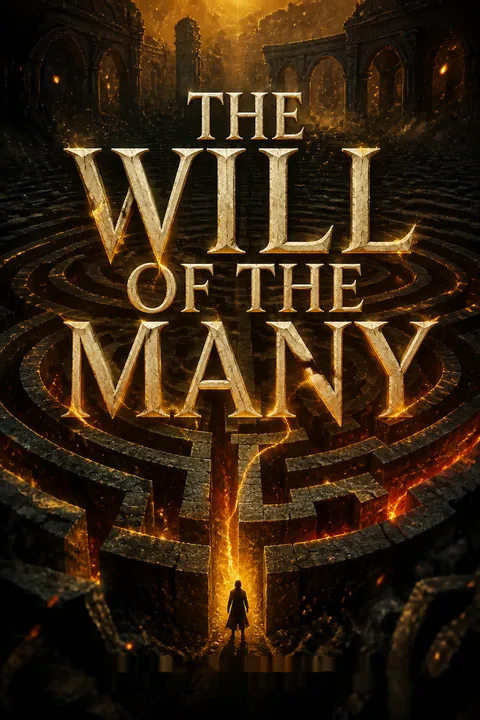
Resumen de la trama
El Último Sacrificio de un Padre
La historia comienza con una escena desgarradora en la que el joven Vis se aferra a un acantilado, sostenido por la mano ensangrentada de su padre. En un acto de sacrificio, su padre lo suelta, asegurando la supervivencia de Vis. Este gesto de valentía marca el inicio del viaje de Vis a través de un mundo dominado por la opresiva Jerarquía, lleno de peligros y la constante lucha por sobrevivir.
Juegos de Prisión y Secretos
Ya mayor, Vis trabaja en la prisión de Letens, participando en juegos estratégicos con Hrolf, un guardia. Estos juegos simbolizan la astucia necesaria para sortear los peligros de la Jerarquía. La mente aguda de Vis y la carga del sacrificio de su padre se revelan en estas interacciones, mientras la prisión se convierte en un lugar de secretos y vigilancia constante.
La Llegada de un Visitante Misterioso
Un hombre llamado Hospius llega a la prisión alegando asuntos urgentes. Su presencia inquietante y el tenso encuentro con el prisionero Nateo desencadenan una serie de eventos que transforman la vida de Vis. La visita de Hospius no es tan inocente como parece, insinuando conexiones profundas con la Jerarquía y los Anguis.
Los Anguis y los Sappers
Vis y Hospius se enfrentan a un peligro relacionado con los Anguis, un grupo que resiste a la Jerarquía. La rápida inteligencia de Vis los salva, revelando la brutal realidad de los Sappers, dispositivos que drenan la Voluntad de los prisioneros. La resistencia de Vis a estos aparatos sugiere un potencial único, crucial en el conflicto mayor.
Comienza una Nueva Vida
Vis es adoptado por Ulciscor, un Magnus Quintus, y llevado a su finca. Esta nueva vida ofrece seguridad y oportunidades, pero también nuevos desafíos. Vis debe navegar las complejidades de su nueva familia y las expectativas que recaen sobre él, mientras los motivos de Ulciscor permanecen enigmáticos.
Entrenamiento para la Academia
En la finca de Ulciscor, Vis se somete a un riguroso entrenamiento bajo la tutela de Lanistia, una mentora estricta. La preparación es tanto física como intelectual, llevando a Vis al límite. Este entrenamiento es vital para su supervivencia en el mundo de la Jerarquía, poniendo a prueba su determinación y adaptabilidad.
El Desafío del Laberinto
Vis es introducido a el Laberinto, un complejo dispositivo de entrenamiento que simula la manipulación de la Voluntad. Al principio lucha, pero poco a poco mejora, impulsado por la necesidad de demostrarse a sí mismo. El Laberinto simboliza los retos que enfrentará en la Academia y más allá.
Secretos y Sospechas al Descubierto
En la Academia, Vis se ve envuelto en secretos. La explosión de Lanistia revela una conexión con el hermano de Ulciscor, Caeror, cuya muerte misteriosa Ulciscor sospecha involucra a Veridius, el Principalis. Vis debe descubrir la verdad mientras mantiene su tapadera, pues fracasar podría significar un destino peor que la muerte.
Un Juego Peligroso de Confianza
El camino de Vis en la Academia está lleno de desafíos. Forma una alianza tentativa con Eidhin, un compañero estudiante, y se relaciona con Emissa, insinuando posibles aliados. Vis debe decidir en quién confiar, consciente de que la traición puede venir de cualquier lado.
Un Viaje Prohibido Más Allá de los Muros
Impulsado por la necesidad de la verdad, Vis emprende un viaje clandestino más allá de los muros de la Academia, descubriendo antiguas ruinas con símbolos crípticos. El conocimiento que obtiene podría ser decisivo en la lucha contra la Jerarquía, revelando hasta dónde llegará la Religión para proteger sus secretos.
Susurros de los Muertos que Despiertan
En las ruinas, Vis encuentra una sala de los muertos, cuyos susurros advierten sobre abrir una misteriosa puerta. Este encuentro estremecedor deja a Vis decidido a comprender la conexión entre estos antiguos secretos y las luchas de poder actuales dentro de la Jerarquía.
Un Reencuentro Tenso en Suus
Vis llega a Suus, su hogar de infancia, ahora cambiado por la Jerarquía. Navega una cena con Dimidius Quiscil, un senador poderoso, y es atormentado por Fadrique, un antiguo consejero de su padre. El encuentro es un doloroso recordatorio de traición y pérdida.
Traición y una Huida Desesperada
Durante el Iudicium, Emissa, bajo una compulsión misteriosa, intenta matar a Vis. A pesar del shock, Vis escapa con la ayuda de un alupi que una vez salvó. Herido y confundido, comprende que las apuestas son más altas de lo imaginado, con los Anguis planeando un ataque mortal a la Academia.
Los Secretos Mortales del Laberinto
Decidido a cumplir las demandas de Ulciscor, Vis regresa a el Laberinto, descubriendo su propósito real como prueba de voluntad y estrategia. Esta experiencia desgarradora revela la brutal realidad de la manipulación de la Jerarquía y el potencial para un conflicto mayor.
Se Elige un Nuevo Camino
Tras el Iudicium, a Vis se le ofrece un puesto en el Censor, permitiéndole influir en el futuro de la Jerarquía. A pesar de las pérdidas personales, Vis acepta, impulsado por el deseo de cambiar el sistema desde dentro. Esta decisión marca un nuevo comienzo, mientras se compromete a luchar por la justicia y la verdad.
Personajes
Vis
Vis es un joven moldeado por la pérdida y la traición, impulsado por el deseo de descubrir la verdad y proteger a quienes ama. Su viaje revela su resiliencia e inteligencia, enfrentando las duras realidades de la Jerarquía y las decisiones que debe tomar para cambiarla.
Ulciscor
Ulciscor es una figura poderosa en la vida de Vis, ofreciéndole un nuevo camino y oportunidades. Sus motivos son complejos, impulsados por pérdidas personales y el deseo de descubrir la verdad sobre la Jerarquía. La relación de Ulciscor con Vis es de guía y protección, pero también de manipulación.
Lanistia
Lanistia tiene la tarea de entrenar a Vis, llevándolo al límite. Sus métodos son duros pero efectivos, preparando a Vis para los desafíos venideros. Su pasado y conexión con la Academia añaden profundidad a su personaje, desempeñando un papel crucial en el desarrollo de Vis.
Hospius
La llegada de Hospius a la prisión de Letens desencadena una cadena de eventos que cambian la vida de Vis. Sus verdaderas intenciones son inciertas, y su conexión con la Jerarquía y los Anguis añade capas de intriga, representando los peligros y secretos del mundo que habita Vis.
Emissa
Emissa es un personaje complejo, dividido entre su lealtad a Vis y las fuerzas misteriosas que impulsan sus acciones. Su traición durante el Iudicium es un punto de inflexión, revelando la profundidad de su lucha interna y las complejidades de la confianza y la lealtad.
Eidhin
Eidhin es un compañero estudiante en la Academia, conocido por su carácter hosco y su impresionante destreza física. A pesar de su pasado enigmático, forma una alianza tentativa con Vis, sugiriendo una conexión más profunda con los eventos que se desarrollan.
Veridius
Veridius es el Principalis de la Academia, una figura de intriga y sospecha. Su conexión con el Laberinto y los secretos de la Jerarquía lo convierten en un personaje clave en el viaje de Vis, añadiendo capas de complejidad a la historia.
Callidus
Callidus es un amigo cercano de Vis, conocido por su inteligencia y pensamiento estratégico. Su lealtad y valentía son evidentes, pero su destino trágico sirve como catalizador para la determinación de Vis de luchar por la justicia, representando los sacrificios en la lucha contra la Jerarquía.
Dimidius Quiscil
Dimidius Quiscil es un senador de alto rango y padre de Indol. Su presencia es un recordatorio constante del control de la Jerarquía y la intriga política que rodea a Vis, destacando la compleja red de poder e influencia.
Indol
Indol es el hijo de Dimidius Quiscil, esperado para seguir los pasos de su padre. Su revelación de planes para unirse a la Religión destaca las lealtades cambiantes dentro de la Jerarquía, obligando a Vis a reconsiderar sus suposiciones.
Elementos Narrativos
Los Sappers
Los Sappers son usados por la Jerarquía para extraer la Voluntad de los prisioneros, representando su control brutal. La resistencia de Vis a ellos sugiere un potencial único, simbolizando la naturaleza opresiva de la Jerarquía y lo que está en juego en el conflicto.
El Laberinto
El Laberinto es un elemento central de la trama, representando los desafíos que Vis debe superar para descubrir la verdad sobre la Jerarquía. Es un lugar de peligro y revelación, que obliga a Vis a enfrentar sus miedos y la realidad del mundo que habita.
Las Ruinas
Las ruinas más allá de los muros de la Academia están llenas de símbolos crípticos, insinuando un pasado olvidado y un arma potencial. La exploración de Vis revela hasta dónde llegará la Religión para proteger sus secretos y los susurros escalofriantes de los muertos.
La Traición
La traición de Emissa es un dispositivo narrativo crucial, que obliga a Vis a confrontar las complejidades de la confianza y la lealtad. Sirve como catalizador para su determinación de luchar por la justicia y el cambio, moldeando su carácter y el camino que debe seguir.
Análisis
"La Voluntad de Muchos" explora temas de sacrificio, resistencia y la lucha contra estructuras de poder opresivas. A través del viaje de Vis, la narrativa profundiza en las complejidades de la confianza, la lealtad y el costo personal del conflicto. La historia destaca la importancia del pensamiento estratégico y la adaptabilidad para navegar un mundo lleno de secretos y manipulaciones. El libro funciona como un comentario sobre la naturaleza del poder y el potencial de cambio, invitando a los lectores a reflexionar sobre el impacto de sus decisiones y la posibilidad de un futuro mejor.
También leyeron




Preguntas frecuentes
Synopsis & Basic Details
What is The Will of the Many about?
- A young man's struggle: The story follows Vis, an orphan with a mysterious past, as he navigates a world controlled by the Catenan Hierarchy, a society that uses a system of Will to maintain power.
- Secrets and conspiracies: Vis becomes entangled in a web of secrets, conspiracies, and political intrigue, forcing him to question everything he thought he knew about the world and his place in it.
- A journey of self-discovery: The narrative explores Vis's journey of self-discovery as he grapples with his past, his unique abilities, and the choices he must make to survive and potentially change the oppressive system.
Why should I read The Will of the Many?
- Intricate world-building: The novel presents a richly detailed world with a unique magic system based on the concept of "Will," offering a fresh take on fantasy world-building.
- Complex characters: The story features morally grey characters with hidden motivations, making for compelling and unpredictable interactions and relationships.
- Political intrigue and action: The plot is a blend of political maneuvering, strategic planning, and intense action sequences, keeping readers engaged and invested in the outcome.
What is the background of The Will of the Many?
- Post-Cataclysm world: The story is set in a world recovering from a cataclysmic event, with remnants of a previous civilization influencing the present.
- Catenan Hierarchy: The Catenan Republic is a powerful, oppressive force that controls the world through a system of Will, a form of energy that can be ceded and manipulated.
- Social stratification: The Hierarchy is structured in a pyramid system, with different ranks (Octavus, Septimus, Sextus, etc.) each having varying degrees of power and influence.
What are the most memorable quotes in The Will of the Many?
- "Courage," he whispers. He pours heartbreak and hope into the word. He lets go. This quote, from the opening scene, encapsulates the theme of sacrifice and sets the tone for Vis's journey.
- "Chain your anger in the dark, my mother used to tell me, and it will only thrive." This quote reveals a key aspect of Vis's character, highlighting his internal struggle with rage and the need to control it.
- "Stronger together." This recurring phrase, a motto of the Catenan Republic, is a stark reminder of the Hierarchy's manipulative use of unity to maintain control.
What writing style, narrative choices, and literary techniques does James Islington use?
- Intricate plotting: Islington employs a complex plot structure with multiple layers of intrigue, keeping readers guessing and engaged.
- Character-driven narrative: The story is heavily focused on character development, with the narrative often shifting to explore the inner thoughts and motivations of the main characters.
- Foreshadowing and symbolism: The author uses subtle foreshadowing and recurring symbols to hint at future events and deepen the thematic resonance of the story.
Hidden Details & Subtle Connections
What are some minor details that add significant meaning?
- The game of Foundation: The strategic board game that Vis plays with Hrolf is not just a pastime, but a reflection of Vis's strategic mind and his ability to think several steps ahead, a skill that proves crucial throughout the story.
- The color red: The color red is used repeatedly, from the blood on Vis's father's hands to the crimson light of the naumachia, symbolizing violence, sacrifice, and the oppressive nature of the Hierarchy.
- The use of Vetusian: The dead language Vetusian, spoken by Hospius and Nateo, hints at a hidden history and a connection to a time before the Hierarchy, suggesting that there are forces at play beyond the Republic's control.
What are some subtle foreshadowing and callbacks?
- The mention of the Bibliotheca: Vis's time at the Bibliotheca, initially presented as a way to pass time, foreshadows his later use of knowledge and history to understand the Hierarchy and its secrets.
- The description of the Transvect: The initial description of the Transvect as a "Will-powered behemoth" foreshadows its later destruction and the revelation of the Anguis's ability to manipulate Will.
- The recurring phrase "Stronger Together": This phrase, used by both the Hierarchy and Hospius, is a callback to the opening scene where Vis's father uses the word "courage," highlighting the contrast between genuine unity and forced compliance.
What are some unexpected character connections?
- Ulciscor and Caeror: The connection between Ulciscor and his deceased brother, Caeror, is a driving force behind Ulciscor's actions, revealing a personal stake in the larger conflict.
- Lanistia and Caeror: The revelation that Lanistia and Caeror were close adds a layer of complexity to her character, explaining her harshness and her desire to see Vis succeed.
- Vis and Estevan: The connection between Vis and Estevan, a former advisor to his father, reveals a hidden network of resistance and a shared history that transcends the Hierarchy's control.
Who are the most significant supporting characters?
- Hrolf: The Septimus guard at Letens Prison, Hrolf, provides a glimpse into the lives of those who serve the Hierarchy, and his interactions with Vis highlight the human cost of the system.
- Gaufrid: The bookkeeper at the Letens Theatre, Gaufrid, is a minor character who provides a sense of normalcy and a connection to the world outside the Hierarchy's control.
- Praeceptor Taedia: The teacher at the Academy, Taedia, is a complex character who challenges Vis and pushes him to his limits, while also showing a degree of understanding and empathy.
Psychological, Emotional, & Relational Analysis
What are some unspoken motivations of the characters?
- Ulciscor's desire for revenge: While he presents himself as a strategic thinker, Ulciscor's actions are driven by a deep-seated desire for revenge for his brother's death, which he believes was caused by Veridius.
- Lanistia's need for justice: Lanistia's harshness and dedication to Vis's training stem from her own personal loss and her desire to see justice served for Caeror's death.
- Vis's yearning for belonging: Despite his resistance to the Hierarchy, Vis is driven by a deep-seated desire for belonging and connection, which is evident in his relationships with Hrolf, Gaufrid, and even Emissa.
What psychological complexities do the characters exhibit?
- Vis's internal conflict: Vis struggles with his desire for revenge and his need to survive, often torn between his anger and his desire to protect those he cares about.
- Ulciscor's obsession: Ulciscor's grief over his brother's death has led to an obsession with uncovering the truth, often blinding him to the potential consequences of his actions.
- Lanistia's stoicism: Lanistia's stoic demeanor hides a deep well of pain and a desire for justice, making her a complex and compelling character.
What are the major emotional turning points?
- Vis's father's sacrifice: The opening scene, where Vis's father sacrifices himself, is a major emotional turning point that shapes Vis's journey and his desire for justice.
- The discovery of the Sappers: Vis's encounter with the Sappers and the brutal reality of their purpose is a major emotional turning point, solidifying his hatred for the Hierarchy.
- The betrayal at the naumachia: The betrayal by Emissa is a major emotional turning point, forcing Vis to confront the complexities of trust and loyalty.
How do relationship dynamics evolve?
- Vis and Hrolf: The relationship between Vis and Hrolf evolves from a simple working partnership to a bond of mutual respect and understanding, highlighting the human connections that can form even in oppressive environments.
- Vis and Lanistia: The relationship between Vis and Lanistia evolves from one of mentor and student to a more complex dynamic of mutual respect and understanding, as they both grapple with their pasts.
- Vis and Ulciscor: The relationship between Vis and Ulciscor is complex, marked by a mixture of guidance, manipulation, and a shared desire for justice, highlighting the blurred lines between ally and enemy.
Interpretation & Debate
Which parts of the story remain ambiguous or open-ended?
- The true nature of the Cataclysm: The cause of the Cataclysm remains a mystery, leaving open the possibility that the Hierarchy's use of Will may have played a role.
- The purpose of the ruins: The purpose of the ruins and the technology they contain remains ambiguous, leaving open the possibility of a greater threat beyond the Hierarchy.
- The true nature of the Remnants: The nature of the Remnants and their connection to the Labyrinth remains unclear, leaving open the possibility of a deeper, more sinister force at play.
What are some debatable, controversial scenes or moments in The Will of the Many?
- Vis's actions at the naumachia: Vis's brutal beating of the Sextus at the Letens Theatre raises questions about the morality of violence and the extent to which it can be justified.
- Ulciscor's manipulation of Vis: Ulciscor's use of Vis as a pawn in his own personal quest for revenge raises questions about the ethics of using others for one's own purposes.
- The nature of the Anguis: The Anguis's methods and their willingness to sacrifice innocent lives raise questions about the morality of resistance and the potential for corruption even in those who fight against oppression.
The Will of the Many Ending Explained: How It Ends & What It Means
- Vis's decision to join the Censor: Vis's decision to join the Censor's office is a complex one, driven by a desire to change the system from within, but also by a need to survive and protect those he cares about.
- The unresolved conflict with the Anguis: The story ends with the Anguis still at large, and with Vis's connection to them still a threat, leaving open the possibility of future conflict and the need for Vis to make difficult choices.
- The ambiguous nature of the future: The ending leaves the future uncertain, with Vis's path still unclear and the fate of the Hierarchy still in question, highlighting the ongoing struggle for power and the need for constant vigilance.
Hierarchy Serie

Descargar PDF
Descargar EPUB
.epub digital book format is ideal for reading ebooks on phones, tablets, and e-readers.








































