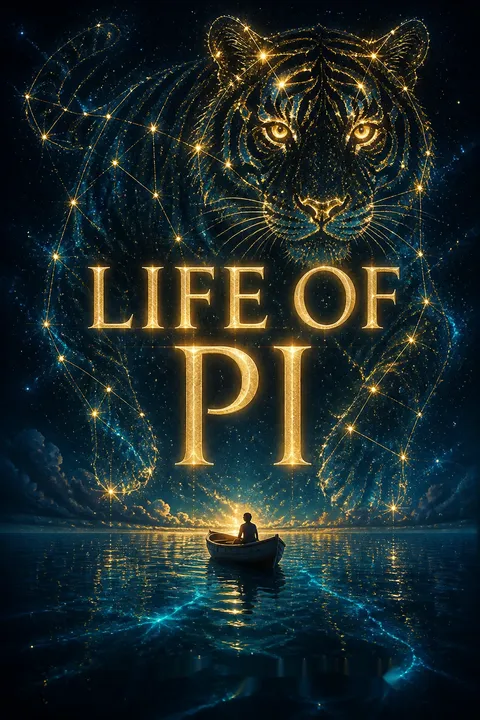
Résumé de l'intrigue
Un garçon nommé Piscine
Pi Patel, affectueusement surnommé Pi, grandit à Pondichéry, en Inde. Il doit son prénom à une piscine parisienne, nom donnée par son oncle passionné de natation, Mamaji. L’enfance de Pi est un mélange de curiosité et d’introspection, marquée par sa fascination pour la religion et la zoologie. Son prénom, souvent mal prononcé en « Pissing », devient source de moqueries, ce qui le pousse à adopter le symbole mathématique « Pi » comme surnom. Ce changement traduit son désir d’identité et d’acceptation, posant ainsi les bases de son parcours de découverte de soi et de survie.
Les habitants improbables du zoo de Pondichéry
Le père de Pi dirige le zoo de Pondichéry, un écosystème vivant où Pi apprend les subtilités du comportement animal et les responsabilités liées à la gestion d’un zoo. Ce lieu, peuplé d’animaux variés, devient une véritable salle de classe pour Pi, lui enseignant la complexité du monde naturel et les dangers de l’anthropomorphisme. Les leçons de son père insistent sur l’importance de comprendre la véritable nature des animaux, un savoir qui s’avérera crucial pour la survie de Pi. Les associations inattendues, comme celle d’un rhinocéros et d’une chèvre, illustrent les liens surprenants qui peuvent se tisser dans le règne animal.
La collision des croyances à Pondichéry
Le parcours spirituel de Pi se caractérise par sa pratique simultanée de l’hindouisme, du christianisme et de l’islam, au grand étonnement de sa famille et des autorités religieuses locales. Il trouve beauté et vérité dans chacune de ces croyances, convaincu qu’elles mènent toutes à Dieu. Cette quête culmine lors d’une rencontre à la fois humoristique et tendue sur l’esplanade de Pondichéry, où les chefs religieux confrontent les parents de Pi à propos de ses pratiques peu conventionnelles. La dévotion de Pi dépasse les frontières traditionnelles, témoignant de son ouverture d’esprit et de sa recherche spirituelle.
Le départ vers le Canada
Face à l’instabilité politique en Inde, le père de Pi décide de vendre le zoo et d’emmener sa famille au Canada, en quête d’un avenir meilleur. Les animaux du zoo sont dispersés dans divers établissements à travers le monde, tandis que la famille embarque à bord du Tsimtsum, un cargo japonais. Pi oscille entre excitation et appréhension, quittant une terre riche en souvenirs. Ce départ marque l’ouverture d’un nouveau chapitre, empreint d’incertitude et d’espoir, prélude aux événements qui bouleverseront sa vie.
Le naufrage et la survie
Le Tsimtsum sombre dans l’océan Pacifique, laissant Pi seul sur un canot de sauvetage en compagnie d’un zèbre, d’une hyène, d’un orang-outan et d’un tigre du Bengale nommé Richard Parker. Ce naufrage constitue un traumatisme brutal, plongeant Pi dans une réalité impitoyable où la survie devient l’enjeu primordial. Le canot se transforme en microcosme de vie et de mort, les interactions entre les animaux reflétant les lois cruelles de la nature. Les connaissances de Pi sur le comportement animal et sa foi deviennent ses atouts essentiels pour affronter cette situation périlleuse, s’accrochant à l’espoir et à la volonté de vivre.
Le prix amer de la survie
Isolé avec Richard Parker, Pi fait face aux dures réalités de la survie. À mesure que les ressources s’amenuisent, son combat devient une épreuve d’endurance et de morale. Il lutte contre la peur et la faim, élaborant des stratégies pour coexister avec le tigre. Le canot devient le théâtre d’une danse macabre entre la vie et la mort, où la foi et l’ingéniosité de Pi sont ses seuls alliés. La rudesse de l’océan et la présence du tigre l’obligent à affronter son humanité, le conduisant à des choix qui brouillent la frontière entre homme et bête.
L’île des illusions
Pi découvre une île flottante mystérieuse, peuplée de suricates et d’une végétation luxuriante. Au premier abord, ce refuge semble un sanctuaire, fournissant nourriture et eau douce. Pourtant, l’île cache un secret sombre : elle est carnivore, digérant tout ce qui y reste la nuit. Cette révélation brise l’espoir de Pi d’un havre sûr, le contraignant à repartir. Cette expérience illustre le thème de l’illusion face à la réalité, Pi apprenant que tout ce qui paraît salut n’est pas forcément sûr.
La domestication du tigre
Pour survivre, Pi doit s’imposer face à Richard Parker. Par des actions calculées, comme l’usage d’un sifflet et une alimentation stratégique, Pi s’établit en alpha. Cette relation devient un équilibre fragile entre peur et respect, la survie de Pi dépendant de sa capacité à maintenir le contrôle. Le processus de domestication du tigre reflète le chemin intérieur de Pi, qui apprend à maîtriser ses peurs et à affirmer sa volonté de vivre.
L’adieu final
Après 227 jours en mer, Pi et Richard Parker atteignent les côtes du Mexique. Alors que Pi s’effondre sur la plage, Richard Parker disparaît dans la jungle sans se retourner. Cet adieu abrupt laisse Pi avec un sentiment d’incomplétude, soulignant le lien profond qui s’est tissé entre eux. Le départ du tigre symbolise la fin de l’épreuve de Pi et le début d’un nouveau chapitre, tout en rappelant la nature éphémère de leur relation et les émotions non résolues que Pi porte en lui.
Vérités et récits entremêlés
À l’hôpital au Mexique, Pi raconte son périple aux enquêteurs japonais chargés d’étudier le naufrage. Il propose deux versions : l’une avec des animaux, l’autre sans. Les enquêteurs préfèrent l’histoire animale, la trouvant plus captivante. Ce choix narratif souligne le pouvoir du récit dans la construction de la perception et de la compréhension. Le conte de Pi devient une méditation sur la foi, la vérité et le besoin humain d’histoires qui dépassent les simples faits, invitant le lecteur à réfléchir sur la nature de la croyance et de la réalité.
Personnages
Pi Patel
Pi Patel est un jeune garçon indien qui survit 227 jours en mer avec un tigre du Bengale. Son parcours met à l’épreuve sa foi, son ingéniosité et sa volonté de vivre. Le personnage de Pi évolue d’un enfant curieux et dévot à un survivant capable d’affronter les aspects les plus sombres de la nature humaine. Sa relation avec Richard Parker devient un élément central de sa survie, reflétant son combat intérieur et sa croissance.
Santosh Patel
Le père de Pi, Santosh Patel, est le propriétaire du zoo de Pondichéry. Homme pratique, il valorise l’éducation et le travail acharné. Inquiet de la situation politique en Inde, il décide d’emmener sa famille au Canada pour un avenir meilleur. Santosh est un père aimant mais strict, qui enseigne à Pi les dangers de l’anthropomorphisme, insistant sur l’importance de comprendre la véritable nature des animaux.
Gita Patel
Gita Patel, la mère de Pi, est une présence douce et bienveillante dans sa vie. Elle encourage la curiosité de Pi et son amour de la lecture, même si elle ne comprend pas toujours ses explorations religieuses. Son attachement profond à l’Inde la rend triste face à la décision de partir. Sa nature maternelle offre à Pi réconfort et force, même en son absence.
Ravi Patel
Ravi est l’aîné de Pi, reconnu pour ses talents sportifs, notamment au cricket. Il taquine souvent Pi à propos de ses pratiques religieuses et de son surnom « Pi ». Malgré leurs différences, les deux frères partagent un lien fort, et l’absence de Ravi se fait cruellement sentir après le naufrage.
Richard Parker
Richard Parker, le tigre du Bengale, incarne à la fois une menace et un compagnon pour Pi. Sa présence oblige Pi à affronter ses peurs et à affirmer sa dominance. Au fil du récit, Richard Parker devient le symbole des instincts de survie de Pi et des forces sauvages de la nature. Son départ à la fin de l’aventure laisse une empreinte durable, soulignant la complexité du lien qui les unit.
Mamaji (Francis Adirubasamy)
Mamaji, ami de la famille et champion de natation, joue un rôle important dans la vie de Pi. Il lui fait découvrir le monde de la natation et inspire son prénom. Les récits et enseignements de Mamaji marquent profondément Pi, façonnant son amour de l’eau et son esprit d’aventure.
M. Satish Kumar (professeur de biologie)
M. Kumar, professeur de biologie de Pi, est athée et communiste. Il transmet à Pi un amour pour la science et la raison, offrant un contrepoids à ses croyances religieuses. Son approche logique pousse Pi à penser de manière critique et à apprécier les merveilles du monde naturel.
M. Satish Kumar (boulanger)
Un autre M. Kumar, boulanger musulman, initie Pi à l’islam. Sa relation personnelle et aimante avec Dieu inspire Pi à explorer cette foi. L’humilité et la dévotion du boulanger laissent une impression profonde, contribuant à la croissance spirituelle de Pi et à sa compréhension des différentes religions.
Orange Juice
Orange Juice est une orang-outan de Bornéo qui se retrouve sur le canot avec Pi. Réputée pour sa nature douce, elle symbolise le soin maternel et la résilience. Sa présence apporte à Pi un sentiment de familiarité et de réconfort au milieu du chaos.
Le cuisinier
Le cuisinier, personnage de l’histoire alternative de Pi, représente le côté sombre de la nature humaine. Ses actes sur le canot, y compris le cannibalisme, illustrent jusqu’où l’homme peut aller pour survivre. Ce personnage fait contraste avec la lutte morale de Pi, soulignant le thème de la survie à tout prix.
Dispositifs narratifs
Multiples religions
La pratique simultanée de l’hindouisme, du christianisme et de l’islam par Pi constitue un thème central. Cette exploration reflète sa quête de compréhension et de lien avec Dieu. Ce dispositif souligne l’universalité de la foi et l’idée que différents chemins peuvent mener à une même vérité.
Anthropomorphisme et zoomorphisme
Le récit explore fréquemment la tendance à attribuer des traits humains aux animaux (anthropomorphisme) et inversement (zoomorphisme). Ces procédés questionnent la perception du lecteur et mettent en lumière la complexité du comportement animal. Ils renforcent aussi le lien entre Pi et les animaux, notamment Richard Parker.
Survie et isolement
Le naufrage et l’isolement de Pi sur le canot créent une narration centrée sur la survie face à des obstacles écrasants. Ce dispositif met à l’épreuve l’ingéniosité, la résilience et la foi de Pi, nourrissant la tension et la profondeur émotionnelle du récit. Le canot devient un microcosme où la lutte pour la survie reflète l’expérience humaine universelle.
Narrations doubles
Pi propose deux versions de son récit : l’une avec des animaux, l’autre sans. Cette structure narrative invite à réfléchir sur la nature de la vérité et de la croyance. L’histoire animale, bien que fantastique, est préférée par les enquêteurs, soulignant le pouvoir du récit à transmettre des vérités plus profondes et à toucher l’expérience humaine.
Symbolisme du tigre
Richard Parker incarne un symbole complexe tout au long du récit. Il représente les instincts primaires de Pi, la peur de l’inconnu et la lutte pour la domination. La présence du tigre force Pi à affronter sa propre nature et à s’adapter pour survivre. Le départ de Richard Parker marque la fin de l’épreuve et les émotions non résolues qui persistent.
L’île carnivore
L’île flottante semble un refuge mais cache un secret mortel. Ce dispositif souligne le thème de l’illusion contre la réalité, Pi apprenant que tout ce qui paraît sûr ne l’est pas forcément. La dualité de l’île reflète l’exploration plus large de la vérité et de la perception, remettant en question la compréhension de Pi sur la sécurité et la survie.
Analyse
L’Odyssée de Pi, de Yann Martel, est une profonde méditation sur la foi, la survie et la puissance des histoires. À travers le voyage de Pi, le roman explore la complexité de la croyance, montrant comment la foi peut offrir force et résilience face à l’adversité. Les narrations doubles invitent à s’interroger sur la nature de la vérité et le rôle des récits dans notre compréhension du réel. La richesse symbolique, notamment à travers Richard Parker, met en lumière l’interaction entre peur et compagnie, survie et isolement. En définitive, L’Odyssée de Pi invite à réfléchir sur l’expérience humaine, la quête de sens et les histoires que nous racontons pour donner un sens au monde.
Les lecteurs ont aussi lu








FAQ
Synopsis & Basic Details
What is Life of Pi about?
- Survival and Faith Journey: Life of Pi tells the story of Piscine Molitor "Pi" Patel, an Indian boy who survives a shipwreck and is adrift in the Pacific Ocean on a lifeboat with a Bengal tiger. It explores his struggle for survival, his complex relationship with the tiger, and his deep spiritual journey.
- Dual Narratives and Truth: The novel presents two versions of Pi's story, one fantastical with animals and one more realistic, challenging the reader to consider the nature of truth and the power of storytelling. It questions what we choose to believe and why.
- Themes of Faith and Resilience: The narrative delves into themes of faith, the will to survive, the human-animal connection, and the importance of stories in making sense of life's challenges. It's a journey of self-discovery and spiritual exploration amidst extreme adversity.
Why should I read Life of Pi?
- Unique Narrative Style: Yann Martel's writing blends vivid imagery, philosophical musings, and a compelling narrative structure, creating a thought-provoking and emotionally resonant reading experience. The story is told from multiple perspectives, adding layers of depth.
- Exploration of Complex Themes: The novel tackles profound themes such as faith, survival, the nature of reality, and the power of storytelling, prompting readers to question their own beliefs and perceptions. It's a book that stays with you long after you finish reading.
- Emotional and Intellectual Engagement: Life of Pi is not just an adventure story; it's a deeply moving and intellectually stimulating work that explores the human condition in the face of extreme adversity. It offers both a thrilling plot and profound insights into the human spirit.
What is the background of Life of Pi?
- Cultural and Religious Context: The story is set against the backdrop of India, particularly Pondicherry, a former French colony, and explores the intersection of Hinduism, Christianity, and Islam. This cultural and religious diversity shapes Pi's worldview and his spiritual journey.
- Zoological and Biological Insights: The novel incorporates detailed observations of animal behavior, reflecting Pi's background as a zookeeper's son. These insights into the natural world add depth to the narrative and highlight the complex relationship between humans and animals.
- Historical and Political Undertones: The story is set in the 1970s, a time of political unrest in India, which prompts Pi's family to emigrate to Canada. This historical context adds a layer of complexity to the narrative, highlighting the challenges of displacement and the search for a better life.
What are the most memorable quotes in Life of Pi?
- "I have a story that will make you believe in God.": This quote, spoken by Francis Adirubasamy, sets the stage for the entire narrative, suggesting that the story is not just about survival but also about faith and the search for meaning. It frames the book as a spiritual journey.
- "The reason death sticks so closely to life isn't biological necessity—it's envy. Life is so beautiful that death has fallen in love with it, a jealous, possessive love that grabs at what it can.": This quote reflects Pi's philosophical musings on life and death, highlighting the beauty and fragility of existence. It underscores the novel's exploration of mortality and the human condition.
- "The world isn't just the way it is. It is how we understand it, no? And in understanding something, we bring something to it, no? Doesn't that make life a story?": This quote encapsulates the novel's central theme about the power of storytelling and how our perceptions shape our reality. It emphasizes the subjective nature of truth and the importance of narrative in making sense of the world.
What writing style, narrative choices, and literary techniques does Yann Martel use?
- Blending Realism and Fantasy: Martel seamlessly blends realistic details with fantastical elements, creating a narrative that is both believable and magical. This juxtaposition enhances the story's themes and challenges the reader's perception of reality.
- Multiple Narrative Layers: The novel employs a layered narrative structure, with the author's voice, Pi's first-person account, and the Japanese officials' report, creating a complex and multifaceted story. This technique allows for different perspectives and interpretations.
- Symbolism and Metaphor: Martel uses rich symbolism and metaphorical language to explore deeper themes. The animals, the ocean, and the island all serve as symbols that enhance the story's emotional and intellectual depth. The use of the number Pi itself is a symbol of the irrational and infinite.
Hidden Details & Subtle Connections
What are some minor details that add significant meaning?
- The Sloth's Calm Demeanor: Pi's choice of the three-toed sloth for his zoology thesis, noting its "calm, quiet and introspective" nature, foreshadows his own need for inner peace and resilience during his ordeal. The sloth's survival strategy of being slow and unnoticed mirrors Pi's own approach to surviving at sea.
- Mamaji's Swimming Stories: Mamaji's detailed stories about swimming pools in Paris, particularly the Piscine Molitor, not only explain Pi's unusual name but also foreshadow the importance of water and swimming in Pi's life. These stories highlight the power of memory and the influence of mentors.
- The Red and Yellow Powders: The recurring mention of red kumkum and yellow turmeric powders in Hindu rituals and on religious figures foreshadows the vibrant colors of the tiger, Richard Parker, and the life-sustaining algae on the island. These colors become symbolic of faith, life, and the unexpected beauty found in adversity.
What are some subtle foreshadowing and callbacks?
- Father's Warning About Tigers: Pi's father's dramatic lesson about the danger of tigers, using a goat as an example, foreshadows Pi's later struggle for survival with Richard Parker. This early scene establishes the tiger as a symbol of both fear and respect.
- The Mirror Behind the Curtain: The zoo's sign asking "Do You Know Which is the Most Dangerous Animal in the Zoo?" and revealing a mirror foreshadows the theme of human nature as the greatest threat. This detail highlights the novel's exploration of human cruelty and self-reflection.
- The "Hairless Christians": Auntieji's mishearing of "Hare Krishnas" as "Hairless Christians" foreshadows Pi's later assertion that Hindus are "hairless Christians," Muslims are "bearded Hindus," and Christians are "hat-wearing Muslims," emphasizing the interconnectedness of faiths. This subtle detail highlights the novel's theme of religious tolerance and unity.
What are some unexpected character connections?
- Two Mr. Kumars: The fact that Pi's biology teacher and the Muslim baker share the same name, Satish Kumar, highlights the interconnectedness of different aspects of Pi's life. It suggests that both science and faith, though seemingly disparate, contribute to Pi's understanding of the world.
- Mamaji and the Author: The author's encounter with Francis Adirubasamy (Mamaji) in a coffee shop in Pondicherry, who then leads him to Pi, creates a meta-narrative connection, blurring the lines between fiction and reality. This connection emphasizes the role of storytelling and the power of personal encounters.
- The Cook and the Hyena: In Pi's second story, the cook's brutal actions mirror the hyena's savagery in the first story, suggesting that the cook is a human manifestation of the hyena's primal nature. This connection highlights the darker aspects of human behavior and the thin line between civilization and savagery.
Who are the most significant supporting characters?
- Francis Adirubasamy (Mamaji): As the inspiration for Pi's name and his swimming mentor, Mamaji plays a crucial role in shaping Pi's early life. His stories and encouragement instill in Pi a love for adventure and a sense of wonder.
- Mr. Satish Kumar (Biology Teacher): This character introduces Pi to the world of science and reason, providing a counterpoint to Pi's religious beliefs. His atheism challenges Pi to think critically and appreciate the natural world.
- Mr. Satish Kumar (Baker): This character introduces Pi to Islam and the concept of a personal relationship with God. His devotion and mysticism inspire Pi's spiritual journey and his understanding of faith.
Psychological, Emotional, & Relational Analysis
What are some unspoken motivations of the characters?
- Pi's Need for Connection: Pi's intense focus on his relationship with Richard Parker, despite the danger, stems from a deep-seated need for connection and companionship in the face of extreme isolation. This need drives his actions and his will to survive.
- Father's Fear of Political Instability: Pi's father's decision to move to Canada is driven by a fear of political instability in India and a desire to secure a better future for his family. This fear motivates his actions and his decision to sell the zoo.
- Richard Parker's Dependence: Despite his ferocity, Richard Parker's dependence on Pi for food and water reveals a vulnerability and a need for a structured environment. This dependence highlights the complex relationship between predator and prey.
What psychological complexities do the characters exhibit?
- Pi's Cognitive Dissonance: Pi's ability to simultaneously believe in multiple religions and his capacity to rationalize his actions, even cannibalism, reveal a complex psychological makeup. He grapples with the contradictions between his beliefs and his survival instincts.
- Richard Parker's Ambiguity: Richard Parker's behavior is often unpredictable, shifting between aggression and passivity. This ambiguity reflects the untamed nature of the tiger and the complex relationship between predator and prey.
- The Cook's Brutality: The cook's actions in Pi's second story reveal a deep-seated brutality and a willingness to abandon morality in the face of survival. His character highlights the darker aspects of human nature and the capacity for extreme violence.
What are the major emotional turning points?
- The Shipwreck: The sinking of the Tsimtsum is a traumatic event that shatters Pi's world and thrusts him into a desperate fight for survival. This event marks a turning point in his life, forcing him to confront his mortality and his capacity for resilience.
- The Discovery of the Island: The island's initial promise of salvation and its subsequent revelation as a carnivorous trap create a major emotional shift for Pi. This experience underscores the theme of illusion versus reality and the fragility of hope.
- Richard Parker's Departure: The tiger's abrupt departure at the end of the journey leaves Pi with a sense of loss and incompleteness. This moment highlights the complex bond formed between them and the emotional impact of their shared ordeal.
How do relationship dynamics evolve?
- Pi and Richard Parker: Their relationship evolves from one of fear and dominance to a complex interdependence. Pi learns to coexist with the tiger, understanding his behavior and establishing a fragile balance of power. This relationship becomes a central element of Pi's survival and his journey of self-discovery.
- Pi and His Family: Pi's relationships with his family, particularly his mother, are marked by love and support. Their absence after the shipwreck underscores the profound loss he experiences and the emotional toll of his ordeal.
- Pi and the Japanese Officials: Pi's interactions with the Japanese officials highlight the power of storytelling and the subjective nature of truth. His ability to craft compelling narratives challenges their perceptions and forces them to confront the limitations of their own understanding.
Interpretation & Debate
Which parts of the story remain ambiguous or open-ended?
- The Nature of the Island: The true nature of the island, whether it is a floating organism or a hallucination, remains ambiguous. This ambiguity underscores the novel's exploration of reality and the power of the mind to create its own world.
- Richard Parker's True Nature: Whether Richard Parker is a real tiger or a manifestation of Pi's own primal instincts is left open to interpretation. This ambiguity highlights the novel's exploration of the human-animal connection and the duality of human nature.
- The "Better Story": The choice between the two stories Pi offers is left to the reader, emphasizing the subjective nature of truth and the power of storytelling. The novel does not provide a definitive answer, inviting readers to consider what they choose to believe and why.
What are some debatable, controversial scenes or moments in Life of Pi?
- The Cannibalism Scene: The graphic depiction of cannibalism in Pi's second story is a controversial moment that challenges readers to confront the darker aspects of human nature. It raises questions about morality and the lengths to which people will go to survive.
- The Nature of Richard Parker: The ambiguity surrounding Richard Parker's true nature, whether he is a real tiger or a figment of Pi's imagination, sparks debate about the novel's themes and the nature of reality. This ambiguity invites readers to consider the power of the mind to create its own truths.
- The Ending's Open Interpretation: The novel's ending, with its two contrasting stories, leaves readers to decide which version they prefer. This open-endedness sparks debate about the nature of truth, the power of storytelling, and the role of faith in shaping our understanding of the world.
Life of Pi Ending Explained: How It Ends & What It Means
- Two Versions of the Story: The ending presents two versions of Pi's survival story: one with animals and one without. The animal story is fantastical and symbolic, while the human story is brutal and realistic. The choice between these two stories is left to the reader.
- The Power of Storytelling: The ending emphasizes the power of storytelling to shape our understanding of reality. Pi's ability to craft compelling narratives highlights the human need for meaning and the subjective nature of truth. The "better story" is the one that resonates more deeply with the individual.
- Faith and Belief: The ending underscores the importance of faith and belief in the face of adversity. Pi's ability to survive his ordeal is attributed to his unwavering faith and his capacity to find meaning in his suffering. The ending suggests that faith, like storytelling, can provide comfort and strength in the face of life's challenges.
Télécharger le PDF
Télécharger l'EPUB
.epub digital book format is ideal for reading ebooks on phones, tablets, and e-readers.








































