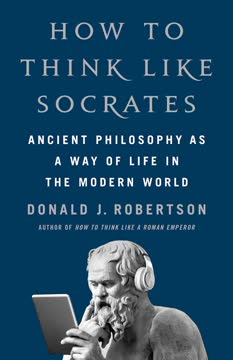
重要ポイント
1. すべてを疑え:自己改善のためのソクラテス式問答法
私の助言を受け入れるなら、ソクラテス自身にはあまり関心を持たず、真実にこそより多くの関心を寄せるだろう。私の言葉が真実だと思うなら賛同し、そうでなければあらゆる論拠を尽くして反論せよ。
ソクラテス式探求の本質。 ソクラテス式問答法は、単に事実を暗記したり意見を受け入れたりすることではなく、前提や信念を積極的に問い直し、より深い真理の理解に至ることを目的とする。これは明晰さを追求し、矛盾を突き、自己や他者の思考に潜む不整合を暴き出す不断の努力である。受け身に知識を受け入れるのではなく、知的探求の動的なプロセスである。
問いかけの技法。 ソクラテス式問答法は以下のような技法を用いる:
- 「それはどういう意味か?」と明確化を求める質問
- 「何を当然のこととしているのか?」と前提を特定する
- 「それが当てはまらない例はあるか?」と反例を探す
- 「その信念の帰結は何か?」と結果を考察する
問いかけの効果。 この方法を取り入れることで、批判的思考力が養われ、自身の偏見に挑戦し、複雑な問題に対してより繊細な理解を深められる。これにより知的謙虚さが育まれ、他者から学ぶ姿勢が生まれ、真理の追求を生涯続けることが可能となる。
2. 汝自身を知れ:知恵と徳の基盤
私の助言を受け入れるなら、ソクラテス自身にはあまり関心を持たず、真実にこそより多くの関心を寄せるだろう。私の言葉が真実だと思うなら賛同し、そうでなければあらゆる論拠を尽くして反論せよ。
デルフォイの神託の教え。 「汝自身を知れ」という言葉は、ソクラテス哲学の核心を示す。これは自己の強みや弱み、価値観や信念、知識の限界を理解することを意味する。生涯にわたる自己探求の旅であり、正直さ、内省、そして不快な真実に直面する勇気が求められる。
自己認識と徳。 ソクラテスは、自己認識が徳ある生き方の必須条件であると考えた。自分の動機や偏見を理解することで、より賢明な選択ができ、誠実に行動し、他者に惑わされることを避けられる。これは自らの無知を認め、他者から学ぶ姿勢を持つことを含む。
実践的な方法。 自己認識を深めるために、以下を行うとよい:
- 自分の価値観や信念を振り返る:本当に大切にしていることは何か?
- 動機を検証する:なぜ自分はその行動をとるのか?
- 強みと弱みを把握する:得意なこと、苦手なことは何か?
- 他者からのフィードバックを求める:周囲は自分をどう見ているか?
3. 現象と実体の区別:日常の欺瞞を見抜く
彼らは予兆や助言を過度に崇拝し、他人の言葉に導かれて自分の心を頼らず、路地を這うようにして他人の言葉から助言を拾い集め、耳で考え、脳で考えないのである。
現象の欺瞞性。 ソクラテスは、あらゆる面で現象と実体を区別する重要性を説いた。見かけが真実であるとは限らず、より正確な世界理解に至るためには、自分の知覚や前提を批判的に検証しなければならない。
実体を見極める技法。 現象と実体を区別するために、以下を実践できる:
- 自分の前提を問い直す:この信念を支える証拠は何か?
- 他者の視点を探る:他の人はこの状況をどう見るか?
- 偏見を認識する:感情や先入観に影響されていないか?
- 信念を検証する:前提に反する証拠はないか?
批判的思考の価値。 批判的思考力を養うことで、他者に惑わされることを防ぎ、より賢明な判断を下し、より真実に即した生き方ができる。これは知的誠実さを持ち、既成概念に挑戦し、真理を追求し続ける姿勢を意味する。
4. 熟考された人生:自己省察が人間の繁栄に不可欠な理由
私の助言を受け入れるなら、ソクラテス自身にはあまり関心を持たず、真実にこそより多くの関心を寄せるだろう。私の言葉が真実だと思うなら賛同し、そうでなければあらゆる論拠を尽くして反論せよ。
熟考されざる人生は生きるに値しない。 ソクラテスは「熟考されざる人生は生きるに値しない」と宣言し、自己省察と批判的探求の重要性を強調した。これは自分の価値観、信念、行動を見つめ直し、自らの原則に沿って生きているかを考える時間を持つことを意味する。
自己省察の効果。 自己省察を行うことで、以下の効果が得られる:
- 目的や目標の明確化:人生で何を達成したいか?
- 改善すべき点の特定:どの習慣や行動が足かせになっているか?
- 自己認識の深化:自分は誰で、何を大切にしているか?
- より真実に即した生き方:自分の価値観に沿って生きているか?
実践的な方法。 自己省察の習慣を育むために、以下を試みるとよい:
- 日記をつける:思考や感情、経験を記録する
- 瞑想を行う:マインドフルネスを実践し、判断せずに思考を観察する
- 他者からのフィードバックを求める:信頼できる友人や師から率直な意見を聞く
- 哲学的対話に参加する:人生や意味に関する根本的な問いを探求する
5. 愛の技法:人間関係を通じて徳を育む
アポローンよ、デロスの主よ、万歳!
愛は徳への道。 ソクラテスはアスパシアの影響を受け、愛を単なる肉体的魅力ではなく、個人の成長と道徳的発展の強力な原動力と見なした。これは知恵、美、善への愛を育み、自己のより良い姿を目指す関係を求めることを意味する。
二つのアフロディーテ。 フェナレテはソクラテスに二つのアフロディーテの概念を紹介した。ひとつは肉体的愛を司る「共通のアフロディーテ」、もうひとつは性格を愛する「天上のアフロディーテ」である。ソクラテスは、他者からの愛が道徳的性格に影響を与えることを学んだ。外見のために愛されていると信じる者は外見を磨き、魂のために愛されていると知る者は魂を磨き、より良い人間となる。
愛を育む方法。 愛を徳への道として育むために、以下を心がけるとよい:
- 尊敬する資質を持つ人々との関係を求める
- 外見よりも内面の美徳と善を育てることに注力する
- 共感と慈悲を実践し、他者の視点を理解しようと努める
- 奉仕の行為に参加し、他者や社会のために貢献する
6. 修辞術の危険性:操作と誤信から身を守る
彼らは予兆や助言を過度に崇拝し、他人の言葉に導かれて自分の心を頼らず、路地を這うようにして他人の言葉から助言を拾い集め、耳で考え、脳で考えないのである。
修辞術の誘惑的な力。 ソクラテスは、感情を操作し真実を曖昧にする説得の技術である修辞術の危険性を警告した。修辞術は善のための強力な道具となりうるが、恐怖や怒り、偏見に訴えて他者を欺き搾取する手段にもなりうる。
操作の手口。 操作から身を守るために、以下を意識するとよい:
- 感情的訴えに注意を払う:自分の感情は操作されていないか?
- 話者の動機を疑う:この人は何を得ようとしているか?
- 主張を裏付ける証拠を求める:どのような証拠が示されているか?
- 他の視点を考慮する:この状況を別の見方はないか?
批判的思考の重要性。 批判的思考力を養うことで、修辞術の誘惑に抗い、理性と証拠に基づいた判断ができる。これは知的誠実さを持ち、権威に挑戦し、真理を追求し続ける姿勢を意味する。
7. 死を平静に受け入れる:恐怖からの自由を見出す
実のところ、もし私が死刑を恐れて哲学的使命を放棄し、アポローンの神託に背いたなら、あなた方は私を不敬罪で訴える正当な理由をより多く持っていただろう。
死は自然な生命の一部。 ソクラテスは死を恐れるべき悲劇ではなく、別の存在状態への移行と見なした。これは自己の死を受け入れ、死が避けられないものであることを認識することを意味する。
死の恐怖を克服する。 死の恐怖から自由になるために、以下を実践できる:
- 自分の価値観や優先事項を振り返る:人生で本当に大切なものは何か?
- 現在に生きる:未来を心配するより、制御可能なことに集中する
- 内なる平和を育む:満足感と受容の心を養う
- 意味と目的を見出す:自己の死を超越する信念を持つ
哲学の価値。 ソクラテスは、哲学が知恵、徳、内なる平和を重視することで死への備えとなると信じた。理性と道徳に導かれた生を送ることで、死を平静に、充実感とともに迎えられる。
8. 正義の重要性:社会の道徳的基盤を築く
彼らは予兆や助言を過度に崇拝し、他人の言葉に導かれて自分の心を頼らず、路地を這うようにして他人の言葉から助言を拾い集め、耳で考え、脳で考えないのである。
正義は社会の礎。 ソクラテスは、正義が秩序ある調和のとれた社会に不可欠であると考えた。これは法を尊重し、他者を公平に扱い、すべての人が繁栄する機会を持つことを意味する。
正義の定義。 ソクラテスは正義を単なる規則や法律の集合ではなく、行動や人間関係を導く根本的な道徳原理として捉えた。これは他者のニーズや利益を考慮し、誠実に行動し、より公正な世界を目指すことを含む。
正義を促進するために。 社会に正義を促すために、以下を心がけるとよい:
- 法を守る:地域社会の規則や法律を尊重する
- 他者を公平に扱う:親切、思いやり、共感を持って接する
- 平等を支持する:機会均等を促進する政策や慣行を支持する
- 不正に声を上げる:差別や抑圧に対して異議を唱える
9. 権力の逆説:真の強さは自己制御にある
彼らは予兆や助言を過度に崇拝し、他人の言葉に導かれて自分の心を頼らず、路地を這うようにして他人の言葉から助言を拾い集め、耳で考え、脳で考えないのである。
外的権力の幻想。 ソクラテスは、他者を支配したり富や名声を得ることを権力とする従来の考えに異議を唱えた。真の権力は自己制御、すなわち欲望や感情、行動を自ら制御する能力にあると考えた。
自己制御こそ真の力。 自己制御を養うことで、以下が可能となる:
- 誘惑に抗う:衝動ではなく理性と道徳に基づいて選択する
- 感情を制御する:困難に対して平静かつ冷静に対応する
- 誠実に行動する:自らの価値観と原則に従って生きる
- 内なる平和を得る:外的状況に左右されず満足感を見出す
外的権力の限界。 ソクラテスは、外的権力は儚く不確かであり、それを持つ者を容易に堕落させると論じた。対照的に、真の強さは内面から生まれ、他者に奪われることはない。
10. 民主主義の脆弱性:古代アテネからの警告
彼らは予兆や助言を過度に崇拝し、他人の言葉に導かれて自分の心を頼らず、路地を這うようにして他人の言葉から助言を拾い集め、耳で考え、脳で考えないのである。
民主主義の脆弱性。 ソクラテスの生涯と死は、民主主義の脆弱さと悪用されやすさを警告するものである。彼は扇動者が世論を操り、社会がいかに容易に専制政治に陥るかを目の当たりにし、個人の権利と自由を守る重要性を説いた。
民主主義を守るために。 民主主義を守るために、以下を心がけるとよい:
- 情報に通じ、積極的な市民であること:政治参加し指導者に責任を求める
- 批判的思考を促進すること:権威を疑い、既成概念に挑戦する姿
レビューまとめ
本書『ソクラテスのように考える方法』は、古代哲学と現代心理学を融合させ、ソクラテスの知恵とその実践的応用について洞察を提供する。読者からは、ロバートソンの魅力的な語り口、歴史的背景の解説、認知行動療法との関連付けが高く評価されている。複雑な概念をわかりやすく伝え、批判的思考のためのツールを提供し、現代生活におけるソクラテス的手法の有用性を示している点が称賛されている。一部には歴史的詳細がやや気を散らすとの意見もあるが、多くのレビューアーは伝記、哲学、自己啓発を巧みに組み合わせた本書を、新規読者にもソクラテスに馴染みのある人にも推奨している。
他の人が読んだ本


よくある質問
1. What is How to Think Like Socrates by Donald J. Robertson about?
- Philosophy as a way of life: The book presents Socratic philosophy as a practical guide for living, not just abstract theory, emphasizing self-examination, wisdom, and justice.
- Historical and psychological context: Robertson intertwines Socrates’s life in turbulent Athens with modern psychological insights, showing how his methods remain relevant today.
- Socratic method and therapy: The book draws parallels between Socratic questioning and cognitive-behavioral therapy (CBT), illustrating how ancient philosophy can support mental health and resilience.
- Literary and dramatic approach: Socrates is depicted both as a historical figure and a literary character, making his teachings accessible and engaging for modern readers.
2. Why should I read How to Think Like Socrates by Donald J. Robertson?
- Timeless wisdom for modern life: The book offers practical tools for navigating fear, anger, injustice, and death anxiety, all of which are still relevant today.
- Critical thinking and self-awareness: Readers are encouraged to develop cognitive and emotional resilience through Socratic questioning and self-examination.
- Bridges philosophy and psychotherapy: Those interested in mental health will find valuable connections between ancient philosophy and modern CBT techniques.
- Engaging narrative and critique: Robertson dramatizes Socratic dialogues and critiques modern self-help culture, inviting readers to develop their own reasoned philosophy of life.
3. What are the key takeaways and themes from How to Think Like Socrates by Donald J. Robertson?
- Self-knowledge is foundational: The maxim “Know thyself” is central, emphasizing the importance of recognizing one’s ignorance and limitations for personal growth.
- Questioning assumptions and values: The book urges readers to critically examine their beliefs about virtue, justice, and the good life, rather than accepting popular opinions.
- Philosophy as daily practice: Socratic philosophy is presented as a way of life aimed at achieving eudaimonia (flourishing) through character improvement.
- Beware of intellectual conceit: Socratic questioning helps dismantle the false belief that one already knows important truths, opening the path to genuine understanding.
4. What is the “Socratic problem” as discussed in How to Think Like Socrates by Donald J. Robertson?
- Uncertainty about historical Socrates: The “Socratic problem” refers to the difficulty in distinguishing the real Socrates from the literary character in Plato’s and Xenophon’s dialogues.
- Dialogues as literary devices: These sources are semi-fictional and often contradictory, using Socrates as a character to explore philosophical ideas rather than record history.
- Philosophical value over accuracy: Robertson argues that the enduring value lies in the ideas and questions attributed to Socrates, not in strict historical accuracy.
- Creative adaptation: The book adapts and sometimes creates dialogues to capture Socrates’s style and make his philosophy relevant for modern readers.
5. How does Donald J. Robertson explain the Socratic method in How to Think Like Socrates?
- Method of questioning: The Socratic method involves asking probing questions to expose contradictions and challenge assumptions, fostering critical self-examination.
- Two-column exercise: Robertson highlights a technique from Xenophon’s Memorabilia, where Socrates uses a two-column diagram to clarify concepts, similar to CBT exercises.
- Cognitive flexibility: The method encourages openness to alternative perspectives and helps avoid rigid thinking, which is linked to psychological distress.
- Therapeutic aim: Socratic questioning serves as a remedy for intellectual conceit and confusion, aligning beliefs with reason and reality for improved well-being.
6. How does How to Think Like Socrates by Donald J. Robertson connect Socratic philosophy with modern cognitive-behavioral therapy (CBT)?
- Shared insight on emotions: Both Socratic philosophy and CBT recognize that people are disturbed not by events themselves but by their opinions about those events.
- Socratic questioning in therapy: CBT uses “Socratic questioning” to help clients examine and challenge irrational beliefs, a technique inspired by Socrates’s method.
- Values clarification: Socratic exercises in defining virtues and the good life resemble modern therapeutic practices that focus on clarifying personal values.
- Philosophy as therapy: Socrates’s approach is presented as a form of psychological therapy aimed at intellectual humility, self-knowledge, and emotional resilience.
7. What are the main philosophical concepts explained in How to Think Like Socrates by Donald J. Robertson?
- Cognitive distancing: The ability to observe one’s thoughts as separate from reality, allowing for greater objectivity and emotional regulation, is linked to Socratic epistemology and CBT.
- Justice and virtue: Socrates argues that doing wrong is worse than suffering wrong, and that true power lies in wisdom and justice, not in harming others.
- Socratic method and dialectic: The book emphasizes questioning assumptions to expose ignorance, contrasting this with rhetoric aimed at persuasion without truth.
- Eudaimonia: The concept of flourishing or living the best possible life, achieved through virtue and self-mastery, is central to Socratic ethics.
8. How does How to Think Like Socrates by Donald J. Robertson critique modern self-help culture?
- Overreliance on advice: The book argues that modern self-help often encourages passive consumption of advice rather than active reasoning and questioning.
- Superficial improvement: Many self-help seekers accumulate knowledge and techniques but fail to achieve lasting change because they do not critically examine their values or assumptions.
- Need for personal philosophy: Robertson stresses the importance of developing one’s own reasoned philosophy of life, guided by critical thinking.
- Socratic freedom: True self-improvement involves “Socratic freedom,” or cognitive flexibility, enabling adaptation and avoiding rigid adherence to ineffective strategies.
9. What role do rhetoric and demagoguery play in How to Think Like Socrates by Donald J. Robertson, and how are they critiqued?
- Rhetoric as persuasion, not truth: The book presents rhetoric, especially as taught by Sophists, as focused on winning debates and influencing crowds, often without concern for justice or truth.
- Danger of demagoguery: Figures like Cleon used rhetoric to manipulate fear and anger, undermining democracy and leading to destructive decisions in Athens.
- Socratic opposition to rhetoric: Socrates challenges Sophists by exposing contradictions and insisting that true oratory must be grounded in knowledge of justice and aimed at improving souls.
- Analogy to confectionery: Socrates likens rhetoric to confectionery, suggesting it panders to desires rather than promoting true well-being.
10. How does How to Think Like Socrates by Donald J. Robertson address the fear of death and dying?
- Philosophical preparation for death: Socrates teaches that true philosophers rehearse dying by detaching from bodily desires and focusing on the soul’s purification.
- Death as cognitive challenge: The book explains that fear of death arises from mistaken beliefs and opinions, not knowledge, and that cognitive distancing can help manage this fear.
- Socrates’s final moments: Through the dialogue with Phaedo, Socrates’s serene acceptance of death is recounted, emphasizing that a life devoted to wisdom diminishes death anxiety.
- Practical application: The approach encourages readers to question their beliefs about death, reducing emotional suffering and fostering acceptance.
11. What practical psychological techniques from How to Think Like Socrates by Donald J. Robertson can help manage anger and injustice?
- Two-column technique: Listing evidence for and against beliefs that provoke anger helps evaluate their validity and reduce emotional reactivity.
- Metacognition and rumination: Observing thoughts from a third-person perspective (illeism) can interrupt angry rumination and lessen its intensity.
- Cost-benefit analysis: Assessing the pros and cons of anger helps individuals understand its consequences and choose more constructive responses.
- Alignment with justice: These techniques align with Socratic emphasis on justice and moderation, promoting rational and ethical responses to perceived injustice.
12. What are the most memorable quotes from How to Think Like Socrates by Donald J. Robertson, and what do they mean?
- “The unexamined life is not worth living.” This dictum underscores the central theme that self-examination and philosophical inquiry are essential for a meaningful life.
- “Doing wrong is a greater evil than suffering wrong.” This Socratic paradox emphasizes that moral corruption harms the wrongdoer more than the victim, highlighting the importance of justice.
- “People are not upset by events but rather by their opinions about them.” This quote, linked to both Socratic thought and CBT, highlights the cognitive basis of emotional distress.
- “Rhetoric is to the mind as confectionery is to the body.” Socrates’s analogy critiques rhetoric as pandering to desires rather than promoting true well-being, warning against superficial persuasion.