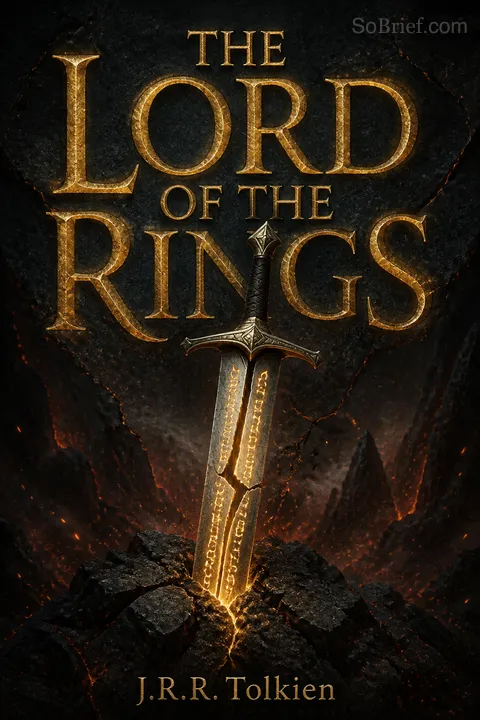
情節概要
夏爾的陰影
故事從和平的夏爾開始,哈比人過著簡單而滿足的生活。比爾博·巴金斯性格古怪且富有,計劃舉辦盛大的生日派對,但他擁有一枚神秘的魔戒,這戒指保護了他的青春,也引起了巫師甘道夫的注意。甘道夫發現這枚戒指正是由黑暗魔君索倫鑄造的至尊魔戒,用以統治中土大陸。索倫的力量在魔多逐漸復甦,他的僕從戒靈正四處尋找魔戒。比爾博離開夏爾,將魔戒交給他的繼承人佛羅多。當戒靈逼近時,佛羅多與忠實的朋友山姆、梅里與皮聘被迫逃亡。他們的旅程充滿不確定,邪惡的陰影甚至延伸到夏爾的邊界。
同盟的形成
佛羅多和他的夥伴們遇見神秘的遊俠阿拉貢,經歷重重險阻後抵達瑞文戴爾。在那裡,精靈、人類、矮人和甘道夫召開議會,揭示魔戒的歷史及索倫帶來的威脅。唯一的希望是將魔戒投入末日火山的火焰中銷毀。於是組成了同盟:佛羅多、山姆、梅里、皮聘、阿拉貢、甘道夫、精靈雷戈拉斯、矮人金利和剛鐸的博羅米爾。他們踏上充滿危險的任務,遭受索倫的軍隊和墮落巫師薩魯曼的追擊。
危險的抉擇
同盟面對卡拉德拉斯的嚴冬,被迫進入摩瑞亞礦坑,遭遇獸人和古老惡魔巴洛格的攻擊。甘道夫為了讓眾人逃脫,與巴洛格一同墜入深淵,犧牲自己。剩餘成員在洛絲洛瑞恩的魔法領地找到庇護,女王加拉德麗爾賜予他們指引與禮物。隊伍沿著安都因河前行,但魔戒的影響力逐漸增強,博羅米爾試圖奪取魔戒。同盟分崩離析:佛羅多與山姆獨自前往魔多,梅里與皮聘被獸人俘虜,阿拉貢、雷戈拉斯和金利追蹤俘虜。
魔戒的腐化
佛羅多與山姆深入荒野,遇見魔戒的前持有者咕嚕,成為他們的嚮導。咕嚕的心智被魔戒扭曲,忠誠與背叛交織。此時,薩魯曼的軍隊蹂躪洛汗,國王西奧登被甘道夫(已轉生為白袍巫師)解救脫離薩魯曼的控制。洛汗騎士與阿拉貢及其同伴守衛赫姆峽谷抵抗薩魯曼軍隊。梅里與皮聘與樹人聯手攻擊艾辛格,推翻薩魯曼的勢力。魔戒的腐化無處不在,連智者與強者也難以抗拒其權力的誘惑。
同盟的破碎
同盟成員四散。佛羅多與山姆在咕嚕的引導下穿越死沼地,接近魔多。阿拉貢、雷戈拉斯和金利追擊獸人,與洛汗聯手參與激烈戰役。梅里與皮聘激勵樹人攻擊艾辛格。甘道夫與薩魯曼對峙,後者失去力量。魔戒的重擔愈加沉重,咕嚕引領他們至巨蛛雪洛布的巢穴。佛羅多被俘,山姆誤以為他已死,接過魔戒繼續使命。
西方的戰爭
索倫的軍隊圍攻剛鐸首都米那斯提力斯。甘道夫與皮聘趕來支援,阿拉貢尋求死者之力以履行古老誓言。洛汗騎士馳援剛鐸,佩蘭諾平原之戰爆發。國王西奧登陣亡,艾歐溫與梅里合力擊殺巫王,阿拉貢率援軍抵達。城市得救,但付出慘重代價。西方領袖決定進攻黑門,吸引索倫注意,為佛羅多與山姆在魔多的奮鬥爭取機會。
王者歸來
阿拉貢揭示為伊西爾杜的繼承人,登基為剛鐸的埃萊薩王。他醫治傷者,統一人類諸國。[法拉米爾]與艾歐溫找到愛與療癒。西方軍隊向黑門進軍,挑戰索倫,為佛羅多與山姆提供唯一機會抵達末日火山。精靈與其他古老種族準備離開中土,人類的時代開始。
通往魔多之路
佛羅多與山姆偽裝成獸人,穿越荒涼的魔多。這片土地貧瘠,充斥著索倫的軍隊與監視之眼。魔戒的重量幾乎壓垮佛羅多,唯有山姆的忠誠支撐著他們。咕嚕因執念尾隨。這段旅程是耐力、希望與意志的考驗,哈比人一步步接近末日火山,唯一能銷毀魔戒之地。
陰影之地
最終接近末日火山,疲憊、口渴與恐懼如夢魘般襲來。佛羅多幾乎被魔戒的力量吞噬,山姆不得不背負他前行。咕嚕發起攻擊,咬斷佛羅多的手指,奪走魔戒。得意的咕嚕墜入火中,魔戒隨之毀滅。索倫的力量崩潰,巴拉多爾倒塌,黑暗從世界消散。佛羅多與山姆被鷹族救出,魔多陷入廢墟。
萬物終結
勝利者慶祝,阿拉貢加冕為王。哈比人因功績受尊敬。精靈、矮人與人類開始療癒戰爭創傷。佛羅多與山姆返回夏爾,但佛羅多因歷劫而永遠改變。夏爾曾遭薩魯曼惡意蹂躪,哈比人必須奮力恢復。和平回歸,但佛羅多的傷痛難以癒合。
夏爾的清理
哈比人發現夏爾被流氓控制,領頭者是薩魯曼(夏基)與洛索·薩克維爾-巴金斯。土地受創,樹木被砍,哈比人受壓迫。佛羅多、山姆、梅里與皮聘號召夏爾人民,推翻流氓,面對薩魯曼,後者被僕人沃姆通殺死。夏爾得以恢復,但佛羅多無法找到內心的平靜。山姆與羅茜結婚成家,而佛羅多的痛苦依舊。
時代的逝去
佛羅多帶著無法癒合的傷痕,與甘道夫、比爾博及精靈一同前往不死之地。山姆、梅里與皮聘返回夏爾,因旅程而改變。精靈與魔法的時代結束,人類時代開啟。故事以山姆回家作結,他心安理得地知道世界已被拯救,儘管付出了巨大代價。
角色
佛羅多·巴金斯
佛羅多是溫和且深思的哈比人,繼承了比爾博的至尊魔戒。命運與友情選中他成為魔戒持有者,肩負將魔戒銷毀於末日火山的重任。旅程考驗他的耐力、意志與道德,魔戒的力量幾乎吞噬他。佛羅多充滿同情心,常對咕嚕甚至薩魯曼展現憐憫。他的心理旅程是負擔與疏離的加深;他永遠改變,無法完全回歸夏爾的純真。佛羅多的故事是犧牲、堅持與英雄極限的展現。
山姆懷斯·甘姆吉
山姆是佛羅多的園丁與摯友,象徵忠誠、謙遜與堅韌。他是任務的情感支柱,常在身體與精神上支持佛羅多。山姆對佛羅多與夏爾的愛賦予他抵抗魔戒誘惑的力量。他務實、勇敢且足智多謀,代表平凡善良的力量。山姆的旅程是從卑微僕人到英雄的成長,最終在家庭與家園中找到療癒與幸福。
甘道夫
甘道夫是邁雅,一位被派遣協助中土的靈體,偽裝成老人。他智慧、富有同情心且精明,策劃對抗索倫的抵抗。甘道夫在摩瑞亞的墜落與以白袍巫師身份回歸象徵死亡與重生,他的角色從嚮導轉變為領袖。他是變革的催化劑,激發勇氣與團結。甘道夫的心理深度體現在他的謙遜與對權力危險的理解;他拒絕魔戒,因知其腐化力量。
阿拉貢(游俠、埃萊薩)
阿拉貢是伊西爾杜的最後繼承人,隱姓埋名成長。他是熟練的遊俠、戰士與治療者,內心掙扎於命運與自我懷疑之間。阿拉貢的旅程是接受血統與團結自由民族的過程。他高貴、無私,激發忠誠。他對亞玟的愛與謙遜使他與其他國王不同。阿拉貢的心理弧線是擁抱責任與希望,最終加冕並恢復王國。
咕嚕(史麥戈)
咕嚕是被魔戒腐化的類哈比人,分裂為原本的史麥戈與黑暗的咕嚕兩面。他狡猾、可憐,對魔戒(「我的寶貝」)癡迷。咕嚕與佛羅多的關係複雜——既是嚮導又是背叛者,喚起佛羅多的同情與山姆的懷疑。他的心理折磨與對魔戒的癮症推動劇情,他的最後行動——奪取魔戒並墜入火中——無意中拯救了中土。
山姆、梅里與皮聘
梅里與皮聘是佛羅多的表親,起初是輕鬆調皮的哈比人,後成為領袖與戰士。梅里協助擊殺巫王;皮聘救助法拉米爾並效力剛鐸。他們的心理成長標誌著純真喪失、勇氣與責任感加深。與山姆一同,他們代表哈比人的韌性與適應力。
雷戈拉斯
雷戈拉斯是密林精靈,擅長射箭,與自然相通。他優雅、敏銳,與金利建立深厚友誼,克服精靈與矮人間的古老敵意。雷戈拉斯的視角帶來驚奇與憂傷,見證他族時代的消逝。
金利
金利是厄瑞博的矮人,勇敢且固執。他與雷戈拉斯的友誼象徵和解。金利對傳統的驕傲與對閃光洞穴的熱愛展現矮人不僅是戰士的深度。他堅定、幽默,重視榮譽與忠誠。
薩魯曼
薩魯曼曾是巫師首領,卻因權力與知識的慾望背叛自由民族。他成為索倫的傀儡,帶來戰爭與工業破壞。薩魯曼的心理弧線警示驕傲、權力誘惑與背叛的自我毀滅。他的結局淒慘,被僕人沃姆通所殺。
索倫
索倫是黑暗魔君,邁雅被魔苟斯腐化,企圖透過魔戒奴役中土。他從未直接現身,但其存在如同無所不在的惡意意志。索倫象徵統治、恐懼與絕望的心理力量。他的敗亡非靠正面對抗,而是靠最微小、最不可能者的謙遜與堅韌。
故事裝置
至尊魔戒
魔戒是核心故事裝置,象徵絕對權力及其腐化力量。它誘惑所有接觸者,揭示他們的慾望與弱點。魔戒的力量孤立並壓迫佛羅多,推動故事發展並考驗角色的道德。唯有透過恩典之舉——咕嚕的介入——而非單靠意志力,魔戒才能被銷毀。
同盟
同盟的組成與解散構築故事架構,允許多條故事線與視角並行。成員多樣——哈比人、人類、精靈、矮人、巫師——象徵跨越差異的合作需求。同盟的破裂導致平行任務,各自為最終勝利貢獻力量。
旅程
旅程主題既是字面也是象徵。角色穿越廣闊險境,映照內心掙扎。旅程考驗並改變他們,剝除純真,塑造新身份。「道路」的意象反覆出現,強調命運、選擇與未知。
誘惑與憐憫
角色反覆面臨魔戒的誘惑及復仇或權力的機會。佛羅多對咕嚕的憐憫、比爾博早期的憐憫,以及山姆的克制至關重要;這些慈悲行為最終導致魔戒的毀滅。敘事結構利用伏筆與呼應強化主題:勝利的關鍵在於憐憫,非武力。
戰爭與時代更替
魔戒戰爭提供不斷升級的衝突背景,赫姆峽谷、佩蘭諾平原與黑門的戰鬥交織其中。敘事以此標誌精靈與古老種族的統治終結,人類時代的開始。結構交織個人與史詩規模,展現微小行動如何影響世界命運。
平行故事線
同盟破裂後,故事分為多條線索——佛羅多與山姆的任務、西方的戰爭、梅里與皮聘的冒險。敘事在這些線索間交替,營造懸念並提供同一事件的不同視角。此裝置豐富且層次分明地探索世界與其人民。
夏爾的清理
哈比人回到被腐化的夏爾,將史詩帶回家園,顯示邪惡可在任何地方生根。清理既是字面也是象徵的淨化,並評論日常生活中警惕與勇氣的必要。它也凸顯旅程的心理代價,佛羅多無法完全癒合。
魔戒持有者的離去
佛羅多、比爾博與精靈前往不死之地,帶來苦樂參半的結局。這承認某些傷痕無法在此世癒合,一個時代的終結也是另一個時代的開始。敘事結構利用此裝置提供結束感與歷史延續感。
分析
《魔戒》作為現代奇幻的基石作品,因其融合史詩冒險、深刻心理洞察與深遠道德視野而歷久彌新。托爾金精心構築的世界,其真正力量在於對人類(及哈比人)處境的探討。魔戒象徵誘惑統治的慾望,故事堅持真正的英雄主義不在於力量或智慧,而在於謙遜、憐憫與堅韌。交織的故事線與多變視角反映歷史的複雜與萬物相連。旅程主題允許轉變,同時承認失落與無法回歸的現實。夏爾的清理將史詩根植於日常,提醒讀者邪惡必須在家園中抵抗。
其他人也在讀
常見問題
```markdown
Synopsis & Basic Details
What is The Lord of the Rings about?
- A Quest Against Absolute Evil: The Lord of the Rings chronicles the perilous journey of Frodo Baggins, a hobbit, who inherits a seemingly innocuous magic ring from his eccentric uncle, Bilbo. This ring is, in fact, the One Ring, an artifact of immense power forged by the Dark Lord Sauron to dominate all of Middle-earth.
- The Fellowship's Formation: To prevent Sauron from reclaiming the Ring and plunging the world into eternal darkness, a diverse fellowship is formed at the Council of Elrond. This group, comprising hobbits, Men, an Elf, a Dwarf, and a Wizard, embarks on a desperate quest to destroy the Ring in the only place it can be unmade: the fires of Mount Doom in Mordor.
- Sacrifice and the Dawn of a New Age: The narrative follows the Fellowship's trials, their eventual breaking, and the individual journeys of its members as they fight against Sauron's growing power. It culminates in the Ring's destruction, Sauron's defeat, and the restoration of Aragorn, the rightful king, ushering in a new age for Middle-earth, albeit one marked by the fading of Elves and the lingering wounds of war.
Why should I read The Lord of the Rings?
- Immersive World-Building: Tolkien's masterpiece offers an unparalleled depth of world-building, from its intricate languages and detailed histories to its rich mythologies and diverse cultures. Readers are transported to a Middle-earth that feels ancient and real, fostering a profound sense of immersion.
- Profound Thematic Exploration: Beyond the adventure, the book delves into universal themes such as the corrupting nature of power, the importance of friendship and loyalty, the resilience of the ordinary, and the bittersweet beauty of sacrifice. It's a story that resonates deeply with the human condition.
- Enduring Literary Influence: As a foundational work of modern fantasy, The Lord of the Rings has influenced countless authors, artists, and filmmakers. Reading it provides insight into the origins of many tropes and narrative structures prevalent in the genre today, offering a richer appreciation for its legacy.
What is the background of The Lord of the Rings?
- Deep Mythological Roots: The story is set in the Third Age of Middle-earth, a world with a vast, ancient history detailed in Tolkien's other works like The Silmarillion. This background includes the creation myths, the rise and fall of ancient kingdoms, and the long struggle against primordial evil, providing a rich tapestry against which the events of the Ring War unfold.
- Linguistic Inspiration: Tolkien, a philologist, initially created the Elvish languages (Quenya and Sindarin) for his own enjoyment, and then built the world of Middle-earth around them to give them a place and history. This linguistic foundation lends an extraordinary authenticity and depth to the names, songs, and lore within the narrative.
- Post-WWI Reflections: While Tolkien explicitly denied allegory, his experiences in World War I and observations of industrialization deeply influenced the story's themes. The devastation of the Shire, the industrial blight of Isengard, and the pervasive sense of loss and fading beauty reflect a profound concern for the impact of war and unchecked technological progress on nature and traditional ways of life.
What are the most memorable quotes in The Lord of the Rings?
- "All that is gold does not glitter, / Not all those who wander are lost; / The old that is strong does not wither, / Deep roots are not reached by the frost.": This iconic verse, from Gandalf's letter to Frodo, serves as a crucial piece of foreshadowing and character introduction for Aragorn. It encapsulates the theme of hidden nobility and the deceptive nature of appearances, urging readers and characters alike to look beyond the surface.
- "I wish it need not have happened in my time," said Frodo. "So do I," said Gandalf, "and so do all who live to see such times. But that is not for them to decide. All we have to decide is what to do with the time that is given us.": This exchange between Frodo and Gandalf in "The Shadow of the Past" is a powerful meditation on destiny, responsibility, and agency. It highlights the universal human desire to avoid hardship, yet underscores the moral imperative to act courageously within one's given circumstances, a central theme of the entire saga.
- "There's some good in this world, Mr. Frodo, and it's worth fighting for.": Uttered by Samwise Gamgee, this simple yet profound statement encapsulates the core message of hope and perseverance in the face of overwhelming evil. It reflects Sam's unwavering loyalty and his deep love for the simple beauties of life, which he believes are worth defending, even when all seems lost.
What writing style, narrative choices, and literary techniques does J.R.R. Tolkien use?
- Archaic and Formal Language: Tolkien employs a rich, often archaic vocabulary and formal sentence structures, especially in descriptions and the speech of noble characters or ancient beings. This choice imbues the narrative with a mythic, timeless quality, evoking the sense of reading an ancient legend or historical account, as seen in the elevated prose of Elrond's speeches.
- Omniscient and Shifting Perspective: The narrative primarily uses an omniscient third-person perspective, but frequently shifts its focus, particularly after the Fellowship breaks. This allows for a comprehensive view of the unfolding war, contrasting the intimate, often internal struggles of Frodo and Sam with the grander, external conflicts involving Aragorn, Gandalf, and the armies of Men, Elves, and Dwarves.
- Extensive Use of Poetry and Song: Throughout the text, Tolkien intersperses numerous poems, songs, and riddles, which serve multiple functions: they enrich the world-building by providing historical context, cultural insights, and character depth; they break up the prose, offering moments of reflection or emotional release; and they often foreshadow future events or reveal hidden truths, such as Bilbo's "Road goes ever on" poem or the Lay of Lúthien.
Hidden Details & Subtle Connections
What are some minor details that add significant meaning?
- The Significance of Pipe-weed: Beyond a simple hobbit pleasure, pipe-weed is revealed in the Prologue and later by Merry to be a plant native to Gondor, brought north by the Men of Westernesse. This seemingly trivial detail subtly links the Shire to the ancient history of Men and the wider world, foreshadowing the hobbits' eventual involvement in larger events and highlighting the unexpected origins of common things.
- The Elven-cloaks' Camouflage: The grey cloaks given by Galadriel are not merely warm garments; they possess a subtle magic that allows the wearer to blend seamlessly with their surroundings. This detail, initially presented as a practical gift, symbolizes the Elves' deep connection to nature and their mastery of subtle, non-aggressive forms of power, contrasting with Sauron's overt might.
- The Names of the Days and Months: Appendix D reveals that the Shire's calendar and weekday names are translations of older Dúnedain and Elvish terms, often with forgotten meanings. This deep linguistic layering underscores the ancient lineage of Middle-earth's cultures and the hobbits' unconscious connection to a grander past, even in their seemingly isolated existence.
What are some subtle foreshadowing and callbacks?
- Bilbo's "Thin and Stretched" Feeling: In "A Long-Expected Party," Bilbo describes feeling "all thin, sort of stretched, if you know what I mean: like butter that has been scraped over too much bread." This seemingly whimsical complaint subtly foreshadows the Ring's insidious effect, which drains its bearer's vitality and makes them feel insubstantial, a fate Frodo later experiences more acutely.
- Sam's Oliphaunt Rhyme: Sam's recitation of the "Oliphaunt" rhyme in Ithilien, initially a moment of comic relief, subtly foreshadows the later appearance of the Mûmakil in the Battle of the Pelennor Fields. It transforms a childhood fancy into a terrifying reality, emphasizing the vastness and unexpected dangers of the world beyond the Shire.
- The Barrow-blades' True Purpose: The daggers given to the hobbits by Tom Bombadil, taken from the Barrow-downs, are revealed by Gandalf to be "blades wrought by our own kindred in the North in the deep past." Merry's blade, in particular, proves to be a "troll's bane" and later, crucially, the only weapon capable of wounding the Witch-king, fulfilling an ancient prophecy and highlighting the enduring power of forgotten artifacts.
What are some unexpected character connections?
- Aragorn's Hidden Lineage and the Elfstone: Aragorn's true identity as the heir of Isildur is a central reveal, but the depth of his connection to the Elves is often overlooked. He is not only fostered by Elrond but is also betrothed to Arwen, Elrond's daughter, making him a descendant of Lúthien and Beren. The green Elfstone, Elessar, given to him by Galadriel, is a token of this heritage and a symbol of his future kingship, linking him directly to the ancient Elven-kings.
- Gimli and Galadriel's Unlikely Bond: The initial animosity between Gimli and Legolas, reflecting the ancient feud between Elves and Dwarves, is famously overcome. However, Gimli's profound reverence and love for Lady Galadriel, culminating in his request for a strand of her hair, is a truly unexpected connection. This bond transcends racial prejudice and symbolizes the healing of old wounds, foreshadowing Gimli's unique fate of sailing to the Undying Lands.
- Tom Bombadil's Ancient Knowledge: Tom Bombadil's seemingly whimsical nature belies his immense age and unique connection to Middle-earth. His casual familiarity with the "River-woman's daughter" (Goldberry) and his deep knowledge of the Old Forest and Barrow-wights hint at a primordial existence far predating the Elves and Men. His immunity to the Ring's power further emphasizes his singular, almost elemental, connection to the land itself, making him an enigmatic figure outside the conventional power structures.
Who are the most significant supporting characters?
- Tom Bombadil: Though he appears briefly, Tom Bombadil is profoundly significant as a character who exists outside the power struggles of Middle-earth. His immunity to the Ring's influence and his ancient, joyful connection to nature offer a glimpse of a different kind of power—one of pure being and harmony, untouched by the world's conflicts. He represents a primal, untamed spirit of the land.
- Lady Galadriel: As one of the most powerful and ancient Elves remaining in Middle-earth, Galadriel serves as a crucial source of wisdom, comfort, and subtle aid to the Fellowship. Her temptation by the Ring and her subsequent rejection of it highlight the immense moral strength required to resist absolute power, while her gifts, particularly the Phial, prove vital to Frodo's quest.
- Faramir: Boromir's younger brother, Faramir, stands out as a man of Gondor who resists the Ring's temptation, demonstrating a rare wisdom and compassion. His encounter with Frodo and Sam, and his understanding of the Ring's true nature, provide a stark contrast to his brother's fall and underscore the theme that true strength lies not in wielding power, but in refusing it.
Psychological, Emotional, & Relational Analysis
What are some unspoken motivations of the characters?
- Bilbo's Lingering Attachment to the Ring: While Bilbo outwardly claims to be "thin, sort of stretched" and desires a permanent holiday, his deep-seated reluctance to part with the Ring, calling it "My Precious" in a manner disturbingly similar to Gollum, reveals an unspoken, almost subconscious addiction. His "joke" at the party is a thinly veiled attempt to escape the Ring's hold, but his struggle with Gandalf shows the profound psychological grip it still has on him.
- Aragorn's Self-Doubt and Burden of Kingship: Aragorn's reluctance to claim his throne is often attributed to humility, but it also stems from a deep-seated fear of failure and the weight of his lineage. His long years as Strider, a wandering Ranger, allowed him to avoid the direct responsibilities of kingship. His internal struggle is not just about proving his worth, but about overcoming the historical failures of his ancestors, particularly Isildur, and the fear that he might succumb to the same temptations.
- Denethor's Despair and Pride: Denethor's seemingly irrational actions, such as his favoritism towards Boromir and his eventual madness, are driven by a profound, unspoken despair. He sees the inevitable decline of Gondor and the Age of Men, and his pride prevents him from accepting help or hope from outside sources, especially Gandalf, whom he views as a rival. His use of the palantír, a desperate attempt to gain knowledge and control, ultimately feeds his despair, leading to his tragic end.
What psychological complexities do the characters exhibit?
- Frodo's Empathy and the Burden of Pity: Frodo's decision to spare Gollum, echoing Bilbo's earlier act of pity, is a pivotal moment that highlights his deep empathy. This compassion, however, becomes a psychological burden, as he grapples with the moral implications of his choices and the constant threat posed by Gollum's treachery. His internal conflict between mercy and self-preservation is a central psychological complexity, demonstrating that even good intentions can lead to unforeseen perils.
- Sam's Simple Loyalty vs. Growing Wisdom: Sam's character evolves from a simple, unquestioning servant to a figure of profound wisdom and resilience. His initial "hobbit-sense" and distrust of the unknown are gradually tempered by his unwavering loyalty to Frodo and his experiences in the wider world. His internal monologues, particularly in Mordor, reveal a growing understanding of the larger stakes and a deep, unarticulated love for his master, showcasing a complex blend of simplicity and profound moral strength.
- Saruman's Intellectual Arrogance and Isolation: Saruman's fall is a psychological study in the dangers of intellectual pride and the pursuit of knowledge for its own sake. His belief that he can control power, rather than be controlled by it, leads him to isolate himself from his peers and ultimately from reality. His "mind of metal and wheels" symbolizes a detachment from living things and a descent into a sterile, destructive form of wisdom, culminating in his pathetic end as a "beggar in the wilderness."
What are the major emotional turning points?
- Bilbo's Relinquishment of the Ring: The scene where Bilbo finally gives up the Ring, after a fierce internal struggle and Gandalf's stern intervention, is a major emotional turning point. It marks the first clear demonstration of the Ring's corrupting power and the immense difficulty of letting go of absolute control, setting the stage for Frodo's even greater struggle.
- The Breaking of the Fellowship at Parth Galen: Boromir's attempt to seize the Ring from Frodo, followed by his valiant but ultimately fatal defense of Merry and Pippin, shatters the Fellowship and forces Frodo to continue alone with Sam. This event is a profound emotional blow, marking the loss of innocence and the realization of the Ring's divisive power, forcing the remaining members to confront their individual destinies.
- Éowyn's Defiance of the Witch-king: Éowyn's revelation as Dernhelm and her slaying of the Witch-king on the Pelennor Fields is a powerful emotional climax. Her act of defiance, driven by love and despair, shatters the ancient prophecy that "no living man may hinder me." This moment is a triumph of courage and will, not just for Éowyn, but for all who felt trapped by fate and the overwhelming power of evil.
How do relationship dynamics evolve?
- Gimli and Legolas: From Ancient Feud to Deep Friendship: The initial tension between Gimli and Legolas, rooted in centuries of Elvish-Dwarvish animosity, gradually transforms into one of the most profound friendships in the story. Their shared perils, mutual respect for each other's skills, and particularly Gimli's reverence for Galadriel, forge an unbreakable bond that transcends racial divides, symbolizing hope for reconciliation in Middle-earth.
- Frodo and Sam: Master and Servant to Co-dependant Companions: Their relationship evolves from a traditional master-servant dynamic to one of deep, almost symbiotic, companionship. Sam's unwavering loyalty and practical support become indispensable to Frodo, especially as the Ring's burden grows. Frodo, in turn, relies on Sam not just for physical aid but for emotional and moral strength, highlighting how their shared ordeal forges an unbreakable bond of love and mutual dependence.
- Aragorn and Théoden: From Distrust to Mutual Respect: Théoden, initially under Saruman's sway and distrustful of outsiders, views Aragorn with suspicion. However, through Gandalf's intervention and Aragorn's actions in battle, Théoden comes to recognize Aragorn's true nobility and wisdom. Their relationship transforms into one of mutual respect and alliance, symbolizing the rekindling of ancient bonds between the realms of Men and the hope for a united front against evil.
Interpretation & Debate
Which parts of the story remain ambiguous or open-ended?
- The Nature and Origin of Tom Bombadil: Tom Bombadil remains one of the most enigmatic characters, defying easy categorization. His power over the Ring, his ancientness ("Eldest, that's what I am"), and his detachment from the larger conflict leave his true nature ambiguous. He is neither Elf, Man, nor Dwarf, and his role seems to be that of a primal spirit of the land, a force of nature rather than a participant in the cosmic struggle, prompting endless reader speculation about his identity and purpose.
- The Fate of the Entwives: Treebeard's lament for the lost Entwives, who "did not die" but were "lost" after crossing the Great River to tend their gardens, leaves their ultimate fate unresolved. This ambiguity adds a layer of melancholy to the Ents' story and raises questions about the lasting impact of war and industrialization on nature. Their potential return, "when we have both lost all that we now have," suggests a cyclical view of history and a hope for future reconciliation that remains unfulfilled within the narrative.
- The Long-Term Healing of Frodo's Wounds: While Frodo is physically healed in Rivendell and after the Ring's destruction, his spiritual and psychological wounds are explicitly stated to be "not wholly cured." His departure to the Undying Lands, a place of healing, leaves the exact nature and duration of his recovery open to interpretation. This ambiguity acknowledges the lasting trauma of profound sacrifice and suggests that some burdens cannot be fully shed within the mortal world, even after victory.
What are some debatable, controversial scenes or moments in The Lord of the Rings?
- Gandalf's Delay in Reaching Frodo: Gandalf's prolonged absence after instructing Frodo to leave the Shire, leading to Frodo's perilous encounters with the Nazgûl, is a point of contention. While Gandalf explains he was imprisoned by Saruman, some readers question whether his priorities or judgment were flawed, or if his delay was a deliberate, albeit risky, part of a larger, unseen plan to test Frodo and the Ring.
- Boromir's Temptation and Death: Boromir's attempt to seize the Ring from Frodo is a deeply debated moment. While it highlights the Ring's corrupting power, some argue that his character arc is too abrupt or that his death, though valiant, is a convenient way to remove a morally compromised character. Others see it as a tragic but realistic portrayal of human fallibility and the immense pressure of the quest.
- The Eagles' Role and Late Intervention: The Eagles' repeated interventions, particularly their rescue of Gandalf from Orthanc and Frodo and Sam from Mount Doom, often spark debate. Critics argue that their power is too deus ex machina, questioning why they don't intervene earlier or more directly in the war. Tolkien's explanation that they are not "taxi services" and act only at specific times, or when commanded, points to their role as agents of a higher power, not mere plot devices.
The Lord of the Rings Ending Explained: How It Ends & What It Means
下載 PDF
下載 EPUB
.epub digital book format is ideal for reading ebooks on phones, tablets, and e-readers.








































