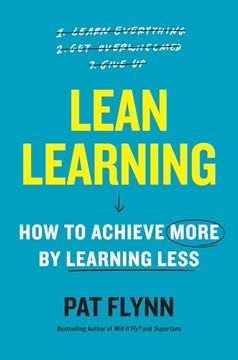
核心要点
1. 优先行动,别陷入无尽的信息消费
“知识若不能指导行动,对我们来说就是死的。”
停止过度学习。 作者帕特·弗林坦承自己是个“过度学习者”,不断吸收内容却不付诸实践。这种信息囤积导致了瘫痪和挫败感,尤其是在大萧条期间被裁员后。他意识到,单有知识远远不够,行动才是真正推动进步的催化剂。
信息过载。 当今世界充斥着海量内容,造成“灵感过载”和过度思考。这种持续的消费往往拖延简单决策,阻碍前进。关键在于从被动接受转向主动应用。
行动即进步。 帕特的商业教练杰里米曾直言不讳地告诉他:“别磨叽,赶紧开始”(JFGS),当时他正陷在第一本电子书的规划中。这句直白的建议点明了所有规划反而阻碍了真正的进展。真正的学习始于行动,而非单纯消费。
2. 用关键问题简化下一步行动
“如果这件事很简单,会是什么样子?”
开启清晰思路。 这个“关键问题”(ITWEWWILL),受蒂姆·费里斯启发,帮助你突破迷茫,找出推动前进的最小可行行动(MVA)。它鼓励你剥除表面复杂,聚焦最简单的路径。
实际应用。 当帕特和凯勒布发明SwitchPod三脚架时,每个阶段都问自己这个问题。结果他们:
- 用纸板箱做原型。
- 在会议上向YouTuber询问尺寸。
- 通过贴牌配件扩展,而非从零开发新产品。
从当下出发。 塞拉利昂年轻创新者凯尔文·多的故事进一步说明了这一点。他通过拆解废弃电子零件自学电子学,问自己“如果学电子很简单,会是什么样子?”他的答案是边做边学,利用现有资源。
3. 接纳不完美,从每次错误中学习
“你必须先成为灾难,才能成为大师。”
错误是老师。 社会常将失败妖魔化,但对精益学习者而言,错误是宝贵的学习机会。它们提供即时反馈,激发好奇心,加深理解,是理论知识无法替代的。
失败类型。 哈佛研究员艾米·埃德蒙森区分三类失败:
- 基础失败:未遵循已知“正确方法”。
- 复杂失败:熟悉情境中多因素叠加导致。
- 智慧失败:新尝试在新环境中产生的意外结果。
智慧失败涉及小规模、心理安全的风险,是创新和成长的关键。
培养韧性。 帕特早期生意曾因商标侵权收到停止令。他没有放弃,而是调整品牌,学到了宝贵的法律经验。这场磨难锻造了韧性,将潜在失败转化为成长动力。
4. 借助冠军力量:导师、同伴与社区
“独自一人,我们能做的很有限;携手共进,我们能成就非凡。”
支持体系。 没有人能孤军奋战成就伟业。冠军——朋友、家人、同伴和导师——提供关键支持、指导和责任感。芭芭拉·科恩博士的播客之路,尽管害怕技术,却因社区支持而蓬勃发展。
冠军类型:
- 亲友:提供情感支持,庆祝胜利。
- 同伴:基于共同经历提供独特见解与协作(如智囊团)。
- 虚拟导师:通过书籍、播客等内容分享专业知识。
- 个人导师:提供量身定制的一对一指导与督促。
互惠为本。 成为他人的冠军,给予鼓励或资源分享,强化社区纽带。这种互助交流丰富了所有人的学习体验。
5. 用及时信息保护专注力
“结构化指导胜过随意摘取。”
远离噪音。 就像帕特的高尔夫伙伴乔治,通过避免无休止的高尔夫理论而表现出色,精益学习倡导“退订”不必要的信息。只关注下一步真正需要的内容。
及时信息(JITI)。 这是精益学习的核心原则,意味着只获取当前任务所需信息。帕特写学习指南时,专注于格式和内容,之后才考虑封面设计和销售页面。
对抗错失恐惧(FOMO)。 害怕错过会干扰进展。应对策略包括:
- 设立“稍后处理”系统,处理非紧急信息。
- 信任已选路径。
- 设置信息边界。
- 将FOMO视为重新评估需求的信号。
- 采用“时间块”法,创造专注无干扰的工作时段。
6. 创造自愿压力,促进快速成长
“路若太顺,可能走错了方向。”
刻意压力。 自愿压力是自我施加的挑战,迫使行动并加速学习。帕特首次公开演讲,尽管害怕,却迫使他全力准备,正是典型例子。
有效压力的要素:
- 信念跃进:承诺“现在开始”。
- 时间锁定:不可更改的截止期限。
- 高度激励:足够压力激发动力,非致瘫痪。
- 有意义挑战:与个人成长和价值观相符。
- 奖励回报:开启新机遇。
策略性分享。 公开宣布目标可能适得其反(过早满足),但向你尊敬的“高地位”人士透露目标,可带来强大动力和责任感。
7. 定期评估路径:坚持或有目的地转向
“生活不是自动驾驶的旅程。”
重温“为什么”。 定期回归核心目的、信念或价值观,是决策的指南。谢恩和乔斯林·萨姆斯的创业历程,正是由“为家人自由”这一初心驱动。
个人追求的三大要素:
- 进展:庆祝里程碑,评估是否前行。
- 热情:检视热忱和精力是否持续。
- 目标:确保与核心价值和长远愿景一致。
个人使命宣言。 制定清晰简洁的价值观和愿景陈述。这颗“北极星”帮助你评估机会,迷失时引导回正轨。
8. 结合微观精通与大胆飞跃
“幸运青睐勇者。”
微观精通。 专注于小而具体的渐进改进,日积月累产生复利效应。被称为“沙发冲浪者奥里”的奥里·本加尔,通过每天专注于一处细节(如笔触、颜色),极大提升了艺术水平。
复利效应。 流程中的微小改进,如销售漏斗,能带来指数级成果。转化率翻倍,销售额也能翻倍,无需增加流量。
量子飞跃。 突然且显著的转变,推动进步,需要计算风险并突破舒适区。内森·巴里决定“加倍押注”ConvertKit,关闭盈利的出版业务,令公司成为行业领军。
9. 通过教导与引领巩固学习
“教是最好的学。”
教学强化学习。 分享知识迫使你拆解复杂概念,发现理解盲点,有效表达思想。帕特的《聪明写电子书》指南不仅帮助他人,也优化了自己的写作流程。
教学的好处:
- 加深自身理解。
- 建立信誉与权威。
- 构建有意义的人际关系。
- 产生积极的连锁反应。
公开学习。 通过博客、社交媒体、开源项目等公开分享过程、挑战和见解,邀请反馈与合作,建立信任。阿维德·卡尔透明开发Podscan.fm即是典范。
构建社区。 创建并培育志同道合的空间,无论线上还是线下,促进共同成长与互助。帕特的SPI社区和Card Party活动正是将个人成功转化为集体影响的典范。
读者评价
《精益学习》总体评价积极,读者普遍赞赏其关于高效学习与目标达成的实用建议。许多人认可书中强调优先处理重要信息、行动胜于过度调研的理念。一些读者认为本书对创业者和终身学习者尤为有益。也有少数评论指出,书中后半部分的重点转向了创业主题。总体来看,读者认为本书在提升学习策略和工作效率方面价值显著,部分读者甚至视其为个人成长的必读之作。
其他人还在读

 沉浸式
沉浸式
常见问题
1. What is "Lean Learning: How to Achieve More by Learning Less" by Pat Flynn about?
- Core Premise: The book introduces "Lean Learning," a method for acquiring new skills and knowledge efficiently by focusing on just what you need, taking action quickly, and avoiding information overload.
- Personal and Professional Growth: Pat Flynn shares his journey from over-learner to successful entrepreneur, illustrating how Lean Learning can help anyone adapt, grow, and thrive in a rapidly changing world.
- Action-Oriented Framework: The book emphasizes moving from passive consumption to active implementation, using real-life stories, practical exercises, and a step-by-step process.
- Audience: It's designed for entrepreneurs, professionals, lifelong learners, and anyone overwhelmed by too much information or struggling to turn inspiration into results.
2. Why should I read "Lean Learning" by Pat Flynn?
- Overcome Information Overload: The book addresses the modern problem of being paralyzed by too much information and offers a clear path to cut through the noise.
- Practical, Actionable Advice: Pat Flynn provides a simple, repeatable framework that helps readers move from inspiration to action, making learning more effective and less overwhelming.
- Real-World Examples: The book is filled with relatable stories—from preschoolers solving real problems to entrepreneurs making bold pivots—that demonstrate Lean Learning in action.
- Applicable to All Areas: Whether you want to learn a new skill, start a business, or simply be more productive, the Lean Learning method can be tailored to any goal or challenge.
3. What are the key takeaways from "Lean Learning" by Pat Flynn?
- Learn Just Enough: Focus on acquiring only the information you need to take the next step, rather than trying to know everything before starting.
- Action Over Accumulation: Progress comes from doing, not just learning; mistakes and imperfection are essential parts of the process.
- Champions Matter: Surround yourself with mentors, peers, and supportive communities to accelerate learning and overcome obstacles.
- Regular Reflection: Periodically assess your progress, passion, and purpose to decide whether to persist or pivot.
- Teach to Master: Sharing your knowledge with others reinforces your own learning and creates a positive feedback loop.
4. What is the Lean Learning method as defined by Pat Flynn?
- Four-Step Process: 1) Identify what you want to accomplish next, 2) Learn only what you need to move forward, 3) Implement what you’ve learned, 4) Review and repeat to refine and deepen your skills.
- Simplicity Over Complexity: The method intentionally avoids overcomplicating learning, focusing on efficiency and effectiveness.
- Just-in-Time Information: Only seek out information relevant to your immediate next step, avoiding the trap of "just-in-case" learning.
- Iterative Improvement: Each cycle of the process builds on the last, allowing for continuous growth and adaptation.
5. How does Pat Flynn address information overload and inspiration overload in "Lean Learning"?
- Inspiration Matrix: Flynn introduces a tool to categorize ideas and inspirations into Passion Pursuits, Critical Commitments, Recreational Inspirations, and Junk Sparks, helping you prioritize what matters.
- Selective Curiosity: Encourages being intentional about which inspirations to pursue, rather than chasing every new idea.
- Time Travel Exercise: Recommends visualizing your future self after pursuing an inspiration to determine if it’s truly worth your time.
- Saying No: Emphasizes the importance of eliminating distractions and "Junk Sparks" to focus energy on meaningful pursuits.
6. What is "Just-in-Time Information" and how does it work in Lean Learning?
- Definition: Just-in-Time Information (JITI) is the practice of seeking out only the information you need for your immediate next step, rather than stockpiling knowledge for potential future use.
- Prevents Overwhelm: This approach helps avoid information overload and keeps you focused on actionable tasks.
- Practical Application: Flynn shares examples from his own business, showing how JITI allowed him to make progress quickly by learning only what was necessary at each stage.
- Tools and Boundaries: Suggests using "For Later" folders and setting information boundaries to manage FOMO and stay on track.
7. What role do mistakes and imperfection play in the Lean Learning approach?
- Mistakes as Learning Opportunities: Flynn argues that mistakes are not failures but essential feedback that deepen understanding and accelerate growth.
- Embracing Imperfection: The book encourages starting before you feel ready and accepting that your first attempts will be imperfect.
- Types of Failure: Cites research on basic, complex, and intelligent failures, advocating for "intelligent failure"—small, recoverable risks that lead to innovation.
- Resilience and Innovation: Learning from mistakes builds resilience and often leads to unexpected breakthroughs.
8. How does Pat Flynn recommend you protect your progress and stay focused in "Lean Learning"?
- Unsubscribe and Unfollow: Actively remove sources of unnecessary information and distractions from your environment.
- Time Blocking: Use intentional scheduling to create distraction-free periods for focused work, treating these blocks as non-negotiable.
- Dealing with Anti-Champions: Recognize and distance yourself from negative influences or "crabs in a bucket" who may try to pull you down.
- Joy of Opting Out: Learn to say no to opportunities that don’t align with your core values or current priorities, preserving energy for what matters most.
9. What are "Voluntary Force Functions" and "Power 10s" in the context of Lean Learning?
- Voluntary Force Functions: These are self-imposed challenges or constraints (like deadlines, public commitments, or high-stakes situations) that force you to take action and grow.
- Recipe for Success: Effective force functions include a leap of faith, a time-locked commitment, high stakes, a meaningful challenge, and clear rewards.
- Power 10s: Inspired by rowing, a Power 10 is a short, intense burst of focused effort to break through plateaus or accelerate progress.
- Strategic Use: Both concepts are about intentionally creating pressure or urgency to catalyze learning and achievement, rather than waiting for external circumstances to force your hand.
10. How does "Lean Learning" by Pat Flynn help you decide when to persist or pivot?
- Self-Assessment Sessions: Regularly schedule time to reflect on your progress, passion, and purpose (the "three Ps") to evaluate if your current path is still right for you.
- Reconnect with Your Why: Use personal mission statements and "Why-FI" (Why Focused Introspection) to ensure your actions align with your core values and long-term vision.
- Seek Feedback: Gather input from mentors, peers, and trusted friends to gain perspective and identify blind spots.
- Embrace Change: Recognize that pivoting is not failure but a strategic adjustment to stay aligned with your goals and values.
11. What is Micro Mastery versus Quantum Leaps in Lean Learning, and how do they accelerate growth?
- Micro Mastery: Focuses on breaking down skills into the smallest possible components and improving one at a time, leading to compounding progress.
- Quantum Leaps: Involve bold, high-impact moves or decisions that can rapidly accelerate your trajectory, such as doubling down on a business or making a major career shift.
- When to Use Each: Micro Mastery is best for steady, sustainable growth, while Quantum Leaps are for moments when a significant breakthrough is needed.
- Combined Approach: Flynn advocates using both—incremental improvements for long-term mastery and bold moves when the situation calls for it.
12. How does teaching and working in public reinforce learning in the Lean Learning framework?
- Teaching to Learn: Sharing your knowledge with others forces you to clarify your understanding and exposes gaps in your knowledge.
- Learning Out Loud: Documenting your process and progress publicly (via blogs, social media, or community forums) creates accountability and invites feedback.
- Building Community: Engaging with others—whether by teaching, collaborating, or participating in mastermind groups—amplifies learning and creates opportunities for growth.
- Ripple Effect: Teaching not only solidifies your own mastery but also helps others, creating a virtuous cycle of learning and leading.