核心要点
1. 你的本性是健康且无习惯束缚的
无论我们当前状况如何,所有人类的心灵本源都是健康、满足且没有破坏性习惯的。
天生的安宁。 你生来就拥有一种内在的心理健康、清明与平和状态。这是你的默认设定,你的真实本性,不受任何暂时的思想、情绪或行为(包括习惯)所影响。当你感到愉悦时,实际上是在体验这份自然状态。
习惯是暂时的。 你的习惯并非你身份的永久组成部分,也不是你根本的本性。它就像穿过晴朗天空的天气,或许会暂时遮蔽阳光,但并不影响天空本身。你并非生来就带有习惯,它也不定义你的核心存在。
永远可及。 这份健康、无习惯束缚的本质始终存在且完整无缺。即使你感觉被习惯困住,也从未真正远离你与生俱来的安宁。你的韧性和重新连接这份真理的能力始终可用。
2. 你的一切体验皆由思想创造
我们每时每刻感受到的,都是心中所想;而正是这种感受——思想的直接结果——驱动了我们百分之百的行为。
思想创造现实。 你生活中所经历的一切——感受、知觉和反应——都是通过你自己的思维而来。你并非直接体验外部现实,而是你的心灵利用感官信息构建了一个主观的世界图景,而你相信这就是现实。
由内而外的体验。 你的感受从不直接源自外部环境,比如同事的评论或压力情境。它们始终是你对这些环境的思考结果。这意味着外界没有任何东西能“让”你感受或行动。
梦境的隐喻。 就像夜晚的梦境,你的内心世界创造出一个生动的现实,直到醒来才发现那只是梦;你的清醒生活同样是思想创造的体验。认识到这一点,让你明白体验是可塑的,不受外界支配。
3. 习惯是错误的寻求舒适的尝试
你的习惯是为了让自己感觉更自在而误入歧途的努力。
寻求安慰。 几乎所有习惯都起源于一种无害的尝试,想要感觉更好或逃避不适。它们是麻痹感官、逃离当下或回归某种被认为的平静状态的方式,当你感到焦躁或不安时尤为如此。
暂时缓解。 习惯极其有效地提供短暂的痛苦思维缓解。它们平息内心冲突,转移你对不适感受的注意力,使其看起来是当下最快最好的选择。
宝贵信号。 你的习惯实际上是你心境的有益指示。习惯前的紧张或不适是你迷失于个人思绪、制造不舒服体验的信号。它邀请你退一步,让心灵澄明。
4. 冲动是无个人色彩的暂时思想
冲动不过是促使你执行习惯的思想或感受。
思想的伪装。 无论冲动多么强烈或具身体感受,本质上它们只是思想。它们是暂时思维的外在表现,由意识赋予生命,产生身体和情绪的感觉。
内在闹钟。 冲动像一个无智能的程序闹钟,是你心理偏离正轨、错误使用思维力量的信号。它们是提醒你退后一步的警钟,而非行动的命令。
无害且短暂。 冲动无意义且无个人色彩。它们是大脑的条件反射,试图维持习惯,但本身没有内在力量。像所有思想一样,若不被关注或行动助燃,它们会自然消退。
5. 意志力是错误的工具,洞察才是
意志力不过是更多的思考。
更多思考不是答案。 依赖意志力戒除习惯,就是用更多思想去压制已有思想。这如同用更多燃料扑灭火焰,往往适得其反,反而给予你想消除的思想更多关注和能量。
关注强化。 神经科学表明,专注于某个思想,即使是为了抵抗它,也会激活并强化与之相关的神经通路。试图“不去想”某事,比如白熊,反而会让你更频繁地想到它(讽刺监控过程)。
不稳定且耗竭。 意志力需要大量心理和情绪资源,导致其不稳定且不可靠,尤其在你疲惫、压力大或冲动强烈时。你最需要它时,它往往最难获得。
6. 洞察让行为轻松改变
当你对某事有深刻、个人的洞察时,你会看到新的真相,自然而然地、毫不费力地影响你的行为。
超越理智。 洞察是一种比理性理解更深层的认知。你或许能逻辑理解概念,但洞察触及你内心深处,带来自发的情感和行为变化,无需刻意努力或练习。
焕然一新。 洞察如同突然看清一条你误以为是蛇的绳子;物体未变,但你的感知改变了,恐惧自然消失。当你以新视角看待习惯或冲动时,它们的力量便会消散。
被动转变。 你无法强迫洞察,但可以创造促使其发生的条件,比如以开放、非分析的心态接纳新观念(“装傻”)。洞察常在心灵宁静、易于接受时出现,而非你刻意求解时。
7. 暂停中蕴含力量(自由不为)
冲动(或任何思想)的出现非你所控,但你是否尊重或行动于冲动,则掌握在你手中。这就是我们的自由不为。
选择时刻。 从冲动产生到你付诸行动之间,存在一个选择窗口。即使感觉瞬间完成,总有空间让你决定如何回应。
否决权。 你更高的脑力,源自宇宙心智,赋予你“自由不为”——否决或选择不执行冲动或思想的能力。无论“内心蜥蜴”多么嚎叫,都无法强迫你的自愿行为。
创造空间。 有意识地在行动前暂停,即使起初不完美,也能在你与冲动之间制造空间。此空间让智慧得以显现,使你更容易将冲动视为暂时思想,而非必须服从的命令。
8. 那个习惯的声音不是“你”
上瘾的声音告诉你永远无法摆脱习惯,何必尝试?
无个人色彩的信息。 鼓励你习惯的思想或“声音”(有时称为上瘾声音)并非你的真实声音,也不反映你的本质。它们是条件反射的低级大脑发出的可预测、重复的信息,如同坏掉的唱片。
辨别真相。 你的自然状态是平和与安宁。任何制造痛苦、困惑或苦难的思想或内心声音,都是偏见且不真实的个人思维,而非客观现实或你与生俱来的智慧。
见证者而非所有者。 你是觉察这些思想和声音的意识,是它们的见证者,而非思想本身。认识到这层距离,让你更容易将它们视为无害、短暂的现象而予以忽略。
9. 挫折是正常且无意义的
习惯性行为的反复发生是常态,而非例外,且毫无意义。
非失败。 在无习惯状态后复发极为常见,不会否定你的进步。它反映了大脑倾向于沿用熟悉神经路径,尤其当心智忙碌或压力大时。
意义才是问题。 挫折的真正问题不在行为本身,而在于你赋予它的意义。认为失误意味着失败或无法康复,才是阻碍进步的根源,而非复发行为本身。
学习的机会。 将挫折视为无意义的事件,如同行走时绊倒。你只是注意到它,重新站起,继续前行。它们甚至是有益的提示,提醒你退后让心灵平静,强化你的理解。
10. 理解思想改变一切
思想的存在本身并非问题。
思想如云烟。 思想和冲动如同云朵——远看似实,近观却虚无缥缈。它们的力量仅来自我们赋予的意义和关注。
关注使其固化。 当你抗拒、否认或试图修正思想时,实际上是在给予它们关注。这无意中放大了它们在意识中的存在,将云烟变成似乎坚固的混凝土,制造出“被困住”的黏性体验。
轻松释放。 当你看到思想的真实、无个人色彩、起伏流动的本质时,自然会放松对它们的执着。你可以作为旁观者观察思想和冲动,而不陷入其中或被其伤害。移开焦点,它们便保持虚无并自行消散。
11. 变得更轻松;新常态渐成
随着时间推移,抛弃习惯变得远比初始时容易得多。
轻松的演进。 起初察觉并放下冲动需要努力,随着理解加深和练习让思想消退,这种努力逐渐减少。你的心灵自然减少对习惯模式的依赖。
基础转变。 当你持续看到自身天生健康和思想暂时性的真相时,你与习惯的根本关系发生变化。这种转变如同学会烘焙原理;错误仍会发生,但你理解了底层系统,不再感到无助。
天生的放松。 你不需要习惯来放松或感受良好。这些感觉源自内在,当心灵安定时,你的自然安宁状态便显现。随着习惯消退,你的基线提升,更轻松自然地进入这份天生的平和,形成新的无习惯常态。
读者评价
《大改变小书》评价褒贬不一。一些读者认为内容重复,但不乏深刻见解,赞赏其通过正念和理解思维来打破习惯的方法;另一些读者则批评其带有新纪元灵性色彩,且对成瘾问题过于简化。正面评价强调本书有助于改变人们对习惯和思维的看法,而负面评价则认为缺乏科学依据和实用建议。许多读者认可书中核心观点:思维非一成不变,习惯可通过观察冲动而不付诸行动来打破。
其他人还在读
常见问题
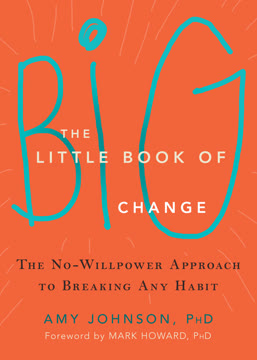
1. What is "The Little Book of Big Change" by Amy Johnson about?
- No-willpower approach to habits: The book presents a unique, no-willpower method for breaking any habit, focusing on understanding rather than force or discipline.
- Integration of science and spirituality: Johnson combines modern neuroscience with spiritual principles, especially the Three Principles (Mind, Thought, Consciousness), to explain how habits form and how they can be changed.
- Habits as thought-based experiences: The book argues that all habits—whether behavioral or mental—are impersonal, thought-based experiences that can be addressed without analyzing the past or using traditional coping mechanisms.
- Emphasis on insight: Rather than offering step-by-step techniques, the book aims to foster deep insights that naturally lead to lasting change.
2. Why should I read "The Little Book of Big Change" by Amy Johnson?
- Break free from habits: If you struggle with unwanted habits or addictions, the book offers a hopeful, practical path to freedom without relying on willpower.
- New paradigm for change: Johnson introduces a fresh perspective that challenges conventional wisdom about habit change, making it accessible and less daunting.
- Applicable to all habits: The approach works for both behavioral habits (like overeating, smoking, or gambling) and mental habits (like anxiety, worry, or phobias).
- Empowering and compassionate: The book helps readers see their innate health and resilience, reducing guilt and self-blame associated with habits.
3. What are the key takeaways from "The Little Book of Big Change" by Amy Johnson?
- Habits are not personal flaws: Habits are the result of habitual thought patterns, not character defects or lack of willpower.
- Insight over information: Lasting change comes from deep, personal insight rather than accumulating more information or using forceful techniques.
- Thoughts and urges are temporary: All thoughts, including urges, are fleeting and lose power when not acted upon or resisted.
- You are innately healthy: Beneath habits and thoughts, everyone has an innate well-being and capacity for change.
4. How does Amy Johnson’s no-willpower approach to breaking habits work?
- Understanding, not fighting: The method focuses on understanding the true nature of habits and urges, rather than battling them with willpower.
- Seeing through urges: By recognizing that urges are just temporary thoughts, you can allow them to pass without acting on them.
- Insight leads to change: When you see your habit in a new light, change happens naturally and often effortlessly.
- No need to analyze the past: The approach does not require digging into your history, identifying triggers, or replacing habits with new behaviors.
5. What are the Three Principles (Mind, Thought, Consciousness) in "The Little Book of Big Change" and how do they relate to habits?
- Universal Mind: The intelligence and energy behind all life, providing innate wisdom and well-being.
- Thought: The creative force that shapes all experience; habits are simply patterns of thought that have been repeated.
- Consciousness: The awareness that brings thoughts to life, making them feel real and compelling.
- Habits as thought-created: Understanding these principles helps you see that habits are not fixed parts of your identity, but temporary experiences created by thought.
6. How does "The Little Book of Big Change" by Amy Johnson explain the role of neuroscience in habit change?
- Neuroplasticity and habits: The book explains that the brain is plastic and can rewire itself based on how you respond to thoughts and urges.
- Urges as brain patterns: Acting on urges strengthens neural pathways, but dismissing them weakens those pathways over time.
- Self-directed change: By changing your relationship to urges (viewing them as harmless thoughts), you can physically alter your brain’s habit circuits.
- Science supports insight: Research on mindfulness and OCD shows that insight and detached observation can be as effective as medication in changing habits.
7. What is the difference between behavioral and mental habits according to Amy Johnson?
- Behavioral habits: Outward actions like overeating, smoking, gambling, or compulsive shopping, driven by urges to feel better.
- Mental habits: Persistent thought patterns such as anxiety, worry, phobias, or self-criticism, which create internal discomfort.
- Common root: Both types of habits are maintained by the way you relate to and act on your thoughts.
- Unified approach: The book treats both behavioral and mental habits as thought-based, making the same principles applicable to both.
8. How does "The Little Book of Big Change" by Amy Johnson redefine urges and cravings?
- Urges as alarm clocks: Urges are likened to an inner alarm clock—automatic, impersonal signals from the lower brain, not emergencies.
- Not personal or dangerous: Urges are not signs of weakness or danger, but simply habitual thoughts that can be ignored.
- Powerless without action: Urges only have power if you act on them; left alone, they fade on their own.
- Helpful signals: Urges can be seen as reminders to step back and let your mind settle, rather than calls to action.
9. Why does Amy Johnson argue that willpower is the wrong tool for breaking habits?
- Willpower is limited: Relying on willpower is exhausting and often fails when you’re tired, stressed, or emotionally low.
- Fighting thought with thought: Using willpower means adding more thinking to an already thought-created problem, which can backfire.
- Resistance strengthens urges: Trying to suppress or argue with urges often makes them stronger and more persistent.
- Insight is easier: Seeing the truth about urges and habits makes them less compelling, reducing the need for willpower altogether.
10. What practical steps or advice does "The Little Book of Big Change" by Amy Johnson offer for ending habits?
- Pause before acting: Practice pausing when an urge arises, creating space to make a different choice.
- Recognize habitual thoughts: Identify the repetitive “soundtrack” of your inner lizard (lower brain) and learn to dismiss it.
- Trust your wisdom: Listen for your own inner wisdom, which is more accessible when your mind is calm.
- Let thoughts pass: Allow urges and thoughts to come and go without engaging or resisting them; they will fade naturally.
11. How does "The Little Book of Big Change" by Amy Johnson address setbacks and relapses?
- Setbacks are normal: Falling back into old habits is common and does not mean failure or that change is impossible.
- Meaningless in the big picture: Setbacks are simply signs that your mind is busy, not indicators of your character or future.
- Don’t add meaning: The real problem is the story you tell about the setback, not the behavior itself.
- Compassion and patience: Treat yourself with understanding and return to the principles; progress resumes naturally.
12. What are the most powerful quotes from "The Little Book of Big Change" by Amy Johnson and what do they mean?
- “If the only thing people learned was not to be afraid of their experience, that alone would change the world.” (Sydney Banks) – Encourages embracing all experiences, including urges, without fear, as they are temporary and harmless.
- “Your habit is a useful indicator that you are in a low state of mind, using your amazing power of thought to your detriment rather than to your benefit.” – Habits signal when you’re caught up in unhelpful thinking, not that you’re broken.
- “You are the awareness that notices the Addictive Voice. You are the witness to it, the consciousness that experiences urges and inner conflict but is not urges or inner conflict.” – Reminds readers that their true self is separate from thoughts and habits.
- “Behavior change is the consequence, not the solution. Behavior changes as a result of seeing things differently.” – Emphasizes that insight, not effort, is the key to lasting change.
- “There is nothing you must do.” – Reassures that change comes from understanding, not from following rigid steps or techniques.