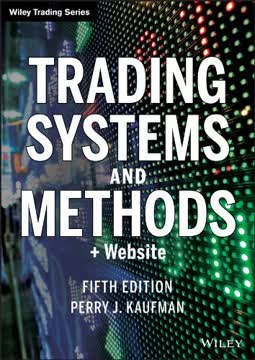
核心要点
1. 技术分析:超越基本面
在许多方面,基本面分析与技术分析并不冲突。
同一枚硬币的两面。 技术分析侧重于价格、成交量和未平仓合约,而基本面分析则关注供需关系和经济因素。两者都旨在理解市场行为,但采用不同的工具和视角。技术分析自成体系,仅依赖市场数据;基本面分析则需借助外部信息。
时机至关重要。 基本面分析可识别长期趋势,技术分析则为进出场时机提供工具。技术分析在期货市场尤为重要,高杠杆要求关注短期价格波动。
市场预期。 技术分析假设市场已反映所有已知信息,包括对未来事件的预期,使其成为识别重复模式和预测价格走势的有力工具。
2. 数据为王:理解均值与分布
最谨慎的投资者,是只追求“通常”正确的总体行动,避免“通常”错误的行为和策略。
均值不足以说明一切。 均值反映中心趋势,但若不了解数据分布,易产生误导。算术平均数、几何平均数和调和平均数各具特性,适用于不同类型数据。
分布至关重要。 频率分布、中位数和众数帮助理解价格走势的形态和极端值。标准差衡量数据围绕均值的离散程度,偏度和峰度则量化分布的非对称性和尖峭度。
数据偏差。 需警惕数据中的偏差,可能源于抽样、加权或多种分析方法的使用。充足数据有助降低误差,确保交易系统的可靠性。
3. 回归分析:揭示变量关系
回归分析是衡量两组或多组数据间关系的方法。
线性与非线性关系。 回归分析运用统计方法确定变量间关系。线性回归寻找最佳拟合直线,非线性方法如曲线拟合、对数和指数近似则捕捉更复杂关系。
最小二乘法。 最小二乘法通过最小化误差平方和找到最佳拟合,计算斜率、截距和相关系数。
相关与因果。 相关系数衡量两个变量线性关系强度,范围从+1到-1。但相关不等于因果,需避免虚假关联。
4. 趋势计算:从噪音中提取信号
所有趋势识别方法的目的,是穿透市场中看似无意义的杂乱波动,找到价格的当前方向。
预测与跟随。 预测试图预判未来价格,跟随则识别当前趋势。自回归模型利用历史价格预测未来,但受限于历史数据。
最小二乘法与移动平均。 最小二乘法用于寻找时间与价格的关系,移动平均通过平均过去数据平滑价格波动。时间区间的选择对两者均至关重要。
移动平均的变体。 移动平均有多种变体,包括加权、几何、调和及改良平均,各具特性,适合不同数据类型。
5. 趋势系统:理论付诸实践
避免价格波动的最简单方法是使用价格带。
基本买卖信号。 趋势系统在价格突破趋势线时发出买入信号,跌破时发出卖出信号。信号可通过收盘价、价格带或延迟调整。
价格带与通道。 价格带和通道定义趋势线周围的支撑与阻力区域,可基于百分比、绝对点数或波动率设定。
趋势系统示例。 MPTDI系统采用阶梯加权移动平均和宽度变化的价格带;波动率系统基于价格相对平均波动率的变化发出信号;10日移动平均规则使用基于高低价差的简单移动平均和价格带。
6. 动量与振荡器:衡量变化速度
动量是两个价格在固定时间间隔内的差值。
动量即速度。 动量衡量特定时间内价格变化速率,关联价格趋势斜率,可用于识别超买和超卖状态。
振荡器为归一化动量。 振荡器是限定在特定范围内的归一化动量指标,如+1至-1或0至100。典型例子包括相对强弱指数(RSI)和随机振荡器。
背离与趋同。 背离指价格与动量方向相反,预示趋势可能反转;趋同则指两者同向,确认趋势延续。
7. 季节性:市场的节奏
价格是供需平衡的结果。
稳定的周期模式。 季节性指每年重复出现的模式,常与种植和收获周期相关。可通过频率分布、均值、中位数和众数进行测量。
供需弹性。 供需弹性是理解价格变动的关键。均衡点是供需相遇之处,受多种因素影响而变化。
蛛网图。 蛛网图用于可视化供需情绪的变化,表现为横盘或波动加剧。解释价格变动的模型必须基于供需基本因素构建。
8. 周期分析:揭示隐藏模式
变化令人焦虑,但变化的影响和发生概率可被测量,虽无法预测。
周期基础。 周期是价格运动中非年度的重复模式,可能由商业决策、政府计划或行为因素引起。
周期的发现。 周期可通过三角函数曲线拟合,用正弦和余弦波近似价格走势。傅里叶分析(频谱分析)则分离并测量数据序列中的周期。
最大熵法。 最大熵频谱分析(MESA)是一种滤除时间序列噪声、揭示潜在周期的技术,尤其适用于短期周期。
9. 图表分析:市场行为的可视化
市场反映了交易者对纺织业状况的了解,银行家对货币市场的认知,最有见识的企业主对自身及其他行业的洞察,甚至比任何单一铁路公司总裁更全面地掌握运输状况,农民和农业部也无法比拟其对作物的了解。
条形图解读。 条形图是市场最简单的表现形式,显示每个周期的最高价、最低价和收盘价。趋势线、通道、顶部和底部等图形用于识别潜在交易机会。
蜡烛图。 蜡烛图是日本的图表方法,用阴影实体表示开盘价与收盘价的关系,常用于识别反转形态及其他交易信号。
成交量、未平仓合约与广度。 成交量、未平仓合约和市场广度用于衡量市场参与度并确认价格趋势。趋势期间成交量应扩大,未平仓合约应增加。
10. 成交量、未平仓合约与广度:衡量市场参与度
目前市场支持数十个主要基金和管理计划,它们占据期货市场未平仓合约的相当份额,主要依赖“技术分析”做出决策。
合约成交量与总成交量。 合约成交量指特定交割月份的成交量,总成交量是市场所有合约的成交量总和。总成交量更适合分析整体市场活动。
标准解读。 成交量用于确认价格趋势。价格上涨伴随成交量增加被视为看涨,价格下跌伴随成交量增加则被视为看跌。未平仓合约衡量未结算合约总数。
成交量指标。 成交量指标如能量潮(OBV)、价格与成交量趋势(PVT)及市场便利指数(MFI)结合价格和成交量数据生成交易信号。市场广度衡量上涨与下跌股票数量。
11. 点数图表:价格行为的精准表达
点数图表因其具体的交易规则和类似条形图及行情带的形态而广受欢迎。
价格绘制。 点数图表用X和O表示价格,每格代表特定价格增量。价格走势方向由X列或O列指示。
图形形态。 点数图表采用类似条形图的形态,如趋势线、通道及顶部和底部,但更为精准,且具备明确的交易规则。
箱体大小与反转。 箱体大小和反转值决定图表的敏感度。较小的箱体和反转值会产生更多信号,较大则信号较少。
12. 行为技术:交易中的人性因素
商品现货和期货市场的价格波动很大程度上是预期性的,反映了对经济发展影响的预期。
新闻的衡量。 新闻事件对市场价格影响显著。通过赋予不同新闻类型权重并综合得分,可量化新闻影响。
事件交易。 事件交易关注价格冲击后的市场反应,研究意外新闻后的模式并据此生成交易信号。
逆向观点。 逆向观点是一种交易哲学,旨在从大众行为中获利,采取与市场主流情绪相反的立场。
读者评价
读者普遍认为《交易系统与方法》内容详尽但较为晦涩。许多有经验的交易者欣赏其广度与深度,尤其适合寻求高级策略的专业人士。有些人认为此书更适合作为参考资料,而非从头至尾通读。书中技术性内容丰富,吸引了一部分读者,但对另一些人来说可能显得过于复杂。评论者称赞其对技术分析工具的全面覆盖,尽管部分读者希望能获得更多关于实际应用的指导。总体来看,该书被视为技术驱动型交易者的重要资源,尽管需要投入大量时间才能充分掌握。
其他人还在读
 沉浸式
沉浸式


 沉浸式
沉浸式
 沉浸式
沉浸式

 沉浸式
沉浸式

常见问题
What is "Trading Systems and Methods" by Perry J. Kaufman about?
- Comprehensive trading systems guide: The book offers a thorough exploration of trading systems, methods, and the tools needed to develop or select a robust trading program, with a focus on futures but applicable to other markets.
- Emphasis on systematic, quantitative trading: Kaufman prioritizes quantitative and systematic approaches, including trend-following, countertrend, breakout, and spread systems, rather than discretionary trading or market psychology.
- Bridging theory and practice: It covers both technical and fundamental analysis, research skills, risk management, and practical system development, aiming to close the gap between trading expectations and real-world results.
- Testing and validation focus: The book stresses rigorous system testing, validation, and adaptation to ensure trading strategies are robust and reliable.
Why should I read "Trading Systems and Methods" by Perry J. Kaufman?
- Authoritative and detailed resource: Kaufman draws on decades of experience, providing clear explanations, formulas, and programming examples suitable for both beginners and professionals.
- In-depth technical coverage: The book covers a wide range of technical methods, from basic moving averages to advanced topics like neural networks, genetic algorithms, and adaptive techniques.
- Practical system development: Readers are guided through system design, testing, risk management, and performance monitoring, all essential for real-world trading success.
- Bridges theory and application: Kaufman emphasizes the importance of adapting systems to real market conditions and using computer tools for optimization and robustness.
What are the key takeaways from "Trading Systems and Methods" by Perry J. Kaufman?
- Systematic approach is essential: Successful trading relies on well-tested, systematic methods rather than intuition or market lore.
- Testing and validation are critical: Robust backtesting, out-of-sample validation, and step-forward testing are necessary to avoid overfitting and ensure real-world performance.
- Risk management is non-negotiable: Effective leverage, diversification, stop-losses, and position sizing are vital to protect capital and maximize returns.
- Adaptation to market conditions: Adaptive techniques and regular system review help maintain effectiveness as market dynamics change.
What are the most notable quotes from "Trading Systems and Methods" by Perry J. Kaufman and what do they mean?
- "The market reflects all the jobber knows about the condition of the textile trade... it is better informed on crops than the farmer or even the Department of Agriculture." — Highlights that market prices incorporate all available information, often more than any individual participant.
- "Your answer is only as good as its weakest point." — Stresses the importance of rigor and thoroughness in system development and testing.
- "Speculation is a difficult business, not one to be taken casually." — Warns that trading requires discipline, skill, and realistic expectations, not casual or reckless behavior.
- "Conserve Your capital and wait for the right time." — Emphasizes patience and capital preservation as keys to long-term trading success.
How does Perry J. Kaufman define and compare technical and fundamental analysis in "Trading Systems and Methods"?
- Fundamental analysis: Focuses on supply-demand, economic reports, political events, and long-term price forecasts to understand market direction.
- Technical analysis: Studies price, volume, and open interest patterns, often using computerized methods, to forecast short- and long-term price movements.
- Integration benefits: Kaufman notes that many professionals combine both approaches, using technical analysis for timely signals and fundamental analysis for broader context.
- Practical application: The book provides tools and methods for both types of analysis, allowing traders to choose or blend approaches as needed.
What are the main types of moving averages and their uses according to "Trading Systems and Methods" by Perry J. Kaufman?
- Simple Moving Average (SMA): Averages prices over a fixed period, smoothing data but introducing lag; useful for identifying general trends.
- Exponential Moving Average (EMA): Weights recent prices more heavily, reducing lag and adapting faster to price changes; better for volatile markets.
- Weighted and double smoothing: Variations that adjust weighting schemes or smooth the moving average itself to improve trend detection and reduce noise.
- Adaptive moving averages: Methods like KAMA adjust their sensitivity based on market volatility, providing more responsive trend signals.
How does Perry J. Kaufman explain momentum and oscillator indicators in "Trading Systems and Methods"?
- Momentum as speed: Measures the rate of price change over a fixed interval, helping identify the strength and direction of trends.
- Oscillators normalized: Indicators like RSI and stochastic oscillate between fixed bounds (e.g., 0-100), signaling overbought or oversold conditions.
- Divergence and smoothing: Momentum divergence can signal trend reversals, while smoothing techniques reduce noise and improve signal quality.
- Adaptive oscillators: Adjust calculation periods or centering values to avoid prolonged false signals in changing market conditions.
What is cycle analysis and how is it applied in "Trading Systems and Methods" by Perry J. Kaufman?
- Trigonometric and spectral analysis: Uses sine and cosine functions, Fourier analysis, and Maximum Entropy Spectral Analysis (MESA) to identify and model market cycles.
- Seasonality and cycles: Recognizes recurring patterns linked to natural or economic cycles, such as planting/harvesting or planetary cycles.
- Practical application: Kaufman advises removing trend and seasonality to isolate cycles, which can then be used for timing entries and exits.
- Cycle channel index and phase angle: Tools like the cycle channel index and phase angle help track cycle progression and identify turning points.
How does Perry J. Kaufman describe and use charting techniques like point-and-figure and swing charts in "Trading Systems and Methods"?
- Point-and-figure charting: Plots price movements without regard to time, using Xs and Os to filter noise and highlight trends and reversals.
- Swing charts: Define trends by price reversals of a minimum size, filtering out minor fluctuations and clarifying trend changes.
- Trading signals and formations: The book details classic buy/sell signals, trendlines, and price objectives derived from chart patterns.
- Integration and risk management: Kaufman explains how to use these charts for stop-loss placement, position scaling, and combining with other methods for robust trading.
What are adaptive techniques in trading systems, as explained by Perry J. Kaufman in "Trading Systems and Methods"?
- Dynamic parameter adjustment: Adaptive methods modify parameters like moving average periods or stop-loss levels based on current volatility or market noise.
- Examples of adaptive systems: Includes Kaufman's Adaptive Moving Average (KAMA), Chande's VIDYA, and the Parabolic Time/Price System.
- Improved robustness: Adaptive techniques help reduce whipsaws, improve timing, and maintain effectiveness across different market regimes.
- Careful design required: While powerful, adaptive methods require thorough testing to avoid overfitting and ensure reliability.
How does Perry J. Kaufman recommend developing, testing, and validating trading systems in "Trading Systems and Methods"?
- Stepwise development: Start with a clear hypothesis, test simple components independently, then combine and refine for a complete system.
- In-sample and out-of-sample testing: Optimize parameters on historical data, then validate on unseen data to check for consistency and robustness.
- Step-forward (walk-forward) testing: Sequentially optimize and test on rolling periods to simulate real-time trading and avoid overfitting.
- Avoid feedback loops: Never reuse out-of-sample data for optimization, as this undermines the validity of future performance estimates.
What risk management and money management strategies does Perry J. Kaufman recommend in "Trading Systems and Methods"?
- Leverage management: Use margin and leverage carefully, adjusting position sizes according to risk tolerance and market volatility.
- Diversification: Spread risk across different markets and systems with low correlation to reduce overall portfolio volatility.
- Stop-loss and equity monitoring: Implement individual trade stops and monitor overall equity to prevent catastrophic losses and survive losing streaks.
- Conservation of capital: Risk only a small portion of total capital on any single trade to ensure long-term survival.
How does Perry J. Kaufman address advanced topics like neural networks, genetic algorithms, and pattern recognition in "Trading Systems and Methods"?
- Neural networks: Mimic brain-like structures to learn patterns from historical data, requiring careful input selection, training, and validation to avoid overfitting.
- Genetic algorithms: Use evolutionary principles to optimize trading strategies by mutating and combining parameter sets for improved performance.
- Pattern recognition: Forms the basis of many trading systems, from traditional charting to computerized analysis of price sequences and intraday patterns.
- Cautions and best practices: Kaufman warns that these advanced methods can find spurious relationships if not properly controlled, emphasizing the need for multiple runs and out-of-sample testing.








































