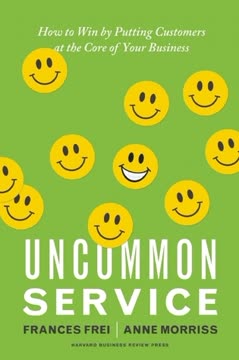
核心要点
1. 卓越服务需要战略性取舍
你不可能样样精通,必须在“做优”中容忍“做差”。
战略性有意弱化。 要提供卓越服务,企业必须有意识地选择在哪些方面出色,在哪些方面有所妥协。这种看似矛盾的策略使组织能够将资源集中于目标客户最看重的维度。例如,Commerce Bank选择提供业内最差的利率,从而将资金投入到延长营业时间和优质客户服务上。类似地,西南航空舍弃了指定座位和餐食等设施,以保持低价和快速周转。
以客户为导向的优先级。 成功的服务组织会识别客户的关键需求,并据此调整服务内容。这需要:
- 制作“属性图”以直观展示客户偏好
- 确定不同需求的细分市场
- 做出艰难选择,在关键领域做到卓越,同时接受其他方面的平庸
通过拥抱战略性取舍,企业能够打造难以被竞争对手复制的可持续竞争优势。
2. 资助卓越服务的四大机制
卓越服务必须有人买单。
四种资助策略。 企业可以通过以下方式为优质服务融资:
- 以客户易接受的方式提高收费
- 降低成本同时提升服务
- 通过提升服务来实现成本节约
- 让客户参与部分工作
创新实践。 Progressive Insurance通过派遣快速响应车到事故现场,既提升客户体验,又打击欺诈和减少法律索赔,实现了服务质量提升与运营成本降低的双赢。
自助服务创新。 设计合理的自助服务既能降低成本,又能提升客户满意度。成功案例包括:
- 航空自助值机亭,让客户自主选座
- 24小时在线银行平台,随时查询账户信息
关键在于让自助服务成为优于全程服务的选择,而非简单地将工作转嫁给客户。
3. 员工管理体系应面向普通员工设计
卓越服务组织的目标是让普通员工也能交出卓越表现。
务实的人力规划。 许多企业设计服务模式时假设员工具有超凡能力,实际上应构建支持普通员工持续交付卓越的体系,包括:
- 精心的选拔流程,识别合适特质的候选人
- 有效的培训项目,强化文化价值和操作技能
- 简化复杂任务的岗位设计,合理利用技术
- 绩效管理体系,将激励与期望结果挂钩
LSQ Funding Group案例。 通过开发直观的IT系统,LSQ让新员工第一天就能高效工作,减少培训需求,从而在招聘时更注重态度。这种做法既提升了员工赋能和参与度,也保持了高服务标准。
4. 客户是服务体验的重要共创者
客户不仅是服务的接受者,更是服务的共同创造者。
管理客户差异性。 服务组织必须认识到客户在塑造服务结果中扮演积极角色,这种差异体现在:
- 到达时间
- 服务需求
- 客户能力
- 付出努力
- 个人偏好
客户管理策略。 针对差异性,企业可以:
- 通过菜单选项或预约系统降低复杂度
- 通过系统冗余容纳多样性
- 利用自助服务赋予客户更多控制权
- 培训客户高效的服务行为(如星巴克的点单语言)
Shouldice医院案例。 这家专门治疗疝气的诊所通过:
- 精准筛选符合服务模式的患者
- 提供清晰的术前指导和预期
- 鼓励患者早期活动参与康复
- 营造患者间的支持社区
有效管理客户,提升服务质量并降低成本。
5. 文化是服务设计的倍增器
卓越服务 = 设计 × 文化
文化的关键作用。 强大的服务文化能放大设计良好的系统和流程的效果。卓越服务组织通常表现为:
- 明确成功所需的文化
- 有效传递核心价值观和期望
- 在全组织范围内持续强化文化规范
Zappos案例。 这家电商的成功源于对文化的执着:
- 明确十条核心价值观指导决策
- 严格的招聘流程确保文化契合
- 不分岗位的四周培训
- 培训后提供2000美元离职补偿以确保承诺
- 绩效评估高度重视文化贡献
通过文化与服务设计的深度契合,企业打造了难以复制的可持续竞争优势。
6. 扩展卓越服务:标准化与定制化的平衡
打破两者的矛盾不仅可能,而且往往是实现卓越与增长的唯一选择。
平衡之道。 随着服务组织规模扩大,保持质量与提升规模的矛盾日益突出。关键在于找到标准化(提升效率)与定制化(满足客户)的最佳平衡。
扩展策略:
- 标准化后台流程,同时允许客户接触点定制
- 在标准框架内实施销售点定制选项
- 持续优化简化产品,降低运营复杂度
四季酒店案例。 这家奢华酒店集团通过:
- 标准化核心流程和质量标准
- 在提升客户体验的环节允许本地定制
- 坚持服务卓越的强烈文化
实现了全球范围内持续卓越的服务交付。
7. 多元聚焦型企业:在一体化中构建多重服务模式
企业内的各服务模式相互促进,共同提升整体表现。
组合策略。 一些企业通过在单一组织内发展多个独特服务模式,有效对抗专注型竞争者,实现:
- 针对不同客户群体提供定制化服务
- 跨业务单元共享资源与知识
- 实现规模经济和经验积累
共享服务模式。 以CDM集团为例,通过:
- 集中人力资源、财务和IT等后台职能
- 保持独立品牌和客户运营
- 促进跨部门协作与知识共享
创造价值。
成功关键:
- 明确共享与单元专属职能边界
- 确保高质量的共享服务为各单元增值
- 培养协作与持续改进的文化
通过构建多元互补的服务模式,企业既能实现增长,又能保持专注与灵活,持续交付卓越服务。
读者评价
《非凡服务》获得了大多数积极评价,平均评分为4.04分(满分5分)。读者普遍认可书中关于优先关注客户服务重点领域的实用建议,以及对战略取舍的强调。许多人觉得书中的真实案例颇具参考价值,尽管部分读者认为这些案例略显陈旧。书中聚焦客户最关心事项的核心理念,引起了广泛共鸣。虽有少数读者批评内容重复或偏学术,但总体而言,本书被视为对企业主和管理者颇具洞见且极具价值的参考读物。
其他人还在读



常见问题
1. What is "Uncommon Service" by Frances Frei and Anne Morriss about?
- Focus on Service Excellence: "Uncommon Service" explores how organizations can achieve service excellence by making deliberate design choices that put customers at the core of their business.
- Four Service Truths Framework: The book introduces a framework of four "service truths" that underpin successful, high-performing service models.
- Design Over Heroics: Frei and Morriss argue that great service is not about extraordinary individual effort, but about designing systems that enable average employees to deliver excellence routinely.
- Real-World Case Studies: The book uses case studies from companies like Commerce Bank, Southwest Airlines, Zappos, and others to illustrate how these principles work in practice.
2. Why should I read "Uncommon Service" by Frances Frei and Anne Morriss?
- Practical, Actionable Advice: The book provides concrete steps and frameworks for leaders seeking to improve their organization's service quality.
- Challenges Conventional Wisdom: It debunks the myth that you can be great at everything, showing that strategic trade-offs are essential for excellence.
- Broad Applicability: The lessons apply to businesses of all sizes and industries, including nonprofits and public sector organizations.
- Inspiring and Insightful: Through stories and examples, the book inspires leaders to rethink their approach to service and organizational culture.
3. What are the key takeaways from "Uncommon Service" by Frances Frei and Anne Morriss?
- Excellence Requires Trade-Offs: You must underperform in some areas to excel in others that matter most to your customers.
- Service Must Be Funded: Exceptional service needs a sustainable funding mechanism—either customers pay more, costs are reduced, or customers do some of the work.
- System Design Over Individual Effort: Service excellence is achieved by designing systems that enable average employees to succeed, not by relying on heroes.
- Customers Must Be Managed: Customers are active participants in service delivery and need to be managed, trained, and sometimes selected for operational fit.
- Culture Multiplies Design: Organizational culture is as important as service design; both must be aligned for sustainable excellence.
4. What are the "Four Service Truths" in "Uncommon Service" by Frances Frei and Anne Morriss?
- You Can’t Be Good at Everything: Excellence requires being bad at some things to be great at others, based on what your customers value most.
- Someone Has to Pay for It: Service excellence must be funded, whether through higher prices, cost reductions, or customer participation.
- It’s Not Your Employees’ Fault: The system, not individual effort, is the primary driver of consistent service excellence.
- You Must Manage Your Customers: Customers play an operational role and need to be managed, trained, and sometimes selected to ensure service quality.
5. How does "Uncommon Service" by Frances Frei and Anne Morriss define and use the concept of trade-offs in service design?
- Strategic Sacrifice: The book emphasizes that organizations must deliberately choose where to excel and where to underperform, based on customer priorities.
- Attribute Mapping: Tools like attribute maps help identify which service dimensions matter most to target customers and where to focus resources.
- Emotional Challenge: Embracing trade-offs can feel uncomfortable, but resisting them leads to mediocrity.
- Real-World Examples: Companies like Commerce Bank and Southwest Airlines are highlighted for their willingness to be "bad" at some things to be "great" at others.
6. What are the main ways to fund service excellence according to "Uncommon Service" by Frances Frei and Anne Morriss?
- Charge Customers More: Implement palatable pricing strategies where customers are willing to pay extra for better service.
- Reduce Costs While Improving Service: Find operational efficiencies that both lower costs and enhance the customer experience.
- Improve Service to Lower Costs: Invest in service improvements that reduce demand for costly interventions (e.g., better product design reduces support calls).
- Get Customers to Do the Work: Design self-service options that customers prefer, which also reduce organizational costs.
7. How does "Uncommon Service" by Frances Frei and Anne Morriss recommend organizations manage their employees for service excellence?
- Design for Average Employees: Build systems and processes that enable ordinary employees to deliver extraordinary service as a routine.
- Four Elements of Employee Management: Focus on selection, training, job design, and performance management, ensuring all are aligned with the service model.
- Simplify Jobs or Invest in Training: Either reduce job complexity or invest heavily in training and selection, depending on your business model.
- Integrate Technology Thoughtfully: IT systems should be designed to support, not hinder, employee performance and should be developed in tandem with job roles.
8. What does "Uncommon Service" by Frances Frei and Anne Morriss say about managing customers as part of the service process?
- Customers as Co-Producers: Customers are not just consumers but also play an active role in creating the service experience.
- Manage Variability: Recognize and address the different ways customers can impact service (arrival, request, capability, effort, preference).
- Customer Management System: Apply similar principles as employee management—select, train, design roles for, and manage the performance of customers.
- Use Normative and Structural Incentives: Employ community values, peer pressure, and system design (e.g., Netflix’s model) to encourage desired customer behaviors.
9. How does organizational culture factor into service excellence in "Uncommon Service" by Frances Frei and Anne Morriss?
- Culture Multiplies Design: Service excellence is the product of both good design and a strong, aligned culture (Service Excellence = Design × Culture).
- Three Cultural Levers: Clarity (knowing the culture you need), Signaling (communicating and reinforcing values), and Consistency (aligning actions and policies).
- Imprinting and Storytelling: Use onboarding, rituals, and stories to embed cultural values deeply in the organization.
- Decalcification: Regularly refresh and reinforce culture to prevent cynicism and complacency, especially in customer-facing roles.
10. What are some real-world examples and case studies used in "Uncommon Service" by Frances Frei and Anne Morriss?
- Commerce Bank: Excelled at convenience and attitude by sacrificing deposit rates and product complexity.
- Southwest Airlines: Focused on low prices and friendly service, while underperforming on amenities and network breadth.
- Zappos: Built a culture of happiness and service, with systems that support both employees and customers.
- Shouldice Hospital: Managed customer selection and training to achieve world-class surgical outcomes.
- Magazine Luiza: Designed customer management systems for low-income, often illiterate customers, enabling financial inclusion and loyalty.
11. How does "Uncommon Service" by Frances Frei and Anne Morriss address scaling and growth for service organizations?
- Standardization vs. Customization: To scale, organizations often need to standardize operations, but can still deliver high-quality, personalized experiences at the point of service.
- Multifocused Firms: Growth can also come from building multiple, distinct service models under one corporate umbrella, each optimized for different customer segments.
- Shared Services: Leverage economies of scale and experience by sharing back-office functions and knowledge across business units or brands.
- Leadership and Political Will: Successful scaling requires strong leadership to draw boundaries and maintain high standards in shared services.
12. What are the best quotes from "Uncommon Service" by Frances Frei and Anne Morriss and what do they mean?
- "You must be bad in the service of good." — Excellence requires deliberate underperformance in some areas to excel in others that matter most to customers.
- "Service excellence is a product of design and culture." — Both system design and organizational culture are equally important for sustainable service excellence.
- "The goal of an excellent service organization is to deliver outstanding results with average employees." — Systems, not individual heroics, should drive consistent excellence.
- "Leadership, at its core, is about making other people better as a result of your presence—and making sure that the impact lasts in your absence." — True leadership is about creating lasting conditions for others to succeed.
- "The primary obstacle to service excellence is not the ambition to be great, but the stomach to be bad." — Emotional resistance to trade-offs is the biggest barrier to achieving uncommon service.