
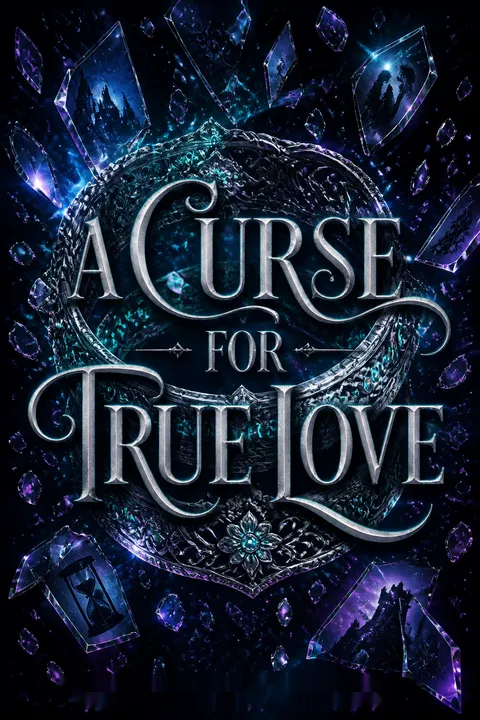

Plot Summary
A Husband She Cannot Remember
Evangeline Fox1 surfaces from darkness on the floor of an ancient library, clutching a heart that aches as though it should be broken. A tall, magnetic man holds her, insisting he is her husband, Prince Apollo Acadian,3 returned from death itself. Before stunned librarians and guards he bares scarred flesh and a tattoo of her name, declaring he crawled back from hell and that Lord Jacks2 poisoned him and stole her memories.
Installed in opulent Wolf Hall and dressed like a princess, Evangeline1 feels like an actress in a borrowed costume. One certainty gnaws at her: there is something vital she must tell someone, though she cannot recall what or whom. A sly apprentice slips her a red calling card before vanishing.
Garber opens at the genre's supposed endpoint, happily ever after, and immediately poisons it. Amnesia becomes a feminist horror device: a woman handed an identity by a man who insists he knows her better than she knows herself. The fairytale trappings (castle, prince, tattoo) read as evidence and as warning. Evangeline's body remembers what her mind cannot, the phantom wound over her heart, dramatizing the novel's central wager that emotional truth outlasts manufactured narrative. The crowd's worship of Apollo establishes spectacle as power, while the unnamed card-giver plants the seed of resistance, suggesting that even an engineered reality leaks.
The Prince Who Lied
Behind the miracle lurks a forgery. Apollo3 never returned from death; he was cursed and freed, and woke to find a kingdom that had already forgotten him in a single fortnight. Desperate to become more than a footnote, he reveals that he, not Jacks,2 ripped away Evangeline's1 memories, hoping to rewrite their love and crown her queen.
He pressures a journalist13 to brand Jacks2 a villain daily and manipulates his Council of Great Houses, secretly elevating a mysterious family called House Vale, who are not what they seem. When the Council demands an heir to secure his throne, Apollo3 bristles but schemes on, certain that possessing Evangeline1 fully will erase his own emptiness and bury what he has done.
The pivot to Apollo's perspective converts a fairytale prince into a study of male insecurity weaponized as control. His obsession with legacy, his father's creed that a prince must never be merely nice, curdles into entitlement: love redefined as authorship over another person's mind. Garber frames memory theft as the ultimate violation, a rape of selfhood dressed as protection. The dramatic irony is exquisite and unbearable; the reader now watches Evangeline trust her abuser. House Vale's quiet insertion seeds the larger mythology, demonstrating how political maneuvering and intimate cruelty share the same engine: fear of being insignificant.
Blood, a Well, a Rescuer
Confined to Wolf Hall and forbidden to seek the journalist,13 Evangeline1 is introduced to Garrick of the Greenwood,10 a mercenary whose raven, Argos, pecks blood from her shoulder to track the marked debt Lord Jacks2 supposedly left on her wrist. Soon a forged note, seemingly from her tutor,9 lures her into a fog-drowned garden, where unseen hands shove her into the Well of Wishes.
Sinking in her heavy cloak, unable to swim, she is hauled up by a golden-haired guard2 whose touch detonates a fragment of memory: being carried through water by someone who would pull her from fire and falling worlds. He sets her down and disappears, leaving her trembling, certain her ordinary fairytale conceals something far stranger.
The well sequence stages the novel's recurring baptism motif, near-drowning as the threshold between false safety and dangerous truth. Garber literalizes how trauma resurfaces: physical sensation, not logic, unlocks Evangeline's buried self. The blood-taking introduces bodily autonomy as a battleground, her consent repeatedly overridden by men claiming to protect her. The luminous rescuer arrives as an inversion of the angelic, a savior who refuses the role. Crucially, the attack feels engineered, training the reader's suspicion toward the very household that vows to shield her, and reframing protection itself as a form of imprisonment.
The Reckless Tutor Called Archer
The rescuer2 returns by night, tossing clothes at her, naming himself Archer, and dragging her into brutal self-defense lessons on a rain-slicked bridge where he pins, taunts, and nearly drops her to force her to fight. He gives her a jeweled dagger whose blue and purple gems spark another vivid memory, proving he lied about being a stranger.
Evangeline1 grows magnetized to him against all reason. Meanwhile Apollo's3 private accounting damns him further: he orchestrated the well attack himself to make Evangeline1 believe she needed his protection, then orders the two guards who carried it out, Victor and Hansel, executed to bury the secret, sacrificing loyal men to preserve his control over the wife he claims to cherish.
Archer embodies the seductive danger that fairytales sanitize: intimacy through controlled violence, eroticized peril. Their bridge wrestling reads as courtship choreographed as combat, each refusing to admit recognition. Garber juxtaposes this honest hazard against Apollo's manufactured one, sharpening her thesis that the truly dangerous man is the one who cages you gently. Apollo's murder of his own pawns exposes the moral accounting of tyranny: every lie demands fresh blood. The dagger functions as a relic of buried history, an object that remembers when its owner cannot, advancing Evangeline's reconstruction of self through tactile breadcrumbs rather than told stories.
A Banquet and a Blade
At a glittering banquet in the Court of Columns, Evangeline1 meets the violet-haired Aurora Vale,4 sweet and disarming, alongside her imposing parents, Lord7 and Lady Vale,8 whose old-world power visibly unnerves Apollo.3 Lord Belleflower11 lets slip that her former guards were put down like dogs, shattering her belief they were merely questioned.
That night a masked assassin invades her bedroom, instructed to make her death slow and bloody. Archer2 appears, kills the man, and a kiss of returned memory reveals the truth she misattributed: it was Archer,2 not Apollo,3 who once dragged her from a drowning ocean and vowed never to let her die. Shaken and electrified, she chases him into the corridors, no longer able to deny what her heart insists.
The banquet performs courtly menace, smiles masking knives, while introducing the Vales as a gravitational anomaly even a prince fears. Belleflower's casual cruelty about the dead guards punctures Apollo's romantic facade, accelerating Evangeline's disenchantment. The assassin's mandate to prolong pain signals a personal hatred exceeding politics, deepening the mystery of her forgotten enemies. The corrected ocean memory is the section's emotional fulcrum: Evangeline has been attributing Archer's devotion to Apollo, a misrecognition that mirrors the entire engineered marriage. Garber suggests love cannot be reassigned by decree; the body files its own true record beneath the imposed one.
The Killer Wears Archer's Face
Summoned to the slaughtered household of House Fortuna, Apollo3 finds carnage no human could cause, the work of a vampire, yet sees opportunity. He coaxes the sole survivor, a gifted orphaned boy, into sketching a face, then murders the child and stages it as suicide, planting the drawing on fresh wanted posters that brand Lord Jacks2 the monster.
The next morning Evangeline1 opens the scandal sheet and her blood freezes: the printed portrait of the dreaded Lord Jacks2 is unmistakably Archer,2 apple in hand, devil's grin and all. Her gentle rescuer,2 the man whose touch unlocks her past, is the villain Apollo3 has vowed to destroy, and the realization curdles her longing into shame and dread.
Apollo's casual filicide marks his irredeemable turn, propaganda built on a corpse, truth manufactured with a child's talent. Garber indicts the machinery of narrative itself: posters, scandal sheets, the story curse, all systems that overwrite reality with serviceable fiction, the same crime Apollo committed on Evangeline's mind. The reveal that Archer is Jacks weaponizes the reader's accumulated tenderness, forcing Evangeline to reconcile desire with monstrosity. Her shame is the cost of a world that teaches women to distrust their own attraction. The vampire's real authorship, hidden beneath the frame, foreshadows that the kingdom's deadliest secrets wear borrowed faces.
Betrayed at the Hunt
Resolved to warn Apollo3 that Jacks2 infiltrates Wolf Hall as a guard, Evangeline1 travels to the Hunt, a wild Northern tradition staged at the edge of the Cursed Forest. There Lord Byron Belleflower,11 smiling and helpful, isolates her from her escort, hurls a knife into the throat of her guard Hale, and seizes her, snarling that she must pay for what she did to someone named Petra.
Pinned and dragged through fog, Evangeline1 grabs Jacks's2 jeweled dagger and slashes Belleflower's11 wrist free, then runs blindly. Outrunning his curses, she crosses a threshold where the rain abruptly stops, and stumbles into the impossible, a bright street she knows, the road home to her father's curiosity shop, the best day of her life.
Belleflower's grief-fueled vendetta widens the web of forgotten enmities, reminding Evangeline that her erased year brimmed with consequences she cannot defend against. The murder of an innocent guard underscores collateral cost, the bystanders crushed in others' obsessions. Her self-rescue with Jacks's blade marks a maturation: she no longer waits to be saved. The forest's threshold, where punishing rain yields to false sunlight, literalizes the seduction of nostalgia. Garber positions the Cursed Forest as a psychological trap that exploits longing, the deadliest snare being not pain but the counterfeit return of what we have lost and cannot stop chasing.
Bound by Blooming Rope
The Cursed Forest replays each victim's happiest day, dangling parents and lost joys just out of reach to lure them deeper forever. Chasing her mother's voice through endless balloons and crates, Evangeline1 meets a beautiful stranger who calls himself Chaos5 and warns that a mutual friend is about to make a terrible, possibly fatal decision she alone can stop.
Jacks2 bursts in, runs his sword through the stranger, and ties his wrist to Evangeline's1 with a rope that erupts into flowering vines. He hauls her into the Hollow, the inn that is his own best day, pleading with her to truly remember, before leading her out through rain into the world beyond the forest, refusing to explain his desperate, secret purpose.
The best-day mechanism is Garber's meditation on grief as addiction: the forest does not torture with horror but with hope, the cruelest bait. Evangeline's refusal to trade a year of life for one more embrace with her dead parents marks moral clarity born of love rather than fear. The flowering bonds visualize a connection that magic deepens against both their wills. That Jacks's best day was the one spent with Evangeline, glimpsed in the Hollow, betrays the feeling he denies. Chaos's cryptic warning installs the ticking clock, reframing Jacks's coming cruelty as a sacrifice misunderstood, devotion disguised as rejection.
The Letter in His Coat
At Ye Olde Brick Inn, where the sign promises one bed, Jacks2 signs them in as newlyweds and carries her upstairs, intending to scatter golden sleeping dust, fit her with a mysterious cuff, and vanish forever. Evangeline1 knocks the vial from his hand; the spilled powder leaves them both dazed and tender, and they begin undressing in the firelit haze.
Sliding her hand beneath his doublet, she finds a worn, folded paper, a letter she once wrote to herself, warning never to be fooled by his dimples or the name Little Fox, listing his crimes as the Fate who framed her.2 The act of reading her own insistent words, written for exactly this moment, finally cracks her memory open.
The scene fuses eroticism with revelation, intimacy becoming the conduit for recovered identity. That Jacks carries a letter cataloguing his villainy against his own heart is the tenderest contradiction in the book: he treasures the proof of why she should hate him. Garber stages selfhood as something a woman must transmit across the violence done to her mind, past Evangeline parenting future Evangeline. The cuff he tries to lock on her, an act of stealth presented as goodbye, foreshadows sacrifice rather than malice. Memory returns not through a man's telling but through her own preserved voice, restoring authorship to the violated.
Everything Comes Flooding Back
Memory returns in a torrent: Jacks the Fated Prince of Hearts,2 the prophecy that made her a key to the Valory, the night she opened the arch, and the staggering truth that she once died in his arms and he turned back time to save her, a sacrifice that cost her memories not through his magic but through Apollo's3 theft.
She wakes to find Jacks2 gone, his blood smeared on the door, and three corpses below, killed by a vampire. Garrick10 captures her; Apollo3 arrives. She slaps him but must feign continued amnesia to survive. He spirits her to Merrywood, where she discovers a glass cuff welded to her wrist and watches Apollo,3 secretly chasing immortality, double over in pain when he grips her.
The deluge reframes the entire novel: Jacks's coldness was grief, his rewinding of time an act of doomed love that backfired into Apollo's predation. Garber lands her thesis that love and control both reshape reality, but only one does so to free rather than possess. Evangeline's forced performance of helplessness, slapping then simpering, dramatizes the survival theater of the disempowered, intelligence masked as compliance. The protective cuff, now revealing itself by wounding Apollo, weaponizes consent: an object that enforces her bodily sovereignty. Apollo's hidden immortality quest escalates the stakes from emotional to existential, his hunger for permanence mirroring his hunger to own her.
The Heart He Gave Away
Reunited through her friend LaLa,6 an immortal Fate disguised as a guard, Evangeline1 escapes the camp. In the forest Jacks2 appears but wrong, cold-eyed, calling her pet, leaning in to kiss her, only for the cuff to drop him in agony: he now intends to kill her. Castor5 (the stranger from the forest, the vampire Chaos, and Aurora's twin4) snatches her to safety and reveals the devastating bargain.
Jacks2 traded his second heart, the heart that loves and breaks rather than merely beats, to Aurora Valor4 in exchange for the protection cuff, so no one could ever harm Evangeline1 again. Aurora,4 secretly in love with Jacks2 for centuries, took it gladly, and Evangeline1 must reclaim it before Jacks2 becomes something incapable of loving her at all.
Jacks's self-mutilation, surrendering the organ of feeling to guarantee her safety, is the book's most tragic gesture of love as self-erasure, protection metastasizing into the very abandonment it fears. Garber doubles Apollo's possessiveness with Aurora's, both willing to deform a beloved rather than risk losing them. The cuff that saves Evangeline now estranges her from Jacks, irony sharpened to a blade. Castor's revelations knit the Valor mythology to the romance, exposing that monstrousness runs in beautiful families. The heartless Jacks dramatizes a chilling question: if love is what makes us cruel and breakable, is a being without it freer, or merely dead inside?
A Kiss Meant to Kill
Raiding Aurora's4 hidden lair with LaLa,6 Evangeline1 finds the spell book proving Aurora4 cursed Jacks2 long ago, both the compulsion to hunt the fox-girl he loved and the fatal kiss, twisted by the story curse so that only a girl who will never love Jacks2 can survive his lips.
Following a trail of petals and a slain fox left as Jacks's2 warning, Evangeline1 learns he means to burn his reclaimed heart in the fire of a phoenix tree. At the clearing she finds him about to destroy it, declares that she chooses him over fate itself, and kisses him. She nearly collapses, then steadies; she has merely forgotten to breathe. Their mutual love, not destiny, shatters the centuries-old curse.
The curse's twisted clause, survival reserved for the woman incapable of loving him, condemns Jacks to a paradox: anyone safe to kiss cannot love him, anyone who loves him dies. Garber resolves it by insisting that breaking curses requires reciprocity, not a chosen-one's immunity but two people loving fully and freely. Evangeline's near-faint, deflated into a comic missed breath, refuses tragic spectacle, asserting that love's triumph can be ordinary and human. The phoenix tree, poised between gold and fire, externalizes Jacks's soul on the brink of self-immolation. Choice, not prophecy, becomes the book's redemptive force, dismantling the fatalism Fates embody.
The Tree That Took Him
Apollo3 crashes the reunion, plucks a golden leaf to set the phoenix tree ablaze, and carries Evangeline1 off to the Tree of Souls, the bloody, heartbeat-pulsing tree whose blood grants immortality at a terrible price. Wolfric Valor7 had warned that drinking it claims the life one loves most.
Apollo,3 restraining Jacks2 with the help of the Valor sons, slices a branch and drinks, glowing godlike for an instant before the tree's roots seize him: the person he loves most is himself. The trunk splits and swallows him, adding a new screaming face to its bark. Evangeline1 frees herself with her own blood, halts the brawl, and walks out of the cavern at last beside Jacks,2 free.
Apollo's destruction delivers poetic justice with surgical precision: the narcissist who reduced everyone to instruments of his legacy is consumed because he loves no one more than himself. Immortality, his bid to become more, exposes his hollowness instead. Garber lets the villain author his own doom through the same selfishness that drove his every cruelty, the Tree of Souls functioning as a literalized conscience. The Valors' grim neutrality, honoring law over rescue, complicates heroism, while Evangeline's self-liberation reaffirms her agency. The lovers leave not into guaranteed bliss but into the freedom to choose each other, the only ever-after the book trusts.
Epilogue
The Magnificent North's story curse, a watching intelligence that sets fire to tales it dislikes, observes the lovers leave the cavern. It loathed the Tree of Souls and is relieved the rose-gold girl1 and her not-quite-human boy2 were wise enough to walk away. Half hoping they will find their happily ever after, it lingers only to satisfy one last curiosity.
When Evangeline1 asks Jacks2 to explain his apples, he refuses, then admits softly that he no longer needs them, and leans in to kiss her. The curse, satisfied, looks away to let them have their ending, noting that other stories are already brewing across the North.
By personifying the story curse as narrator, Garber makes explicit the novel's preoccupation with who controls a tale and how telling distorts truth. The curse's boredom with happy endings slyly defends the series' refusal of tidy closure, even as it grants this couple peace. Jacks abandoning his apples, the prop of his detached, heartless persona, signals that he no longer needs armor against feeling; love has made the talisman obsolete. The closing gesture hands narrative authority back to the reader's imagination, withdrawing the watching eye so intimacy can be private. It is a meta-commentary on fairytales: the curse releases its grip precisely when genuine love no longer needs a story to validate it.
Analysis
Garber's trilogy capstone weaponizes the fairytale's own grammar against itself, opening at happily ever after only to expose it as a forgery authored by a controlling man. The novel's deepest concern is authorship: who gets to tell your story, and what violence hides inside a beautiful telling. Apollo's3 theft of Evangeline's1 memories, his framing of an innocent, and his propaganda machine all rhyme with the story curse that twists every Northern tale, equating tyranny with narrative control. Against this, Evangeline's1 recovery of self arrives not through a man's explanation but through her own preserved handwriting and her body's stubborn memory, a quietly radical insistence that emotional truth cannot be fully overwritten. The book interrogates love's two faces with unusual rigor. Apollo3 and Aurora4 both love by possessing, willing to deform their beloved rather than lose them, while Jacks2 loves by sacrificing, mutilating his own heart to guarantee safety. Garber's verdict is that both impulses, control and self-erasure, are failures of love; the genuine article requires reciprocity and choice. The climactic curse-breaking hinges precisely on mutual love freely chosen, dismantling the chosen-one fatalism that Fates embody. Evangeline's1 refusal to let fate decide, declaring Jacks2 her choice rather than her destiny, reframes the entire romantic tradition: agency, not prophecy, is salvation. The recurring motif of two hearts, one that beats and one that breaks, crystallizes the thesis that the capacity to be hurt is inseparable from the capacity to love, and that amputating vulnerability is a kind of death. Apollo's3 doom, swallowed by a tree because he loves only himself, delivers the moral with surgical irony. Ultimately the book argues that real stories never tidily end; they continue in the freedom to keep choosing one another, which is the only ever-after worth trusting.
Review Summary
A Curse for True Love received mostly positive reviews, with readers praising the romantic storyline between Evangeline and Jacks. Many found the book fast-paced and enjoyed the magical atmosphere. Some felt the ending was rushed and wanted more scenes between the main characters. Criticisms included loose plot threads and underdeveloped side characters. Despite mixed feelings about certain aspects, fans of the series generally found it a satisfying conclusion, though some wished for more depth and resolution to various storylines.
People Also Read
Characters
Evangeline Fox
Hopeful amnesiac heroineA rose-gold-haired believer in fairytales raised in her father's curiosity shop, Evangeline begins the novel stripped of a year's memories and an unidentified grief lodged like shrapnel in her heart. Her defining trait is hope, an almost compulsive faith that love and wonder can rewrite any darkness, which makes her vulnerable to manipulation yet also unbreakable. Psychologically she is a study in trusting one's own buried instincts: even robbed of recollection, her body and heart resist the lies imposed on her. Across the story she matures from a girl who waits to be rescued into a woman who fights, lies strategically, wields a blade, and ultimately chooses her own dangerous love2 over the safety others insist she accept. Her arc affirms agency over fate.
Jacks
The Fated Prince of HeartsAn immortal Fate with golden hair, unearthly blue eyes, and a fondness for apples, Jacks is beautiful, cruel, and haunted by the conviction that his kiss kills everyone he loves. He first appears to Evangeline1 disguised as a guard named Archer, training and rescuing her while denying any history between them. Beneath the sadistic swagger lies a man so broken by repeated loss that he equates love with murder and refuses happiness as a danger to others. His protectiveness toward Evangeline1 borders on self-destruction; he would rather mutilate himself than risk her death. Jacks dramatizes the paradox of a heart that loves so fiercely it tries to amputate its own capacity to feel, and his arc tests whether devotion can survive without sacrifice of self.
Apollo
Possessive prince husbandThe prince of the Magnificent North, Apollo presents as the perfect fairytale husband, broad-shouldered, adoring, returned from death. In truth he is the novel's central villain, a man raised to believe niceness signals weakness and that a prince must become more than human. His insecurity over a forgettable legacy curdles into obsessive control: he rewrites Evangeline's1 mind, frames an enemy2, murders to protect his secrets, and chases immortality. Apollo embodies love as ownership, tenderness deployed as a leash. He genuinely believes himself her savior even as he cages and endangers her, making him a chilling portrait of how abusers narrate their cruelty as devotion. His hunger to be remembered ultimately reveals a man who loves no one more than himself.
Aurora Vale
Sweet-faced manipulatorIntroduced as a charming, violet-haired noblewoman of House Vale, Aurora is in truth Aurora Valor, a long-hidden princess with a gift for spellcraft and a centuries-old, unrequited fixation on Jacks2. Beneath her flower crowns and musical laughter lies a petty, ruthless schemer who treats love as possession and never thinks her cruelties through. She drives much of the hidden plot, trading in spells, secrets, and blackmail.
Castor
Vampire prince, old friendJacks's2 oldest friend and Aurora's twin4, Castor is a Valor prince turned vampire, who also appears under the name Chaos. Once burdened by a cursed helm that prevented him from feeding, he is now freed and struggling with his hungers. Cocky yet guilt-ridden, he becomes an unlikely ally to Evangeline1, revealing crucial truths even when they damn his own family.
LaLa
Loyal immortal Fate friendAn immortal Fate known as the Unwed Bride, doomed to weep poisoned tears at altars, LaLa is also one of the original Merrywoods and Evangeline's1 fiercely loyal friend. She channels her endless longing for love into exquisite sewing. Warm, funny, and bloodthirsty on her friend's behalf, she helps Evangeline1 navigate the world of Fates while nursing her own old heartbreak.
Wolfric Valor
Returned first kingThe legendary first king of the Magnificent North, said to fell armies with a battle cry, Wolfric returns from centuries of suspended sleep posing as Lord Vale. Imposing, principled, and stubborn, he embodies an older, harder code of honor. He guards dangerous secrets, including the price of the Tree of Souls, and acts on conviction even when it horrifies others.
Honora Valor
Healer queenWolfric's7 wife and the Valor matriarch, a woman who moves like an arrow through battlefields and ballrooms alike. She possesses rare healing power and a steady moral gravity, having once cured Apollo3 of his curses.
Madame Voss
Royal tutorA warm, silver-haired instructor assigned to teach Evangeline1 royal etiquette and her own supposed love story, using an enchanted book afflicted by the story curse. Her lessons inadvertently trigger painful, fragmentary memories.
Garrick of the Greenwood
Mercenary hero leaderThe hooded, ruthless leader of the Guild of Heroes, hired to hunt Lord Jacks2. With his blood-collecting raven Argos, he is more bloodhound than savior, willing to wound Evangeline1 to track his prey and to capture her for her own supposed safety.
Byron Belleflower
Spiteful council lordA young, charming councilman and Apollo's3 childhood rival, embittered by inheriting only a cold castle. Behind his quips lies a grudge against Evangeline1 tied to a dead lover named Petra, a grievance he is willing to kill for.
Martine
Sympathetic maidA maid at Wolf Hall, originally from Evangeline's1 homeland, assigned to ease her adjustment. Devoted to the scandal sheets and quietly kind, she offers Evangeline1 glimpses of the world beyond the castle's controlled narrative.
Kristof Knightlinger
Scandal sheet journalistA perpetually cheerful gossip columnist for The Daily Rumor whose printed speculations shape public opinion. Apollo3 pressures him to vilify Jacks2 daily, making him both a tool of propaganda and a potential source of forbidden truth.
Dane
Dragon shifter Valor sonOne of Wolfric's7 formidable sons and LaLa's6 long-lost dragon shifter love, freed from the Valory. A brute who insists on the last punch, he embodies the changed world LaLa6 returns to and her complicated, unresolved longing.
Plot Devices
Stolen Memories
Engine of mystery and controlEvangeline1 begins the novel with a year erased, told that Lord Jacks2 is the thief. The amnesia structures the entire narrative as a detective story of the self, with memories returning piecemeal through touch, objects, and emotion rather than telling. It dramatizes identity as something that can be violated and overwritten, and the gradual restoration of her past becomes the spine of her empowerment. The device also generates devastating dramatic irony: the reader learns early that the true thief is the man claiming to love her3, so every tender scene reads as predation. Memory theft frames the book's argument that emotional truth survives even the deliberate destruction of recollection.
The Protection Cuff
Object enforcing bodily safetyA glass cuff etched with cherry blossoms, originally forged by Vengeance Slaughterwood, that cannot be removed once worn and physically harms anyone who intends to hurt its bearer. Locked secretly onto Evangeline1, it repeatedly drops her attackers in agony, reading their intent regardless of disguise or relationship. The cuff externalizes consent and sovereignty, a magical refusal that no one, prince or Fate, can override. Its origin and the price paid to obtain it carry the novel's central tragic bargain, transforming a simple safety charm into the emblem of love distorted into self-erasure. It becomes both Evangeline's1 shield and, painfully, the wedge separating her from the one she loves2.
The Story Curse
Truth-distorting narrative magicA pervasive enchantment over the Magnificent North that twists every tale with each retelling, sets fire to certain dangerous stories, and prevents truths, especially about vampires, from spreading clearly. It explains why history has become unreliable myth and why crucial facts arrive garbled or hidden. Thematically it mirrors the human villainy of the book: propaganda, framed killers, rewritten memories. The curse is finally personified as the epilogue's narrator, making explicit Garber's preoccupation with who authors a story and how telling itself corrupts. It even warps a curse's wording at a pivotal moment, turning a clear magical rule into a deadly riddle that the lovers must decode and defy.
Jacks's Second Heart
Locus of love and curseThe novel posits that everyone has two hearts: one that beats to keep them alive and a second that loves, hopes, and breaks. Jacks's2 second heart, the seat of his capacity for love, becomes a tradable, destructible object central to the plot. Tied to it is the fatal-kiss curse, which dooms those Jacks2 loves to die from his kiss while sparing only a woman who could never love him. The heart's fate drives the climax, posing the book's sharpest question: whether a being is freer without the organ that makes it cruel and breakable, or merely hollow. Reclaiming and protecting it becomes the test of whether mutual love can break centuries of fatalism.
The Sacred Trees
Twin engines of fire and priceTwo extraordinary trees anchor the magic system. The phoenix tree spends a thousand years turning its leaves to gold, but plucking a single leaf early erupts the whole tree into a fire capable of destroying a second heart. The Tree of Souls, with a beating bloodred trunk and faces trapped in its bark, grants immortality to whoever drinks its blood, at the cost of the life its drinker loves most. Both trees literalize the novel's law that magic and love alike demand sacrifice. They converge in the climax, one used as an instrument of self-destruction and salvation, the other delivering poetic justice to a man whose greatest love is himself3.
FAQ
Synopsis & Basic Details
What is A Curse for True Love about?
- Memory Loss & Reawakening: Evangeline Fox awakens with no memory of her marriage to Prince Apollo, thrust into a world of courtly intrigue and danger, where she must navigate her feelings for a man she doesn't remember and a mysterious figure from her past.
- A Battle for Love & Truth: The story follows Evangeline as she grapples with stolen memories, a resurrected husband, and a dangerous connection to a man accused of murder, all while trying to uncover the truth about her past and her heart.
- Magic, Curses, & Deception: The narrative is filled with magical elements, curses, and deceptive characters, creating a complex web of relationships and motivations that Evangeline must unravel to find her own path.
Why should I read A Curse for True Love?
- Intriguing Mystery & Romance: The book offers a compelling blend of mystery, romance, and fantasy, keeping readers engaged with its twists, turns, and emotional depth.
- Complex Characters & Relationships: The characters are multifaceted, with hidden motivations and evolving relationships, providing a rich and nuanced reading experience.
- Exploration of Love & Fate: The story delves into the themes of love, destiny, and the power of choice, prompting readers to consider the nature of true love and the forces that shape our lives.
What is the background of A Curse for True Love?
- Magical & Mythical North: The story is set in the Magnificent North, a land steeped in magic, curses, and old tales, creating a rich and fantastical backdrop for the events.
- Royal Court & Political Intrigue: The setting includes a royal court with its own set of rules, traditions, and power dynamics, adding layers of political intrigue and social complexity to the narrative.
- Historical & Cultural Echoes: The story incorporates elements of historical and cultural references, such as knights, formal attire, and old traditions, giving the world a sense of depth and history.
What are the most memorable quotes in A Curse for True Love?
- "I am the one who will never let anyone harm you again.": This quote, spoken by Apollo, highlights his protective nature and sets the stage for his complex relationship with Evangeline, while also foreshadowing his possessiveness.
- "If you stop fighting, you lose.": This line, spoken by Archer, encapsulates the core theme of resilience and the need to fight for what one believes in, even when faced with overwhelming odds.
- "You're not a prisoner, Evangeline. I would never lock you up.": This quote, spoken by Apollo, is memorable for its dramatic irony, as his actions later contradict his words, highlighting his manipulative nature and the theme of deception.
What writing style, narrative choices, and literary techniques does Stephanie Garber use?
- Fairy Tale & Fantasy Elements: Garber employs a writing style that blends fairy tale tropes with fantasy elements, creating a whimsical yet dangerous world with a strong sense of enchantment and peril.
- Intricate Plot & Twists: The narrative is characterized by an intricate plot with numerous twists and turns, keeping readers guessing and engaged as the story unfolds.
- Emotional Depth & Internal Conflict: Garber delves into the emotional complexities of her characters, exploring their internal conflicts and motivations through vivid descriptions and introspective passages.
Hidden Details & Subtle Connections
What are some minor details that add significant meaning?
- The Broken Heart Scar: The scar on Evangeline's wrist, shaped like a broken heart, is a recurring symbol of her connection to Jacks and the pain she has endured, foreshadowing their complex relationship.
- The Doorknobs in the Valors' Wing: The elaborate doorknobs in the Valors' wing, each with a unique design, hint at the hidden history and secrets of the Valor family, adding a layer of mystery to the castle.
- The Changing Titles of the Book: The book Madame Voss gives Evangeline, with its title that changes from "Prince of Hearts" to "Prince Apollo," subtly foreshadows the true identity of Jacks and the shifting nature of love and fate.
What are some subtle foreshadowing and callbacks?
- Apollo's "I'm not a nice prince": Apollo's early statement about not being nice foreshadows his later actions and his descent into a more ruthless and possessive character, contrasting with his initial charming persona.
- The Mention of the Archer and the Fox: The repeated references to the story of the Archer and the Fox foreshadow the true identity of Jacks and the tragic nature of their relationship, creating a sense of impending doom.
- The Description of the Valory Arch: The description of the Valory Arch as a place for guarding things foreshadows its significance in protecting the Valors and the secrets it holds, hinting at the true nature of the Valors and their history.
What are some unexpected character connections?
- Aurora and Jacks's Past: The revelation that Aurora had a past connection to Jacks, and that she was the one who put the Archer's curse on him, adds a layer of complexity to their relationship and reveals her hidden motivations.
- Havelock's Familiarity: Havelock's subtle hints that he knows Evangeline, despite her memory loss, suggest a deeper connection and a hidden history that is not fully explored, adding intrigue to his character.
- The Valors' True Identities: The reveal that the Valors are not just a new Great House but are actually the legendary first royal family of the North, adds a layer of historical significance and power to their presence in the story.
Who are the most significant supporting characters?
- Madame Voss: As Evangeline's tutor, Madame Voss provides crucial information about the North's history and traditions, while also subtly hinting at the dangers and secrets surrounding Evangeline's situation.
- Kristof Knightlinger: The journalist, Kristof Knightlinger, serves as a source of information and a commentator on the events of the story, providing a different perspective on the characters and their actions.
- The Valor Family: The Valors, particularly Wolfric, Honora, and Aurora, play a significant role in the plot, revealing hidden truths and influencing the actions of the main characters, while also adding a layer of mystery and power to the narrative.
Psychological, Emotional, & Relational Analysis
What are some unspoken motivations of the characters?
- Apollo's Fear of Loss: Apollo's actions are driven by a deep-seated fear of losing Evangeline, leading him to take extreme measures to control her and their relationship, even if it means sacrificing his own humanity.
- Jacks's Self-Sacrifice: Jacks's actions are motivated by a desire to protect Evangeline, even if it means sacrificing his own happiness and well-being, highlighting his internal conflict and his belief that he is not worthy of love.
- Aurora's Jealousy & Obsession: Aurora's actions are driven by a deep-seated jealousy and obsession with Jacks, leading her to manipulate events and characters in an attempt to win his affection, revealing her darker side.
What psychological complexities do the characters exhibit?
- Evangeline's Internal Conflict: Evangeline struggles with her conflicting emotions and loyalties, torn between her love for Jacks and her initial connection to Apollo, highlighting her internal battle with her past and present.
- Apollo's Descent into Madness: Apollo's obsession with immortality and control leads to a descent into madness, as he becomes increasingly desperate and willing to sacrifice others to achieve his goals, showcasing the destructive nature of unchecked ambition.
- Jacks's Self-Loathing & Guilt: Jacks is plagued by self-loathing and guilt over his past actions, leading him to believe that he is not worthy of love and that he is destined to hurt those he cares about, highlighting his internal struggle with his identity.
What are the major emotional turning points?
- Evangeline's Memory Return: The return of Evangeline's memories is a major emotional turning point, as she is forced to confront the truth about her past and her feelings for Jacks, leading to a shift in her loyalties and her understanding of her situation.
- Apollo's Betrayal: Apollo's betrayal of Evangeline, by stealing her memories and attempting to sacrifice her, is a major emotional turning point, shattering her trust in him and highlighting the depth of his deception.
- Jacks's Sacrifice: Jacks's willingness to sacrifice his heart to protect Evangeline is a major emotional turning point, revealing the depth of his love and his internal struggle with his own worthiness.
How do relationship dynamics evolve?
- Evangeline & Apollo's Relationship: The relationship between Evangeline and Apollo evolves from a seemingly loving marriage to a power struggle, as his possessiveness and her growing awareness of his deception lead to a complete breakdown of trust.
- Evangeline & Jacks's Relationship: The relationship between Evangeline and Jacks evolves from a contentious rivalry to a deep and passionate love, as they confront their past and their feelings for each other, highlighting the transformative power of genuine connection.
- The Valors' Family Dynamics: The dynamics within the Valor family are complex, with hidden tensions and conflicting motivations, adding layers of intrigue and uncertainty to their interactions with the main characters.
Interpretation & Debate
Which parts of the story remain ambiguous or open-ended?
- The True Nature of the Story Curse: The exact origins and limitations of the story curse remain ambiguous, leaving readers to wonder about its true power and its influence on the characters and events.
- The Valors' Future Plans: The Valors' true intentions and their plans for the future of the North remain open-ended, leaving readers to speculate about their long-term goals and their impact on the kingdom.
- The Fate of the Other Characters: The fates of some supporting characters, such as Lord Byron Belleflower and the impostor heir, are left ambiguous, leaving readers to wonder about their ultimate destinies and their potential future roles in the story.
What are some debatable, controversial scenes or moments in A Curse for True Love?
- Apollo's Actions Towards Evangeline: Apollo's decision to steal Evangeline's memories and his attempts to sacrifice her are controversial, raising questions about the nature of love and the lengths to which one might go to possess another.
- Jacks's Methods of Protection: Jacks's methods of protecting Evangeline, which often involve violence and manipulation, are debatable, prompting readers to consider the morality of his actions and his true intentions.
- The Ending's Ambiguity: The ending, while offering a sense of hope, leaves some questions unanswered, prompting debate about the true nature of happily ever after and the challenges that the characters may still face.
A Curse for True Love Ending Explained: How It Ends & What It Means
- Jacks and Evangeline's Reunion: The ending sees Jacks and Evangeline finally reunited, their love having overcome the curses and obstacles that stood in their way, highlighting the power of true love to defy fate.
- Apollo's Downfall: Apollo's tragic end, consumed by the Tree of Souls, serves as a cautionary tale about the dangers of unchecked ambition and the destructive nature of possessive love.
- The Story Curse's Limitations: The story curse, while still present, is shown to be limited by the power of love and choice, suggesting that even the most powerful forces can be overcome by genuine human connection.
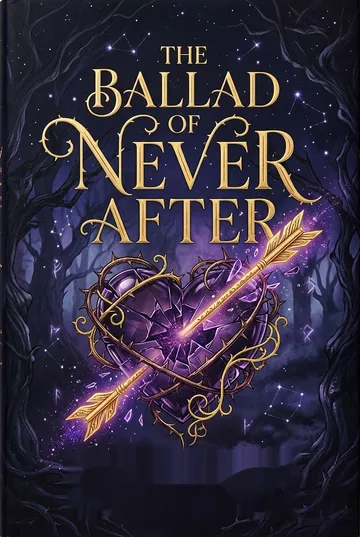
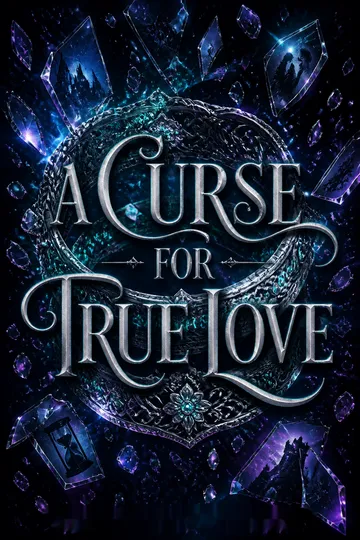
Once Upon a Broken Heart Series
About the Author
Other books by Stephanie Garber

Download PDF
Download EPUB
.epub digital book format is ideal for reading ebooks on phones, tablets, and e-readers.








































