
Key Takeaways
1. The Profound Power of Silence and Solitude
It’s not a feeling but a knowing; in the emptiness I can be filled by everything around me.
Silence as presence. The author's initial visits to the Hermitage reveal that silence is not merely an absence of sound but a palpable, active presence. This profound stillness allows for a heightened awareness of the surrounding world, transforming the ordinary into the extraordinary. The self recedes, enabling a deeper connection with nature and an immediate, unfiltered experience of life.
Unveiling reality. In this quietude, the extraneous chatter of daily life—arguments, deadlines, worries—dissolves, revealing a fundamental clarity. Admiral Byrd's polar solitude, for instance, taught him that true success lay in freedom from ceaseless striving, and that a "discordant mind" was the greatest enemy. The author finds that without the constant need to communicate or achieve, the world "freely offer[s] itself to you to be unmasked."
Inner transformation. The sustained experience of silence acts like a lens cap removed, allowing the world to flood in with wild immediacy. This internal revolution shifts one's perspective from being the center of the world to feeling the world at the center of oneself. It's a process of coming to one's senses, getting out of one's head, and allowing every moment to make the most of you, rather than the other way around.
2. Monastic Life as a Path to Inner Clarity
Contemplation, I come to see, does not in any case mean closing your eyes so much as opening them, to the glory of everything around you.
Beyond dogma. The author's initial aversion to religious institutions is challenged by the Camaldolese monastery, which embraces diverse traditions and asks nothing of visitors beyond a "spirit of quiet and recollection." This environment transcends rigid doctrines, focusing instead on universal intimations of silence and emptiness. The beauty of the space, designed by a Japanese man, emphasizes light and simplicity over ornate religious symbols.
Active contemplation. Monastic life, far from being a passive retreat, is an active engagement with inner and outer realities. It's about opening one's eyes to the world's glory, rather than closing them in prayer. The monks, with their varied backgrounds—psychologist, scholar, aid worker—demonstrate that contemplation is a practical, grounded practice, not an otherworldly escape.
Self-improvement. Henry Miller, the "good-natured bum" who found solace in Big Sur, noted that with "nothing to improve on in the surroundings, the tendency is to set about improving oneself." The monastery provides a space where the self is not erased but returned to its proper proportions, allowing extraneous elements to fall away. This leads to a profound sense of homecoming and liberation, where the point is not to get anything done, but to discover what might be worth doing.
3. Embracing Imperfection and Human Fallibility
Let no one hope to find in contemplation an escape from conflict, from anguish, or from doubt.
Reality of retreat. The monastery is not a utopian paradise free from human struggles. The author experiences this during a storm, feeling stuck and animalistic, realizing that the cell is a "desert without guarantees." Monks, too, are fallible humans with obligations, stresses, and internal conflicts, bringing their "world with them" into the enclosure.
Inner battles. The silence, rather than providing an escape, often intensifies internal struggles, bringing issues of sexuality, longing, and personal shadows to the surface. As one monk explains, entering such a different world inevitably means meeting the shadow, much like in E.M. Forster's A Passage to India. This confrontation with one's deepest self is a necessary, albeit challenging, part of the contemplative journey.
Authentic humanity. The monks are not idealized figures but real people with diverse pasts, humor, and everyday concerns, from peeling onions to dealing with Navy bombing exercises that threaten their silence. Their commitment is a "continuous renewal," a promise made again and again, acknowledging that obedience can be an unforgiving master. This human dimension makes their spiritual path relatable and powerful, demonstrating that true peace is found not by avoiding conflict, but by facing it within.
4. The Interplay of Retreat and Engagement with the World
Anyone can sit in a Zendo. The trick is to sit in the world.
Purpose of retreat. The author recognizes that days of sunlit silence are not an end in themselves but a means to gather a "candle to carry back into the unlit corners" of daily life. Solitude, as Thoreau demonstrated, is never an end but a means to becoming a more useful member of society, fostering a deeper capacity for love and service.
Integrating wisdom. The challenge lies in sustaining the clarity found in retreat amidst the "tumult" of the world. Paula, a novelist, creates a quiet garden space and helps the monks, while the author, after his monastic visits, finds himself covering the Olympics by focusing on the wonder of the Bhutanese archers. This integration means applying the lessons of stillness to everyday responsibilities, from family support to professional duties.
Selfless engagement. The true test of spiritual practice is how it transforms one's interactions with others. The author learns that being away from the self he is when other people are around allows him to be more attentive, thoughtful, and less selfish upon returning. This is exemplified by Leonard Cohen, who, despite his monastic vows, found his gift was for communicating "to and in the world," bringing the insights of the mountain back to "Boogie Street."
5. Finding Meaning Amidst Loss and Suffering
Fire illuminates a life quite brilliantly, but in that very blaze it threatens to bring down everything in its path.
Catalyst for clarity. Personal tragedies, such as the author's home burning down in a wildfire, act as a "good fire drill," clearing the way for deeper understanding. The loss of material possessions, photos, and keepsakes, though devastating, paradoxically creates space for new perspectives, as reflected in the Japanese poem: "My house burned down / I can now see better / The rising moon."
Facing impermanence. The monastery itself is constantly threatened by wildfires, landslides, and the inevitable aging of its members, serving as a stark reminder of life's impermanence. This constant proximity to destruction and loss forces a confrontation with mortality, not as an enemy, but as an intrinsic part of existence. One monk's words, "If you so wish, you can become aflame," suggest that suffering can be a path to inner fire.
Resilience and hope. Despite the relentless challenges—illness, death of loved ones, natural disasters—the narrative emphasizes resilience and a profound sense of gratitude. The monks, facing evacuation and zero revenue, find "a spirit of worship, and of fellowship, that brings them even closer to what they love." This demonstrates that hope is not a belief in happy endings, but a sense that there is an order to things, even if unfathomable.
6. Universal Wisdom Across Spiritual Traditions
If you’re freed of all distinctions, there’s no need of words like ‘God.’
Beyond labels. The Hermitage, though Catholic, embraces a universal spirituality, referring to the Rig Veda and noting the Buddha as the "father of monasticism." Visitors from diverse backgrounds—Buddhist, Hindu, non-believers—find common ground in the shared silence, realizing they are joined not by doctrine but by a "universal intimation." This suggests that fundamental truths transcend specific religious frameworks.
Shared quest. The author encounters individuals like Ree, a "Roman Catholic Buddhist," and monks who integrate Eastern philosophies into their Christian practice, such as Bede Griffiths, who sought the "other half of his soul" in Indian traditions. This cross-pollination highlights a shared human quest for meaning and connection, where different paths lead to similar insights about compassion, selflessness, and the dissolution of boundaries.
Common ground. The Dalai Lama, a Buddhist monk, emphasizes learning from Christian brothers about caring for the poor and suffering, acknowledging that neither tradition can entirely heal pain. His focus on imparting confidence to a dispossessed soul in Soweto, rather than on global honors, underscores a universal commitment to service. This convergence of traditions reveals that the essence of spiritual life lies in practical kindness and presence, rather than exclusive claims to truth.
7. The Unseen Work Sustaining Spiritual Life
It’s not a matter of finding or acquiring anything, only of letting everything extraneous fall away.
The "boiler room." The author's stay in the Ranch House, the monks' residence, reveals the unglamorous "boiler room" of monastic life. Far from the serene retreatants' area, this side is filled with practical duties: peeling onions, fixing toilets, managing finances, and caring for aging brothers. This hidden labor is essential for keeping the "vessel in motion," demonstrating that spiritual life is deeply rooted in mundane service and mutual care.
Daily discipline. The monks' lives are a web of obligations, as unyielding as any workplace, continuing until their final breath. Their routine involves seven daily services, communal meals, and constant maintenance of the property. This rigorous discipline, often unseen by visitors, is the foundation upon which their contemplative practice rests, proving that spiritual growth requires consistent, often uncelebrated, effort.
Community as sustenance. In this "scrappy backyard," monks find sustenance in caring for one another, looking for the divine in everything around them. The prior, Robert, who was once the community's barber, and the monk who meticulously prepares meals "to brighten their day," exemplify this spirit of humble service. This communal aspect, where individuals are "nothing in himself, but put him next to anything, and its value increases by a factor of ten," underscores that spiritual life is not just about individual enlightenment but about collective support and shared humanity.
8. Surrender to the Unknowable as a Source of Peace
The only point of being here, I realize: surrender.
Embracing mystery. The monastery, with its constant threats from nature and the unpredictable challenges of life, offers few certainties. This environment fosters a profound sense of surrender to an order one "can't begin to second-guess." The author's experience of being stalked by a mountain lion, and the small monk's dry humor about it, highlights the need to let go of control and embrace the unknown.
Freedom from answers. Leonard Cohen, the Zen monk, articulates this beautifully: "Here you find freedom from answers. Freedom from questions. A landscape without doubt." This perspective suggests that true peace comes not from having all the answers, but from accepting the inherent bafflement and irrationality of life. It's about living calmly with all that cannot be controlled.
The longing itself. One monk explains that the "longing itself is the ecstasy," implying that the search for meaning, rather than its definitive attainment, is where true spiritual richness lies. This surrender extends to personal identity, as the author finds that in silence, his "personal feels impersonal," and writing about himself feels like writing about everyone, dissolving the boundaries of the individual self.
9. Love and Compassion as the Ultimate Practice
The longing itself, he’d said, is the ecstasy.
Beyond self-interest. The core of monastic practice, and indeed all spiritual growth, is learning how to love in the midst of loss and how to hope in the face of death. This involves a radical shift from self-concern to outward-focused care. One monk's spiritual director advises him to "give up my family. Give up all my ideals! Get rid of my dreams and truly give myself over to the community," emphasizing selfless devotion.
Practical kindness. Compassion manifests in tangible acts: Cyprian tending to the dying, visiting monks in hospitals, and making perilous drives to ensure their safety. Thérèse, the old woman in the valley, is cared for by monks who secure her screen door and wheel her to Eucharist, demonstrating a deep commitment to protecting the vulnerable. This practical, everyday kindness is the true measure of spiritual attainment.
The gift of tears. The "gift of tears," a grace of feeling for one's neighbors, signifies a profound empathy that transcends personal suffering. The author observes that in the monastery's "clement light," it's hard to curse anyone because one is "not locked inside my own perspective." This expanded awareness fosters a deep sense of interconnectedness, where the well-being of others becomes paramount, and the "family" extends to the entire world.
10. The Paradox of Freedom in Limits
You can’t dwell on things. That’s the heart of Zen practice. Not dwelling.
Liberation through constraint. The author discovers that true freedom arises from an embrace of limits, rather than a pursuit of endless options. In the monastery, with its lack of distractions and prescribed routines, he feels liberated from the "self that huffs and puffs along the highway." This intentional constraint allows for a deeper engagement with the present moment and a release from the ceaseless striving of the external world.
Letting go. The practice of "not dwelling," central to Zen, involves letting go of attachments—to thoughts, longings, and even ideals. As one monk explains, "leisure is where things happen to you," but it requires sustained commitment, not just half an hour. This process of shedding the extraneous allows for a profound sense of repletion, where one is filled by everything around them.
Conscious choice. The choice to live within limits is a conscious act of self-direction. Wittgenstein, who worked as a gardener in a monastery, sought to humble his dazzling mind and make philosophy a practice rather than mere theory. The author, too, learns to direct his gaze, choosing to watch the radiance outside his window rather than tuning into the news. This deliberate embrace of simplicity and constraint ultimately leads to a richer, more meaningful existence.
Review Summary
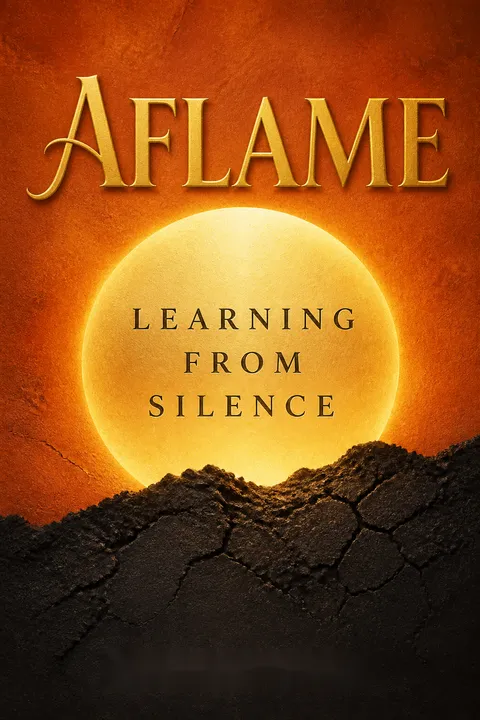
Reviews for Aflame are mixed, averaging 3.79/5. Admirers praise its meditative beauty, lyrical prose, and profound exploration of silence, stillness, and monastic life. Many found it moving and transformative. Critics, however, describe it as disjointed, self-indulgent, and narcissistic, arguing it lacks depth and coherent structure. Several note its non-linear narrative as confusing, while others feel Iyer name-drops and self-promotes. Some readers found it slow but worthwhile; others abandoned it entirely. Consensus suggests it resonates deeply with certain readers while alienating others entirely.
People Also Read






About the Author

Download PDF
Download EPUB
.epub digital book format is ideal for reading ebooks on phones, tablets, and e-readers.








































