
Key Takeaways
1. The "Hard Problem" of Consciousness Remains Unsolved
“Why doesn’t all this information-processing go on ‘in the dark,’ free of any inner feel?”
The enduring mystery. Despite decades of intense scientific and philosophical inquiry, the fundamental question of why any mental operation is accompanied by subjective experience—dubbed the "hard problem" by philosopher David Chalmers—persists. While science has made strides in understanding the "easy problems" of consciousness, such as learning and perception, it struggles to explain the qualitative, internal "feel" of being alive. This challenge highlights a core limitation of objective, third-person scientific methods when applied to inherently subjective phenomena.
A historical divide. The difficulty in scientifically addressing consciousness traces back to Galileo, who bifurcated nature into measurable "primary qualities" and subjective "secondary qualities," effectively cordoning off the mind from scientific inquiry. This approach, reinforced by Descartes' mind-body dualism, allowed science to flourish by focusing on the quantifiable material world. However, it inadvertently created a "blind spot" for lived experience, making it difficult to integrate consciousness into our scientific understanding and leading many to seek "magic" outside of reductive explanations.
Competing theories, limited answers. Two leading theories, Integrated Information Theory (IIT) and Global Workspace Theory (GWT), attempt to explain consciousness. IIT posits that consciousness is integrated information, not just correlated with it, and is characterized by properties like being intrinsic and unified. GWT suggests that information competes for attention in a "global workspace" before becoming conscious. While these theories offer plausible mechanisms for certain aspects of mental processing, they ultimately fall short of explaining why these processes should feel like anything, or who experiences them, leaving the hard problem largely intact.
2. Consciousness May Extend Far Beyond Human Brains
“I cannot imagine any living being that is not conscious.”
Challenging anthropocentrism. The traditional view, championed by Descartes, limited consciousness to humans. However, modern science increasingly recognizes rudimentary forms of consciousness, or sentience, in a wide array of animals, including mammals, birds, and octopuses. This expansion challenges our "zoocentrism" and "neurocentrism," the assumption that only animals with nervous systems can be conscious, prompting us to reconsider how widespread subjective experience might be in nature.
Plants as sentient beings. A growing field of "plant neurobiology" argues that plants exhibit intelligence and possibly sentience, despite lacking brains or neurons. Research shows plants can:
- Learn and form memories (e.g., Mimosa pudica remembers for over 28 days).
- Predict environmental changes and adapt their growth.
- Distinguish kin from strangers and communicate chemically.
- Integrate information from over twenty distinct "senses."
These capabilities suggest a flexible, problem-solving intelligence beyond mere genetic programming, leading some, like Stefano Mancuso, to assert that plants are conscious, especially given their ability to "sleep" and be anesthetized by the same drugs as animals.
Mind at the cellular level. Biologists like Michael Levin and Arthur S. Reber propose that basic "mindedness" or sentience extends "all the way down" to the simplest life forms, even single-celled organisms. Levin's work with Xenobots—synthetic organisms made from frog skin cells that exhibit purposeful behavior without a brain or DNA-encoded instructions—demonstrates how intelligence can emerge from distributed bioelectric networks. This "biopsychism" suggests that the capacity to sense, infer, and predict, driven by the fundamental need for homeostasis, is coeval with life itself, challenging the notion that neurons are a prerequisite for sentience.
3. Feelings, Not Just Information, Are the Wellspring of Consciousness
“Consciousness is felt uncertainty.”
Beyond cold cognition. Many theories of consciousness focus on information processing, overlooking the crucial role of feelings (or affect). Neurologist Antonio Damasio argues that feelings are the "inaugural act" of consciousness, serving as a vital bridge between mind and body. He contends that "I feel, therefore I am" is a more accurate foundation for existence than Descartes' "I think, therefore I am," as feelings are inherently conscious and guide our decision-making, especially in novel situations.
The body's language. Damasio locates the origin of these homeostatic feelings deep in the brainstem, not the cortex. Specialized "naked neurons" in these subcortical regions, lacking myelin and the blood-brain barrier, intimately "commingle" with the body's biochemical reality. These neurons convey not just information, but the raw, valenced force of bodily states like hunger, thirst, or pain, compelling conscious attention for "deliberate life regulation." This "bottom-up" approach grounds consciousness in the biological imperative of survival, making feelings fundamentally different from other mental contents because they are necessarily felt.
Uncertainty as the spark. Building on Damasio's work and Karl Friston's free-energy principle, neuroscientist Mark Solms proposes that "consciousness is felt uncertainty." When our self-organizing systems (biological or otherwise) encounter unexpected deviations from homeostatic set points, feelings arise to signal this uncertainty and guide adaptive action. These feelings are not mere information; they are subjective, valenced states that force us to consciously engage with problems that cannot be solved automatically. This perspective suggests that the "hard problem" might be softened if we start by asking how feelings arise, rather than how abstract cognition becomes conscious.
4. The Brain-as-Computer Metaphor Has Critical Limitations
“The price of metaphor is eternal vigilance.”
A pervasive, yet flawed, analogy. The idea that the brain is essentially a computer, running the "software" of consciousness on its "hardware," underpins much of modern cognitive neuroscience and the quest for artificial intelligence. This "computational functionalism" assumes that consciousness can exist in any substrate capable of running the right algorithms. However, as biologist Richard Lewontin warned, metaphors can be misleading if we forget their limitations, and this one, in particular, obscures crucial differences between biological brains and digital machines.
Beyond hardware and software. The brain fundamentally blurs the distinction between hardware and software that is central to computers. In the brain, memory is not a separate program but a physical pattern of neuronal connections, constantly rewired by experience. This means:
- The brain's physical structure is continually shaped by its "software" (experiences).
- Brains are not interchangeable; each is unique due to its lived history.
- Neurons are far more complex than simple transistors, influenced by a rich "soup" of neuromodulators, hormones, and wavelike oscillations, which profoundly affect consciousness.
These biological intricacies suggest that consciousness is deeply rooted in the specific, dynamic, and embodied nature of wet biological tissue, making it unlikely to be simply "run" on a different, disembodied substrate.
The illusion of understanding. The confidence in building conscious AI often stems from a circular logic: theories of consciousness, themselves often based on computational metaphors, are then used to define "indicators" of consciousness in AI. If an AI's design simulates these theoretical mechanisms, it's deemed potentially conscious. This approach risks mistaking the map for the territory, assuming that by replicating computational functions, we automatically replicate subjective experience. Furthermore, AI's learning environment—the internet—is a "shadow cast by the world," consisting of representations rather than direct physical and social interactions, raising questions about whether such a disembodied intelligence could ever truly "feel" or "understand" life as we know it.
5. Our Thoughts Are More Diverse and Elusive Than We Imagine
“No state once gone can recur and be identical with what it was before.”
The elusive stream. Our inner mental life, often assumed to be a continuous "stream of consciousness" (William James), is far more complex and less understood than we realize. James meticulously described thoughts as continuous, "colored" by preceding experiences, and unique to each moment, making it impossible for any thought to recur identically. He highlighted the "mind-stuff" surrounding thoughts—auras, halos, feelings of tendency—that defy simple categorization or verbal capture, suggesting that consciousness is far richer than discrete, easily definable units.
Beyond words and images. Contrary to the common assumption that our inner monologue is the primary medium of thought, research by Russell T. Hurlburt using Descriptive Experience Sampling (DES) reveals a surprising diversity. Many people do not experience constant inner speech; instead, thoughts often manifest as:
- Preverbal images or sensations.
- "Unsymbolized thoughts"—complete thoughts without words or clear visuals.
- A blend of these modes, often layered and simultaneous.
This suggests that our attempts to describe inner experience often force it into linguistic or visual categories that don't fully capture its true nature, leading us to misunderstand both our own minds and the minds of others.
The wandering mind's purpose. Psychologist Kalina Christoff Hadjiilieva studies "spontaneous thought"—mind-wandering, daydreaming, and creative insights—which accounts for a significant portion of our mental experience outside of direct sensory input. She argues that this "unconstrained" thinking, often correlated with the brain's default mode network (DMN), is crucial for deriving meaning from experiences, mapping our identity, and fostering creativity. While often dismissed as unproductive, spontaneous thought represents a space of mental freedom, allowing us to integrate conscious and unconscious streams of thought and potentially offering a pathway to deeper self-understanding, a process that psychedelics can also facilitate by lifting cognitive constraints.
6. The Self is a Useful, Yet Often Illusory, Construct
“I never can catch myself at any time without a perception, and never can observe any thing but the perception.”
The elusive "I." The intuitive sense of a stable, continuous "I" that authors our thoughts and experiences is a cornerstone of our identity, yet its existence is surprisingly difficult to prove. Philosopher David Hume, through introspection, found only a bundle of fleeting perceptions, never a fixed "self" behind them. This echoes Buddhist philosophy, which also denies an essential, abiding self. While we cling to the idea of a singular self, attempts to locate it through introspection often reveal only a dynamic flow of mental contents, raising questions about its fundamental reality.
A developmental fiction. The self is not innate but emerges gradually in childhood. Babies are conscious long before they develop a sense of a separate self, typically recognizing themselves in a mirror around 18 months. Later, around ages four or five, "episodic memory" develops, allowing children to construct a coherent narrative of their past and future, creating a sense of continuity. This "autobiographical self," while crucial for planning and social interaction, is partly a "fiction," a carefully curated story that provides stability and purpose, enabling adults to engage in long-term goals like writing a book.
The self as a prediction. Neuroscientist Anil Seth proposes that the self is not a perceiver, but "itself a kind of perception," a "controlled hallucination" constructed by the brain. This self-perception is primarily driven by "interoceptive signals" from the body, allowing the brain to make its best guesses about the body's state and regulate homeostasis. The brain "predicts" a stable self because it needs to maintain certain physiological parameters for survival. While this theory offers a compelling biological account of how the self is generated, it still leaves the "hard problem" of who experiences this hallucination, or whose illusion it is, largely unanswered.
7. Self-Transcendence Offers Profound, Blissful Experiences
“We lose ourselves entirely in this object, to use a pregnant expression; in other words, we forget our individuality, our will…so that it is as though the object alone existed without anyone to perceive it, and thus we are no longer able to separate the perceiver from the perception, but the two have become one.”
Beyond the ego's confines. While the self is a powerful and adaptive construct, many profound human experiences involve its temporary dissolution or "self-transcendence." These states, achieved through practices like meditation, psychedelics, extreme sports, or deep absorption in art or nature, are often described as blissful, characterized by a sense of timelessness, boundlessness, and merging with something larger than oneself. This suggests that consciousness can operate quite happily without a strong, individual ego, challenging the notion that the self is indispensable for meaningful experience.
The suffering self. Buddhist philosophy, as articulated by Matthieu Ricard, views the attachment to a permanent, autonomous self as the root of suffering. In a world of impermanence, clinging to the "bubble of ego" leads to attraction, repulsion, desire, and aversion, creating "big storms" of discontent. By cultivating practices that loosen the grip of self-clinging, individuals can achieve greater equanimity, openness, and compassion. The goal is not to eliminate the "conventional" self used for social interaction, but to recognize its illusory nature and reduce its subtle, egoistic demands.
Pathways to egolessness. Various methods can facilitate self-transcendence:
- Meditation: Prolonged sitting, especially in silent retreats, can lead to boredom and exhaustion, causing the ego to "drop in" and surrender to a state of pure presence.
- Psychedelics: Substances like psilocybin or ayahuasca can induce profound "ego dissolution," where the sense of individual identity explodes, leading to experiences of "pure awareness" or "Mind at Large."
- Aesthetic Absorption: As Arthur Schopenhauer described, complete immersion in art or nature can collapse the distinction between perceiver and perceived, leading to a temporary, blissful egoless state.
These experiences, while varied, often share a common theme: a temporary healing of the "breach from one mind to another," fostering a sense of universal connection and reducing the isolation inherent in individual consciousness.
8. The Scientific Materialist View of Consciousness is Facing a Crisis
“Physicalism ultimately fails to explain the only thing we know to exist, which is experience.”
Materialism's explanatory gap. The long-held scientific assumption that consciousness can ultimately be reduced to and explained by matter—physicalism or materialism—is increasingly being questioned, even by prominent neuroscientists. Christof Koch, a leading figure in consciousness research, has publicly expressed doubts, citing the "abject inability of physicalism to explain or even deal with consciousness." He points out that dismissing consciousness as an "illusion" is self-contradictory, as an illusion itself requires a conscious experiencer, and describing it as an "emergent property" often feels like an "abracadabra" rather than a scientific explanation.
Quantum physics shakes foundations. Beyond the direct challenges from consciousness studies, the very nature of matter, the bedrock of physicalism, has been destabilized by quantum theory. Discoveries like "entanglement"—where particles instantaneously influence each other across vast distances—have shattered the principle of "locality" and challenged the notion of a "subject-independent reality." This means that what we perceive as matter is deeply intertwined with observation, further eroding the confidence that materialism can serve as a sturdy metaphysical foundation for explaining all phenomena, including consciousness.
Exploring alternative paradigms. The crisis in physicalism has opened the door to a broader conversation about non-materialist theories of consciousness, once dismissed as unscientific. Koch's personal experience with ayahuasca, leading to a profound sense of "Mind at Large," further fueled his exploration of idealism—the philosophy that mind, rather than matter, is fundamental to the universe. Idealist thinkers like Bernardo Kastrup argue that "matter is an inference, and mind a given," suggesting that experience is the only thing we know for certain, and therefore, consciousness itself might be a fundamental property of reality, not merely a product of brains.
9. Embracing "Not-Knowing" Can Deepen Our Experience of Consciousness
“Always keep a don’t-know mind.”
The limits of intellect. The relentless pursuit of definitive answers and theories, characteristic of "spotlight consciousness" or "professor consciousness," can inadvertently narrow our aperture of awareness. By striving to "solve" consciousness as a puzzle, we risk overlooking or diminishing the richness of direct, lived experience. This intellectual focus, while yielding valuable knowledge, can also distance us from the very phenomenon we seek to understand, making us "not altogether here" in the present moment.
The value of experiential inquiry. To truly understand consciousness, we may need to complement traditional scientific methods with more experiential and descriptive approaches. Phenomenology, literature, meditation, and even psychedelics offer pathways to explore the "view from within," revealing aspects of consciousness that abstract theories cannot capture. These methods emphasize firsthand experience, allowing us to:
- Become more scrupulous observers of our own inner lives.
- Recognize the diversity and fluidity of thought.
- Appreciate the "sacredness of the everyday" through heightened presence.
This shift from explanation to practice can transform our relationship with consciousness, making it less a problem to be solved and more a miracle to be experienced.
Consciousness as practice. Ultimately, the journey into consciousness may not lead to a single, definitive theory, but rather to a deeper appreciation of its mystery and a transformation of our own awareness. As the author's experience in a remote cave revealed, stripping away distractions and embracing solitude can shrink our time horizon, still the stream of thought, and dissolve the self, leading to moments of "minimal phenomenal experience"—a pure, uninflected presence. This "don't-know mind," advocated by Zen masters like Joan Halifax, opens us to possibilities that intellectual certainty often closes off, allowing us to reconnect with the "numinous lantern of awareness" and experience the world more fully, freshly, and empathetically.
Review Summary
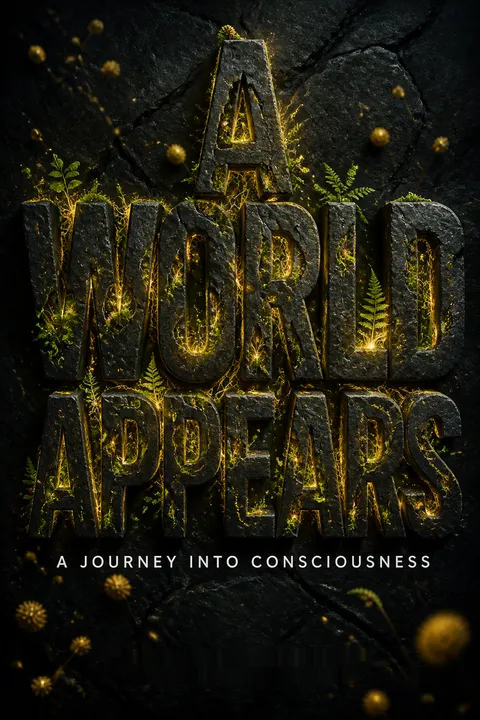
Reviews of A World Appears are mixed, averaging 4.03/5. Many praise Pollan's accessible writing, infectious curiosity, and ability to synthesize complex ideas across science, philosophy, and personal experience. Fans of his previous work, particularly How to Change Your Mind, tend to rate it highly. Critics find it meandering, overly technical, or insufficiently comprehensive in covering non-physicalist perspectives. Chapters on plants and the self receive frequent praise, while AI-related content divides readers. Most agree the book raises more questions than it answers — a feature some celebrate and others lament.
People Also Read





Download PDF
Download EPUB
.epub digital book format is ideal for reading ebooks on phones, tablets, and e-readers.








































