
Key Takeaways
1. The Ego is only a part of the greater Self.
The entity so denoted is not meant to take the place of the one that has always been known as the ego, but includes it in a supraordinate concept.
Defining the Ego. The ego is the conscious center of our personality, the "I" that experiences and relates to conscious contents. It forms the subject of all our personal acts of consciousness. However, Jung emphasizes that the ego is not the entirety of the psyche; it is merely the focal point of our awareness.
Limits of Consciousness. The ego's domain, consciousness, is inherently limited. It constantly encounters the unknown, both from the external world and from the vast internal realm of the unconscious. This inner unknown, the unconscious, forms a crucial part of our total being, influencing us in ways we often don't perceive.
Introducing the Self. The total personality, encompassing both conscious and unconscious elements, is what Jung terms the Self. The ego is merely a subordinate part of this greater Self, much like a part is to a whole. While the ego experiences a subjective feeling of free will within its conscious sphere, it is ultimately influenced and limited by the objective occurrences and facts originating from the Self.
2. The Shadow embodies our repressed, darker aspects.
The shadow is a moral problem that challenges the whole ego-personality, for no one can become conscious of the shadow without considerable moral effort.
Personal Unconscious. The shadow represents the contents of the personal unconscious that are typically repressed or ignored by the ego. These are aspects of our personality—often negative or inferior traits—that we deem unacceptable and push out of conscious awareness. It is the "dark side" that we prefer not to acknowledge.
Moral Challenge. Confronting the shadow requires significant moral effort, as it involves recognizing and integrating these undesirable aspects as real parts of oneself. This process is fundamental to self-knowledge and often meets with strong resistance, as it challenges our idealized self-image. Projections, where we see our own shadow traits in others, are a common defense mechanism against this difficult realization.
Autonomous Influence. When the shadow remains unconscious and unintegrated, its emotional nature can gain autonomy, leading to obsessive or possessive behaviors. Affects often arise where our adaptation is weakest, revealing a lower, less controlled level of personality. Unrecognized projections can isolate an individual, creating an illusory world that mirrors their own unknown face, leading to feelings of incompleteness and sterility.
3. Anima and Animus are contrasexual bridges to the unconscious.
Though the shadow is a motif as well known to mythology as anima and animus, it represents first and foremost the personal unconscious, and its content can therefore be made conscious without too much difficulty. In this it differs from anima and animus, for whereas the shadow can be seen through and recognized fairly easily, the anima and animus are much further away from consciousness and in normal circumstances are seldom if ever realized.
Contrasexual Archetypes. Beyond the personal shadow lie the anima (for men) and animus (for women), which are archetypes of the collective unconscious representing the contrasexual aspects of the psyche. These figures are projection-making factors, often appearing in dreams, visions, and fantasies as personified forms that embody feminine qualities in men and masculine qualities in women.
The Anima's Role. For a man, the anima is his "Lady Soul," a perilous image of Woman that can be both a great illusionist and a source of profound solace. She represents the connective quality of Eros, influencing a man's relationships and emotional life. When projected, she can lead to regressive states, seeking the protective circle of the mother, or to intense, often idealized, romantic attachments.
The Animus's Influence. For a woman, the animus embodies masculine qualities, representing the discriminating and cognitive aspects of Logos. When active, he can manifest as rigid opinions, argumentative tendencies, or a drive for power. Both anima and animus, when unconscious, can lead to "animosity" in relationships, characterized by emotionality and collective, rather than individual, interactions. Integrating these figures allows for greater self-knowledge and a capacity for reflection.
4. The Self is the paradoxical totality of the psyche.
Clearly, then, the personality as a total phenomenon does not coincide with the ego, that is, with the conscious personality, but forms an entity that has to be distinguished from the ego. Naturally the need to do this is incumbent only on a psychology that reckons with the fact of the unconscious, but for such a psychology the distinction is of paramount importance.
Beyond Ego-Consciousness. The Self is the central archetype of order and wholeness, encompassing both the conscious ego and the vast expanse of the unconscious. It is the totality of the psyche, a supraordinate concept that includes all aspects of an individual's being, both known and unknown. The ego is merely the conscious point of reference within this larger, more comprehensive entity.
Paradoxical Nature. The Self is inherently paradoxical, a "complexio oppositorum." It is simultaneously male and female, old man and child, powerful and helpless, large and small. This antinomial character reflects the fundamental polarity of reality itself, which cannot exist without the interplay of opposites. This paradox is not a contradiction but an expression of its indescribable, transcendental nature.
Spontaneous Manifestations. The Self manifests spontaneously in symbols of unity and totality, particularly mandalas and quaternities, which appear in dreams, visions, and active imagination. These symbols often emerge during times of psychic disorientation or re-orientation, acting as organizing principles that transform chaos into cosmos. Historically, these symbols are indistinguishable from God-images, pointing to the numinous character of the Self.
5. Christ symbolizes the Self, yet lacks its dark complement.
If we see the traditional figure of Christ as a parallel to the psychic manifestation of the self, then the Antichrist would correspond to the shadow of the self, namely the dark half of the human totality, which ought not to be judged too optimistically.
Archetype of the God-Man. Christ exemplifies the archetype of the Self, representing a divine totality, a glorified man, and the mystic Adam. He occupies the center of the Christian mandala, embodying wholeness of a heavenly kind. However, from a psychological perspective, the Christ-symbol lacks completeness because it specifically excludes the dark side of things, projecting it onto a Luciferian opponent.
The Antichrist as Shadow. The exclusion of evil from the Christ-figure necessitates the emergence of the Antichrist, who functions as the shadow of the Self. This figure develops in legend as a perverse imitator of Christ, representing the dark half of human totality. This split in the archetype leads to a metaphysical dualism, separating the kingdom of heaven from the fiery world of the damned, and increasing the tension between light and shadow.
Psychological Complement. The sublime and spotless nature of the dogmatic Christ-figure demands a psychic complement to restore balance. This is an inexorable psychological law: every intensified differentiation of the Christ-image brings a corresponding accentuation of its unconscious complement. The empirical Self, in contrast, integrates both light and shadow, forming a paradoxical unity that gives it body and humanity.
6. The "Privatio Boni" doctrine creates an incomplete view of evil.
The privatio boni argument remains a euphemistic petitio principii no matter whether evil is regarded as a lesser good or as an effect of the finiteness and limitedness of created things.
Denial of Evil's Substance. The doctrine of privatio boni (evil as the privation or absence of good), championed by Church Fathers like Augustine and Thomas Aquinas, asserts that God, as the Summum Bonum (Highest Good), could not create evil. Therefore, evil is deemed to have no substance of its own, being merely a diminution or defect of good. This theological stance aimed to preserve God's absolute goodness and unity.
Psychological Critique. Jung argues that this doctrine is a "euphemistic petitio principii" (begging the question) that fails to account for the empirical reality of evil. Psychologically, good and evil are equivalent opposites, necessary for moral judgment and discrimination. Denying evil's substantiality leads to an incomplete God-image and an overly optimistic view of human nature, overlooking the colossal role evil plays in the world.
Consequences of Denial. Attributing evil solely to human disposition or "mutilation of the soul" (as Basil the Great did) minimizes its impact and can lead to a dangerous undervaluation of the psyche's capacity for malevolence. This denial of evil's reality in collective ideas can lead to compensatory developments in the unconscious, manifesting as destructive forces in the external world, as seen in historical events.
7. Astrological ages reflect shifts in collective consciousness.
The Pisces aeon is the synchronistic concomitant of two thousand years of Christian development.
Cosmic-Psychic Correlation. Jung explores the idea that major shifts in collective consciousness, particularly religious and cultural developments, synchronize with astrological ages, or "Platonic months." The "Christian aeon" is identified with the age of Pisces, a period spanning approximately two thousand years, marked by the symbolism of the fish.
Anticipated Changes. Christian tradition, from its outset, was saturated with ideas about the beginning and end of time, often influenced by astrological concepts. The expectation of the Antichrist, for instance, can be seen as an anticipation of an "enantiodromian reversal of dominants" – a swing towards the opposite pole – coinciding with the astrological transition within the Pisces age.
Prophecies and Synchronicity. Prophecies like those of Nostradamus and Joachim of Flora, which foretold significant historical changes and the coming of new spiritual eras, are interpreted as reflections of these underlying archetypal shifts. The synchronicity between these predictions and actual historical events, such as the Reformation and the French Revolution, suggests a profound, acausal connection between inner psychic processes and outer cosmic patterns.
8. The Fish symbol reveals the Christian aeon's inherent duality.
The symbolism shows Christ and those who believe in him as fishes, fish as the food eaten at the Agape, baptism as immersion in a fish-pond, etc. At first sight, all this points to no more than the fact that the fish symbols and mythologems which have always existed had assimilated the figure of the Redeemer; in other words, it was a symptom of Christ’s assimilation into the world of ideas prevailing at that time.
Ubiquitous Symbolism. The fish is a pervasive symbol in early Christianity, representing Christ, believers, baptism, and the Eucharist. This assimilation of the Redeemer into existing fish mythologems indicates a deep, unconscious resonance between the Christ-figure and the archetypal significance of the fish, particularly as the new astrological age of Pisces dawned.
Duality of Pisces. The zodiacal sign of Pisces often depicts two fishes moving in opposite directions, symbolizing an inherent duality or conflict. This astrological characteristic aligns with the psychological tension within the Christian aeon, particularly the dilemma of Christ and Antichrist. Christ is identified with the first fish, while the Antichrist corresponds to the second, representing the dark, opposing force.
Ambivalent Meanings. The fish symbol itself carries profound ambivalence, being associated with both redemption and danger. In various traditions, it can represent a savior (Manu's fish), eucharistic food (Leviathan's flesh), or destructive forces (devouring concupiscence). This dual nature reflects the paradoxical totality of the Self, encompassing both light and shadow, and foreshadows the complex psychological developments of the Christian era.
9. Alchemy and Gnosticism explored the Self's integration of opposites.
Had this attempt succeeded, we would not be witnessing today the curious spectacle of two parallel world-views neither of which knows, or wishes to know, anything about the other.
Ancient Psychological Insights. Alchemy and Gnosticism, often dismissed as obscure or heretical, are presented by Jung as profound attempts to understand nature and the psyche from both external and internal perspectives. They represent "subsidiary currents" that sought to investigate the empirical aspect of Nature, not just from the outside, but also from the inside, anticipating many modern psychological insights.
The Lapis as Self. In alchemy, the "lapis philosophorum" (philosopher's stone) is a central symbol for the Self, representing the union of opposites (coniunctio oppositorum) and the totality of the psyche. The alchemical process, or "opus," is a symbolic journey of transformation, aiming to integrate disparate elements into a unified whole, often using symbols like the fish, serpent, and hermaphrodite.
Gnostic Parallels. Gnosticism, particularly the Naassenes and Basilidians, articulated concepts strikingly parallel to Jung's psychology of the unconscious. They spoke of an "unconscious God," the "Original Man" (Anthropos) as the universal ground, and the "spark" (scintilla) of divine light hidden in matter. Their use of magnetic analogies to describe the attraction and integration of psychic contents directly prefigures Jung's understanding of the Self's organizing power.
10. Quaternities are archetypal patterns for psychic wholeness.
The circle and quaternity symbolism appears at this point as a compensating principle of order, which depicts the union of warring opposites as already accomplished, and thus eases the way to a healthier and quieter state ('salvation').
Universal Organizing Schema. Quaternities are fundamental archetypal patterns that spontaneously appear in dreams, myths, and religious symbols across cultures and epochs. They represent a principle of order, a system of coordinates used instinctively to organize chaotic multiplicities, such as the four elements, cardinal directions, or psychological functions.
Symbol of Totality. These fourfold structures, often combined with circular forms (mandalas), symbolize psychic wholeness and the integration of opposites. Examples include the "marriage quaternio" (representing the union of masculine and feminine principles), the "Anthropos quaternio" (the Original Man), and the "Lapis quaternio" (the philosopher's stone). The dilemma of "3+1" often signifies a defective quaternity, striving towards completion.
Dynamic Process. Quaternities are not static forms but dynamic processes, illustrating the continuous transformation and integration within the Self. They depict the "opus circulare" – a cyclical journey of descent into the unconscious and ascent to conscious realization. This process, akin to "solve et coagula" in alchemy, involves discriminating and synthesizing psychic contents, leading to an unfolding of totality into conscious awareness.
11. Integrating the unconscious is crucial for psychological health.
Loss of roots and lack of tradition neuroticize the masses and prepare them for collective hysteria. Collective hysteria calls for collective therapy, which consists in abolition of liberty and terrorization. Where rationalistic materialism holds sway, states tend to develop less into prisons than into lunatic asylums.
The Path to Wholeness. The ultimate goal of psychological development, or individuation, is the conscious realization and integration of the Self. This involves confronting and assimilating the contents of the unconscious – the shadow, anima/animus, and other archetypes – into the conscious personality. This process leads to a wider, more complete personality, whose center of gravity shifts from the ego to the Self.
Dangers of Repression. When the unconscious remains unintegrated or repressed, its contents do not simply disappear; they manifest externally as fate or collective phenomena. Jung warns that a society that loses touch with its "transcendent roots" and traditions, succumbing to rationalistic materialism, risks spiritual regression and increased psychic dissociation, leading to collective neuroses and destructive mass psychoses.
Restoring the Myth. Modern man's alienation from traditional religious symbols and myths, which once provided a framework for understanding the unconscious, has created a dangerous spiritual vacuum. Psychology, by elucidating the archetypal basis of these symbols, aims to re-establish the connection between conscious and unconscious, offering a path to individual and collective healing. This involves a "new assimilation of the traditional myth," allowing its therapeutic effect to be renewed for contemporary consciousness.
Review Summary
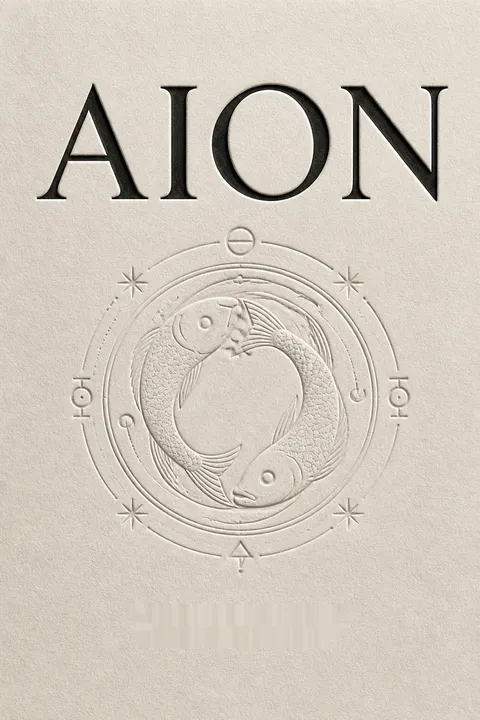
Aion by C.G. Jung explores the archetype of the Self through Christian symbolism, Gnosticism, and alchemy. Reviewers consistently note its extreme difficulty, with dense prose requiring slow, careful reading. The book examines Christ as a symbol of the Self, fish symbolism in Christianity, and the integration of conscious and unconscious aspects including the shadow. Many praise Jung's argumentative depth and insights into collective unconscious, though the alchemical and astrological sections prove challenging. Readers emphasize this isn't an introductory work—prior Jung knowledge is essential. Despite complexity, many found it transformative, revealing profound truths about human nature and psychological wholeness.
People Also Read

FAQ
What is Aion by C.G. Jung about?
- Exploration of the Self: Aion investigates the archetype of the self, focusing on its psychological, historical, and symbolic manifestations.
- Christian and Gnostic Symbolism: Jung analyzes Christian and Gnostic symbols, especially the figures of Christ and the Antichrist, to illustrate the psychic dynamics of opposites.
- Integration of Alchemy and Psychology: The book connects alchemical imagery with psychological processes, showing how ancient symbols reflect the journey toward individuation and wholeness.
- Cultural and Historical Context: Jung situates his analysis within the broader context of European culture and the evolution of religious consciousness.
Why should I read Aion by C.G. Jung?
- Deep Psychological Insight: The book offers profound understanding of the psyche’s structure, especially the self, shadow, anima, and animus, which are central to Jungian psychology.
- Bridging Myth and Mind: Jung reveals how ancient religious and mythological symbols correspond to psychological realities, enriching both spiritual and therapeutic perspectives.
- Foundational Jungian Text: Aion is essential for anyone interested in analytical psychology, providing foundational knowledge about archetypes and individuation.
- Relevance to Modern Life: The book addresses the crisis of meaning in modernity, offering tools for reconnecting with inner experience and tradition.
What are the key takeaways from Aion by C.G. Jung?
- Self as Wholeness: The self is a dynamic archetype representing psychic totality and the union of opposites.
- Symbolic Mediation: Symbols such as Christ, the fish, mandalas, and the serpent mediate between conscious and unconscious, aiding individuation.
- Integration of Opposites: Psychological health requires integrating shadow, anima/animus, and other unconscious contents into consciousness.
- Historical Evolution: Religious and alchemical symbols evolve alongside the psyche, reflecting collective and individual psychological development.
How does C.G. Jung define the ego and the self in Aion?
- Ego as Conscious Center: The ego is the center of consciousness, responsible for personal identity and decision-making.
- Self as Total Personality: The self encompasses both conscious and unconscious aspects, representing the totality of the psyche and including the ego as a part.
- Supraordinate Nature: The self is a higher-order concept, often symbolized by mandalas or quaternities, and acts as a guiding principle for individuation.
- Limits of the Ego: The ego has free will within consciousness but is limited by the self, which includes unconscious elements beyond the ego’s grasp.
What is the shadow archetype in Aion by C.G. Jung?
- Dark Side of Personality: The shadow represents the inferior, rejected, or morally problematic aspects of the personality.
- Moral Challenge: Becoming conscious of the shadow requires significant moral effort and self-knowledge, as it often manifests through projection onto others.
- Personal and Archetypal Levels: While the shadow is primarily personal, it also has an archetypal dimension that is more autonomous and difficult to integrate.
- Source of Conflict: Unrecognized shadow elements can lead to emotional possessiveness, conflict, and illusory relationships.
What are the anima and animus in Aion and what is their psychological significance?
- Contrasexual Archetypes: The anima (in men) and animus (in women) are archetypes representing unconscious feminine and masculine elements, respectively.
- Projection and Relationship: These figures often appear in relationships with the opposite sex, causing emotional and intellectual conflicts through projection.
- Mediators of the Unconscious: The anima and animus serve as bridges between conscious and unconscious, facilitating reflection and relationship.
- Autonomous and Numinous: Even after integration, these archetypes retain autonomy and a numinous quality, influencing moods, attitudes, and creativity.
How does Jung relate the archetype of the self to the figure of Christ in Aion?
- Christ as Self Symbol: Jung interprets Christ as an archetype of the self, embodying wholeness and the union of opposites.
- Duality and Shadow: The Christian Christ-symbol lacks the shadow aspect, which Jung associates with the Antichrist, representing the dark half of human totality.
- Historical and Psychological Context: Jung’s interpretation is psychological, not metaphysical, viewing Christ as a symbol of individuation and psychic wholeness.
- Androgyny and Integration: Christ’s androgyny, such as the vision of the woman born from his side, symbolizes the integration of opposites and spiritual ascent.
What is the significance of the fish symbol in Aion and its relation to Christianity and astrology?
- Ancient and Christian Symbolism: The fish (Ichthys) has deep roots in Near Eastern cultures and early Christianity, symbolizing Christ and the Christian community.
- Astrological Age of Pisces: Jung connects the fish symbol to the astrological age of Pisces, aligning it with the Christian era and messianic expectations.
- Ambivalence and Duality: The fish embodies both salvation and danger, purity and impurity, reflecting the paradoxical nature of the self and Christian myth.
- Alchemical and Gnostic Links: The fish also appears in alchemical and Gnostic traditions, symbolizing transformation and the union of opposites.
How does Jung interpret alchemical symbolism, especially the fish, in Aion?
- Fish as Prima Materia: In alchemy, the fish symbolizes the arcane substance or prima materia, the starting point and goal of transformation.
- Magnet of the Wise: The fish’s legendary power to stop ships is likened to the "magnet of the wise," representing the doctrine that attracts and integrates the unconscious self.
- Union of Opposites: The alchemical fish embodies the complexio oppositorum, the union of opposites, and is linked to the philosopher’s stone (lapis philosophorum).
- Symbol of Transformation: Alchemical symbols illustrate the psychological process of individuation and the integration of unconscious contents.
What role do Gnostic symbols play in Jung’s understanding of the self in Aion?
- Anticipation of Jungian Ideas: Gnostic systems anticipated many images and concepts about the self and psychic wholeness.
- Magnetism and Integration: Gnostic symbols, such as the serpent and water, represent the magnetic attraction of the divine to the human soul and the integration of opposites.
- Complex Symbolism: Gnostic imagery expresses the unknowable essence of the incarnate God and the individuation process, blending water, serpent, and Logos motifs.
- Shadow and Light Duality: Gnostic dualism, including the demiurge and devil, corresponds to the shadow aspect of the psyche and the interplay of conscious and unconscious.
What is the "Moses Quaternio" in Aion and what is its psychological meaning?
- Fourfold Structure: The Moses Quaternio consists of the lower Adam (ordinary man), Moses (culture hero/father), Zipporah (higher mother), and Miriam (anima figure).
- Stages of Consciousness: It represents a psychological ascent from the lower, mortal man to the higher spiritual man, reflecting stages of consciousness and unconscious dynamics.
- Shadow Elements: The quaternio includes shadow aspects, such as Miriam’s leprosy and the Ethiopian woman, illustrating the ambivalence and complexity of psychic relationships.
- Symbol of Individuation: The structure exemplifies the process of integrating opposites and achieving psychic wholeness.
What practical insights about individuation and self-knowledge does Aion by C.G. Jung offer?
- Integration of Unconscious Contents: Individuation involves integrating unconscious archetypes like the shadow, anima/animus, and self, expanding consciousness and achieving psychic wholeness.
- Moral and Intellectual Effort: The process requires moral courage, self-criticism, and intellectual openness to overcome projections and illusions.
- Symbolic Mediation: Symbols such as mandalas, fish, serpent, and Christ serve as mediators between conscious and unconscious, helping individuals navigate conflicts of opposites.
- Therapeutic and Spiritual Value: Understanding and working with these symbols can facilitate personal growth, healing, and a deeper connection to the collective unconscious.
About the Author
Other books by C.G. Jung
Download PDF
Download EPUB
.epub digital book format is ideal for reading ebooks on phones, tablets, and e-readers.








































