
Summary Temporarily Unavailable
This summary is temporarily unavailable and is currently being updated. You can still explore the FAQs and other metadata below.
Key Takeaways
1. Set limitations to force the choice of the essential
Limitless is weak. Learn to focus yourself with limits, and you’ll increase your strength.
The power of boundaries. Living without limits dilutes our energy and spreads us too thin, much like pouring a cup of red dye into the ocean. When we establish firm boundaries on our time, tasks, and possessions, we concentrate our personal power and achieve maximum impact.
Testing your limits. To implement limits, analyze your current usage levels and select a lower, ideal limit to test as an experiment for one week. Adjust this limit dynamically based on your real-world performance until it becomes an effortless habit. For example:
- Limit email checking to twice a day (e.g., 10 a.m. and 4 p.m.)
- Limit active projects to a maximum of three at any given time
- Limit daily tasks to a short list of high-impact items
Valuing your time. Setting limits sends a clear message to others that your time is highly valuable. By refusing to be at the mercy of every incoming request, you earn mutual respect and eliminate the friction of constant busywork.
2. Simplify by identifying the essential and eliminating the rest
Simplicity boils down to two steps: 1. Identify the essential. 2. Eliminate the rest.
The core of simplicity. True simplicity is not about living in an empty void, but about clearing away the noise to make room for what you truly love. We must put the horse before the cart by determining what is truly important before we try to do things quickly.
The editing process. Identifying the essential requires a continuous editing process where you evaluate your life through a series of critical questions. You must ruthlessly separate your actual needs from your superficial wants. Consider these key filters:
- Does this task directly further my long-term goals?
- What activity will have the most significant, lasting impact?
- Is this commitment aligned with my core values and passions?
Chipping away the excess. Once you have identified your core priorities, you must chip away everything else like a sculptor carving a statue. This deliberate reduction leaves you with a clean, highly effective workspace and a deeply satisfying personal life.
3. Harness the power of simple focus through single-tasking
People find their greatest enjoyment not when they’re passively mindless, but when they’re absorbed in a mindful challenge.
The myth of multitasking. Multitasking is highly inefficient because of the cognitive cost of constantly switching gears between tasks. It increases stress, invites errors, and prevents us from entering a state of deep, satisfying flow.
Entering the flow state. Single-tasking allows you to immerse yourself completely in a single, challenging activity until the outside world melts away. To cultivate this powerful state of mind, you must systematically eliminate external triggers. Try these focus strategies:
- Turn off all notifications, phone ringers, and email alerts
- Keep a simple notepad nearby to write down distracting thoughts for later
- Work in dedicated, uninterrupted blocks of time on a single task
Practicing present-moment awareness. Focus is a mental muscle that must be trained through daily, mindful practice. Whether you are washing dishes, eating a meal, or writing a report, bring your entire attention back to the present moment whenever your mind begins to wander.
4. Create lasting change by focusing on one habit at a time
Focus on one habit at a time, one month at a time, so that you’ll be able to focus all your energy on creating that one habit.
The single-habit rule. Attempting to change multiple habits simultaneously is a guaranteed recipe for failure because it dilutes your limited willpower. By focusing your entire energy on a single habit for thirty days, you ensure a dramatically higher rate of success.
The Power of Less Challenge. Use a structured thirty-day challenge to anchor your new behavior into your daily routine. Public accountability and daily reporting are incredibly powerful tools that leverage social support to keep you on track. Key elements of a successful challenge include:
- Defining a highly specific, measurable daily goal
- Identifying a clear trigger that immediately precedes the habit
- Reporting your progress daily to a supportive group or partner
Building a foundation. Once a habit is deeply entrenched after a month of consistent practice, it becomes automatic and requires very little conscious effort. You can then safely move on to the next habit, building a powerful foundation of positive lifestyle changes over the course of a year.
5. Start small to guarantee long-term success
Start new habits in small increments to ensure success.
The strategy of small steps. Drastic, sudden changes often trigger immediate mental resistance and quickly run out of steam. By starting with incredibly small increments, you bypass this resistance and build unstoppable momentum.
Harnessing gradual change. Starting small keeps your focus narrow and your enthusiasm high, acting like water building up behind a dam. It is far better to secure a series of tiny, consistent victories than to suffer a massive, discouraging failure. For example:
- Exercise for just five to ten minutes a day instead of thirty
- Wake up fifteen minutes earlier instead of two hours earlier
- Declutter just one drawer instead of the entire house
Long-lasting compounding results. Gradual changes are much more sustainable and far more likely to stick for the long term. Over time, these tiny, incremental improvements compound into life-altering transformations that feel completely natural and effortless.
6. Achieve major milestones using the One Goal System
The One Goal system will keep you focused on achieving your goal, moving closer to it each day.
The power of singular focus. Having too many goals at once spreads your motivation too thin, leaving your dreams to gather dust. The One Goal System forces you to select your absolute top priority and dedicate your best energy to it until it is fully completed.
Deconstructing the goal. To prevent a large, year-long goal from becoming overwhelming, you must systematically break it down into smaller, highly actionable steps. This keeps your focus sharp and provides immediate, achievable targets. Use this breakdown structure:
- Select one major goal that takes six to twelve months to complete
- Create a specific sub-goal that can be achieved in one to two months
- Set a weekly milestone and a daily action step to maintain momentum
Prioritizing daily progress. Ensure that your daily action step is treated as your absolute highest priority for the day. By taking one small, focused action toward your One Goal every single morning, you guarantee that your deepest dreams are constantly moving forward.
7. Focus your day on three Most Important Tasks (MITs)
At least one of the MITs should be related to one of my goals.
Defining daily success. Your Most Important Tasks (MITs) are the two to four critical activities that you absolutely must accomplish today. By defining these tasks first thing in the morning, you take control of your day instead of letting external demands dictate your schedule.
Executing with priority. Always tackle your MITs early in the day before you get bogged down by minor chores, emails, or phone calls. If you complete your MITs, your day is already a massive success, and anything else you accomplish is extra. Remember these execution rules:
- Limit your daily MIT list to a maximum of three items
- Ensure at least one MIT directly furthers your One Goal or active projects
- Focus on completing one MIT at a time with absolute single-tasking focus
Overcoming procrastination. If an MIT feels too large or intimidating, break it down into a tiny, bite-sized task that takes less than twenty minutes. Once you break through the initial barrier of resistance and get started, your momentum will naturally carry you forward.
8. Batch-process minor tasks to protect your peak focus hours
Less switching means fewer complications, less time wasted, and a simpler schedule.
The efficiency of batching. Minor, repetitive tasks like emails, phone calls, and paperwork can easily fragment your day if handled as they arrive. Batch processing involves saving these similar, low-impact tasks and knocking them all out at once during a designated time block.
Protecting your focus. By batching your administrative chores, you eliminate the heavy cognitive cost of constantly switching between deep creative work and shallow busywork. Save your high-energy morning hours for your MITs, and relegate your batched tasks to the afternoon. Excellent candidates for batching include:
- Checking and processing emails only twice a day (e.g., 10 a.m. and 4 p.m.)
- Making all phone calls in a single, focused thirty-minute block
- Running all out-of-office errands on a designated day or time
Processing to empty. When you open an inbox—whether physical or digital—process it systematically from top to bottom without skipping anything. Make an immediate decision to delete, delegate, file, or add the task to your to-do list, ensuring the inbox is completely empty when you finish.
9. Reclaim your time by ruthlessly saying "no" to nonessential commitments
Protect your time—it’s your most valuable commodity. Guard it with your life.
The burden of overcommitment. Our lives become overwhelming because we say "yes" to individual requests without considering their cumulative toll on our limited time. Every commitment you accept is a direct withdrawal from the finite bank of your life's energy.
Creating a Short List. Take a complete inventory of your current commitments and ruthlessly compare them against a Short List of your four to five absolute priorities. Any commitment that does not align with these core priorities must be systematically eliminated. To successfully decline new requests:
- Be honest, firm, and clear that you are currently overloaded
- Understand that saying "no" is a vital commitment to your own priorities
- Realize that others will find alternative solutions without you
Designing a spacious life. Eliminating nonessential commitments frees up the spacious blocks of time required to pursue your true passions, exercise, read, and connect with loved ones. It allows you to live a relaxed, intentional life instead of constantly rushing through a chaotic schedule.
10. Slow down your pace of living to increase your effectiveness and calm
Life is a journey—make it a pleasant one.
The power of a slower pace. Rushing through our days at a breakneck speed burns out our minds and bodies, leading to chronic stress and decreased productivity. By consciously slowing down, we improve the quality of our work, deepen our focus, and reclaim our sanity.
Mindful daily practices. You can cultivate a calmer, more deliberate lifestyle by practicing mindfulness during routine daily activities. Slowing down allows you to fully experience and appreciate the present moment instead of constantly worrying about the future. Try these slow-living habits:
- Eat slowly to improve digestion, enjoy your food, and naturally control weight
- Drive slowly to save gas, protect lives, and transform your commute into a peaceful retreat
- Work slowly by focusing deeply on one important, challenging task at a time
Establishing daily routines. Simple morning and evening routines act as calming anchors for your day, providing essential space for quiet reflection, exercise, and preparation. By starting and ending your day with peace and solitude, you build a resilient shield against the chaotic demands of the modern world.
I confirm that I have written detailed takeaways for ALL 10 key takeaways in the format requested.
Last updated:
Report IssueReview Summary
The Power of Less receives mixed reviews. Many readers find it helpful for simplifying life and improving productivity, praising its focus on essential tasks and minimalism. Some appreciate the practical tips for goal-setting, habit formation, and time management. However, others criticize it for being repetitive, obvious, or impractical in certain work environments. Some readers feel the advice is too rigid or doesn't account for different lifestyles. Despite these criticisms, many still find value in the book's core message of focusing on what's truly important and eliminating unnecessary clutter from one's life.
People Also Read







FAQ
What's "Be the Change" by Guadalupe de la Mata about?
- Focus on Personal Transformation: "Be the Change" is about transforming your life into a powerful engine of leadership and social change. It emphasizes personal growth and the impact of individual actions on the world.
- Happiness and Social Impact: The book combines the pursuit of personal happiness with the goal of contributing to social change, suggesting that personal well-being and societal improvement are interconnected.
- Practical Guidance: It provides practical advice and exercises to help readers develop habits that lead to a more fulfilling and impactful life.
- Inspiration and Motivation: Through stories and testimonials, the book aims to inspire readers to take action and become part of a global movement for positive change.
Why should I read "Be the Change" by Guadalupe de la Mata?
- Empowerment: The book empowers readers to take control of their happiness and use it as a tool for social change.
- Actionable Steps: It offers clear, actionable steps and exercises to help readers implement positive habits in their daily lives.
- Holistic Approach: The book addresses both personal well-being and societal impact, making it relevant for those interested in self-improvement and social responsibility.
- Inspiring Stories: It includes inspiring stories of individuals who have successfully transformed their lives and communities, providing motivation and real-world examples.
What are the key takeaways of "Be the Change" by Guadalupe de la Mata?
- ESP Formula: The book introduces the ESP formula (Enjoyment, Self-fulfilment, Purpose) as a framework for achieving happiness and impact.
- Power of Habits: It emphasizes the importance of developing positive habits to create lasting change in personal and social contexts.
- Self-Compassion and Kindness: The book highlights the role of self-compassion and kindness in personal growth and societal improvement.
- Community and Collaboration: It encourages readers to join or create communities focused on positive change, emphasizing the power of collective action.
How does the ESP formula work in "Be the Change"?
- Enjoyment: Focus on cultivating a positive attitude, living in the present, and appreciating small pleasures in life.
- Self-fulfilment: Identify and use your talents in various aspects of life, such as work, relationships, and leisure.
- Purpose: Contribute to something greater than yourself by finding and living your purpose, which can lead to societal change.
- Integration: The ESP formula combines these elements to create a balanced and meaningful life that benefits both the individual and society.
What are some practical exercises from "Be the Change" to improve happiness?
- Gratitude Journal: Write down three things you are grateful for each day to cultivate a positive mindset.
- Mindfulness Practices: Engage in daily mindfulness exercises, such as focused breathing or mindful eating, to enhance present-moment awareness.
- Acts of Kindness: Perform small acts of kindness regularly to boost your well-being and positively impact others.
- Strengths Identification: Identify your top strengths and find ways to use them daily in various aspects of your life.
How does "Be the Change" suggest we find our purpose?
- Reflect on Passions and Talents: Consider what activities you enjoy and what strengths you possess to identify areas where you can make a difference.
- Identify Social Issues: List social or environmental problems that you feel passionate about and want to address.
- Create a Personal Mission: Combine your talents, passions, and desire to change the world into a coherent personal mission statement.
- Take Action: Experiment with different activities and projects to find what truly fulfills you and aligns with your mission.
What role does self-compassion play in "Be the Change"?
- Acceptance of Emotions: Recognize that negative emotions are a natural part of life and practice self-kindness during difficult times.
- Positive Self-Talk: Replace self-critical thoughts with supportive and compassionate dialogue, treating yourself as you would a close friend.
- Common Humanity: Understand that suffering and imperfection are part of the human experience, which can foster a sense of connection with others.
- Mindful Observation: Observe your experiences without judgment, allowing for a balanced approach to emotions and self-awareness.
How can "Be the Change" help improve my relationships?
- Choose Positive Company: Surround yourself with people who inspire and support you, fostering a positive social environment.
- Strengthen Connections: Dedicate time to nurturing relationships with family and friends, which can enhance your overall happiness.
- Practice Empathy: Engage in active listening and show genuine interest in others' well-being to build deeper connections.
- Acts of Kindness: Regularly perform small acts of kindness for those around you to strengthen bonds and create a supportive community.
What are some inspiring quotes from "Be the Change" and their meanings?
- "Be the change you want to see in the world." This quote emphasizes personal responsibility in creating societal change, suggesting that individual actions can lead to broader impact.
- "Happiness never decreases by being shared." It highlights the contagious nature of happiness and the positive effects of spreading joy to others.
- "The greatest gift you have to give is that of your own self-transformation." This quote underscores the importance of personal growth as a catalyst for positive change in the world.
- "If you want to awaken all of humanity, then awaken all of yourself." It suggests that personal enlightenment and self-awareness are foundational to inspiring change in others.
How does "Be the Change" address the concept of happiness?
- Beyond Circumstances: The book argues that happiness is not solely dependent on external circumstances but can be cultivated through mindset and habits.
- Hedonic Treadmill: It discusses the concept of the hedonic treadmill, where people quickly adapt to positive changes, emphasizing the need for internal sources of happiness.
- Neuroplasticity: The book highlights the brain's ability to change and adapt, suggesting that happiness can be developed through intentional mental practices.
- Holistic Approach: Happiness is presented as a combination of enjoyment, self-fulfillment, and purpose, integrating personal and societal well-being.
What is the significance of community in "Be the Change"?
- Collective Action: The book emphasizes the power of community and collaboration in achieving social change and personal growth.
- Support Networks: It encourages building and participating in communities that share similar values and goals, providing support and motivation.
- Shared Purpose: Communities can help individuals find and live their purpose, amplifying their impact on society.
- Happiness Revolution: The book envisions a global movement where individuals and communities work together to create a happier and more equitable world.
How does "Be the Change" propose to integrate happiness into organizations?
- ESP in Organizations: Apply the ESP formula to create workplaces where employees enjoy their work, use their strengths, and feel they contribute to a greater purpose.
- Positive Work Culture: Foster a culture of well-being, creativity, and collaboration, which can lead to higher productivity and employee satisfaction.
- Leadership and Happiness: Encourage leaders to prioritize employee happiness and well-being as a strategic goal for organizational success.
- Social Responsibility: Align organizational goals with social and environmental impact, creating a sense of purpose and fulfillment for employees.
About the Author
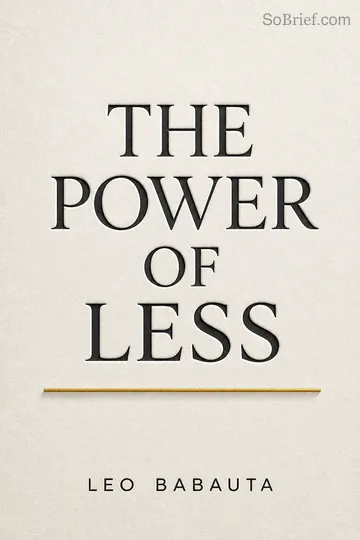
Leo Babauta is a simplicity blogger and author known for creating Zen Habits, a popular blog with over 260,000 subscribers. He has written several best-selling books on minimalism and productivity, including "The Power of Less" and "Zen To Done." Babauta's work focuses on helping people simplify their lives and improve their habits. He draws from his personal experiences, having transformed his own life through habit changes. Formerly a journalist for 18 years, Babauta is married with six children and moved from Guam to San Francisco in 2010. His approach emphasizes gradual, sustainable changes and focusing on essential priorities to achieve a more fulfilling life.
Other books by Leo Babauta

Download PDF
Download EPUB
.epub digital book format is ideal for reading ebooks on phones, tablets, and e-readers.








































