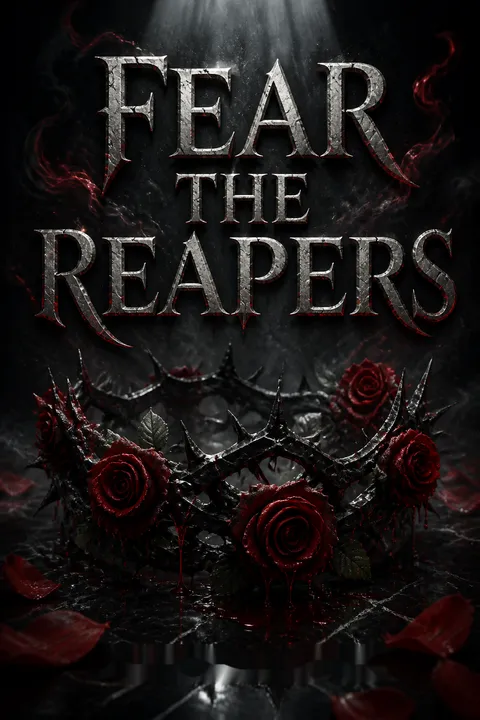

Plot Summary
Broken Promises, Broken Home
Stevie's earliest memories are a blend of her father's warmth and her mother's cruelty. Her father, loving but dying, makes Stevie promise to live, even after he's gone. When he succumbs to cancer, Stevie is left with her abusive mother, Carla, and later, a neglectful stepfather, Malcolm. Stevie's sense of self is battered by years of emotional and physical abuse, teaching her to hide her feelings and survive in silence. Her only solace is her younger half-sister, Alex, whom she protects fiercely. The trauma shapes Stevie into someone who expects betrayal and pain, but also someone who will do anything to protect those she loves.
Sisters in Survival
After Carla's overdose, Stevie becomes Alex's guardian, forced into adulthood far too soon. Malcolm, now their only legal guardian, is a drug addict who extorts and abuses them. Stevie shields Alex from the worst, taking the brunt of Malcolm's violence and manipulation. Their lives are a cycle of fear, poverty, and desperate attempts to escape. When Malcolm's debts catch up with him, he makes a deal with the town's most feared criminal syndicate, The Reapers, offering Alex as payment. Stevie, unwilling to let her sister be sacrificed, hatches a plan to take Alex's place, setting the stage for her entry into a world even darker than the one she's known.
The Reapers' Bargain
Malcolm's desperation leads him to The Reapers, four brothers who rule Caspian Hills through fear and violence. He offers a girl—Alex—as payment for his drug debts. The Reapers, led by Atlas, are ruthless and calculating, accepting the deal to maintain their reputation. Stevie, determined to save Alex, manipulates the situation and presents herself as the payment. The Reapers are initially suspicious but intrigued by Stevie's boldness and resilience. She enters their world not as a victim, but as a player, determined to survive and protect her sister at any cost.
Entering the Wolves' Den
Stevie's arrival at the Reapers' mansion is a test of will. She's subjected to intimidation, invasive searches, and psychological games. The brothers—Atlas, Cyrus, Tristan, and Ezra—each react differently to her presence: suspicion, desire, curiosity, and cruelty. Stevie quickly learns that survival means adapting to their rules while never letting them see her fear. She's given a luxurious room but is constantly reminded she's a captive. The Reapers' world is one of opulence and brutality, and Stevie must navigate their shifting moods and power plays, all while plotting her next move.
Four Kings, One Captive
Each Reaper is drawn to Stevie in his own way. Atlas, the leader, is cold and distant, hiding a past connection to Stevie. Cyrus is charming and protective, but also possessive. Tristan, haunted by trauma and a stutter, is both withdrawn and fiercely loyal. Ezra, the most violent, is fascinated by pain—both inflicting and understanding it. Stevie's scars, both physical and emotional, intrigue them. The brothers' dynamic is complex, shaped by their own childhood traumas and the need to maintain power. Stevie becomes both a symbol of their dominance and a catalyst for change within their fractured family.
Scars and Seduction
Stevie's relationship with the Reapers is a constant negotiation of boundaries. She's tested, humiliated, and sometimes comforted. Her scars—literal and metaphorical—become points of fascination and empathy. The brothers push her to reveal her pain, and she pushes back, refusing to be broken. Sexual tension simmers, especially with Cyrus and Ezra, leading to moments of vulnerability and unexpected tenderness. Stevie's ability to withstand their cruelty and return it in kind earns their respect, even as it deepens the dangerous attraction between them.
Boundaries and Betrayals
Stevie's attempts to maintain her autonomy are met with both resistance and grudging admiration. She forms uneasy alliances with each brother, learning their secrets and weaknesses. When she tries to escape, using Cyrus's trust against him, the fallout is brutal. The brothers feel betrayed, and Stevie is punished—physically and emotionally. Yet, even in punishment, there is a twisted intimacy. The lines between captor and captive blur, as Stevie and the Reapers begin to see each other as more than enemies or possessions.
The Price of Freedom
Stevie's escape attempt is both a bid for freedom and a test of the Reapers' feelings for her. She nearly drowns, only to be saved by Cyrus, who then lets her go—an act of mercy and heartbreak. When she's recaptured, the brothers' anger is palpable, but so is their fear of losing her. Stevie is locked away, isolated, and subjected to psychological torment. Her hunger strike forces the brothers to confront their own complicity in her suffering. The power dynamic shifts as they realize that keeping Stevie means more than just possession—it means responsibility and, perhaps, love.
The Club and the Queen
Stevie is introduced to the Reapers' criminal empire, including their nightclub, Hell's Tavern. Here, she meets Jessie, the club manager, and Melanie, Atlas's fiancée and the daughter of a rival cartel. Tensions flare as Stevie becomes a pawn in the power struggles between the Reapers and the Diaz Cartel. A violent confrontation with Melanie exposes the dangers of Stevie's new life and the lengths the Reapers will go to protect her. The club becomes a stage for both seduction and violence, as Stevie navigates shifting alliances and deadly rivalries.
Violence and Vulnerability
Stevie's past trauma resurfaces, both in nightmares and in the scars she carries. The Reapers, each in their own way, begin to open up about their own histories of abuse and loss. Moments of vulnerability—shared stories, confessions, and acts of care—create a fragile sense of family among the five. Yet, violence is never far away. When Stevie is forced to confront her rapist, Gavin, the Reapers give her the power to exact revenge. The act is both cathartic and horrifying, cementing her place among them and blurring the line between victim and perpetrator.
Hunger Strike
Stevie's hunger strike is a last-ditch effort to regain agency. The brothers, realizing they cannot break her spirit without destroying her, are forced to negotiate. Stevie demands more freedom, including the right to work at Hell's Tavern and contact with the outside world. The Reapers, reluctantly, agree. The balance of power shifts again, as Stevie becomes less a captive and more a partner—albeit one still bound by the dangers of their world. The truce is uneasy, but it marks a turning point in their relationship.
The Truth in Blood
Stevie's confrontation with her past is mirrored by the Reapers' own quest for justice. Together, they hunt down Gavin and his accomplices, giving Stevie the chance to reclaim her power through violence. The act is both a release and a burden, forcing Stevie to reckon with what she's become. The Reapers, too, are changed by the experience, seeing Stevie not just as a symbol of their power, but as someone who belongs with them—by choice as much as by force.
The Past Resurfaces
Jessie, once a friend and ally, is revealed as a betrayer, driven by jealousy and a twisted sense of loyalty to the Reapers. She lures Stevie into a trap, handing her over to masked men for torture and death. The betrayal is devastating, not just for Stevie, but for the brothers, who realize that their insular world breeds both loyalty and treachery. The past, in the form of old alliances and unresolved trauma, threatens to destroy everything they've built.
The Sister's Trap
Stevie learns that her sister Alex has been lured into a trap by Melanie and Jessie. Desperate to save her, Stevie risks everything, leaving the safety of the Reapers' home and walking into an ambush. She is captured, tortured, and nearly killed, but her focus remains on protecting Alex. The Reapers, realizing what's happened, mobilize to save her, confronting their own limitations and the consequences of their violent world.
The Final Reckoning
The Reapers storm Maria's Cantina, battling Jessie's hired men and rescuing Stevie in a bloody showdown. Jessie is exposed as the true traitor, and Melanie, surprisingly, helps the Reapers save Stevie. The aftermath is both brutal and cathartic: Jessie is handed over to the authorities, and the Reapers reaffirm their loyalty to Stevie. The violence is both an ending and a beginning, as old debts are paid and new bonds are forged in blood.
Choosing Family
In the aftermath, Stevie and the Reapers must decide what kind of family they want to be. Forgiveness is hard-won, but necessary. Stevie chooses to stay, not out of fear or obligation, but out of love—for Alex, for the brothers, and for herself. The Reapers, in turn, accept her as one of their own, not just a possession or a symbol, but as an equal. Together, they redefine what it means to be a family in a world built on violence and betrayal.
Becoming a Reaper
Stevie's journey comes full circle as she embraces her place among the Reapers. No longer a victim or a pawn, she is a partner, a lover, and a leader in her own right. The scars of the past remain, but they are no longer marks of shame—they are badges of survival and strength. The Reapers' world is still dangerous, but Stevie faces it with open eyes and a fierce heart. Together, they are unstoppable—a family forged in fire, blood, and love.
Analysis
Fear The Reapers is a dark, unflinching exploration of trauma, power, and the search for belonging in a world defined by violence. At its core, the novel is about survival—not just the physical endurance of pain, but the psychological resilience required to reclaim agency and identity after profound betrayal. Stevie's journey from victim to equal, from captive to family, is both harrowing and empowering. The Reapers, for all their brutality, are not redeemed by Stevie's love, but are instead forced to confront their own wounds and the consequences of their actions. The story challenges traditional notions of romance and morality, presenting love as something forged in adversity and sustained by mutual respect, vulnerability, and choice. In a modern context, the novel resonates as a meditation on the complexities of healing, the dangers of unchecked power, and the possibility of building new families from the ashes of the old. It is a testament to the strength required to break cycles of abuse and to the transformative power of choosing one's own path, even in the darkest of circumstances.
Review Summary
Fear The Reapers receives mixed reviews, averaging 3.46/5. Many readers enjoy the dark romance premise, compelling characters, and satisfying action sequences. However, common criticisms include rushed pacing, underdeveloped character relationships, and an abrupt emotional shift in the protagonist. The most frequent complaint is its striking similarity to Den of Vipers by K.A. Knight, with several readers calling it a copycat. Some praise the spice and found-family dynamic, while others find the insta-love unconvincing. The ending's tonal shift, particularly Mel's sudden redemption, drew significant criticism.
People Also Read








Characters
Stevie Alexander
Stevie is the emotional core of the story—a young woman forged in the fires of abuse, loss, and betrayal. Her childhood is marked by her mother's cruelty and her father's death, leaving her with deep scars and a fierce determination to protect her sister, Alex. Stevie's psychological complexity is rooted in her ability to endure pain and her refusal to be broken, even when faced with overwhelming odds. Her journey is one of reclaiming agency: she enters the Reapers' world as a sacrifice, but quickly becomes a player, challenging their power and forcing them to confront their own vulnerabilities. Stevie's relationships with the brothers are fraught with tension, desire, and mutual respect. She is both a mirror and a catalyst, exposing their wounds and helping them heal. Her development is a testament to resilience, as she transforms from victim to equal, ultimately choosing to stay not out of fear, but out of love and belonging.
Atlas Cole
Atlas is the eldest Reaper and the syndicate's cold, calculating leader. Haunted by the trauma of losing his parents and the burden of caring for his brothers, Atlas is driven by a need for control and a fear of vulnerability. His relationship with Stevie is complicated by a secret past—he was her mysterious confidant, "DC," before she ever entered his world. Atlas's engagement to Melanie is a political maneuver, masking his true feelings for Stevie. He struggles with jealousy, guilt, and the fear that loving Stevie will make him weak. Over the course of the story, Atlas is forced to confront his own emotional walls, ultimately choosing to risk everything for Stevie. His arc is one of learning to trust, to forgive, and to accept love, even when it threatens his carefully constructed world.
Cyrus Cole
Cyrus is the smooth-talking, charismatic twin, often serving as the bridge between his brothers and the outside world. Outwardly confident and playful, Cyrus hides his own scars—both literal and emotional—from a childhood marked by abuse and neglect. His relationship with Stevie is marked by mutual attraction, banter, and a surprising tenderness. Cyrus is the first to see Stevie as more than a captive, recognizing her strength and resilience. He struggles with possessiveness and the fear of betrayal, especially after Stevie uses his trust to attempt an escape. Ultimately, Cyrus's journey is one of vulnerability—learning to let down his guard, to forgive, and to accept that love is not a weakness, but a source of strength.
Tristan Cole
Tristan, Cyrus's twin, is the most withdrawn and enigmatic of the brothers. Scarred by childhood abuse and a persistent stutter, Tristan communicates more through actions than words. He is fiercely protective of his family, especially Cyrus, and is slow to trust outsiders. Stevie's presence challenges him, forcing him to confront his own fears and insecurities. Their relationship is built on mutual understanding—both are survivors, both know what it means to be broken and to fight for control. Tristan's arc is one of gradual opening, as he learns to trust Stevie and to accept that he is worthy of love and connection.
Ezra Cole
Ezra is the most volatile and dangerous of the brothers, channeling his trauma into violence and art. He is fascinated by pain—both inflicting it and understanding it—and is drawn to Stevie's scars as evidence of her survival. Ezra's relationship with Stevie is a dance of dominance and submission, cruelty and care. He is both her tormentor and her protector, pushing her to confront her own darkness while revealing his own. Ezra's development is marked by a growing capacity for empathy and a recognition that love does not have to be destructive. Through Stevie, he learns that vulnerability can coexist with strength, and that healing is possible even for the most damaged souls.
Alex Warner
Alex is Stevie's younger half-sister and the primary reason for many of Stevie's choices. Innocent and empathetic, Alex represents the hope for a better future—a life free from abuse and fear. Her vulnerability is a constant source of anxiety for Stevie, driving her to make sacrifices and take risks. Alex's presence in the story is a reminder of what is at stake, and her eventual rescue is both a victory and a turning point for Stevie. Alex's relationship with Stevie is one of unconditional love, and her safety becomes the measure of Stevie's success.
Malcolm Warner
Malcolm is the embodiment of everything Stevie fears and despises—a violent, manipulative addict who exploits and endangers his stepdaughters. His decision to sell Alex to the Reapers sets the entire plot in motion, forcing Stevie to confront the darkest aspects of her world. Malcolm's presence is a constant threat, even after he disappears, and his eventual fate is a testament to the story's commitment to justice and retribution.
Melanie Diaz
Melanie is Atlas's fiancée and the daughter of a rival cartel. Initially positioned as an antagonist—jealous, vindictive, and dangerous—Melanie's character is more complex than she appears. Her engagement to Atlas is a political arrangement, masking her own vulnerabilities and desires. Melanie's rivalry with Stevie is both personal and symbolic, representing the larger power struggles at play. In the end, Melanie becomes an unexpected ally, helping to save Stevie and demonstrating that even in a world of violence, alliances can shift and redemption is possible.
Jessie
Jessie begins as a friend and confidante, managing Hell's Tavern and offering Stevie support. However, her loyalty to the Reapers is twisted by jealousy and a sense of entitlement. Jessie's betrayal is a devastating blow, revealing the dangers of obsession and the fragility of trust in a world built on secrets. Her actions force Stevie and the brothers to confront the consequences of their insular world, and her eventual downfall is both tragic and necessary.
Gavin Anderson
Gavin is the embodiment of Stevie's deepest wounds—a former lover who betrays and brutalizes her. His presence in the story is a constant reminder of the violence women endure and the difficulty of healing from such trauma. The Reapers' decision to let Stevie exact her own revenge is both empowering and troubling, forcing her to confront the darkness within herself. Gavin's death is not just an act of vengeance, but a moment of catharsis and transformation for Stevie.
Plot Devices
Trauma as Identity and Motivation
The narrative is driven by the characters' histories of abuse, loss, and betrayal. Trauma is not just backstory—it is the engine of character development and plot progression. Stevie's scars, the brothers' childhoods, and the cycle of violence they all endure are explored with unflinching honesty. The story uses flashbacks, confessions, and physical scars as symbols of survival and as catalysts for change. Healing is depicted as a messy, nonlinear process, requiring both confrontation and forgiveness.
Power Dynamics and Shifting Control
The central tension of the story is the shifting balance of power between Stevie and the Reapers. What begins as a relationship of captor and captive evolves into one of negotiation, mutual respect, and eventually, partnership. The use of physical captivity, psychological games, and sexual dominance/submission explores themes of autonomy, consent, and the ways in which power can be both destructive and redemptive. The narrative structure mirrors this dynamic, with chapters alternating between perspectives and revealing the inner workings of both sides.
Found Family and Chosen Loyalty
The Reapers are bound by blood and shared trauma, but their family is incomplete until Stevie enters their world. The story interrogates what it means to be a family—whether it is defined by biology, loyalty, or shared suffering. Stevie's journey is one of finding belonging, not through traditional means, but through the forging of new bonds in the crucible of violence and love. The motif of "found family" is reinforced through repeated acts of protection, sacrifice, and forgiveness.
Revenge and Justice
The narrative does not shy away from the realities of violence, both as a tool of oppression and as a means of reclaiming power. Stevie's revenge against her rapist, the brothers' retribution against betrayers, and the constant threat of external enemies create a world where justice is personal and often brutal. The story uses these moments to explore the costs of vengeance and the possibility of redemption, questioning whether true healing is possible in a world built on blood.
Foreshadowing and Symbolism
The story is rich with foreshadowing and symbolic imagery. Scars—both physical and emotional—are recurring motifs, representing both pain and survival. Doors and thresholds symbolize transitions: entering the Reapers' home, crossing into new phases of relationship, and the constant tension between captivity and freedom. The use of art, especially Ezra's blood paintings and Stevie's own creations, serves as a metaphor for transformation and the reclaiming of narrative control.
Download PDF
Download EPUB
.epub digital book format is ideal for reading ebooks on phones, tablets, and e-readers.








































