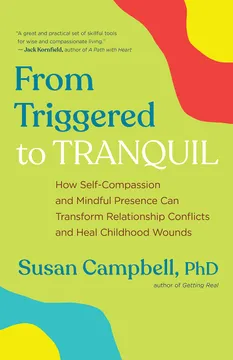
Key Takeaways
1. Triggers are Universal Portals to Self-Healing
Our unprocessed emotional wounds and the reactions that arise from them are what make us go to war, blow up at our children, get hostile on the freeways, hit “send” on that email rant, walk out of meetings, argue with our loved ones, and make short-sighted decisions.
Unconscious reactions. Triggers are not a sign of weakness but a built-in survival mechanism, often rooted in childhood hurts or developmental traumas. These reactions, whether fight, flight, or freeze, hijack our higher brain functions, leading to automatic, rigid behaviors and poor decision-making. Recognizing that almost everyone experiences triggers helps normalize these powerful, often unconscious, responses.
Beyond blame. When we get triggered, our primitive "lizard brain" takes over, flooding our system with neurochemicals like adrenaline and cortisol. This isn't anyone's fault; it's a biological response to perceived threats, which in modern times are often interpersonal (e.g., threats to connection, approval, or self-image). Understanding this neurological basis helps us move beyond self-blame or blaming others.
Doorway to wholeness. Instead of viewing triggers as problems, we can see them as invaluable portals into our unconscious mind. They reveal denied, abandoned, or repressed aspects of ourselves—our "shadow"—and unmet childhood needs. Engaging in "trigger work" allows us to explore these hidden parts, integrate them, and expand our sense of self, leading to deeper self-knowledge and more authentic connections.
2. Mastering Triggers Involves Five Core Steps
The starting point for this work is the experience of getting triggered into some version of fight, flight, or freeze — which may involve angry feelings, a tight chest, the urge to hide, and so on.
Structured healing. Transforming reactivity isn't a haphazard process; it follows a clear, interdependent five-step framework. Each step builds upon the last, creating a reinforcing cycle that fosters healing and growth. These steps are designed to move you from automatic, unconscious reactions to conscious, resourceful responses.
The Five Steps of Trigger Work:
- Admitting and accepting your insecurities: Acknowledging that triggers happen and are normal.
- Learning your unique trigger signature: Identifying your specific patterns of reaction.
- Pausing to regulate yourself: Halting the reactive cycle to calm your nervous system.
- Being with sensations and emotions: Cultivating self-compassion and exploring underlying feelings.
- Repairing and clearing the air: Restoring connection and trust after a rupture.
Continuous practice. These steps are not a one-time fix but a lifelong practice. Consistent engagement with each stage, even in small doses, builds confidence and skill. The more you practice, the more easily you can navigate triggers, transforming moments of discomfort into opportunities for profound self-healing and stronger relationships.
3. Acceptance is the Foundation for Healing Insecurities
Acceptance is achieved when you are able to notice and accept that you sometimes get triggered, that other people also get triggered, and that sometimes others get triggered by things that you do or say.
Embrace imperfection. True healing begins with accepting that you, like everyone else, get triggered. This means letting go of self-judgment, shame, or the need to appear perfect. If your self-image struggles with mistakes or imperfections, this step might be challenging, but it's crucial for allowing denied or repressed parts of yourself to surface and heal.
Beyond blame and justification. When triggered, the ego-mind often seeks to blame others or justify our reactions, preventing deeper healing. Acceptance means rising above this need, recognizing that our emotional sensitivities stem from our own inner world and past experiences. This shift in perspective empowers us to take responsibility for our reactions, rather than projecting them onto others.
Overcoming resistance. Common emotional blocks to acceptance include:
- Shame: Believing triggers mean you are flawed.
- Mistrust: Fearing that owning your reactions lets others off the hook.
- Protecting parents: Denying childhood wounds to preserve a positive family image.
Self-compassion is the antidote to shame, while recognizing "fear-stories" helps dismantle mistrust. Accepting your early history, even its painful parts, is the first step toward self-healing.
4. Identify Your Unique "Trigger Signature" for Early Detection
Knowing your unique trigger signature helps you quickly recognize the fact that you are getting triggered.
Personalized patterns. Just as your handwriting is unique, so is your "trigger signature"—a characteristic set of reactive behaviors, feelings, thoughts, and body sensations that emerge when you're triggered. This signature often stems from a core fear, such as fear of rejection, abandonment, or not being good enough, and is linked to your attachment style (e.g., anxious pursuer, avoidant withdrawer).
Mapping your reactions. To identify your signature, recall past upsetting incidents and detail:
- Reactive behaviors: Yelling, withdrawing, defending, freezing, fawning.
- Reactive feelings: Anger, fear, sadness, overwhelm, confusion.
- Body sensations: Tight jaw, chest pressure, numbness, agitation.
- Reactive story/self-talk: "I'm not important," "They're trying to control me."
- Core fear: The underlying insecurity (e.g., not being valued).
- Core need: What you truly desire (e.g., to feel accepted).
Early warning system. Recognizing even one element of your trigger signature acts as an early warning sign, empowering you to intervene before reactivity escalates. For instance, if you know judgmental thoughts are part of your signature, you can pause and question them, rather than acting on them as objective truths. This self-awareness is a crucial step toward conscious response over automatic reaction.
5. Pause and Self-Regulate to Regain Inner Control
Pausing is important because it stops you from doing or saying things that might escalate a conflict, retraumatize yourself or another person, or cause some other kind of harm.
Halting the runaway train. A trigger reaction can feel like an unstoppable force. Pausing is your inner braking system, allowing you to interrupt automatic fight, flight, or freeze responses. This conscious intervention develops voluntary control over your internal states, preventing further damage to relationships and yourself.
The pause agreement. In relationships, a mutual pause agreement is invaluable. Both parties agree on a neutral signal (e.g., "pause") that, when uttered, immediately halts all conversation. This isn't to shut someone down, but to create space for everyone to calm their nervous system. The agreement also includes deciding on a pause duration (short, medium, or long) and a commitment to return for repair.
Conscious self-calming. During a pause, engage in practices to regulate your nervous system. Slow, deep breathing (inhaling for 4 counts, exhaling for 6-8) activates the vagus nerve, releasing relaxation hormones. Other techniques include:
- Focusing on body sensations (e.g., feeling your feet on the floor, your body in a chair).
- Mindfulness meditation or counting breaths.
- Physical activities like walking or gentle stretching.
Consistent practice, even when not triggered, makes these tools readily accessible when you need them most, bringing your higher brain functions back online.
6. Embrace Emotions with Compassionate Self-Inquiry
Whatever you notice arising in you, see if you can welcome this and embrace it.
Inner nurturing. Once calm, the next step is to intimately engage with your triggered feelings and sensations through "Compassionate Self-Inquiry." This involves becoming a "spacious, loving presence" for your inner experience, much like a good mother comforts a hurting child. This practice helps heal old wounds by allowing previously suppressed emotions to be felt and processed in a safe, accepting internal environment.
The inquiry process:
- Calm and recall: After self-calming, gently recall the triggering event from a witness perspective.
- Feel and observe: Allow sensations, feelings, and reactive thoughts to arise, observing them with curiosity.
- Explore deeper layers: Notice if core fears (e.g., "I'm not enough") or childhood memories surface.
- Nurture your inner child: Offer empathy, tenderness, and reassurance to the vulnerable parts of yourself.
This dual awareness—experiencing emotions while witnessing them—is key to integration.
Antidote to shame. Many learned in childhood to suppress or judge their emotions, leading to shame. Self-compassion directly counters this by validating your feelings as understandable and acceptable. Repeatedly engaging in this practice helps unfreeze stuck energy, allowing for emotional release (e.g., tears, trembling) and a gradual shift towards greater self-acceptance and inner wholeness.
7. Repair Ruptures to Restore Connection and Trust
As you come to know each other’s sensitivities, this helps you get over the tendency to take the other person’s reactive behavior personally.
Reconnecting after disconnection. Repair is the crucial final step, especially after a triggered interaction with others. It's about restoring safety, trust, and connection, not just "getting over it." Effective repair moves beyond typical long-winded explanations to heartfelt, concise communication that addresses the emotional core of the rupture.
The repair statement. After individual self-inquiry, prepare a repair statement that includes:
- Ownership: Acknowledge your triggered behavior.
- Core fear: Reveal the underlying fear (e.g., "my fear of not being valued").
- Reactive story: Share the meaning you made of the other's actions.
- Apology: Express genuine sorrow for your behavior.
- Do-over: State what you wish you had said or done.
- Core need: Ask for reassurance related to your core fear (e.g., "I need your help feeling important").
This structured approach helps both parties take responsibility and fosters empathy.
Reassuring response. The listener's role is to offer a simple, sincere statement of understanding and love, directly addressing the speaker's core need (e.g., "I do love you very much," "Your needs are important to me"). This, coupled with gentle touch and eye contact, helps rewire insecure brain circuits. Even unilateral repairs, where only one person was triggered, are vital to prevent the buildup of negative "fear-stories" that erode trust over time.
8. Intimate Relationships are Powerful Trigger Crucibles
When your partner gets triggered, you are very likely to become triggered also — even if you don’t exhibit your reaction in an obvious way.
The "herd of two." Intimate partnerships are fertile ground for triggers because partners are "wired together" as a biological unit. When one person's survival alarm rings, the other's is likely to activate too, leading to "cotriggering." This means that when your partner is most in need, you might be least emotionally available, often re-stimulating childhood feelings of being alone in distress.
Understanding reactive cycles. Couples often fall into predictable "reactive cycles" where each partner's trigger signature feeds the other's (e.g., one criticizes, the other defends, escalating the conflict). Recognizing this cycle as a shared problem, rather than blaming one person, fosters mutual responsibility and cooperation in breaking the pattern.
Beyond obvious triggers. Long-term relationships can also suffer from "subliminal triggers"—unnoticed, chronic states of vigilance or anxiety. Partners may stop asking for what they truly need, operating on "fear-stories" (e.g., "I don't matter to them"). Addressing these requires open conversations about unmet expectations and a willingness to make vulnerable requests, fostering deeper trust and authentic connection.
9. Groups Amplify Triggers, Offering Unique Growth Opportunities
Adult groups often mirror some of the dynamics of our early family, school, or peer-group experiences.
Echoes of the past. Group settings, whether work, social, or personal development, can powerfully re-stimulate childhood experiences related to social anxiety, authority, conformity, and belonging. Our early family roles (e.g., rescuer, black sheep) often unconsciously resurface, influencing how we interact and get triggered by leaders or peers.
Common group triggers:
- Criticism/Interpretation: Feeling blamed, misunderstood, or unseen.
- "Plop" effect: Feeling invisible or that your voice doesn't matter when contributions are ignored.
- Time scarcity: Fear of being left out or unimportant when time runs out for sharing.
- Authority issues: Projecting unmet childhood needs onto leaders, leading to mistrust or rebellion.
- Performance anxiety: Fear of being judged when speaking or performing publicly.
- Conflict: Re-stimulating fears of chaos or abandonment from dysfunctional family backgrounds.
Mindful participation. Leaders and members can proactively manage triggers by:
- Setting context: Establishing clear ground rules and a "group pause" agreement.
- Marking boundaries: Asserting personal needs (e.g., no unsolicited physical touch) to prevent retraumatization.
- Public repair: Apologizing and taking ownership for triggered behavior witnessed by the group, fostering collective learning and trust.
Groups, as microcosms of society, offer invaluable opportunities to practice self-regulation and contribute to a more empathetic, functional community.
10. World Events Can Be Catalysts for Profound Inner Work
True strength and wisdom, the kind that enable us to cope with the complexity of today’s world situation, require integrated input from all parts of the system, including the vulnerable parts.
Collective overwhelm. The constant barrage of global crises—climate change, political polarization, social injustice—can trigger widespread anxiety, helplessness, and depression. This dysregulated state makes us susceptible to manipulation and hinders our ability to think clearly or act effectively. To contribute to solutions, we must first gain sovereignty over our inner state.
Personal to universal. Our reactions to world events often reveal personal, unprocessed emotional wounds. For example, outrage over injustice might stem from childhood experiences of powerlessness. By using "Compassionate Self-Inquiry" to explore these personal triggers, we can differentiate our reactive stories from objective reality, transforming raw emotion into fuel for genuine outrage and effective, clear-headed action.
Whole-making for the world. Just as we integrate our own neglected inner parts for personal wholeness, we must approach global challenges with a "whole-systems perspective." This means advocating for solutions that consider everyone's needs, rather than resorting to divisive "us vs. them" tactics. Leaders who have done their inner trigger work are less susceptible to manipulation and can inspire constructive dialogue, fostering cooperation and resilience in a chaotic world.
People Also Read










Download PDF
Download EPUB
.epub digital book format is ideal for reading ebooks on phones, tablets, and e-readers.








































