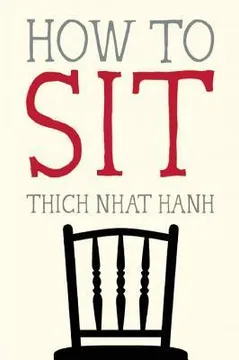

Key Takeaways
1. Sitting is Mindful Presence, Not Just a Posture
To sit, in this book, means to sit in such a way that you enjoy sitting, to sit in a relaxed way, with your mind awake, calm, and clear.
Redefining sitting. Many of us spend excessive time sitting—at work, with computers, in cars—but often without true presence. This book redefines sitting not as a mere physical position, but as a conscious practice of being fully present, relaxed, and mentally clear. It's about transforming a mundane activity into a source of enjoyment and awareness.
A trained practice. Achieving this quality of sitting requires training and practice. It involves cultivating a state where your mind is awake yet calm, allowing you to experience the simple pleasure of being. This contrasts sharply with the distracted, often tense, way we typically sit, highlighting the need for intentionality.
Beyond physical comfort. While physical comfort is important for sustained sitting, the essence lies in the mental and spiritual state. It's about creating an inner environment of peace and clarity, regardless of the external setting. This mindful approach to sitting becomes a foundation for deeper self-understanding and well-being.
2. Integrate Body, Mind, and Breath for Wholeness
As soon as we pay attention to our breath, as we breathe in, these three things—body, breath, and mind—come together.
Coming back to yourself. In our busy lives, our attention is often fragmented: the body is in one place, the mind wanders, and the breath is ignored. The simple act of paying attention to your breath instantly unifies these three elements, bringing you back to yourself and making you fully present in the here and now.
The unifying broth. Think of your breath as the broth that harmonizes disparate ingredients in a soup. It integrates your spirit and mind, making them one cohesive entity. This process of integration is not about control, but about gentle presence, allowing your body, mind, and breath to simply be themselves, embodying a form of nonviolence towards your inner self.
Contagious peace. When your breath becomes calmer and deeper through simple recognition, it naturally influences your body and mind, fostering a sense of peace. This inner calm is contagious, not only within your own being but also radiating outwards, much like a calm person can steady a panicked boat in a storm, demonstrating the power of your quality of being.
3. Cultivate a High Quality of Being Over Constant Doing
The quality of our presence is the most positive element that we can contribute to the world.
Being over action. The common adage, "Don't just sit there, do something," often pushes us towards constant activity. However, if our inner state—our "quality of being"—is filled with anger, worry, or lack of understanding, our actions will reflect that poor foundation. True, impactful action stems from a place of peace, understanding, and equanimity.
The power of non-action. There are individuals whose quiet presence, rather than their busy endeavors, is profoundly crucial for the well-being of the world. Like trees in a forest that simply grow and provide clean air, their steady, solid presence contributes significantly. This "non-action" is a powerful contribution, making them truly available and impactful.
Beyond superficial effort. Many people engage in extensive activities, even meditation, without transforming their inner struggles like anger or jealousy. This is because the quality of our being dictates the quality of our actions. To be solid, fully alive, and present in the here and now is a profound and positive contribution to our collective situation, far more than mere busyness.
4. Find Joy and Freedom in the Simple Act of Sitting
We can sit just to enjoy sitting and breathing.
No goal, just joy. We don't need to sit with grand intentions like achieving enlightenment or becoming smarter. The primary purpose of sitting can simply be to enjoy the pleasure of it, much like a child enjoys chocolate or one feels happy standing on a hilltop without a specific reason. Sitting is an end in itself, a source of immediate happiness.
A celebration of life. Mindful breathing brings an immediate insight: you are alive. This realization transforms each breath into a celebration of life, acknowledging the miracle of your existence. This simple awareness nourishes joy and calm, making sitting a deeply satisfying experience without the pressure of external goals.
Freedom in the present. True happiness is intertwined with freedom. By returning to the present moment through sitting, we liberate ourselves from the burdens of past regrets, future anxieties, and endless projects. This arrival home, this feeling of being truly present, radiates joy and peace, benefiting everyone around us.
5. Use Breath as an Anchor to Navigate Emotions
Mindful breathing is your anchor in the storm.
Observing the river of feelings. Within each of us flows a river of feelings—pleasant, unpleasant, and neutral. Instead of being swept downstream by strong emotions, sitting allows us to observe them from the riverbank, naming them as they pass. This creates distance, helping us see that feelings are impermanent and not the entirety of who we are.
Weathering the storm. Strong emotions are like storms that can cause damage. Our practice is to create a safe inner environment to weather these storms, protecting our body and mind. By recognizing that "this is only an emotion, it's not the whole of me," we gain a basic insight that prevents us from being overwhelmed and helps us survive the storm, becoming stronger each time.
Belly breathing for stability. When a storm of emotion arises, shift your attention from your thoughts to your lower belly, focusing solely on your breath. Your belly acts like the steady trunk of a tree, grounding you while the "top of the tree" (your mind) is tossed. This practice helps emotions pass, and even transforms neutral feelings—like the absence of pain—into moments of profound joy and gratitude.
6. Extend Mindful Sitting into Daily Life
Whenever we perform our daily activities with mindful awareness, we’re practicing meditation.
Meditation beyond the cushion. While sitting meditation is a powerful practice, mindfulness meditation is not confined to a specific posture or location. It can be practiced anywhere, in any position—walking, standing, lying down, or performing daily activities. The key is to bring mindful awareness to whatever you are doing.
Bringing presence into the world. The security and protection cultivated during sitting meditation can be carried into every action of your day. Whether you are walking, talking, or working, engaging fully in life with mindful awareness allows you to bring joy and presence to your relationships and the world around you.
Mindful daily tasks. Simple tasks like mopping the floor can become opportunities for meditation. By mopping just to mop, and finding happiness in the act itself, you integrate the contentment experienced in sitting meditation into your daily routine. This restoration of presence, even for a few seconds, offers a high quality of being to yourself and others.
7. Connect with Ancestors and Community for Collective Strength
When we sit together, we create a collective energy of mindfulness that is very powerful.
A stream of continuation. You are never truly sitting alone; your ancestors—parents, grandparents, and great-grandparents—are present within every cell of your body. By acknowledging and inviting them to breathe with you, you recognize yourself as a continuous stream, offering them the chance to experience peaceful mindfulness through you.
Sitting with spiritual guides. Beyond blood relatives, you can invite your spiritual ancestors—figures like Moses, Jesus, or Mohammed—to breathe and sit with you. They are also within you, and by inviting them, you give the seeds of mindfulness, peace, and enlightenment within yourself a chance to manifest beautifully.
The power of collective energy. Sitting with others creates a powerful collective energy of mindfulness, making meditation easier and more effective. Like a flock of birds flying smoothly together, each individual contributes to and benefits from the shared energy, allowing for deeper insight and the capacity to embrace and transform personal suffering with collective support.
8. Guided Meditations Offer Tools for Deep Transformation
A guided meditation can also help us come face to face with suffering we have been avoiding.
Ancient and beneficial. Guided meditation is not a modern invention; it was practiced over 2,500 years ago during the time of the Buddha. Even for those who enjoy silent sitting, guided meditations offer a unique opportunity to look deeply into the mind, sow wholesome seeds, and cultivate them for transforming suffering.
Facing inner landscapes. These meditations provide a structured way to confront and understand suffering that might otherwise be avoided. By seeing its root causes more clearly, we can begin to free ourselves from its bondage. Examples include:
- Joy: Using breath to bring calm and ease, smiling to release tension.
- Sitting with the Buddha: Inviting the Buddha within to sit and breathe, making the practice effortless.
- Talking with your Inner Child: Addressing past hurts and fears, bringing the vulnerable child and adult self together.
- Sitting with Death: Cultivating awareness of impermanence to transform fear and live more meaningfully.
Personalized practice. The practice encourages writing your own gathas (short verses) to align with your specific intentions, choosing elements to embrace and let go of. This personalizes the meditation, making it a direct tool for self-transformation and returning to your true presence.
9. Overcome Habit Energy to Embrace the Present
Habit energy is energy that is fueled by an old pattern, situation, or habit.
The push to do more. When you sit, you might feel an internal push to get up and do something else—this is habit energy. It's a powerful force, driven by old patterns and the belief that happiness lies somewhere else, in the future, rather than in the present moment. This energy often makes the present seem boring.
A transmitted legacy. This tendency to constantly run and seek happiness externally is a deeply ingrained habit, often transmitted across generations. Our ancestors, and even our parents, may have passed down this pattern, making it challenging to simply stop and be present without conscious awareness and effort.
The bell as a friend. The sound of a bell, whether physical or imagined, serves as a gentle reminder to let go of habit energy and return home to yourself, to the present moment. It's a call to stop running and embrace the wonders of life within and around you, allowing you to become free from the relentless pull of past conditioning and future anxieties.
Review Summary
Readers largely praise How to Sit as a deceptively simple yet profoundly impactful guide to mindfulness meditation. Many appreciate its bite-sized, accessible format, finding it ideal for daily reading one page at a time. Common highlights include its gentle wisdom, practical exercises, and focus on present-moment awareness. Critics note it can feel repetitive or overly simplistic, particularly for intellectually inclined readers or experienced meditators. Overall, most readers find it a valuable, calming companion that effectively introduces the transformative potential of sitting meditation.
People Also Read



Mindfulness Essentials Series
About the Author
Other books by Thich Nhat Hanh



Download PDF
Download EPUB
.epub digital book format is ideal for reading ebooks on phones, tablets, and e-readers.








































