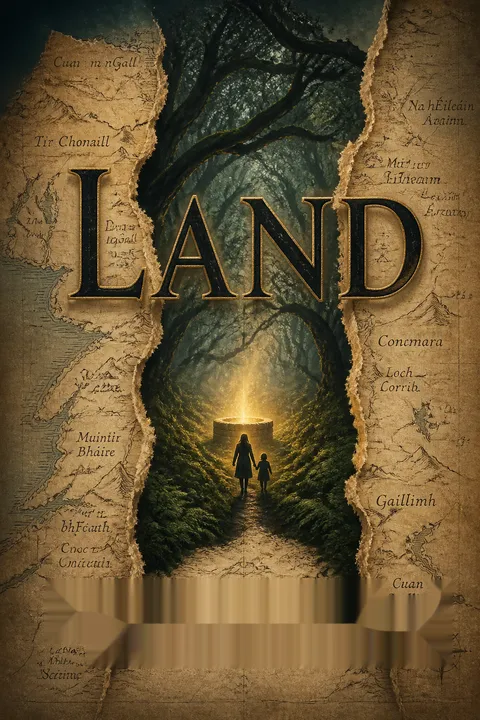

Plot Summary
Mapping the Unknown Land
Tomás, accompanied by his young son Liam, ventures through the battered Irish peninsula in 1865, mapping terrain for the British occupiers. While the land bristles with scars from famine and mass emigration, Tomás is committed not only to cartographic accuracy but to preserving history erased by power. For Liam, the landscape is charged with anxiety and fantasy—his father is distant, exacting, and relentless. As they measure, the ruined homes and vanished families press on them, making each mark on the map a quiet act of mourning. Through careful, methodical labor, father and son confront each other's weaknesses and hidden strengths, feeling the weight of their precarious safety, the demands of survival, and their responsibility to record what has been lost.
The Well's Secret Waters
Sent into an unmapped woodland to locate a stream's source—a secret well—Liam's journey is colored by the folklore of the land and the memory of the Great Famine. In the copse's supernatural hush, he battles his fears: the eerie mossy mounds that conjure child graves, unseen laughter, and an accident that leaves him transiently lost and alone. The well itself is layered in pre-Christian myth and local superstition, promising revelation but threatening madness. Both Tomás and Liam, after their separate encounters with the spring, sense that the land's meaning cannot be contained in numbers or lines. The mystery of the well breaks rational logic, luring them to see the peninsula as haunted, its history encoded beneath the surface, ungraspable by standard maps.
Lost in the Copse
After Liam's panic-ridden trek in the copse, Tomás vanishes, leaving Liam to navigate hunger, cold, and isolation. The day becomes an ordeal of endurance: a limping, shoeless wait on the hillside, visions of distant strangers, and an aching longing for familial warmth. The ruined, depopulated landscape amplifies his sense of abandonment, pressing him toward existential despair—until the kindness of the local widow rescues him. She gives him shelter, clothes, and food, passing along her own haunted memories of famine loss. Yet the ghostliness lingers; searches for Tomás in the wild find nothing. The land repeats loss, consuming memory and voice, and leaving Liam suspended between trauma and belonging.
Hunger and Haunted Ground
The widow's recollections of a thriving peninsula, now emptied by the Great Hunger, structure a communal grief that refuses to yield to progress. The mapping project becomes, for Tomás and the widow, an uneasy exchange: the official erasure of vanished homes and families, versus their personal need to remember and testify. The narratives of dispossession, starvation, and emigration echo through her dreams and daily acts; for Liam, these stories mingle with his own longing for home. Food—scarce, symbolic—marks both their traumas and hopes. Their struggle against silence and forgetting becomes a form of resistance, insisting that personal and national loss be seen and recorded, however imperfectly.
Names on the Map
Tomás's obsessive commitment to recording the real story of the land—retaining native names, inscribing evictions and famine—puts him at odds with British overlords and the colonial priests. The act of naming is deeply political: it resists the tidy erasures of power, preserving memory in ink against official amnesia. Maps become a battleground: Tomás draws a secret, counter-map, honoring what was, as his mind grows more fevered by the well's revelations. This project is also a gift and burden for Liam, laying the groundwork for later generations to confront the violence behind "progress." Naming is an act of survival, agency, and stubborn hope.
Possession and Exile
Tomás, after drinking the well's supernatural water, is overtaken by a torrent of words, vision, and hallucination. The priest's arrival marks colonial Christian order re-imposing itself, and Tomás's "possession" becomes both a medical and spiritual crisis. Tied up, exorcised, starved, and shamed, Tomás's suffering exposes the collision of folk knowledge, trauma, and religious paranoia. The experience scars Liam and the community, and erodes the family's fragile stability. Tomás is both alienated and "enlightened"—seeing deeper connections between land, myth, history, and power, even as he cannot return to normal life. Exile becomes a shared fate: in mind, faith, and body.
Shadows of Survival
Retreating into memories, Tomás recalls the brutal compensations of workhouse survival: loss of language, family, identity; the chance encounter with Phina; the picking up of craft, skill, and a stubborn will to endure. Ghosts of siblings and parents haunt his steps—echoes of hunger, loss, and shame. A glimmer of love, hope, and solidarity emerges: forming bonds with Phina and a circle of the dispossessed, trying to create possibility amidst wreckage. The cost of survival is forgetting—yet Tomás never escapes the need to remember and bear witness, even as success is bought by past and future exile.
The Widow's Shelter
Phina and the children's arrival in the widow's home, after Tomás's mental and spiritual crisis, sketches a rare zone of safety. Old griefs are aired, new losses mourned, and the network of women's labor that sustains memory and hope becomes visible. Here meals are shared, beds prepared, and traumas watched over—until Tomás's partial return signals a negotiation between old wounds and ongoing need. This shelter is no permanent home. The demands of survival—rent, work, repairs—intrude, and the family must soon choose between a haunted past and an uncertain future on the open land.
Thin Places, Thin Bonds
Taking up residence in the ruined cottage, the family is held together by Phina's refusals to accept less than safety and Tomás's desire to inscribe history on his own terms. The land's haunted past shadows their labor: every stone, every seed, every song gestures to survival snatched from disaster. Yet the balance is fragile. Enda's restlessness, Liam's apprenticeship to conflicting mentors (father and priest), and the presence of old traumas threaten to rip the family's bonds. Home is both shelter and risk—every act repeats the tension between absence and presence, memory and forgetting.
Children of the Famine
Liam and Enda's competitions and jealousies give way to solidarity in moments of need: Enda takes up the mapping when Liam falls, Rose becomes keeper of practical affairs, Eugene learns in his own mysterious way. Celebration and survival turn around the table, the fiddle, the animal companions, even as the threat of hunger, eviction, and outside violence persists. Education—the priest's school versus Tomás's memory work—is a site of hope and harm. The next generation must decide what histories to claim, what stories to tell, and what debts are owed the land and each other.
Trial by Water
As Phina's health flags, the children—especially Enda—are forced to leave the peninsula behind for new worlds, victims of economic hardship and colonial oppression. Boats, crossings, and exile become both literal and psychological realities: Enda's emigration, Rose and Eugene's eventual flight, the family's scattering after Phina's death. Each leaves bearing shame, blame, and half-forgotten promises. Farewells are hasty, imperfect, incomplete. Yet water—the source of revelation, ordeal, and change—again marks the cycles of loss and occasional renewal.
The Priest's Bargain
The local priest, Father Joseph, emerges as both a spiritual father and a colonizing agent. He exploits Liam's ambition and need for direction, steering him away from the language and memory of his people and into the strict Jesuit fold. Vocation, sacrifice, and self-denial become means of discipline but also escape. The cost is real: a wedge is driven between Liam and his siblings, between the family and the folkways that sustained them. "Salvation" is both a doorway and a trap, and the price is clarity about what is gained and what is lost.
Breaking the Family
With Phina's death, all bonds seem irreparably broken: Liam leaves for the priesthood, Enda flees under another identity, Rose and Eugene are eventually forced into exile. Each character must undertake their own uncertain journey, faced with violence, violation, isolation, and the daily work of keeping faith in the possibility of home. Each departure is marked by promises that cannot be fulfilled—a letter sent unanswered, a grave untended, a brother or sister lost to the elements. The family's legacy is an open wound, a question without answer, and each survivor walks with invisible shackles of guilt and longing.
Chains of Duty
Tomás's later years are marked by physical debilitation: loss of hand, loss of work, loss of purpose. The redcoat map work brings with it not only small stability (compensation, habit) but a bitter reminder that progress is predicated on violence, erasure, and extraction. Tomás's ambivalence—his simultaneous hunger for mapping truth and horror at the cost—mirrors the family's broader conflict. Bureaucratic language and the violence of duty entangle with wounds that never heal, and grace is found, sometimes, only in the smallest gestures of domestic care or community memory.
Exile and Return
Enda's life in North America is a string of humiliations, exploitations, and hard-won skill: labor as "hired girl," street musician, lover, and soon—unexpected—mother. Liam's Jesuit mission in India collapses under the weight of witnessed suffering and the violence that missionary "charity" can inflict. Both siblings' longings for home are refracted through loss and guilt. Ghosts follow them in violin notes and failed prayers. The hope of reunion recedes, yet some connection, however fractured, persists in imagination, letters, and old songs.
The Price of Departure
Rose and Eugene's attempted escape from landowner violence—after a brutal attack and dire retribution—marks another cycle of forced movement, sacrifice, and wrenching loss. Acts of self-defense and solidarity are tainted by the knowledge that justice bends to power, and that flight is the only option. Absolution, forgiveness, and reconciliation are deferred by the sea. Across the Atlantic, old ties await, but nothing can undo the trauma, the deaths along the way, or the price exacted for a moment's safety.
Lost Children, Unfound Paths
In the final movements, the children of the Famine and exile become wanderers, strangers—each forging a precarious foothold in new worlds. Enda, bereft herself, finds Rose at her door, and two broken lives collide, not in healing but in bitter honesty. Eugene, left behind, becomes a mythic solitary—a folk cartographer, a hidden caretaker of lost knowledge, kin to the ghosts and to the hidden land. Their afterlives are stories within stories: descendants grow up in a changed Ireland, the memory of hunger and violence encoded in every stone and stream.
Sibling Endings, New Beginnings
The last chapter circles back to the peninsula, to memories, ruins, and children who now hear stories of the silent "gruagach" spirit on the hill, of tunes and siblings and animals half-remembered. The land records, but does not explain, the many cycles of abandonment, return, love, and loss. Across continents, the survivors' lives take divergent forms—marriage, labor, music, new kin—and the bonds of family stubbornly persist in legend, music, and longing. Each path is marked by unfinished business, unanswered questions, and an ongoing hunger for home.
Analysis
Maggie O'Farrell's Land is at once an epic of haunted survival and a meditation on the deep wounds of Irish history. Through the fortunes of one family, she registers the aftershocks of famine, violence, forced migration, and the struggle to hold fast to truth amid official erasure. The book's structure—concentric, recursive, choral—embodies its themes: memory, trauma, and resilience are never linear, and the land itself is both wound and healer, archive and silence. O'Farrell probes how personal and national identity are shaped, battered, and preserved through naming, storytelling, and the tenuous inheritance of language and craft. Faith—in Church, in maps, in one's own kin—is mutable, often betrayed, yet capable of unexpected renewal. The novel insists that home is never merely a fixed place, but an act: of care, of remembering, of resisting oblivion. Its lessons, urgently modern, remind us that history's losses are felt in every family—yet survival is an act of stubborn collective will, and every map, every story we choose to tell is a form of resistance.
Review Summary
Readers overwhelmingly praise Land as a sweeping, lyrical masterpiece of historical fiction, set in post-famine Ireland in 1865. The novel follows mapmaker Tomás and his family across generations, weaving Irish history, folklore, and magical realism into deeply moving prose. Most reviewers highlight O'Farrell's breathtaking writing, vivid sense of place, and richly drawn characters. Some note slow pacing and demanding structure as occasional obstacles. Many predict award recognition and call it a favorite of 2026.
People Also Read



Characters
Tomás
Tomás is both traumatized by famine survival and fiercely loyal to the truth and history of his people. As a cartographer, he is driven to record the land's losses and secrets, refusing to allow official revision to erase the dead and the dispossessed. His emotional distance masks shame, guilt, and deep love—especially for his children and wife. The well's power exposes his inner fractures, leading to madness and alienation, but also a visionary, poetic understanding of land and legacy. Later, physical injury and loss of his hand represent the culmination of colonial violence and personal defeat. Tomás's relationships are fraught: he cannot easily express love, but his actions and map-work are acts of witness, hope, and ultimately, a search for forgiveness.
Liam
Liam grows from a fearful child—longing for approval—to a man divided: between loyalty to family and the seductions of spiritual and professional authority. Under the guidance—and manipulation—of Father Joseph, he forsakes the language, memory, and craft of his own family for the austere certainty of the Jesuits. His journey through faith and exile, especially after his mother's death, is an agonizing lesson in abandonment and loss. The collapse of his priestly vocation in India, haunted by visions of injustice and failure, leaves him broken and ashamed, unable to return home or write. His psyche is riven by guilt—toward Tomás, Enda, Rose, and especially Eugene—and yet, through his work and memories, he seeks reconnection and some measure of redemption.
Enda
Enda, Tomás's spirited daughter, embodies rebellion, resourcefulness, and longing. She bristles against constraint—be it her father's disappointments or the priest's strictures. Her skills as fiddler, chainboy, and later immigrant worker transcend gender and class, but she pays a high cost: haunted by exile and trauma, denied letters from home, and betrayed in love and labor. Enda's strengths—music, memory, self-fashioning—are both a shield and a wound. Her eventual reunion with Rose (and implied motherhood) offers an ambiguous grace: love and hope are possible, but scars remain. Her embodiment of the seanchaí tradition marks her as both custodian of loss and creator of new stories.
Rose
Rose is the quiet force that sustains what's left of the family: managing the crisis of everyday survival, providing emotional and practical support, and, eventually, navigating flight and violence. Her gentleness coexists with a dogged wariness—she is fiercely loyal to Eugene, quick to anger and betrayal, and able to fight when the family is under threat. Rose's journey is marked by the wounds of sexual and personal violence, the trauma of migration, and deep longing for safety and connection. Her later life with Enda is hard-won and incomplete, but it gestures toward healing through persistence, kinship, and small acts of beauty.
Eugene
Eugene, the youngest, is the family's enigma—nonverbal, deeply intuitive, and attuned to hidden connections in land, ancestry, and myth. He is closer to animal than human in some respects, embodying the "thin places" where world and otherworld intersect. His emotional attachments (to Rose, to animals, to the rhythms of labor) shape his life as a folk figure, a secret custodian of the land after all others have gone. His traumatic leap from the ship, his solitary survival, and his long, mysterious years as peninsula "gruagach" make him both a symbol of loss and the unbreakable persistence of memory and tradition.
Phina (Seraphina)
Phina's story threads through famine, workhouse, love, and motherhood. Her skills as a healer, her ability to forgive and nurture, and her refusal to accept less than her children deserve are pillars of the family's temporary stability. Her memory's fragility—lingering on vanished kin, stolen shawls, lost dreams—complicates her tenderness with sorrow. Her early death is a wound from which the family cannot recover, but her example lingers in acts of care and grace, and in the dogged hope embodied by her children.
The Widow
The widow's home is the temporary shelter for the family in crisis, a locus for communal memory, female solidarity, and defense against oblivion. She has suffered enormous loss and survives through practical kindness, storytelling, and a stubborn refusal to let her grief determine her reality. She enables the family's survival at critical junctures and imparts vital lessons on remembering, mourning, and moving forward.
Father Joseph
Father Joseph wields the double-edged sword of faith and power. As the family's spiritual guide, he is both sincere and self-serving, driven by insecurities, class resentment, and a need to control. His relationship with Liam exemplifies both the lure and the violence of assimilation—offering stability, meaning, and status at the price of language, kin, and local traditions. His actions ultimately drive the family's deepest alienations and haunt Liam into adulthood.
Bran (and Descendants)
Bran and his canine lineage are more than companions; they embody the land's memory, the loyalty between worlds, and the persistence of the old knowledge. Their presence—saving, warning, and finally sacrificed—marks both the beauty and cruelty of survival. The bond between human, animal, and place persists even when all else is scattered.
Anatole
The Baltic immigrant Anatole, with whom Enda forms a rare bond in Canada, represents the broader world of refugees, displaced peoples, and fellow outcasts. His relationship with Enda—musical, intimate, full of possibility—is tragically brief. His sudden death mirrors the prejudice, randomness, and dangers faced by all migrants. The failure of words and promises in his loss crystallizes Enda's long struggle to make meaning in the aftermath of dislocation.
Plot Devices
Mapping, Naming, and Narrative
The literal and metaphorical act of mapping—the Ordnance Survey, family histories, personal beliefs—is a central structure. Tomás's counter-mapping, Liam's later survey work, and the children's efforts to orient themselves all show how cartography is never neutral: it can either erase lives or memorialize them, bolster the powerful or resist them. Names—who records them, in what language—reveal the stakes of storytelling and legacy. The narrative structure itself, with interludes from multiple voices and time periods, mirrors a palimpsest map: layers of loss and survival pressed together, never completely erased.
The Sacred Well / Thin Place
The fairy-haunted well is a site of transformation: drinking its water begets vision, madness, and altered destinies. The well's "voice"—sometimes demanding, sometimes mute—persists as a symbol of ancestry, trauma, and connection between past and present, life and death, myth and history. This liminal realm is dangerous: those who enter are changed, never entirely safe, but often see more than they wished.
Exile, Emigration, and Chain Migration
Forced migrations—through famine, violence, or economic necessity—disperse the family across the world. Each journey (Enda's Canada, Rose and Eugene's escape, Liam's priestly mission) is both an escape and a wound, severing ties and forging new ones. Letters, lost or unanswered, and impossible reunions structure the emotional plot, revealing that exile's cost is measured both in those left behind and those found anew.
Silence, Speech, and Miscommunication
Throughout the story, language is contested—between Irish and English, science and story, faith and disbelief. Silence is imposed (Eugene's muteness, Phina's trauma, Tomás's reluctance), forced (exorcism, loss), and sometimes chosen (as healing, as resistance). Miscommunication diminishes hope, fosters shame, and thwarts healing. Yet, music, storytelling, and the dog's loyalty all present alternate forms of speaking and remembering.
Foreshadowing and Cyclical Time
The narrative is deeply cyclical: children relive parents' traumas, landscapes preserve ancient wounds, the "thin place" well repeats mythic sacrifice and loss. Foreshadowing (of violence, exile, breakdown) echoes through dreams, prophecies, and folk tales. Even as the family's line disperses, their struggles—moving, mapping, losing, surviving—recur endlessly.
Narrative Multiplicity
The story is built from an array of voices, times, genres—part folk epic, part realism, part confession, part myth. The chapters jump across generations, echoing the fractured, reassembled forms of trauma and diaspora. Contrasts between "official" and vernacular records, between map and legend, widen the interpretive space, insisting that no single telling is enough to grasp what the land holds.
Download PDF
Download EPUB
.epub digital book format is ideal for reading ebooks on phones, tablets, and e-readers.








































