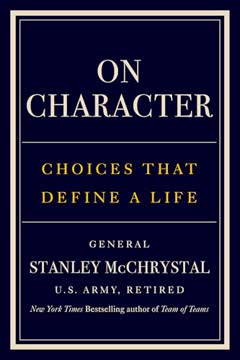
Key Takeaways
1. Character is a Deliberate Choice, Forged by Conviction and Discipline
Character, instead, is a choice.
Defining character. Character is not an inherited trait or a gift; it's a conscious decision built upon deeply held beliefs (convictions) and the resolve to live by them (discipline). This fundamental equation, Character = Convictions × Discipline, highlights that a lack in either area renders one's character valueless. It's the ultimate metric of who we choose to be, far beyond accomplishments or failures.
A lifelong journey. The author's personal search for character, spanning a tumultuous military career and beyond, reveals it as a continuous work in progress. Experiences, even dramatic ones like a forced resignation, serve as catalysts for profound self-reflection, prompting a re-evaluation of beliefs and aspirations. This ongoing challenge to align thoughts and actions with desired standards is what refines character.
Beyond metrics. While headstones record dates and ranks, they fail to capture the essence of a person. Character is that essence, the "last full measure" that truly defines an individual. It's about the internal compass and the consistent effort to follow it, making every other external metric secondary and superfluous.
2. Cultivate Convictions Through Deep, Independent Reflection
Reaching our convictions demands deep reflection.
Beyond surface-level beliefs. Many beliefs are adopted from our environment, tribe, or tradition without critical examination. True conviction, however, arises from pondering, challenging, and consciously choosing ideas, values, and actions. This process, though not foolproof, is essential to forming a solid foundation for character.
The value of philosophy. Engaging with great thinkers, even if intimidating, provides a framework for critical, rational exploration of life's big questions: ethics, logic, beauty, and justice. It's not about academic prowess, but about unlocking deeper wisdom and challenging accepted norms.
- Philosophers offer a framework to think, not a map to navigate.
- They "put the ball in play" on stagnant issues.
- Reading their work quietly leads to deeper wisdom.
The "end of thought" danger. In an age of information overload and instant opinions, many surrender their right to independent thought, relying on pundits and social media. This "end of thought" is dangerous, as thinking is a discipline requiring training and consistent practice. We must actively challenge our own assumptions and cross-examine our logic to form genuine convictions.
3. Discipline is the Bridge Between Belief and Action
Without the discipline to adhere to them, our best beliefs are just opinions—and everybody has some.
Convictions need action. While convictions set the direction of our intentions, discipline provides the impetus to move. Without the will to consistently act on what we believe is right, even the most admirable beliefs remain mere thoughts, failing to translate into tangible character. This is why discipline is paramount.
Self-discipline is a choice. Self-discipline is not a magical trait but a learned skill, a "pick-and-shovel type of skill" acquired through experience and consistent practice. It involves setting personal standards—from diet to daily habits—and holding oneself accountable.
- It's the will to consistently do what you believe is right.
- It's not complicated, just hard.
- It's learned through experience and practice.
The cost of inconsistency. Lapses in self-discipline, even in revered leaders, highlight its value rather than diminish it. Significant accomplishments are built on focus and discipline, and while perfection is unattainable, the consistent effort to live up to one's convictions reinforces their importance and strengthens character.
4. Perspective Shapes Reality; Seek to Understand, Not Demonize
Whom we fear is largely a question of perspective.
The power of "They." Fear of the unknown, often fueled by leaders and media, leads to demonization of "Them"—faceless enemies who are generically assessed as wrong and dangerous. This dynamic oversimplifies complex situations into binary judgments, making it easier to justify hatred and violence.
- Fear mobilizes internal unity.
- It oversimplifies descriptions and assessments.
- It dehumanizes the foe, making destruction easier.
Products of environment. Our perspectives are largely products of our own life journeys and environments. Understanding this means recognizing that had we exchanged positions from birth, our views would likely be reversed. This realization should foster empathy, even for those with vastly different or opposing viewpoints.
Managing the divide. While complete agreement is often impossible, especially on deeply cultural or political issues, minimizing differences is counterproductive. Instead, we must manage the reality of diverse perspectives by:
- Listening to and respecting opposing groups.
- Controlling inflammatory rhetoric.
- Adhering to clearly understood rules and norms in interactions.
5. Embrace the Future: Ditch the Rearview Mirror After Setbacks
Life lies ahead, not behind us.
Moving past failure. A major upset, like the author's unexpected military resignation, can feel like an end, but it's often an impetus for a fresh start. Dwelling on disrupted plans or shaken confidence is unproductive; instead, the focus must shift to "what could be."
- Painful, but not necessarily hard (failure isn't required).
- Requires a willingness to not quit.
- Focus on what's possible, not what's lost.
Shedding emotional baggage. Grudges, slights, and disappointments are heavy burdens that hinder forward movement. Learning to forgive, forget, or simply ignore these past hurts frees up energy for new endeavors. The only person who truly fixates on your past failures is often yourself.
Re-proving oneself. Recovering from failure presents an opportunity to re-prove one's talent and competence, building a new identity beyond past mistakes. This process, though challenging, can be energizing, leading to new responsibilities and credibility that a traditional path might not offer.
6. Leadership is a Choice, Not a Title, Demanding Constant Commitment
Leadership is not a title or position—it’s a choice.
Beyond rank and power. Holding a position of authority—whether as a general, CEO, or manager—confers rank and power, but not automatically leadership. Leadership is a conscious decision to embrace the behaviors, challenges, and frustrations of guiding others, requiring tireless focus and consistent practice.
Credibility is earned. Followers judge leaders not just on technical expertise or charisma, but on integrity, intention, and follow-through. This relentless accountability means leadership must become a disciplined habit, not just a periodic performance.
- Leaders must create a vision.
- They set and enforce standards.
- They commit to the welfare and development of others.
The lonely journey. Effective leadership often means doing what people need, not what they want, which can be a thankless task. It requires prioritizing the mission and the team over personal ambition or popularity, and being willing to make difficult, sometimes unpopular, decisions.
7. Unwavering Standards and Relentless Effort Drive True Greatness
The best professionals I’ve known have chosen the life they live and understand that there’s no harm in “embracing the suck,” wrapping even the most difficult situations in the appearance of an enjoyable experience.
The Ranger Effect. Elite organizations like the Ranger Regiment demonstrate that greatness comes not from superior natural talent, but from an unwavering commitment to standards exceeding what others accept. This disciplined adherence, ruthlessly enforced, transforms average individuals into an exceptionally effective team.
- Not born better, but committed to be the best.
- Standards reduce variables for leaders.
- Inviolable standards are an organization's strongest asset.
Embrace the suck. This military adage encapsulates the philosophy of resilience: if a situation is going to be difficult, one might as well approach it with a positive, even enthusiastic, attitude. This stoic optimism helps individuals and teams persevere through hardship, building confidence and capabilities.
Greatness through effort. Few truly great achievements are attained without obsessive focus and effort. While society sometimes decries a lack of "work-life balance," the price of greatness is often immense dedication to the smallest details. This relentless pursuit, though not always popular, consistently produces results.
8. Beware the Siren's Call: Resist Rationalizing Away Your Values
Don’t convince yourself that what’s wrong is right.
The insidious nature of rationalization. Convincing oneself to act against personal values or beliefs is a common, yet "hellishly complicated," phenomenon. Whether for financial gain, political advantage, or social acceptance, rationalization erodes integrity, often leading to actions one later regrets.
The "Inner Ring" danger. C.S. Lewis warned that the desire for acceptance into exclusive groups can lead otherwise good people to do very bad things. This "passion for the Inner Ring" is a powerful form of opportunism, where values are casually abandoned in pursuit of personal ambition or status.
Consequences of compromise. When leaders abandon bedrock values with cynical intentionality, it normalizes poor behavior and diminishes trust in institutions. This "say anything" culture, driven by focus groups and social media outrage, leaves society vulnerable to demagoguery and undermines the very principles it claims to uphold.
9. Invest in Relationships: Community and Connection are Essential
Community is not a place, it’s a decision.
The fabric of life. Healthy relationships, particularly marriage and community, are central to personal and professional success. They provide a sense of belonging, responsibility, and mutual support that enriches life and strengthens individuals.
- Informal relationships emerge and mature.
- It requires time and effort, often inconvenient.
- Small gestures (weddings, funerals) deepen friendships.
Marriage as a partnership. Marriage is a relationship requiring constant maintenance, where partners choose to surrender part of themselves for a greater gain. It's a promise that binds, a status that constrains, and a relationship that defines who we are, demanding commitment beyond fleeting passion or convenience.
Knowing someone intimately. To truly know someone is a unique gift and responsibility, requiring an understanding of both their public persona and their private quirks. This intimacy, built over time, allows for unbiased judgment and deep affection, recognizing that love isn't always objective.
10. Speak Your Truth: Silence Can Be Consent to Injustice
The pressure to remain quiet should not override our values.
The cost of silence. While there's strong pressure for leaders, especially military and business figures, to remain apolitical or avoid controversy, silence can be an abrogation of responsibility. When responsible actors retreat to the sidelines, the field is left to ideologues and opportunists, allowing extremism to flourish.
Navigating public scrutiny. In today's hyper-polarized world, taking a public position on controversial issues is fraught with risk, often leading to vitriol and personal attacks. However, leaders must speak from their heart and values, considering how their words will be judged by future generations and those whose judgment they care most about.
Command like it's your last job. This maxim encourages leaders to prioritize being the person and leader the organization needs, rather than making overcautious decisions to ascend to a higher level. It's about having the courage to do what's right, even if it means career suicide, rather than being a timid figure seeking politically acceptable answers.
11. Patriotism is Action and Character, Not Blind Allegiance
Real support of a nation is more than flag pins.
A personal choice. Patriotism is a uniquely personal choice, not a reflexive or inherited trait. It involves recognizing responsibilities to the nation, its principles, and fellow citizens, and actively working to make the country worthy of pride.
- It's a unique personal choice.
- It's based on what we do and who we are.
- It's a cause and a result.
Beyond exceptionalism. True patriotism isn't about proclaiming national greatness loudly or believing in divine anointment. It's about the collective character of its people—their willingness to be good, hardworking, and responsible. A nation is only as great as its citizens choose to be.
Rights and responsibilities. The rights we enjoy are not inalienable guarantees but are created and sustained by a mutual agreement to respect and defend them. Citizenship demands active participation and a willingness to bear the burdens of society, from voting to defending sacred values. Without this commitment, rights weaken and the republic becomes fragile.
12. Embrace the Suck: Resilience Transforms Adversity into Strength
If it’s going to hurt anyway, you might as well enjoy it.
The power of attitude. The phrase "Embrace the Suck" embodies a powerful discipline: accepting that difficult situations are inevitable and choosing to face them with a positive, resilient mindset. This attitude transforms hardship into an opportunity for growth and strengthens resolve.
Beyond physical limits. People often underestimate their capacity for endurance. Great athletes and successful individuals understand that few things of value are achieved without commensurate effort. The ability to push past perceived limits, refusing to see hardship as a reason to stop, is a hallmark of high performance.
The bond of shared hardship. In elite units, an infectious positivity often emerges amidst extreme challenges. This shared experience of "embracing the suck" forges deep bonds and a sense of collective identity. It's a reminder that while war elicits towering courage and commitment, it also displays the best in those called to fight, creating a simple purity of duty.
Review Summary
Reviews of On Character: Choices That Define a Life are largely positive, averaging 4.01 out of 5. Many readers praise McChrystal's humility, reflective tone, and central formula—Character = Convictions × Discipline—finding it thought-provoking and inspirational. Fans appreciate its personal, memoir-like quality, comparing it favorably to Marcus Aurelius' Meditations. Critics, however, feel the short chapters lack depth, the content rehashes familiar leadership themes, and the narrative lacks cohesion. Some dismiss it as rambling. Overall, most recommend it, particularly for those new to leadership literature or seeking personal reflection.
People Also Read

 Immersive

 Immersive
 Immersive