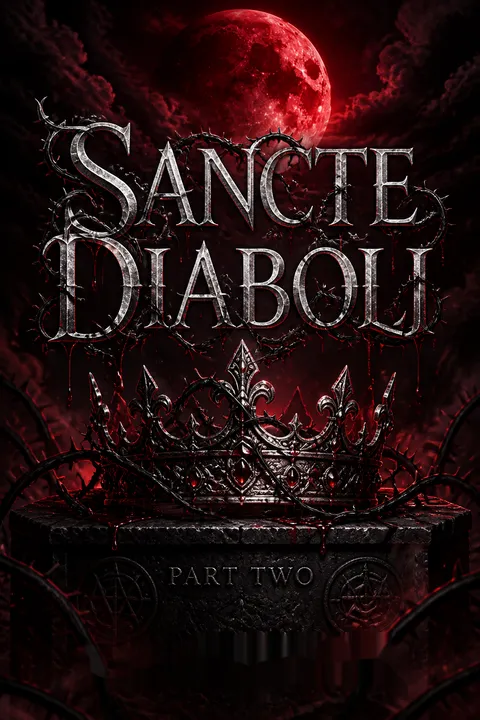

Plot Summary
Shattered Trust, Strange Sanctuary
After being shot and whisked away by those she once trusted, Saint is delivered into the enigmatic care of Veronica, a dominatrix-like presence who immediately starts dismantling any notion of safety. Isolated in opulence that feels like a cage, with wounds—physical and emotional—ever throbbing, Saint's rage and confusion threaten to boil over. Veronica greets her with power plays and cryptic hints, making it clear that Saint is both guest and captive. As she explores this place, realizing little fits but everything is beautiful, the numbing absence of connection with her old life only deepens Saint's sense of loss. Pain, anger, and icy detachment mark her entry into a dangerous new chapter.
The Daughters of Night
Now introduced to The Daughters of Noctum, Saint is confronted by Ophelia, Ivy, Alessi, and Frankie—each reflecting a different facet of survival, sisterhood, and suspicion. Veronica positions Saint within this enigmatic society where ritual and power games reign, and the girls size her up, wary of her Elite King ties. Among them, Saint finds fleeting comfort in Ophelia's sincerity and Alessi's subtle welcome, while Frankie's animosity simmers. As alliances and enmities reveal themselves, Saint must quickly adapt to unwritten rules and shifting loyalties, intuiting that safety and kinship in this coven are provisional—and always transactional.
Crossed Lines and Secrets
The breach between Saint and Brantley is brutal and raw. Every encounter is saturated with unresolved longing and betrayal, especially as Brantley's icy demeanor clashes with his undeniable protectiveness. Their conversations, whether in darkness or daylight, pulse with suppressed love and violence. Brantley's motives are shrouded in secrecy, as are the true mechanics of Saint's forced isolation. Meanwhile, coded messages, missing texts, and veiled threats amplify Saint's paranoia. Both are being maneuvered by forces outside their control, caught in a maze of threats and manipulations neither fully understands.
Coven of Shadows
Veronica's control is iron-clad yet elusive. While Saint searches for clues about her captivity and purpose in this new home, Veronica manipulates, tests, and occasionally mentors her. The politics of the coven become increasingly fraught as the annual Hunt approaches—a ritual where sensuality and violence intermingle. The other witches reveal fractures and histories as Saint's empathic abilities begin to awaken. Throughout, mysterious visions and predator eyes in the night tell her danger lies closer than she suspects, hinting at a larger plot with her at its center.
Tangles of Power and Betrayal
While Saint bonds with Ophelia, she uncovers layers of old betrayals, new alliances, and unresolved enmities within the coven and the Elite Kings. Outside, Brantley and the other Kings play chess with mortal enemies and internal traitors, orchestrating Saint's "protection" while hiding old wounds that fester. The balance of power teeters as events from their shared violent past twist tense relationships into ever more dangerous patterns, making every word, every decision, liable to draw blood.
The Hunt and the Heart
The Hunt, a blood moon rite, draws smoke and mirrors: witches and warlocks, forbidden desires, ancient curses. Saint is thrust into this dangerous performance, caught between Veronica's calculated plotting and Brantley's possessive fury. Her tentative touch with a masked man ignites jealousy and violence. Brantley's arrival halts the Hunt in its tracks—their bond, once again undeniable, leaves the coven reeling and Saint's heart torn between defiance and longing, further complicated by rumors of Veronica and Brantley's history, fueling Saint's latent jealousy.
Fractures, Fears, and Flashbacks
Saint's internal landscape becomes a battlefield: haunted by dreams, visions, and the invasive presence of a shadowy figure who wears Brantley's face but is not him. These psychic assaults erode her sense of reality. Brantley, meanwhile, is plagued by past abuses and fractured family loyalties, attempting to shield Saint from threats neither fully comprehends. Their intimacy is stormy, a salve and a trigger for everything they have suffered—each physical touch simultaneously healing and tearing open scars.
Ties of Blood and Lies
Saint's world shatters again when Veronica claims to be her true mother—Brantley's mother—making her and Brantley half siblings. The revelation sends shockwaves through both their circles and sets off an identity crisis that threatens their love, sense of belonging, and very sanity. Saint's gift—the curse of her bloodline—now feels like a trap, a manipulation played by the previous generation's sins. Their friends rally, but the ground beneath Saint feels permanently unstable, every relationship suspect in this labyrinth of deception.
Illusions of Family
With the "sibling" revelation exposed as a ruse, Saint and Brantley are free to love, but the wounds left behind—of almost incest, of being pawns—linger, leaving the couple closer yet more cautious. Veronica's schemes and the deep traumas from Lucan, Brantley's monstrous father, come to the surface. The lines of family, fate, and selfhood blur, but Saint begins asserting her own agency amidst the wreckage, rediscovering bonds with her chosen family—Bishop, Madison, Tillie—and forging new resolves with Ophelia and Ivy.
Love and Monsters Collide
Brantley and Saint reunite in body and spirit, their union both a rebellion and a healing. Sex and violence, love and protection, are inextricably tangled. The war with the coven, their families, and their inner demons reaches new heights, with everyone dangerously exposed. The curse hovering over the Daughters of Noctum reveals itself: Saint may be the "chosen one" whose child will break—or perpetuate—the ancient cycle. Love, here, is a weapon and a salve, but always carries a cost.
The Curse Revealed
Veronica's obsession with breaking the coven's curse intensifies, culminating in the revelation that Saint is pregnant—and destined to be both sacrifice and savior in Veronica's eyes. Betrayed again by those supposed to protect her, caught and caged once more, Saint must rely on her own grit, newly strengthened empathy, and shaky alliances. Sam, a male witch and reluctant ally, risks everything to help her escape Veronica's deadly plans. The curse, it becomes clear, is rooted in pain, power, and the failures of generations past.
Exodus and Return
Brantley, the Kings, and their allies wage a literal and metaphysical war to free Saint from Veronica's grasp. The final confrontation exposes all players—traitors, cowards, and heroes. Saint returns to her circle, battered but alive, her pregnancy now public. The coven and the Kings attempt to negotiate peace among themselves, burying casualties (Bailey, Cash, and others) and reckoning with the price of survival. The triumph is hollow, the losses sharp, but memories, bonds, and the promise of new life ignite hope.
War of the Witches
The final showdown with Veronica and Lucan brings together magic, violence, and long-festering wounds. Allies reveal themselves, battles are fought across both supernatural and psychological landscapes, and the new generation—Nate, Madison, Bishop, Tillie—lock arms to finish what the elders began. Hearts break. Blood is spilled. The war is not simply for power—it's for the very soul of their future.
Sacrifice and Survival
The deaths of Bailey and Cash, and the near death of Saint, force the Kings' world to a crossroads. Abel, shattered by Bailey's death, is brought into the fold by Saint, a new kind of brotherhood forged in sorrow. Saint reckons with her pregnancy, her own mortality, and the possibility that even death cannot end her and Brantley's bond—or the trauma that may haunt their child. Redemption is a bittersweet possibility, never pure, always shadowed by the past.
Gathering of Queens
Madison, Tillie, Ophelia, and Saint unite, forging their own traditions and promises. Their pact to rewrite their stories, on their own terms, years in the future, symbolizes the birth of both new legacies and a sisterhood that can survive the Kings' world. Ivy and Ophelia inherit the coven, keeping its history while promising a better path forward. The women become queens in their own right, not pawns, anchoring the fragile peace that follows.
Death's Shadow and Resurrection
Veronica's murder becomes both a catharsis and a curse—her spirit haunting Saint's mind until the unborn generations (Micaela, Daemon, and Bailey's spirit) guide her back to life. The supernatural and emotional scars left by Veronica and Lucan will never be fully healed, but Saint's return is a rebirth. Brantley, finally, learns to say "I love you," breaking his own curse of silence and emptiness. The ghostly wounds of the past become lessons as the survivor generation at last finds some respite.
Redemption's Price
At the final wake, Abel's pain is acknowledged and Saint wins his integration into the Kings' family. Brantley is forced to reconcile with his own legacy and the impossibility of ever fully escaping the shadow of Lucan and Veronica. But in the deaths, betrayals, and near-losses, they discover what it truly means to choose one's family—cutting new roots in haunted soil, refusing to be cursed by the sins of their ancestors.
Roots of Peace, Wings of Legacy
One year later, Saint and Brantley preside over a strange, steady peace—their home filled with light, plants, community, and their child, Vaden. The Kings and their partners, now parents, gather as an extended and hard-won family. Abel is drawn into new purpose; the women have claimed leadership roles; and the cycle of love and pain continues, not as a curse but as a history to rise above. Saint reflects that even death cannot separate her and Brantley, and that legacy—painful and beautiful—offers hope for something better.
Analysis
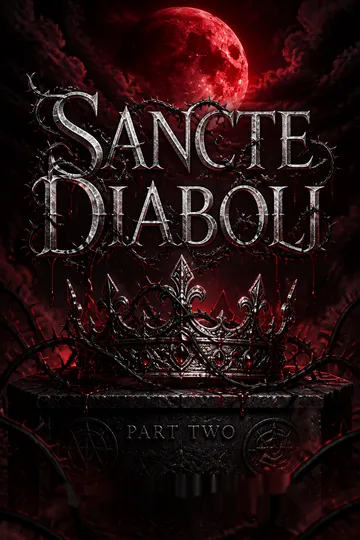
Sancte Diaboli: Part Two uses dark romance and gothic thriller conventions as both narrative engine and psychological inquiry, excavating the wounds of generational trauma, toxic family, and the paradox of finding love among monsters. Amo Jones crafts a world where everyone is marked by violence, secrecy, and the half-healed scars of the past; survival is not about purity but about finding slivers of choice and agency in the aftermath of devastation. Saint's journey—from pawn to player, victim to leader—is mirrored in the wider arc of The Kings' circle as they navigate the collapse of old systems (patriarchy, abusive legacy, blind loyalty), gradually allowing for new forms of connection, family, and sisterhood to emerge. The curse—ostensibly mystical—works as a metaphor for inherited pain and the necessity of confronting what preceding generations refused to name. In the reclamation of choice (whether in love, leadership, or parenthood), the next generation both honor and break with the past, understanding that healing is not a destination but a process, always won at a price. The haunting insistence: "Even death can't separate us," becomes a rally against nihilism—a cry that trauma, when stared down and named, can sometimes lose its teeth. The key takeaway: no curse is absolute, and the truest form of magic is survival, chosen love, and the courage to build anew from ashes.
Review Summary
Sancte Diaboli receives overwhelming praise from most readers, who celebrate its mind-bending plot twists, the passionate romance between Brantley and Saint, and its emotional, bittersweet conclusion to the Elite Kings Club series. Fans adore Brantley's dark, protective nature and Saint's strength, calling them the best couple in the series. Some critics found the supernatural/witch storyline jarring and inconsistent with earlier books, feeling the plot was rushed or incoherent. Despite mixed opinions on execution, most agree the epilogue delivered satisfying closure.
People Also Read

Characters
Saint (Hecate Vitiosis)
Saint is the emotional heart of the story, a young woman shaped by cycles of violence, abandonment, and toxic loyalty. Gifted with empathic abilities she can barely control, she is both a pawn in the machinations of Veronica, Lucan, and the Kings, and the catalyst who slowly seizes her own power. Her psychological arc is harrowing—trust ripped apart, body violated, identity endlessly questioned by revelations about her parentage, her destiny, and her worth. Yet, her grit and capacity for love anchor her, allowing her to survive betrayals and trauma that would destroy anyone else. As a leader, sister, lover, and eventually mother, Saint's journey is about building new roots from the ashes of the old, choosing her own legacy.
Brantley Vitiosis
Brantley is a product of cruelty, hurt from youth by Lucan and shaped by his mother Veronica's manipulations. His psychological walls are nearly impenetrable—except with Saint, whom he both possesses and adores with brutal honesty. His greatest fear is becoming the monster he was raised by; his greatest weakness is the raw, terrifying love he develops for Saint. Through pain, vengeance, and the burden of leadership in the Kings, Brantley walks the razor's edge between redemption and destruction, learning—slowly and painfully—to accept love and choose a different future.
Veronica Vitiosis
Mother to Brantley and would-be mother to Saint, Veronica embodies toxic, generational trauma. Her obsessions—breaking the "curse," controlling legacies, revenge against Lucan—drive her to unfathomable cruelty. Psychoanalyzed, she is both victim and villain: a survivor of abuse, a product of The Vatican's horrors, and ultimately a woman consumed by her own pain. Her constant mask slips only in flashes, exposing the child underneath, but her final acts are those of a person who would rather destroy everything than lose control.
Bishop Hayes
Bishop is Saint's brother, and one of few people she trusts unconditionally. His own story is full of secrets, violence, and an epic, turbulent relationship with Madison. As a leader, he must find a way to protect his family, both blood and chosen, and navigate the aftermath of generational trauma. His loyalty is both his greatest virtue and his Achilles' heel, as his desire to save everyone sometimes blinds him to personal cost.
Madison Hayes
Madison, paired with Bishop, brings ferocious loyalty to her family after surviving abandonment, betrayal, and secrets of her own. Her insights ground both Saint and the reader, frequently voicing truths others shy from. While not without flaws—often bristly, sometimes brittle—she is the sister Saint chose, and her presence is the glue of the new generation's circle.
Tillie Stuprum
Tillie is Saint's outspoken, fiery companion, quick to defend those she loves and push back against cruelty. As Perdita's blood, she bridges worlds—witch, King, mortal—and her personal tragedies (notably the death of Daemon and her own complex relationship with Nate) shape her capacity for strength, humor, and loyalty. Tillie's dynamic with Saint is fiercely protective, a living promise that new legacies can be forged from broken lineages.
Ophelia
Ophelia offers Saint a safe harbor in the storm—a "vault" for secrets and pain, perpetually empathetic, always searching for solutions. Her own loyalty, struggles, and eventual stewardship of the coven mark her as both victim and survivor. Symbolically, Ophelia is the "good witch," all the more powerful for her imperfections.
Ivy
Ivy rarely speaks, but her presence is constant and telling. As a quiet watcher, she is immune to the endless swirl of drama yet always steps up when it truly counts. Her relationship with Saint and Ophelia deepens as the story progresses, providing a reminder that power does not always require noise.
Abel Hayes
Bailey's lover and Saint's reluctant "brother," Abel is a study in survivor's guilt and addiction. His path is marked with loss, self-doubt, and existential pain. Only through Saint's intervention—and the new family forged from loss—does Abel begin to glimpse a possible redemption, even as he is shadowed by tragedy.
Samael
Sam figures at first as Saint's possible new love interest, but is quickly revealed to be an ally of the Kings, a plant in the coven whose true mission is protection, not seduction. His existence highlights the complex political games at play and the difficulty of knowing who to trust.
Plot Devices
Dual Narration and Shifting Perspectives
Jones employs dual first-person narratives (primarily Saint and Brantley), expanding into other key POVs (Madison, Veronica, etc.) to simultaneously deepen character psychology and undermine reliable narration. This structure allows readers to experience betrayal, longing, confusion, and discovery from both the victim's and the "monster's" points of view. The mirroring of trauma—from past to present, between men and women, across generations—becomes a recurring motif.
Symbolic Spaces and Object Motifs
The various settings—a haunted manor, a "coven" mansion, sacred gardens, secret rooms, cemeteries—are psychological landscapes reflecting the characters' wounds and hopes. Necklaces, blood oaths, tattoos, and headstones symbolize both curse and connection, while their repeated loss and recovery mirror the characters' statelessness and search for belonging.
Dreams, Visions, and Supernatural Intrusions
Saint's empathic abilities make her a psychic battleground: visions induced by both friend (Ophelia) and foe (Lucan, Veronica), out-of-body experiences, and mental blockades blur the line between magic and trauma, science and suffering. This device externalizes the internal cruelty Saint and Brantley experience, literalizing the way past wounds invade the present.
Rituals, Riddles, and Curses
From The Hunt to weddings bound by blood, from the coven's "curse" to riddles written in pain (and just as often, lies), these plot devices tie the narrative tightly to questions of fate, agency, and generational suffering. Each ritual is both a performance and a test, reinforcing Jones' central thesis: that the old ways must break for healing to begin.
Betrayal, Revelation, Cycle
The book weaves constant foreshadowing: "Nothing is what it seems," "You won't like this journey." Characters routinely discover that trusted allies are enemies, that familial bonds mask conspiracies, and that the path through danger is recursive, not linear. The plot's structure is cyclical, with Saint again and again having to decide—fight, flee, forgive, or abandon—each time at a new and painful cost.
Elite King's Club Series Series
About the Author


Download PDF
Download EPUB
.epub digital book format is ideal for reading ebooks on phones, tablets, and e-readers.








































