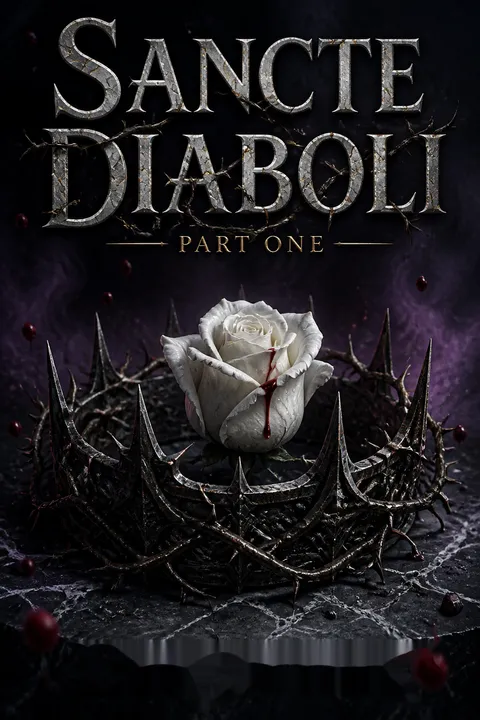

Plot Summary
Pale Boy, Shattered Girl
At just two years old, Saint's universe shifts the night Brantley appears in inky shadows, rescuing her from the cruelty of powerful men. Their bond is instantaneous—he promises her safety and, in a world ruled by darkness, she clings to the pale, dangerous boy with haunted eyes. This formative rescue forges a union of brokenness: Saint is innocence laced with hidden fracture, while Brantley is a storm contained behind cold eyes, setting the stage for years of complicated devotion. Growing together in a world of secrets, violence, and shadowy rules, their psyches are branded by trauma and lonely defiance. From that night forward, they belong to each other—not by choice, but necessity, and the cost of this belonging will reverberate through every jagged turn of their lives.
Into Devil's Arms
Brantley keeps Saint close within the shadowy halls of the Vitiosis manor, believing safety requires captivity. She grows up in the folds of his world: luxury edged with menace, always watched, eternally protected, never free. He names her "Saint," but also forges her into a trophy—a thing to hide and hoard, as his rage becomes both a weapon and a shield. Brantley is her darkest comfort and greatest threat, a walking contradiction who keeps her untouched by the world yet shaped by his own violence. Their relationship is charged, electric, and confusingly intimate, each needing the other in a way neither can explain. In this twisted sanctuary, Saint learns to crave her warden even as he becomes the thing everyone warns her about: the devil who might someday destroy her himself.
Porcelain and Poison
Raised in the devil's lair, Saint is likened to a porcelain doll—delicate, beautiful, and always at risk of shattering. Brantley, meanwhile, handles her with a dangerous possessiveness, oscillating between fierce protectiveness and a cold brutality. In the world of The Elite Kings Club—the secret society ruling the city—every touch, word, and glance is layered with threat and longing. Saint adapts, finding her only comfort in the monster everyone fears: Brantley. Yet beneath her outward delicacy, she harbors a growing poison—restless agency and a dark curiosity that both draws her to him and threatens to erode her innocence. Their dynamic blurs the lines between victim and volunteer, captor and confidante, as Saint learns that sometimes poison feels like love.
Locked in Shadow
As Saint matures, she senses—and finally uncovers—the haunted corridors of her new life. The manor is a labyrinth of closed doors, unspoken horrors, and forbidden knowledge. Brantley is both jailer and guardian, blocking both external and internal threats, sometimes including himself. A menagerie of weirdly affectionate pets, mysterious rooms, and the presence of other "Kings" swirl around her, filling her with suspicion and uneasy fascination. And yet, she begins to test her boundaries, stepping into gatherings and risking Brantley's wrath for the sake of understanding the world beyond her room. Each attempt at freedom magnifies the deep emotional wounds and attachments binding their fates, as shadowy rituals and old wounds seep from the corners.
Secrets of the Elite
Brantley's family—The Elite Kings Club—is not just a boys' club or mafia; it is a blood-bonded dynasty, older than any of them, with customs and cruelties embedded in every rule. Saint's presence as a hidden asset only furthers their paranoia and possessiveness, and the revelation that her blood and lineage matter more than she knows begins to unfurl. Threats hover from rival families, ancient enemies, and betrayals within. As Saint is drawn deeper into their rituals, she realizes power here is only won or kept through violence, domination, and secrecy. In this brotherhood, even love becomes a kind of weapon, and loyalty is always laced with danger.
Kings' Forbidden Kingdom
Trying to find herself among the kings and queens of this clandestine underworld, Saint is caught between longing for autonomy and the suffocating security Brantley provides. Exposure to Brantley's friends—fellow Kings like Bishop, Nate, and Eli—forces her to confront her own persona and her igniting sexuality. The world outside is a carnival of decadence and vice, but Saint can't help but be drawn in, enticed by darkness even as it threatens to consume her. Meanwhile, Brantley's need for control grows, his protectiveness crossing into dangerous obsession as she tests his limits, both emotionally and physically.
Sins We Inherit
The hidden truth of Saint's parentage rocks the already unstable ground she walks. She's not just a rescued orphan; she's the lost half-sister of several Kings, including Bishop and Tillie, and the product of a legacy filled with violence and betrayal. The knowledge that so much of her suffering and isolation was engineered by people who "loved" her is both liberating and crushing. The discovery binds her to some and sets her in opposition to others, finally forcing her to choose between the world that caged her and the family she never truly knew. The sins of fathers and mothers are now hers to bear, reflecting the story's exploration of intergenerational trauma.
Ghosts Whisper at Midnight
Saint is stalked by ghosts both literal and metaphorical—a curse in her blood, visions that won't abate, and the memory of violence that never lets her rest. As she sleepwalks through the dangerous intersection of past and present, Saint's curse becomes a weapon and a liability. Brantley, too, is haunted—by the specter of his own sins and the impossibility of ever being purely good for her. Dreams bleed into reality, revealing that the safety she thought she found is an illusion, and every kindness in this world is paid for with blood. This chapter embodies the novel's use of gothic and psychological horror.
Blood-Stained Promises
When love and violence become indistinguishable, Brantley and Saint's relationship transcends the boundaries of comfort or even of ordinary pain. Their intimacy is marked by bruises, bite marks, and rituals that flirt with destruction. Saint's first sexual encounters are tangled with danger and domination, everything messy and complicated, yet liberating in their raw intensity. In the Kings' universe, promises are written in blood: to fail to protect is to invite death, and to claim something is to be willing to kill for it. Their dance is compulsive and consuming, the fulfillment of desire always hovering at the edge of annihilation.
Craving the Monster
As Saint and Brantley cross the last lines of taboo, their connection becomes a high-stakes addiction. Brantley no longer denies how deeply Saint has embedded herself under his skin. But the closer they become, the more the outside world, and ancient enemies, conspire to tear them apart. Saint's own cravings—to be seen entirely, to inhabit the world on her own terms—collide with Brantley's monstrous need to control and possess. Their love is as much a contest as a consolation. Approaching each other means surrendering to the beast inside them both.
Fractured Trust and Truth
The cost of secrets comes due. As new threats close in, Saint's trust is tested by half-truths, evasions, and power struggles among the Kings and their enemies. The identity of their rivals, the cost of being "claimed," and the true meaning of loyalty are revealed in brutal, bloody confrontations. Saint discovers the horrifying legacies at play, and the violence required to survive them. All the old lies come crashing down, and even love becomes suspect. The boundaries of chosen family, obligation, and autonomy are frayed to breaking.
Rituals in the Dark
Driven by ancient rules, Bishop ascends as Godfather in a chilling, blood-bound ceremony, solidifying the next generation's dominance—and locking in Saint's fate as a key asset and a target. Rituals blend decadence with horror. The night is haunted by an attack from rival factions, who spill blood on sacred soil. In the chaos, Saint is shot, and the careful balance of power tips toward open war. The family finds itself betrayed and exposed, the line between predator and prey fully erased in the burial ground of the Kings.
Cursed Gifts Awaken
In the aftermath, what was mere rumor now becomes prophecy: Saint's bloodline is cursed, giving her visions and gifts that tie her fate to the Kings in ways none anticipated. The burden of connection to the ancient Hayes curse comes with uncanny abilities—but also makes her more valuable and vulnerable than ever. As she learns the depth of her ancestry, Saint must decide whether to embrace the power or flee from it, even as Brantley and the others rally around her in the war that is sure to come.
Forbidden Firsts
After a lifetime of tension, violence, and caustic longing, their relationship explodes into fevered completion. Sex is dangerous, rough, and laced with the bloody intimacy of shared pain. Their union is a final shattering of innocence for Saint, and a fulfillment of destiny for Brantley, who finally claims her with all the ruthlessness he has denied for so long. Yet even this consummation is shadowed—by rivalry, by outside plots, and by the knowledge that in their world, love never comes without loss. This chapter exemplifies the novel's treatment of consent and taboo desire.
Saints and Sinners Entwined
With the new Godfather crowned and enemies all around, Saint finds herself surrounded by strange new siblings and deadly old games. Vulnerability is now unacceptable—she is as much a symbol as a girl, and her relationship with Brantley is no longer private or safe. The threat from The Gentlemen escalates, and alliances and betrayals shift with every bloodstained event. The only comfort is the closeness—however fraught—she shares with the Kings who now claim her as both asset and kin.
The Ceremony's Descent
At Bishop's ceremony, the Kings' enemies act. Gunfire and chaos erupt, blood spills, and Saint is struck down. As she fades, her vision fractures between this world and the next. The sense of family and belonging hard-won throughout the story is suddenly ripped away, replaced by the feeling of being an object—precious for her power, not her personhood. Her own "father," Hector, spirits her away while the family reels in devastation. The cost of loving the devil is finally paid.
Betrayals Writ in Blood
In the aftermath, the Kings are left believing Saint is dead, a loss that threatens to unravel even the coldest monsters among them. Yet old hands move behind the scenes, and secrets multiply. Hector and uncontrolled powers conspire to keep Saint hidden, perhaps for some darker purpose. Every intimacy, every ritual, every hard-won alliance in the story is shown to be at the mercy of older, more impersonal powers—leaving every character, most of all Saint and Brantley, with their hearts in ruins.
Storms Before the Fire
As war brews, enemies circle, and trust is in ashes, the family—splintered, traumatized, and reborn—stands on the edge of a new era. Saint's true fate, the cost of Brantley's love, and the ultimate price of power and legacy hang in the balance. The curse, violence, and longing that have defined their world are not ended—only transformed. In the darkness, fire waits; in their bones, survival is etched as a challenge none can walk away from.
Analysis
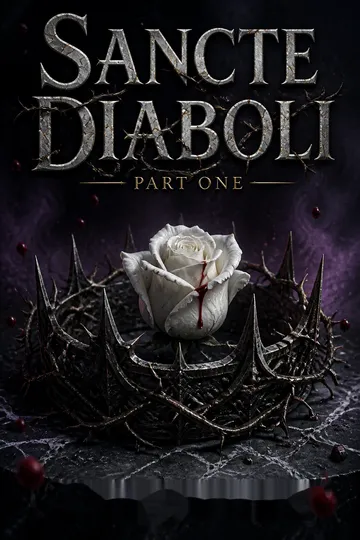
"Sancte Diaboli: Part One" is a raw, immersive thriller-romance about trauma, inheritance, and what it costs to love the monster who has both saved and ruined you. Through Saint's journey—from captive child to cursed young woman—the book explores the toxic shapes of family, the threat and seduction of power, and love that is indistinguishable from danger. Using the framework of a secret society, generations of hidden crimes, and the fevered psychologies of its leads, the narrative critiques patriarchy and the weaponization of intimacy: women's bodies (and supernatural gifts) are both coveted and policed, while men are forged into weapons by patriarchal abuse. At its core, the novel dissects survival—the way we fashion comfort or even desire from the things that hurt us, and the way cycles of violence are perpetuated through secrecy and "protection." Its gothic overtones and unreality serve as metaphors for the nightmarish experience of growing up in an unsafe world, where love must be won at the price of one's innocence and future. In shrinking the story to essentials, we see the tragedy and thrill of loving a devil: you can never be sure where salvation ends and damnation begins.
Review Summary
Sancte Diaboli receives overwhelming praise from readers, earning a 4.46 average rating. Fans celebrate Brantley Vitiosis as a darkly compelling hero and Saint as a perfect, luminous counterpart. Reviewers highlight the explosive chemistry, intricate world-building, and emotionally consuming storytelling within the Elite Kings Club universe. Many describe the book as the series' best installment, praising its flashbacks, secrets, and shocking cliffhanger ending. Common criticisms include a slow start and some confusing narrative elements.
People Also Read


Characters
Saint (Dea Swan / Vitiosis / Hayes)
Saint is the fragile survivor at the center of the story. As a child, she is rescued from trauma and kept in what feels like a gilded cage by Brantley and the Vitiosis family; as she matures, her apparent delicacy conceals a will of iron, a restless need to understand the world, and a dark curiosity about its violence. The revelation of her lineage—daughter of Hector Hayes, half-sister to several Kings, and the unlucky inheritor of a supernatural curse—seals her role as both pawn and power in the Kings' world. Psychologically, Saint is scarred but resilient, always seeking love and autonomy, pulled between craving the monster's touch and fearing its cost. Her development is marked by loss of innocence, awakening sexuality, and the growth of her supernatural gifts, ultimately turning her from a bystander to an active player in the destructive games of the Kings.
Brantley Vitiosis
Brantley is the dark heart of the story: a boy made into a weapon by family trauma, forced to endure and inflict horrors, then fixated on keeping Saint both close and "clean." He is the ultimate anti-hero—ruthless, controlling, heavily scarred, and incapable of ordinary love. His identity as a King binds him to legacy and violence, and his actions oscillate between violence and rare moments of vulnerable devotion toward Saint. Psychologically, Brantley is addicted to pain—his own and others'—and finds meaning only in claiming and protecting what he fears he will destroy. His relationship with Saint is his only salvation and damnation, a complicated blend of obsession, tenderness, and brutality that will both redeem and ruin them both.
Bishop Hayes
Bishop is the new Godfather, the scion of the Hayes line—Saint's brother and Brantley's friend. Stoic and bruised by love, Bishop is bound to both duty and heartbreak—most notably by Madison's absence. While he moves through the world of Kings with confidence, he is plagued by guilt, and his ambition is shadowed by loss. As a leader, he is decisive; as a brother, he is haunted. He offers Saint an alternative comfort: platonic devotion mixed with shared trauma. His journey in the narrative is embracing power while mourning family, embodying the idea that leadership is as much a curse as a prize.
Tillie
Tillie is fierce, loyal, and unapologetically female in a hyper-masculine world—Saint's half-sister and Brantley's foil in many scenes. She provides much-needed emotional ballast and candid advice, often serving as Saint's confidante when secrets threaten to consume her. Balancing motherhood, romance, and loyalty to her "savage" chosen family, she helps guide Saint through trauma and transformation. Her development revolves around learning to forgive, building new family bonds, and standing up for herself and those she loves.
Nate Malum
Nate is the unpredictable wild card among the Kings, famed for humor, recklessness, and seductive energy. Intertwined with Tillie romantically, he brings a sense of lightness to the often brutal underworld of the family, but is more calculating than he appears. Despite his apparent carelessness, Nate is deeply invested in the well-being of his circle, particularly Tillie and the next generation. Underneath the jokes lurks a deep knowledge of pain and survival.
Eli Rebelis
Eli embodies the rebel archetype: flashy, brash, and emotionally slippery. Among the Kings, he's the one always seeking the next thrill and stirring "mischief." His loyalty is true, but his methods are often self-destructive or unpredictable. As a younger King, Eli is both comic relief and a reminder of the group's capacity for chaos. He keeps tensions from boiling over by redirecting conflict, but is also a mirror for the group's ugliest impulses.
Hector Hayes
Hector is the patriarch—a master manipulator and the architect of much of the trauma suffered by the younger Kings. As both Saint's biological father and the outgoing Godfather, his every action is multidimensional: serving club, self, and shadowy legacy. His psychological complexity lies in his ability to compartmentalize love and cruelty, trading lives and secrets with equal nonchalance. His "love" for Saint is as dangerous as his plotting—eventually spiriting her away for his own purposes, showing that he prizes power over sentiment.
Madison
Bishop's lost love and mother of his twins, Madison is as much myth as reality in the main narrative, existing mostly as an absence—a measure of Bishop's grief and longing, as well as a possible future Saint might endure. She bridges worlds: blood, love, power, and escape. Though mostly off-page, her choices drive several plotlines, holding a cracked mirror up to Saint's own struggles with agency and belonging.
Lena
Lena, one of the "Swans" rescued from past horrors, is a doctor-in-training with a chequered past. She provides both maternal care and pragmatic advice, patching up wounds and offering a perspective from outside the direct family legacy. As an outsider within, she observes the dysfunction but helps sustain the fabric of the extended "family," acting with no illusions about the darkness in which they all move.
Abel
The youngest in the circle, Abel is growing up in the shadow of the Kings' legacy, drawn into violence, loyalty, and secret knowledge far beyond his years. He is a reminder that the cycle of trauma, power, and tradition is self-perpetuating—unless someone, somehow, breaks it.
Plot Devices
Power, Control, and Ritual
The narrative is structured around the inheritance of power: the ascension of new "Kings," the dramas of succession, and the manipulative rituals that fuse intimacy and brutality. Everything is dictated by covert rules—"red" for claiming, blood oaths, and the ever-present risk of betrayal from inside or out. The club's ancient structures, commandments, and initiation ceremonies serve as both protection and prison, defining relationships and forcing characters to choose between self and collective.
Intergenerational Trauma
The story explicitly explores how cycles of violence, abuse, trauma, and secrecy shape each generation. Brantley's and Saint's scars are not singular but inherited, making every character responsible not just for their own suffering but the fate of those who come after. Parent-child dynamics are fraught, lies are currency, and reluctant love can be as destructive as hate.
Gothic and Psychological Horror
Dreams, hauntings, and literal curses blur the line between psychological struggle and supernatural peril. Saint's curse is both a metaphor for trauma and a literal bridge into the uncanny: her visions of ghosts, her inherited "gift," and the way her reality distorts through sleepwalking and dissociation provide both foreshadowing and narrative momentum.
Consent and Taboo Desire
The narrative leverages forbidden sexuality—age gaps, rough play, blood, and domination—as a crucible for character and relationship. The boundary between affection and possession is always hazy; Brantley and Saint's union is both fulfillment and erasure of the self. Every milestone is hard-won and never free from risk.
Foreshadowing and Repetition
The book uses repeated motifs—mirrors, blood, dreams, and secrets—to link every stage of the story. Prophecy and destiny hover; Saint's visions, inherited from centuries of "cursed" ancestors, predict violence and war before anyone speaks of it. Old sins return, enemies are never truly gone, and every act of survival is both a victory and a wound for the future.
Elite King's Club Series Series
About the Author
Other books by Amo Jones


Download PDF
Download EPUB
.epub digital book format is ideal for reading ebooks on phones, tablets, and e-readers.








































