
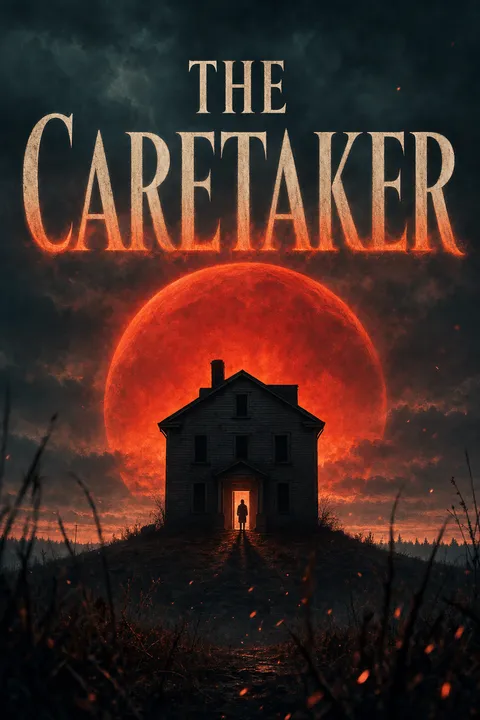


Plot Summary
Prologue
An elderly man, David Carnswel,4 wakes near midnight to three hollow knocks and a trail of muddy footprints leading into the Oregon coast woods behind his home. He believes, with the certainty of revelation, that following these strangers back inside protects all of humanity from unspeakable suffering. He calls them Visitors.
Tonight one wears his dead son Caleb's10 face, though its eyes are a cold, near-white blue. David4 tries to coax it away from the property line, lying about cigarettes in a truck. The Visitor sees through him, tells him Caleb10 died hating him, then shoves him down and bolts toward the house. Dozens more, all in yellow rain ponchos, come running from the trees.
The prologue establishes the novel's central engine: grief weaponized into ritual. David's compulsions read as textbook obsessive-compulsive bargaining, a mind converting unbearable guilt over his son into a cosmology of rules that promise control. Naming the Visitors, following the Rites, refusing to look back: these are the mental rituals of someone who cannot metabolize loss. The Caleb-Visitor delivers the cruelest possible message, that penance cannot buy forgiveness. By opening with a caretaker failing, Kliewer primes us to distrust the very system the book will hand its heroine, and seeds the dread that the routines are less protection than a haunted man's cage built from his own remorse.
A Craigslist Lifeline
Macy Mullins,1 twenty-two, drowning in debt and legal guardian to her teenage sister Jemma,2 rides a nearly empty bus deep into the wealthy Brooksview Heights enclave for a job interview. She has no talent for customer service and a stack of rejection emails to prove it. A vague Craigslist posting seeking a caretaker for an elderly husband is the last branch she can grab before eviction.
On the ride she notices unsettling strangers: a gaunt begging man ejected by the driver, a red-haired woman who stares. The commute is punishing, the neighborhood full of dark empty mansions. Macy1 trudges uphill in the rain to the only occupied address, greeted by a young woman storming out who mockingly wishes her luck.
Macy is introduced through economic terror rather than curiosity, a crucial reframing of the haunted-house setup. Her poverty is the true monster's foothold: desperation overrides instinct. Kliewer renders her depression with clinical precision, the intrusive self-loathing narrated as a separate cruel voice. The spider anecdote her father taught her, goodness versus good looks, signals the book's interest in things that appear evil but protect, and things that appear safe but consume. The fleeing previous applicant functions as a warning Macy cannot afford to heed, dramatizing how class strips away the luxury of refusing sketchy work.
The Widow's Confession
Grace Carnswel,3 poised and grandmotherly, welcomes Macy1 into a modest lodge and admits the ad bent the truth: her husband David4 passed three months earlier. She needs not a caretaker but a house-sitter to maintain David's4 eccentric upkeep routines while she visits her granddaughter in Florida. David4 swore on his deathbed the routines prevented certain consequences, though Grace3 dismisses them as the delusions of an unwell mind.
She refuses to explain further unless Macy1 accepts, citing David's4 insistence on secrecy. Macy1 tries to walk out, unwilling to work a job she can't understand. Then Grace3 names the pay: six thousand dollars for the weekend, plus a three-thousand-dollar bonus. Macy1 sells out and accepts a VHS tape of instructions.
The transaction crystallizes the book's moral economy: everything has a price, and the poor cannot afford scruples. Grace performs down-to-earth wealth, but her calm dismissal of David's beliefs sits uneasily beside the enormous fee, revealing an atheist hedging against a hell she claims not to believe in. The dead husband is the first inversion of expectation, converting a caretaking gig into custodianship of a dead man's obsessions. Macy's capitulation is characterized not as greed but survival math, aligning us with a protagonist who knows she is making a mistake and proceeds anyway, the tragic engine of the entire narrative.
Rules for a Haunted House
Back in their cramped studio, Macy1 and Jemma2 watch David's4 recording. Calm but haunted, he lays out the Rites: keep the house tidy, keep all main-floor lights off between three and four a.m., never let a light burn past three minutes, catch stray rabbits within ten minutes and lock the doors, and above all beware Visitors with cold blue eyes who knock three times between dusk and dawn.
Hide from them, never let them inside, and always obey whoever calls the rotary phone. Sealed envelopes wait for each failure. Fail consistently, David4 warns, and a blood-red sun will rise as the entity spreads beyond the property. Jemma2 begs Macy1 to return the money and never go back.
The tape is a rulebook and a curse simultaneously, converting horror into a compliance game where dread accrues through bureaucratic infractions. David's plea not to believe him, only to obey, is psychologically shrewd: it reframes faith as behavior, mirroring how ritual soothes anxiety regardless of conviction. The sisters' debate stages the novel's central tension between skepticism and superstition, with Jemma voicing the audience's sane objections. Yet Macy's rebuttals are economic, not logical, underscoring that the truly inescapable force here is not the supernatural but the arithmetic of rent, an inhaler, and a delayed insurance payout.
First Night, First Doubts
Alone in the house, Macy1 discovers lights snapping on by themselves and a maddening compulsion to switch them off, each flick delivering a jolt of relief like a drug. Exploring the property, she trips over the boundary rope, finds a maggot-swollen dead rabbit, and reaches a fog-choked ocean bluff.
There she meets Lucy,5 a chatty red-haired woman who once cleaned the Carnswels' house before David4 fired her for failing the light rule. Lucy5 explains the cliff is where the hopeless come to jump, that she hikes out to intervene, and grieves a lost best friend named Zee. That night Macy1 also glimpses a white pickup identical to her late father's truck, idling in the turnaround before driving off.
The chapter braids external omens with internal illness, deliberately blurring which is which. Macy's light-switching compulsions read as OCD, the dopamine relief indistinguishable from ritual reward, so the reader cannot tell whether the house is haunted or whether Macy is projecting a disordered mind onto ordinary faulty wiring. Lucy arrives as apparent human comfort while quietly seeding the suicide motif that stalks Macy's own psyche. The phantom truck weaponizes grief directly: the entity, if it exists, mines the exact shape of what Macy has lost. Kliewer keeps ambiguity taut, refusing to confirm the supernatural.
Seven Seconds Too Long
During the witching-hour patrol, Macy1 fails to notice a storage-room light glowing beneath a door. Reviewing the Ring camera footage, she confirms the bulb blazed for three minutes and seven seconds, seven seconds over David's4 mandate. Sick with a dread that feels moral rather than financial, she cuts open the first envelope, IN CASE OF LIGHTS.
The page appears blank, then words surface in delayed invisible ink: her failure will bring a moderate setback within twenty-four hours, and the rabbits and phone calls will grow more likely. Rattled but rationalizing, she checks locks compulsively, spots a rabbit triggering the motion light outside, and tries to convince herself David4 was merely a paranoid old man.
The seven-second overage transforms the Rites from quirky chores into a system that watches and judges, and the invisible ink supplies the first evidence Macy cannot fully explain away. Crucially, her guilt is disproportionate, described as feeling contaminated and against nature, which continues the psychological reading: this is how obsessive dread inflates trivial lapses into catastrophes. The prophecy of a moderate setback plants a payoff the next chapter will detonate, tightening the causal chain. Kliewer exploits surveillance footage brilliantly, forcing Macy to watch her own oblivious failure, a horror of self-observation that doubles her shame.
The Rabbit She Wouldn't Burn
The promised setback lands: broker Greg7 calls to say the insurers are denying her father's payout, alleging his drowning may have been self-inflicted, and lets slip that Dad had a prior attempt years earlier. Reeling, Macy1 spots a blue-eyed brown rabbit inside the house. A pleading woman on the rotary phone9 begs her not to let it escape, but Macy1 fails to catch it within ten minutes.
The second envelope, IN CASE OF RABBITS, orders her to burn the creature alive to avoid a devastating setback and worse Visitor activity. Horrified, she refuses, releasing the rabbit outdoors instead. Soon after, Lucy5 knocks three times at the door, and Macy1 hides, watching her sit dejected on the camera before wandering into the woods.
The setback prophecy pays off cruelly, and the revelation about her father's history detonates the book's buried theme: suicide as inherited shadow. Macy's refusal to burn the rabbit is her first act of moral resistance, a line she will not cross even for humanity, which humanizes her precisely as the Rites demand inhumanity. That Lucy now arrives as a three-knock Visitor collapses the boundary between the kind woman from the cliff and the entity's masks, retroactively poisoning their earlier warmth. The chapter escalates by binding Macy's real-world devastation to supernatural punishment, making the two indistinguishable and therefore doubly inescapable.
Turning Back to Believe
Macy1 flees, abandoning the money and her belongings, catching an Uber toward Salem with the same podcast-blasting driver who first brought her. Relief lasts only until violent visions overtake her: a blood-red sun, streets running with blood, and finally Jemma2 lying dead with blood pooling beneath her skull.
She vomits on the roadside, seized by absolute certainty that David4 was right and that abandoning the Rites dooms everyone she loves. Against every rational instinct, she orders the driver to turn around. As the car nears the property, the nauseating dread subsides, confirming for her that the house exerts a real pull. She returns, resolved to see the weekend through, believing humanity's survival now rests on her.
This is Macy's point of no return, the moment skepticism surrenders to conviction. Whether the visions are supernatural or the somatic panic of a traumatized mind, the effect is identical: she is now a believer, bound by the same logic that trapped David. The vision of Jemma dead functions as prophecy and threat, and it exploits Macy's core identity, that her survival is justified only by caretaking her sister. Kliewer stages conversion not through evidence but through the body, nausea and dread, dramatizing how belief in the irrational can feel more real than reason itself.
Footprints at Midnight
A young man phones with instructions: at midnight, follow Lucy's5 footprints into the woods, calm whoever waits, keep them from crossing the property line, and if they weep or babble, run home before they can beat her there.
Macy1 obeys, tracking the prints past a bulbous-headed shape watching from a tree. She finds Lucy,5 now with cold blue eyes, frantically searching for her dead friend Zee. Macy1 lies and pleads to steer her from the boundary, but Lucy5 accuses her of trickery, then breaks into animal sobbing and declares, in a hollow voice, that she knows Macy.1
Both women sprint for the house through a gathering crowd of yellow-poncho Visitors. Lucy5 reaches the steps first; Macy1 tackles her, smashing Lucy's5 face on concrete before a boot to the eyes knocks her out.
The Rite of calming forces Macy into the caretaker role the whole book circles, tending the suicidal at the very cliff that tempts her. Her failure is intimate: she cannot soothe another's despair because she cannot soothe her own. Lucy's uncanny recognition, I know you, echoes the prologue's Caleb-Visitor and confirms the entity mines personal shame. The brutal collision on the steps, Macy maiming a woman who was recently a friend, marks her crossing into violence sanctioned by the Rites, the first payment in a currency she resisted with the rabbit. The hive of Visitors literalizes her total encirclement.
The Voice of Her Sister
Waking encircled by silent Visitors, Macy1 locks herself inside. A child on the phone instructs her to reverse the Rite: turn every light on, keep pictures hung, never open the study where the Visitor now hides. For hours she paces, maintaining lights and frames while the thing mimics Jemma,2 first faking a fatal asthma attack, then calmly excavating a secret Macy1 told no one.
Two years ago, alone at the abandoned Hawthorne Hotel, Macy1 swallowed pills and vodka, tied a plastic bag over her head clutching her childhood stuffed rabbit, and tried to die, only to wake having failed. The Visitor taunts that she stays alive not for Jemma2 but out of fear. Her heart rate spikes and every bulb explodes into darkness.
The entity's true weapon is confession, not violence. By voicing the Hawthorne attempt, it externalizes the shame Macy has buried beneath her caretaker identity, and the plastic-bag method ties her directly to the wheezing bagged figure haunting her dreams and the prologue. The Rite of keeping lights on and pictures up becomes a metaphor for the labor of holding a shattered self together, exhausting and doomed. That the monster speaks in her sister's and then her own voice literalizes the internal cruelty Kliewer has narrated throughout: the true haunting is depression, which knows every secret because it is her.
Blood in the Basement
A new caller, an old man relaying a deeper voice, changes the rules again: don't look at the Visitor longer than three seconds or she'll forget to breathe, don't let it touch her, and know it can hear her thoughts. Macy1 hides in a closet as a towering, wet-skinned figure with a plastic-bagged head stalks the halls.
Driven into the basement, she confronts the wheezing entity glimpsed on David's4 mysterious tapes. When it corners her beneath a bed, she severs its Achilles tendon with the Carnswel switchblade, then stabs it repeatedly as its grip drags her into a suffocating hallucination of being crushed. It finally dies in a spreading pool of cold blood. At dawn the rising sun glows golden-white: she survived.
The hunt escalates the Rites into pure survival horror, stripping away bureaucratic detachment for hand-to-hand killing. The bagged, maggot-filled figure is the recurring nightmare made flesh, the Weeping Hag and the suffocation motif fused, meaning Macy is literally knifing an avatar of her own suicidal ideation. Her victory is pyrrhic and defiling: she wins by becoming capable of the violence she refused earlier. The golden dawn offers false relief, a reprieve that lets the reader and Macy exhale before the true devastation. Kliewer uses the body horror to render depression as an external predator that can only be fought, never reasoned with.
Grief, Ash, and a White Rabbit
In shocked calm, Macy1 scrubs blood, rehangs the Carnswels' family photos, and reconstructs their history: David's4 timber fortune, a sad-eyed son, Grace's3 earlier, happier life. Sifting through her own phone's hidden folder of family pictures, she finally breaks and cries for her father, cathartic tears rather than rage. An old woman calls with a gentle chore: repair and mow the lawn.
Macy1 does, soothed by muscle memory of her dad's business. Then a docile white rabbit approaches. Bound now to burn every rabbit within five minutes, she builds a fire and lifts the trembling animal toward the flames, but Jemma's2 phone call startles it free into the basement. The timer completes on failure just as three knocks sound at the door.
The chapter is the emotional pivot, the first genuine grief Macy has permitted in three years, achieved only after she has faced death repeatedly. Rehanging the family photos mirrors her own attempt to reassemble a coherent self and a coherent story of the Carnswels, whose tragedy rhymes with hers. The failed burning reprises her earlier moral refusal, but the timer's completion signals that mercy carries a cost the book is about to collect. Kliewer times the three knocks against Jemma's phone call with surgical dread, fusing the sister Macy protects with the doom approaching the door.
The Man at the Door
At the door stands the exact image of Macy's1 drowned father, in his old clothes, begging her to run even as his hands claw to break in, his eyes that telltale cold blue. Macy1 locks the patio door against him and tears open the final envelope, IN CASE OF EMERGENCY: a single word, BASEMENT.
Fleeing below, she watches the red-glowing TV replay David's4 last message, that the entity now wears someone she lost and must be killed, spliced with tender footage of her childhood garage and her father's rusted truck underwater.
When the door bursts, Macy1 swings the VCR and strikes the intruder down. Only afterward, checking the hazel eyes and calling the ringing phone in the corpse's pocket, does she grasp the horror: it was the real Jemma,2 who had driven up to save her.
The climax detonates the book's cruelest irony: the Rites, designed to protect, weaponize love into fratricide. The Dad-Visitor's split behavior, pleading to be fled while forcing entry, embodies grief's double bind, longing for the dead alongside terror of them. Macy's fatal error springs from obedience to a system she was manipulated into believing, and the ringing phone converts supernatural ambiguity into unbearable literal loss. Whether the entity swapped forms or Macy killed her sister in a delusion, the emotional truth is identical. Kliewer collapses the horror machinery into the oldest tragedy: the protector destroying what she lives to protect.
The Sun Turns Red
Emptied of everything, Macy1 refuses to switch off the newly lit foyer light, done with the Rites, the house, and the world. She walks the boot-printed trail to the Windfall Bluff, steps to the cliff's edge, and for the first time in years the tightness between her lungs dissolves as she prepares to let herself fall.
The rising sun breaks golden-white, not red. Then her phone buzzes: Jemma,2 alive, riding up the last hill, having called 911, pleading with her to hold on. Macy1 cannot speak, undone by the impossibility of it. And as her sister's voice promises help is coming, the white sun over Brooksview Heights slowly turns a terrible shade of red.
The ending refuses resolution and thereby indicts the Rites entirely. If Jemma lives, then Macy killed a Visitor and the basement corpse was a lie, yet the red sun rises anyway, proving her failures doomed the world regardless. If Jemma is dead, the call is a final hallucination at the cliff's edge. Either way, the caretaking that justified Macy's existence has failed catastrophically. The red sun literalizes despair's contagion, the epigraph's cast-out child burning the village for warmth. Kliewer leaves Macy suspended over the void, the book's ultimate statement that some grief admits no rite, no rule, no rescue arriving in time.
Analysis
The Caretaker disguises a study of depression, grief, and suicidality as a rules-based haunted-house thriller, and its power lies in refusing to separate the two. Every supernatural mechanic doubles as a symptom: the compulsive light-switching mirrors OCD, the dopamine relief of obedience mimics ritual soothing, and the Visitors weaponize the exact faces mourning conjures. Kliewer sustains a near-perfect ambiguity, so that a reader can finish believing Macy1 saved and then doomed the world, or believing a broke, traumatized young woman slid into psychosis inside an isolated house that merely had bad wiring and a dead man's delusions. Both readings hold, and both are unbearable. The novel's epigraph, that the child cast out of the village will burn it down to feel its warmth, frames despair as contagious and self-immolating, a theme paid off literally in the closing red sun. Class operates as the true trap: Macy1 cannot refuse dangerous work because poverty has stripped her of the luxury of instinct, and the money that lures her, like the insurance payout perpetually deferred, exposes how economic precarity manufactures its own horrors. The inherited quality of the curse, passed from caretaker to caretaker like David's4 compulsions and echoing her father's6 own history, argues that mental illness travels through families and systems, not haunted properties. Most devastating is the book's treatment of caretaking itself. Macy1 stays alive, she insists, only to protect Jemma,2 making her identity contingent on service. The climax annihilates that logic by turning the protector into the destroyer, suggesting that a self built entirely on caring for others cannot survive the moment care fails. Kliewer offers no rosy platitudes, exactly as promised, only the terrible tenderness of a story that treats the wish to stop existing as real, lonely, and worthy of being spoken aloud rather than buried.
Review Summary
Reviews for The Caretaker are largely positive, averaging 4.07/5. Readers praise its atmospheric, psychological horror set in an isolated Oregon Coast estate, where protagonist Macy Mullins takes a mysterious caretaking job requiring strict rituals. Fans highlight its slow-burn tension, grief themes, and a shocking ending. Common criticisms include Macy's frustrating incompetence, repetitive pacing, and insufficient answers to the story's mysteries. Many reviewers preferred it to the author's debut, while others felt it fell short. Trigger warnings for suicide, depression, and anxiety are frequently noted.
People Also Read










Characters
Macy Mullins
Broke, grieving house-sitterTwenty-two, a graphic-design graduate reduced to gig work and guardianship of her younger sister, Macy1 narrates with corrosive wit and relentless self-loathing. Her mind runs a cruel commentary track, and she copes through dissociation, imagining a fresh carbon-copy Macy1 inheriting each morning's despair. Depression predates her father's6 death but was calcified by it; she has not cried in three years and carries a buried history she shares with no one. She is allergic to kindness, terrible at eye contact, and drawn to bad weather and solitude. Beneath the cynicism lies fierce love for Jemma2, the single thread anchoring her to life. Her defining tension is the gap between the caretaker she performs and the person she fears she is: a fuckup who cannot save even herself.
Jemma
Sharp-tongued younger sisterSeventeen, buzz-cut, asthmatic, and compulsively chewing blue licorice, Jemma2 is Macy's1 foil and lifeline. A habitual shoplifter who rationalizes theft as balancing the scales against corporations, she is funnier, blunter, and more openly frightened than her sister. Her horror-movie commentary, honed on childhood movie nights with Dad, becomes the voice of reason echoing in Macy's1 head throughout the ordeal, screaming at her to leave. Jemma2 sees through Macy's1 lies instantly and loves her with an exasperated ferocity, gifting her stolen headphones and demanding she abandon the cursed job. Behind the jokes lives real dread of being left alone, of losing the only family she has after their mother walked out and their father6 drowned.
Grace Carnswel
Poised, evasive widowA woman in her late sixties who projects down-to-earth humility despite considerable wealth, Grace3 hires Macy1 under false pretenses, admitting only later that her husband is dead. She frames David's4 routines as harmless superstition born of a failing mind, yet pays extravagantly to keep them going, a contradiction that unsettles more than it reassures. Warm one moment and coolly probing the next, she asks intrusive questions and reads Macy's1 discomfort with practiced ease. Her earlier, freer life glimpsed in old photographs suggests a woman shaped by more loss than she reveals.
David Carnswel
Dead maker of the RitesA lumber-fortune heir who spent his final years convinced he alone held back an entity threatening humanity. Known chiefly through his VHS instructions and sealed letters, David4 is athletic, articulate, and terrified, a man performing sanity while describing the insane. His compulsions center on a son named Caleb10 whose loss he never absorbed. He appears calm and commanding on tape yet visibly disintegrates across recordings, the picture of a mind converting guilt and grief into elaborate ritual. Whether prophet or madman, he binds every caretaker after him to the same relentless duty.
Lucy
Talkative cliffside strangerA freckled, red-haired former house cleaner for the Carnswels, fired by David4 for failing the light rule, Lucy5 now hikes the ocean bluff to intercept those tempted to jump. Warm, over-sharing, and prone to making conversations about herself, she carries visible melancholy and a grief for a lost childhood best friend named Zee, whose singing voice she describes with aching tenderness. Kind-eyed and disarming, Lucy5 blurs the line between comforting presence and something far less reassuring the deeper Macy's1 weekend goes.
The Father
Macy's drowned dadAbsent but omnipresent, Macy's1 father ran the tiny Mullins Mowing landscaping business and raised his daughters alone after their mother left. Gentle and wise, he taught Macy1 to release spiders outside, to sit with uncomfortable thoughts, and to walk in the rain rather than flee it. His death three years earlier, driving off a rain-slick road into the Willamette River, cracked something in Macy1 that never healed. His sayings, his parachute jacket, and his vanilla cigarettes recur as talismans of a love she cannot stop grieving.
Greg
Hapless insurance brokerThe Mullins family's timid insurance broker, forever promising a payout that never comes. His fumbling phone call delivers devastating news about their father's6 claim and an accidental revelation that reshapes how Macy1 understands her family's history.
Brownie
The Carnswels' wary catDavid's4 tortoiseshell-Siamese cat, notable for mismatched eyes, one icy blue and one dark brown. Prickly but occasionally companionable, Brownie's8 uncanny attention to empty hallways and unseen presences unnerves Macy1 and repeatedly betrays her hiding spots.
The Phone Callers
Voices dictating the RitesA rotating chorus of disembodied voices, a suffering young man, a detached child, a relaying old man, a grandmotherly woman, who ring the rotary phone with survival instructions. Each seems to exist somewhere trapped and distant, relaying rules Macy1 must obey to the letter.
Caleb
David's lost sonDavid's4 son, glimpsed only in the prologue and photographs, never pictured older than twenty and sad even when smiling. His death is the wound around which David4 built his entire ritual life, and the entity exploits his face without mercy.
Plot Devices
The Rites
Rulebook that governs survivalDavid's4 recorded instructions and their escalating demands form the novel's structural spine: keep lights off during the witching hour, cap any light at three minutes, catch rabbits within ten, hide from cold-blue-eyed Visitors, obey the phone. Each rule carries a punishment and a sealed contingency letter. The genius of the device is that failure compounds, one lapse triggering the next and stiffening the rules until mercy itself becomes forbidden. David4 tells the caretaker not to believe, only to comply, converting supernatural threat into a compliance game that mirrors obsessive ritual. The Rites let Kliewer sustain ambiguity: obeyed, they might be saving the world; obeyed, they might simply be the choreography of a shared delusion passed hand to hand like a curse.
The Invisible-Ink Letters
Delayed punishments in writingThree sealed envelopes, labeled for lights, rabbits, and emergencies, sit atop the fridge. Each appears blank when opened, then reveals text in delayed invisible ink, naming the consequence for the failure that prompted it: a moderate setback, a devastating one, an order to burn or to kill. The staggered reveal is one of the few phenomena Macy1 cannot rationalize, tightening the screw of belief. Functionally, the letters escalate stakes on a schedule, transforming abstract dread into specific, contractual doom. They also externalize the entity's judgment, a bureaucracy of harm that responds to Macy's1 choices with cold, itemized retribution, echoing the eviction notices and bank alerts that terrorize her waking life.
The Visitors
Masks worn by the entityStrangers in yellow rain ponchos with cold, near-white blue eyes who knock three times and must never be let inside. The Visitors take many forms, but the entity's cruelest trick is wearing the faces of those the caretaker has lost, pairing familiar features with wrong eyes. They exploit grief as a lure, forcing Macy1 to refuse comfort that looks exactly like love. Their recurring uncanny line, I know you, signals that the haunting is personal, mining shame and mourning rather than random terror. The device fuses external monster with internal wound, letting the book argue that the deadliest apparition is memory itself, animated and turned against the grieving.
The Compulsion and Relief Loop
Depression rendered as ritualMacy1 experiences the Rites through the grammar of obsessive-compulsive disorder: intrusive urges to flip switches and check locks, each obedience rewarded with a euphoric dopamine hit of relief, each lapse punished with a feeling of moral contamination. This mechanic keeps the reader suspended between explanations, is the house supernatural, or is Macy1 imposing a disordered mind onto faulty wiring and coincidence? Kliewer uses it to make the horror indistinguishable from mental illness, so that following the Rites feels like managing intrusive thoughts. The loop also mirrors her father's6 compulsions and David's4, framing the curse as something inherited and psychological, a family disease of ritualized dread.
The Blood-Red Sun
Apocalyptic stakes of failureDavid4 warns that consistent failure will cause a blood-red sun to rise, spreading the entity's influence beyond the property to the whole world. The threat elevates a private house-sitting gig to cosmic responsibility, giving Macy1 a reason she cannot dismiss and binding her to the property. Golden-white dawns signal survival and reprieve; the color of the morning sun becomes a verdict on her performance. The device also fuels her visions of global horror and her sister's2 death, converting personal despair into planetary consequence. Its final appearance delivers the book's devastating ambiguity, a judgment that arrives regardless of whether anything Macy1 believed was ever true.
Download PDF
Download EPUB
.epub digital book format is ideal for reading ebooks on phones, tablets, and e-readers.








































