Key Takeaways
1. The United States: A Power That Takes Parents Away
Neither of my grandmothers told us that there is something more powerful than La Llorona—a power that takes away parents, not children. It is called The United States.
Early abandonment. Reyna Grande's childhood in Iguala, Mexico, was defined by the absence of her parents, who left for "El Otro Lado" (The Other Side) – the United States – in pursuit of a better life. Her father left when she was two, followed by her mother when Reyna was four, leaving Reyna and her older siblings, Mago and Carlos, in the care of their paternal grandmother, Abuela Evila. This initial separation instilled a deep sense of abandonment and a yearning for a complete family.
Broken promises. The parents' departure was framed as a temporary sacrifice for the children's future, particularly to build a dream house. However, the promised "not too long" stretched into years, transforming the children's longing into a painful reality of parental absence. This early experience taught Reyna that prayers didn't always work, and that the allure of the United States could sever the most fundamental family bonds.
Lingering impact. The metaphor of the United States as a powerful entity that "takes away parents" encapsulates the profound and lasting trauma of this separation. It highlights how the economic pressures driving migration often lead to emotional devastation for the children left behind, shaping their perceptions of love, family, and belonging for years to come.
2. Childhood in Mexico: Poverty, Resilience, and the Burden of "Little Mothers"
My mother had asked Mago to be our little mother, and she and my father would have been proud to see how bravely their older daughter had taken on that role.
Harsh realities. Life with Abuela Evila was marked by poverty, neglect, and emotional abuse. The children often went hungry, lacked proper clothing and hygiene, and endured their grandmother's favoritism towards their cousin Élida. This environment forced the siblings to rely heavily on each other for survival and emotional support.
Mago's sacrifice. As the eldest, Mago bravely stepped into the role of "little mother," taking on immense responsibilities for Reyna and Carlos. She protected them from their grandmother's cruelty, shared her meager food, and offered comfort, often at the expense of her own childhood. Her unwavering love and strength became the anchor for her younger siblings.
Coping mechanisms. The children developed various ways to cope with their parents' absence and the hardships they faced:
- Imagining their parents' return in a private helicopter.
- Finding their parents in sensory details like songs, smells, and photographs.
- Creating games in an abandoned car, pretending to drive to "El Otro Lado."
- Reyna's belief in an "umbilical cord" connecting her to her mother.
3. The Illusion of the American Dream: Disillusionment and New Beginnings
The woman standing there wasn’t the same woman who had left.
Mother's return. After two and a half years, Reyna's mother returned from the U.S., but she was a changed woman – bitter, heartbroken, and burdened by a new baby, Betty, born in the U.S. Her return was not the joyous reunion the children had dreamed of, as she brought news of her separation from their father and her own struggles.
Father's betrayal. The mother revealed that the father had left her for another woman in the U.S., shattering the children's idealized image of him. This betrayal, coupled with the mother's subsequent decision to leave again with a new boyfriend, further deepened the children's sense of abandonment and complicated their understanding of family.
A new reality. The children's initial hope for a restored family was replaced by the harsh reality of their parents' individual struggles and new relationships. The mother's second departure, leaving Betty behind with Abuelita Chinta, highlighted the cyclical nature of abandonment and the profound impact of the "American Dream" on family structures.
4. The Scars of Abandonment: Identity, Belonging, and the Search for Love
I looked at my name on the notebook. I had never hated it as much as I did at that moment. And I didn’t stop hating my name until many years later, when I realized that it wasn’t a name to be ashamed of, but one to live up to.
Struggles with identity. Reyna's sense of self was deeply affected by her parents' absence and the societal perceptions of "orphans." Her unique traits, like being left-handed or having a name that sounded like "queen," became sources of shame due to her grandmother's disapproval and the taunts of others.
Yearning for acceptance. The constant longing for parental love and acceptance drove much of Reyna's early actions. She sought validation from her grandmothers, teachers, and later, her father, often feeling invisible or unworthy. This deep-seated need for belonging shaped her interactions and her internal world.
Physical and emotional scars. The children bore both visible and invisible scars from their experiences:
- Mago's facial scars from a childhood accident, which made her self-conscious.
- Carlos's bedwetting, a manifestation of his sadness and anxiety.
- Reyna's internal "scorpion sting" of anger and sadness.
- The physical beatings from Abuela Evila and later, their father.
5. Navigating a New World: Language Barriers, Cultural Shifts, and Hidden Dangers
“Home?” Papi said. “This is your home now, Chata.”
Crossing the border. Reyna, Mago, and Carlos finally crossed the U.S.-Mexico border with their father, a perilous journey fraught with fear and uncertainty. Their initial attempts were failures, highlighting the dangers and the father's desperation to bring them over. The successful third attempt marked a definitive break from their past in Mexico.
Culture shock. Arriving in Los Angeles, the children faced a new world of unfamiliar sounds, customs, and language. The vibrant, communal life of Iguala was replaced by the anonymity and isolation of Highland Park. They struggled with:
- Learning English in school, feeling like outsiders.
- Adapting to American food and household appliances.
- The constant noise and perceived dangers of their new neighborhood.
The father's rules. Their father, now reunited with them, imposed strict rules, emphasizing education and warning them against revealing their undocumented status. He presented the U.S. as a land of opportunity, but also one where failure would lead to immediate deportation back to their dreaded Abuela Evila.
6. The Father's Dream: Education as Salvation, Abuse as Reality
“I brought you to this country to get an education and to take advantage of all the opportunities this country has to offer. The minute you walk through the door with anything less than As, I’m sending you straight back to my mother’s house.”
Education as a mandate. Their father, Papi, viewed education as the ultimate path to success and a means to escape the poverty he had known. He relentlessly pushed his children to excel in school, seeing their academic achievements as a reflection of his own sacrifices and a justification for bringing them to the U.S. This pressure, however, often overshadowed genuine support.
The father's duality. Papi exhibited a complex and often contradictory personality. While he spoke of a bright future and the importance of education, he also inflicted physical and emotional abuse, especially when drinking. This created a terrifying duality for the children, who struggled to reconcile the loving father they yearned for with the angry, violent man they lived with.
Unmet needs. Despite Papi's emphasis on their future, he often failed to meet their immediate emotional and physical needs:
- He neglected their hygiene, leading to lice infestations.
- He dismissed their emotional pain, such as Carlos's bedwetting.
- He refused to take Carlos to the hospital for a broken leg, seeing it as a punishment.
- He was absent from their school events and personal milestones.
7. The Stolen House: Betrayal, Loss, and the Shattering of Dreams
“I’m never going back there again.”
The dream house. The brick house in Mexico, for which Papi had initially left, symbolized his aspirations and the family's future. It was a tangible representation of his hard work and sacrifice, a place where he envisioned safety and stability for his children. The children, too, invested their hopes and labor into its construction.
Aunt's betrayal. Papi's dream was shattered when his sister, Tía Emperatriz, coerced their frail grandmother into signing over the property deed, effectively stealing the house. This act of betrayal by his own family left Papi devastated, reinforcing his sense of isolation and loss.
Abandonment of the past. The loss of the house, coupled with the emotional toll of his return to Mexico, led Papi to declare he would "never go back there again." This decision marked a definitive break from his past and a deeper commitment to his new life in the U.S., but it also meant abandoning the last vestiges of his Mexican dream.
8. Finding a Voice: Reading, Writing, and the Power of Self-Discovery
One day, I promised myself, thinking about Mr. López’s words, I will write a book that won’t be rejected, one that will make my father proud.
Escape through literature. Reyna found solace and a sense of belonging in books, particularly fairy tales and later, young adult novels. Reading became a refuge from her difficult home life and a way to explore worlds beyond her own, even if they were vastly different from her reality.
The power of writing. Her first attempts at writing, though initially rejected, sparked a profound realization: writing was a way to express herself, to tell her own story, and to connect with others. It offered a voice where her spoken English often failed her, and a path to validation.
Mentorship and inspiration. The discovery of Latina authors like Sandra Cisneros, through the guidance of her English teacher Diana Savas, was a pivotal moment. These books provided a mirror to her own experiences, validating her struggles and inspiring her to pursue writing as a means of self-expression and empowerment.
9. Breaking Free: Abuse, Independence, and the Search for a Haven
“From now on, Reynita, my home will be your home,” she said.
Escalating abuse. As Reyna grew older, the father's abuse intensified, fueled by alcohol and his own unresolved frustrations. His physical violence and emotional manipulation created an unbearable home environment, forcing Reyna to seek escape and independence.
Mila's departure. Mila, Reyna's stepmother, eventually left Papi after enduring his abuse, taking a significant portion of their savings and filing a restraining order. This act, though initially seen as a betrayal by Papi, highlighted the severity of the situation and Mila's own breaking point.
Finding refuge. In a moment of desperation, Reyna found an unexpected haven with her English teacher, Diana Savas. Diana's offer of a home provided Reyna with a safe space to focus on her education and writing, away from the toxic environment of her father's house. This act of kindness was a turning point, offering Reyna a chance to heal and pursue her dreams.
10. Forging a New Path: Sisterhood, Sacrifice, and the Unwritten Future
And I knew, I knew, that I should have been dancing this waltz with her.
Mago's sacrifice. Mago, always the "little mother," continued to prioritize her siblings' well-being, even at the cost of her own dreams. She financed Reyna's quinceañera, bought Carlos a graduation ring, and provided emotional support, often sacrificing her college education and personal aspirations to ensure her siblings had opportunities she might not.
The cost of independence. As the siblings grew, they each sought their own paths to independence, often clashing with Papi's expectations. Mago left home to escape his control, Carlos married young and dropped out of college, and Reyna pursued her education, all while navigating the complex emotional landscape shaped by their upbringing.
Unbreakable bonds. Despite the separations, betrayals, and individual struggles, the bond between Reyna and Mago remained a constant source of strength. Their shared history and unwavering support for each other underscored the enduring power of sisterhood in the face of profound familial brokenness. Reyna's journey, from a longing child to an aspiring writer, was deeply intertwined with Mago's sacrifices and love.
Review Summary
People Also Read





FAQ
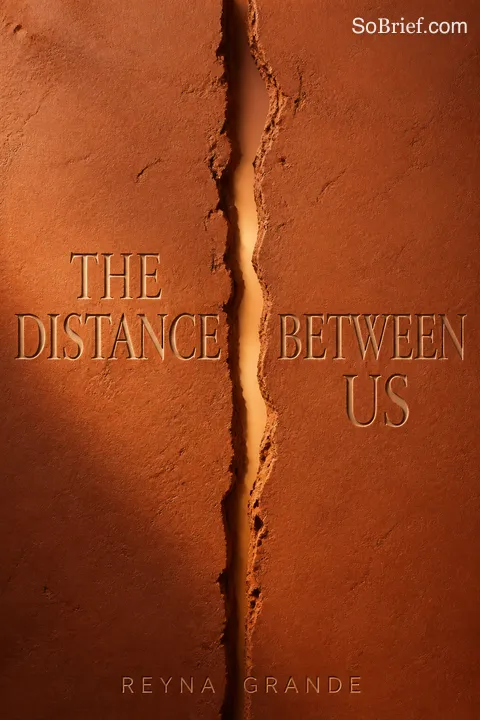
What is The Distance Between Us by Reyna Grande about?
- Memoir of immigration and separation: The book is a memoir chronicling Reyna Grande’s childhood in Mexico, her separation from her parents who immigrated to the U.S., and her eventual journey to reunite with them.
- Family and resilience: It explores the emotional and physical hardships faced by Reyna and her siblings, including poverty, abandonment, and the longing for family unity.
- Immigrant experience: The narrative provides a firsthand account of the dangers and sacrifices involved in crossing the U.S.-Mexico border and adapting to life in a new country.
Why should I read The Distance Between Us by Reyna Grande?
- Insight into immigrant life: The memoir offers a raw, honest portrayal of the emotional toll of immigration, especially on children left behind.
- Powerful storytelling: Reyna Grande’s vivid narrative and heartfelt descriptions make the story relatable and compelling, humanizing the immigrant experience.
- Themes of hope and resilience: Despite adversity, the book emphasizes the strength of family bonds and the enduring hope for a better future.
Who are the main characters in The Distance Between Us by Reyna Grande?
- Reyna Grande: The author and narrator, whose childhood and adolescence are central to the memoir.
- Mami and Papi: Reyna’s mother and father, whose decisions to immigrate shape the family’s fate and emotional landscape.
- Mago and Carlos: Reyna’s older siblings, who take on protective roles during their parents’ absence.
- Abuela Evila and Abuelita Chinta: The grandmothers who care for the children in Mexico, each with distinct personalities and approaches.
What are the key themes in The Distance Between Us by Reyna Grande?
- Separation and abandonment: The memoir centers on the emotional and physical distance caused by immigration and parental absence.
- Poverty and survival: Reyna’s story highlights the harsh realities of poverty in Mexico and the lengths families go to for a better life.
- Identity and belonging: The struggle to reconcile Mexican roots with a new American identity is a recurring theme.
- Family and forgiveness: Complex family relationships, love, betrayal, and the possibility of forgiveness are explored throughout the book.
What are the main challenges Reyna and her siblings face while their parents are in the U.S. in The Distance Between Us?
- Neglect and mistrust: Their grandmother Abuela Evila often withholds money and treats them harshly, leading to feelings of neglect.
- Social stigma: The children are labeled as “little orphans,” affecting their self-esteem and social interactions.
- Health and safety risks: They endure lice infestations, scorpion stings, and dangers from floods and neighborhood violence.
How does Reyna Grande describe her childhood in Mexico in The Distance Between Us?
- Life with grandmothers: Reyna and her siblings live with strict Abuela Evila and nurturing but impoverished Abuelita Chinta.
- Harsh living conditions: The children face poverty, lack of running water, and emotional neglect, vividly depicted through daily struggles.
- Emotional impact: Reyna conveys loneliness, fear, and longing for her parents, while her sister Mago assumes a protective role.
How does Reyna Grande portray her parents’ immigration experience in The Distance Between Us?
- Father’s dream and absence: Papi leaves to build a better life but becomes emotionally distant and starts a new family in the U.S.
- Mother’s struggle and return: Mami faces hardship and betrayal in the U.S., eventually returning to Mexico and struggling to support her children.
- Complex family dynamics: The memoir reveals pain, broken promises, and fractured relationships caused by immigration, showing both parents’ flaws and humanity.
How does Reyna Grande describe her journey crossing the U.S.-Mexico border in The Distance Between Us?
- Perilous attempts: Reyna recounts multiple failed attempts to cross the border, including being caught by border patrol.
- Physical and emotional hardship: She describes illness, exhaustion, fear of immigration agents, and the constant threat of harm.
- Hope and determination: Despite the risks, Reyna’s determination to reunite with her father and build a new life drives her forward.
How does Reyna Grande portray the immigrant experience and assimilation in the U.S. in The Distance Between Us?
- Fear and secrecy: The family lives in constant fear of deportation and must hide their undocumented status.
- Cultural dislocation: Reyna misses Mexican traditions and struggles to adapt to American customs and language.
- Economic hardship: The memoir details financial struggles, low-wage jobs, and cramped living conditions common among immigrant families.
What role does education play in The Distance Between Us by Reyna Grande?
- Path to opportunity: Education is depicted as the key to a better future, emphasized by Reyna’s father.
- Struggles with language: Reyna faces challenges learning English and being placed in ESL classes.
- Empowerment through learning: Academic achievements, such as winning writing contests and graduating college, symbolize Reyna’s resilience and determination.
How does The Distance Between Us by Reyna Grande address themes of abuse and resilience?
- Physical and emotional abuse: The memoir candidly describes the beatings and emotional neglect Reyna and her siblings endure from their father.
- Survival and hope: Reyna finds strength in education, writing, and supportive mentors like Diana Savas.
- Breaking the cycle: The story highlights the importance of confronting trauma and striving for a better life, breaking free from patterns of violence and poverty.
What are the best quotes from The Distance Between Us by Reyna Grande and what do they mean?
- “Nothing happens unless first we dream.” — Carl Sandburg: Captures the theme of hope and aspiration motivating the family’s sacrifices.
- “It is because they love you very much that they have left.” — Don Bartolo: Reflects the painful paradox of immigrant parents leaving children behind for a better future.
- “You made me who I am.”: The final line acknowledges Reyna’s complex feelings toward her father and his role in shaping her.
- “Here in this country, if you aren’t educated, you won’t go very far.”: Emphasizes the central role of education in achieving success as an immigrant.








































