
Key Takeaways
1. Embracing the Fundamental Ambiguity of Human Existence
Man knows and thinks this tragic ambivalence which the animal and the plant merely undergo.
The human paradox. Humans are unique in their awareness of a fundamental ambiguity: they are both sovereign subjects and objects crushed by external forces, pure internality and part of the world. This condition is marked by the tension between freedom and facticity, being and nothingness, the past that is no more and the future that is not yet. This inherent ambivalence is not a flaw but the very essence of human existence.
Philosophical evasion. Throughout history, most philosophers have attempted to mask this tragic ambiguity. They have tried to reduce mind to matter, deny death or life, or establish hierarchies that dismiss uncomfortable aspects of the self. Even sophisticated systems like Hegel's, which sought to reconcile all aspects, ultimately led to a "marvelous optimism" that glossed over the inherent conflicts and failures of human experience.
Existentialism's embrace. In contrast, existentialism, as defined by Kierkegaard and Sartre, confronts this ambiguity head-on. It asserts that man is a "being whose being is not to be," a subjectivity that realizes itself only as a presence in the world. Rather than despair, this recognition of ambiguity is the starting point for ethics, as the notion of "having-to-be" only makes sense for a being who questions himself and is at a distance from himself.
2. The Dishonesty of Fleeing Freedom: The Sub-Man and the Serious Man
Cowardice doesn’t pay.
The child's world. Most individuals begin life in a "serious world" where values, customs, and truths are presented as absolute and ready-made, much like the sky and trees. The child feels happily irresponsible, protected from the anguish of freedom by a "ceiling" built by generations. This metaphysical privilege allows them to escape the burden of choice, believing in the fixed being of adults and the objective existence of good and evil.
The sub-man's apathy. Some individuals remain trapped in this infantile world, or retreat to it, becoming "sub-men." They are characterized by apathy, a fundamental fear of existence, and a rejection of the "passion" that is their human condition. They make themselves blind and deaf to the world, reducing their existence to bare facticity. This flight from freedom manifests as an inert resistance to others' projects, leading to a meaningless world and often becoming a tool for fanaticism and violence.
The serious man's denial. The "serious man" also flees freedom, but by submerging it in external, supposedly unconditioned values like a Cause, science, or revolution. He imagines that by subordinating himself to these idols, he gains permanent value and escapes the stress of existence. This is a form of dishonesty, as he masks the fact that he freely establishes these values. The serious man is dangerous, often becoming a tyrant who sacrifices others to his chosen "thing," ignoring their subjectivity and freedom in a fanaticism that empties life of human content.
3. Flawed Engagements: The Adventurer and the Passionate Man
The adventurer always meets others along the way; the conquistador meets the Indians; the condottiere hacks out a path through blood and ruins; the explorer has comrades about him or soldiers under his orders; every Don Juan is confronted with Elviras.
The adventurer's indifference. The adventurer delights in living and acts for action's sake, spreading a freedom indifferent to its content. He rejects the serious world and embraces a gratuitous display of activity, whether in exploration, conquest, or love. While this attitude appears close to genuine freedom, it often stems from a nihilistic contempt for men, believing one can assert existence without considering others. This indifference leads to treating others as instruments, making the adventurer prone to tyranny and complicity with authoritarian regimes.
The passionate man's possession. The passionate man sets an object as an absolute, disclosed by his subjectivity. Unlike the serious man, his engagement is deeply personal, but he seeks possession and being through this object. This pursuit often leads to torment and a self-created hell, as the object continually eludes him. His freedom becomes a separation, isolating him from others and making genuine communication impossible. Like the adventurer, his partial nihilism—where only his object of passion seems real—can lead him to treat others as things, resulting in tyranny and fanaticism.
The need for conversion. Both the adventurer and the passionate man represent incomplete syntheses of freedom and content. Their flaws lie in their refusal to fully acknowledge the interdependence of freedoms and the human meaning of their actions. A genuine conversion involves accepting the distance from the object, renouncing possession, and recognizing that true love and engagement mean loving others in their otherness and freedom, destining one's existence to other existences without hoping to entrap them.
4. Willing Oneself Free: The Core of Existentialist Ethics
To will oneself moral and to will oneself free are one and the same decision.
Freedom as a positive act. Existentialism asserts that "to will oneself free" is not a hollow formula but a concrete, positive, and constructive step. Freedom is not a static quality but merges with the very movement of existence, which is only by making itself be. It is precisely by having to be conquered that freedom gives itself. This means actively transitioning from a spontaneous, contingent existence to a genuine moral freedom by choosing to found one's projects and constantly affirming this choice.
The possibility of evil. Unlike philosophies that reduce evil to error (Socrates, Plato, Spinoza) or struggle to account for it (Kant), existentialism provides a real role for evil. Because man is fundamentally a negativity, at a distance from himself, he can choose not to will himself free. This "bad willing" manifests as laziness, heedlessness, caprice, or cowardice, where one contests the meaning of their project. This inherent possibility of escaping one's freedom is precisely what gives meaning to the words "to will oneself free" and makes ethics necessary.
Constant tension and creation. Genuine freedom requires a constant tension. One must adhere to the concrete movement by which spontaneity defines itself, reflecting upon itself through the ends it sets up. This creative freedom develops happily, never congealing into unjustified facticity. It embraces the resistance of the world, seeing obstacles not as denials of freedom but as opportunities for disclosure. This indefinite movement, confirmed through all creation, is how man fulfills himself as a freedom.
5. Freedom's Interdependence: The Necessity of Others
To will that there be being is also to will that there be men by and for whom the world is endowed with human significations.
Beyond solipsism. Existentialism is often wrongly accused of solipsism, suggesting that individuals, as creators of their own values, would seek to impose them on others, leading to conflict. However, the philosophy explicitly condemns such tyranny. It recognizes that while every project emanates from subjectivity, this subjective movement inherently transcends itself towards others. Man finds justification for his own existence only in the existence of other men.
The gift of the other. While the initial impulse might be to see others as limits or enemies who "steal the whole world away," a reasonable understanding reveals that others also give the world to us. A thing is revealed and endowed with human meaning only through the presence and projects of other men. No individual project can be defined except by its interference with, and relation to, other projects. To make being "be" is fundamentally to communicate with others through being.
Universal solidarity. True freedom cannot will itself without aiming at an open future, and only the freedom of other men can extend one's projects beyond one's own life. Even a tyrant, in a sense, desires the freedom of others, though he fails to honestly assume the consequences of this wish. Therefore, "to will oneself free is also to will others free." This is not an abstract formula but a concrete imperative: one must respect the freedom of others and help them to free themselves, recognizing that the cause of freedom is universally human.
6. The Antinomies of Action: Violence, Sacrifice, and Justification
No one governs innocently.
The paradox of action. When oppressors refuse conversion, ethics demands their suppression, often through violence. This creates a profound paradox: action generated for man is immediately generated against men. The oppressed, in revolting, risk becoming a "blind force," mirroring the evil they fight. This bitter truth, universally known yet often masked, forces individuals to treat certain men as things to secure the freedom of all, leading to the sacrifice of both enemies and allies.
The problem of justification. Oppressive regimes often justify violence by denying the value of the sacrificed, reducing individuals to "zeros" for the sake of a greater "collectivity" or "cause." While it's true that an individual's existence can seem small, reducing them to pure facticity ignores their transcendence and the world they disclose. Conversely, doctrines like historical materialism claim necessity, eliminating choice and outrage. However, this "doctrine of necessity" is often a weapon, masking the leaders' own risky decisions and the inherent freedom of those they command.
The ethical wager. Utilitarian ethics attempts to justify sacrifice by its "utility" for Man, but "universal, absolute man" exists nowhere. The choice often comes down to sacrificing one freedom for another. A calm, mathematical calculation is impossible because human suffering is incommensurable with future gains. Political choice is thus an ethical wager: one must decide, without external help, whether chances and risks are to be assumed, thereby setting up values. This requires confronting the values realized with the values aimed at, and the meaning of the act with its content, acknowledging that the end justifies the means only if it remains present and fully disclosed in the enterprise.
7. The Finite Present and the Human Future
Man ought not entrust the care of his salvation to this uncertain and foreign future: it is up to him to assure it within his own existence; this existence is conceivable, as we have said, only as an affirmation of the future, but of a human future, a finite future.
The myth of the future-thing. Many doctrines, from religious promises of heaven to secular ideas of progress or a finished socialist state, project a "Future-Thing" – an infinite, harmonious totality where all sacrifices will be redeemed. This myth allows for the justification of present oppression and violence, as the present is deemed merely a negative, transitory stage to be abolished for the sake of future positivity. Those who embrace this view find the "tranquillity of the serious," believing that the end absolutely justifies any means.
The reality of finite existence. However, human existence is originally a negativity, a lack that cannot be eliminated by any social upheaval or moral conversion. There will always be struggle, and freedom will always have to be won. Therefore, waiting for a mythical universal peace or a perfectly harmonious future to establish valid existence is to wait indefinitely. Man's hold on the future is limited; it is a human, finite future, not a formless night from which justification can be drawn.
Asserting the present. To avoid losing existence in an indefinite pursuit of the future, man must assert himself in the present. Festivals, for instance, serve to stop the movement of transcendence, affirming the subjective present and expressing the need to feel that one exists absolutely. While existence is consumption and destruction, it must also be engaged in new undertakings, dashing towards a finite future. Man fulfills himself within the transitory, regarding his undertakings as finite but willing them absolutely, finding meaning in the ensemble of the movement that ends in their fulfillment, not in a mythical historical end.
8. Ethics as Constant Invention and Concrete Engagement
Ethics does not furnish recipes any more than do science and art. One can merely propose methods.
Ambiguity vs. Absurdity. To declare existence ambiguous is not to say it's absurd. Absurdity denies meaning, while ambiguity asserts that meaning is never fixed and must be constantly won. This condition is precisely why ethics exists: man seeks to save his existence through failure and outrageousness. Therefore, acknowledging the antinomies of action—the inherent conflicts between means and ends, present and future—does not mean renouncing action, but rather living it in its truth.
The method of ethical action. Just as science and art don't offer ready-made solutions but methods, ethics provides a framework for invention. The fundamental problem is to ensure the meaning of an action is not falsified by its content. This requires a constant "trial and decision" in each case, confronting the values realized with the values aimed at. This vigilance keeps the validity of goals alive and ensures the genuine assertion of freedom, preventing the man of action from becoming a dictator who blindly pursues an end.
Respecting concrete individuals. A core precept of existentialist ethics is to treat the individual as an absolute end, not merely as a member of a class or collectivity. To will man free is to will the disclosure of being in the joy of existence; thus, the concrete joy and happiness of individuals, even a tramp enjoying wine or a child playing, are essential. While politics may reject thoughtless benevolence, violence is only justified if it opens concrete possibilities for the freedom one seeks to save. This means inventing original solutions in each situation, respecting the absolute freedom of others, and recognizing that to prohibit a man from error is to deprive him of life itself.
Review Summary
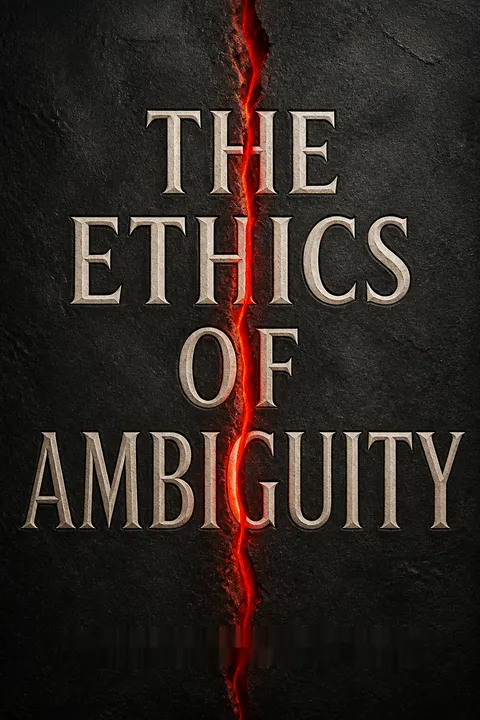
Readers largely praise The Ethics of Ambiguity as an accessible, compelling entry point into existentialist ethics. Many appreciate de Beauvoir's practical grounding of Sartre's abstract philosophy, particularly her framework for understanding freedom, ambiguity, and moral responsibility. Reviewers highlight her nuanced treatment of oppression, human interdependence, and the rejection of moral absolutes. Some find the text occasionally dense or academically challenging, while others consider it refreshingly concise. Critics note it may not constitute a complete ethical system, yet most agree it meaningfully advances existentialist thought beyond Sartre's foundational work.
People Also Read





About the Author
Other books by Simone de Beauvoir


Download PDF
Download EPUB
.epub digital book format is ideal for reading ebooks on phones, tablets, and e-readers.








































