Key Takeaways
1. Embrace Suffering as a Sacred Journey
Suffering need not destroy the heart; it has the potential to lead to life.
Life's inevitable pain. We all experience suffering, from life-wrenching tragedies to nondramatic, routine heartaches. Whether it's the loss of a loved one, a broken friendship, or the frustration of unmet desires, pain is an inherent part of living in a fallen world. Denying or ignoring this pain, or trying to "move on" too quickly, prevents us from being shaped by it in a meaningful way.
God's different perspective. God invites us on a healing journey through the valleys and over the cliffs of an evil world, not around them. His perspective is that pain, if anticipated and embraced thoughtfully, can refine and even bless us. This contrasts with our natural inclination to avoid displeasure, which often robs us of the joy God intends.
Christ's example. As followers of Christ, we are called to view suffering as a sacred journey, following Jesus' example. He was "a man of sorrows, and familiar with suffering," learning obedience through it. Embracing suffering, rather than fleeing it, has the potential to lead to life, deepening our relationship with God and his purposes for us.
2. Avoid Escapist Responses to Pain
By avoiding pain, we might escape life's sorrow. But at what cost?
Four unhelpful routes. When faced with the harm of living in a fallen world, many people choose logical but ultimately unhealing routes to avoid pain. These tangents prevent us from reaching our true destiny and experiencing life's richness and joy.
Paranoid cynicism. This philosophy views life as "nada," a long, hard struggle ending in death. The paranoiac over-predicts misfortune, lives on caffeine and irony, and often actively produces decay to avoid the deeper sadness of unexpected pain. They see the crucifixion but miss the resurrection.
Fatalistic apathy. This approach takes pain in stride, minimizing it and shrugging it off with "what will be, will be." It anesthetizes desire, leading to emotional distance, lack of empathy, and a morally lazy, unimaginative spectator approach to life, rather than engaging with suffering.
Heroic self-reliance. The Nietzschean hero despises weakness, transforming suffering into challenges to overcome. While championing personal responsibility, this approach leaves no room for real pain or community, valuing individual performance and disdain for those who falter.
Optimistic denial. This is the "grin and bear it" approach, assuming God's love means everything will "work out for the best." It's a comfort zone that distances from pain, but it's naive, leading to a walled-off heart that cannot smell decay or hear sorrow, eventually being pierced by life's realities.
3. The Healing Path: Openness, Anticipation, Embrace, Letting Go
Embrace is an accurate metaphor to encompass what is involved in walking the healing path to God.
Openness to truth. Embracing life requires opening our hearts, a position of vulnerability. This involves actively turning toward the whole truth of our past, both good and disconcerting, and making space to receive it. This hunger for life welcomes trials with joy, compelling us to find meaning and discover ourselves, rather than remaining suspicious and closed.
Waiting with anticipation. The healing path demands patience, stirring the soul's deep struggle with hope. Hope lifts us, showing the horizon, yet also distances us. God often traps us between our desire and our demands, not to punish, but to purify our hope for Him alone, satisfying our deepest hungers with Himself, rather than quick fixes.
Encircling and letting go. True love involves encircling others with honor, passion, and respect, both giving and receiving. This interplay is full of mystery. Yet, we must also learn to let go of moments and people, understanding that clinging too tightly can strangle what we love. This freedom allows God to waltz us into new experiences of life, even as earthly glory fades.
4. Evil's Tools: Betrayal, Powerlessness, Ambivalence
Evil works to destroy that glory by stealing and marring what makes us most glorious: our memory, our imagination, and our capacity for sacrifice. In other words, evil wishes to destroy faith, hope, and love.
Targeting human glory. Evil, a diabolical foe, is committed to ruining our lives because we uniquely reveal God's glory. It cannot destroy God, but it can inflict terrible damage on human beings by attacking our core capacities: memory (which underpins faith), imagination (which fuels hope), and the capacity for sacrifice (which defines love).
Betrayal's assault on faith. Betrayal, the breaking of an implied or stated commitment of care, shatters trust and isolates us in loneliness, doubt, and shame. It turns the past into a series of questions, eroding confidence in others and in God's past care. This leads to suspicion, a refusal to remember God's redemptive acts, and ultimately, a loss of faith.
Powerlessness's assault on hope. Powerlessness is the agony of being caught in a trap, unable to erase damage or paint the good we desire. It stems from:
- The world: Personal assaults like illness, death, or job loss.
- The flesh: Internal ineptitude, our autonomous self-will warring against our spirit.
- The devil: Supernatural snares, offering glory but delivering heartache and helplessness.
This leads to apathy and despair, destroying our capacity to anticipate and shape the future for good, trapping us in endless repetition.
Ambivalence's assault on love. Ambivalence, feeling torn in two, creates a divided sense of self, leading to shame and self-hatred. It poisons the hunger of the heart, making us question the sanity of giving and receiving pleasure. This can arise from:
- Fulfilled dreams: When blessings fall short of expectations.
- Used gifts: When talents bring attention but also pressure and resentment.
- Suffering: When trials are viewed as unwanted rather than opportunities for growth.
Evil uses this to alienate and deplete us, stripping us of love's joy and infusing us with shame, which is the silent killer of intimacy.
5. Faith is Remembering God's Redemptive Story
Faith is trust in the goodness of God. I grow as I recall and recollect the stories of God in the Bible, in the lives of others, and in my own life.
The wager of faith. We are compelled to live by faith daily, trusting others in countless interactions. The ultimate wager is on God's existence and goodness. Faith is not blind belief but "being sure of what we hope for and certain of what we do not see," built on clues from creation, conscience, and stories of redemption.
Recalling God's drama. God is a master storyteller, weaving drama, suspense, and even humor into biblical narratives like the Exodus, and into our personal lives. Remembering these stories, even the painful ones, allows us to name the moments God appeared as Rescuer. This process transforms our past from a source of doubt into a treasure map, revealing God's presence and redemption.
Disruption and identity. Betrayal disrupts our "shalom," shattering peace and leading to confusion and doubt. This disruption, however, compels a deeply personal search that can transform us. It leads us to encounter God, who finds us first, and in that wonder, we gain a new sense of identity and calling, choosing which stories—of abuse or redemption—will define us.
6. Hope is Dreaming of God's Future Glory
Biblical hope is substantial faith regarding the future. Hope looks at the shattered remnants of the soul hit by the storm and envisions not merely rebuilding, but rebuilding a life that has even more purpose and meaning than existed before the loss.
Hope's maddening call. When life's storms hit, we often feel powerless and empty, leading to resignation. But hope is the quiet, incessant call to dream for the future, an "insatiable quest for more" that cannot be killed, only drugged numb. It's a "memory of the future," linking past faith with future anticipation, allowing us to envision a life with greater purpose.
The Day of the Lord. Biblical hope centers on Christ's coming, the "Day of the Lord," which signifies radical, total, cosmic change. This day brings destruction for darkness and restoration for light, depicted as a cosmic wedding feast and a day of justice. This "far future" certainty infuses our "near future" with purpose, allowing us to rage against harm and crave the ultimate banquet, seeing present pleasures as foretastes of greater glory.
Growing hope through struggle. Hope grows by risking, struggling, surrendering, and waiting. It's not docile patience but a bold protest against God's silence, a refusal to let powerlessness silence our cry. Like Job, we are to demand God speak, knowing that hope comes alive in the "dreary silence of God." Surrender frees us to admit our emptiness and hunger for glory, enabling us to imagine a future glory that transforms our present.
7. Love is the Dance of Passion and Freedom
Love is an expression of the delight we find in the face of the other.
Love's foundation. Love is the ultimate fruit of faith's memory and hope's desire. It's impossible to love others deeply without our hearts growing in faith (remembering God's goodness and redemption) and hope (dreaming of His coming glory). Faith and hope combine to enable us to open our hearts and live for love today, anticipating His coming.
Remembered and dreamt love. We love only because we have been loved, guided by "North Star" memories of surprising kindness and inexplicable grace. Yet, shame from past betrayals makes us fear vulnerability. Love also fuels desire, drawing us into a future where our deepest hungers are met, not just with information, but with God himself. This desire, as Levinas noted, cannot be satisfied but nourishes itself on its own hungers.
Open hearts and lavish patience. Love requires open hearts, ready to engage with the "abundance of the world," transforming mere circumstances into "occasions" for God's glory. It's sustained by lavish patience, giving and receiving even when rewards are not immediate, and by bold, desperate prayer that refuses to be silenced by God's apparent inactivity. This "boldness" invites God's profligate pledge to meet our asking, seeking, and knocking.
Embracing and letting go. Love is a passionate embrace, a "jouissance" that unites body and soul in worship. Like the prodigal's father, God runs to us, embracing us without rebuke, celebrating our return. Yet, true love also lets go, emptying itself like Christ, allowing others the freedom to follow their own path, even if it means loss. This "emptying love" is for "the joy set before him," the Day of the Lord, compelling us to release others to walk their healing path.
8. Live a Radical Life: Be Fully Human Like Jesus
Christians don’t seem to grasp that the goal of redemption is to make us more human. Instead, we labor to be superhuman and lose what makes us most like Jesus—our humanity.
Purpose and calling. A radical life begins with the premise that we exist for God and His purposes, not our own. This means being fully human, embracing both the weariness of this soiled world and its capacity to transfix us with God's glory. We are to give our daily passions and burdens to Him for His glory, making Him known in all we do.
Intrigue and imagination. Being fully human involves deep intrigue in others' hearts, like Jesus with the Samaritan woman, seeing beyond superficial labels. We are rarely curious about others' stories, but Jesus was deeply intrigued by three-dimensional "losers." It also requires imagination to glimpse the unseen Kingdom of God within and to labor creatively to bring forth beauty and order, seeing what others have no imagination to see.
Incarnate care. A radical life means holy indifference to our own plans, giving up our agenda to join the dreams of others. Incarnate care takes on the suffering of others, bearing the cost of their plight. Like the Good Samaritan, we get dirty, entering the fray of blood and death, disturbing, drawing, and directing others to the Father, not just those we deem "worthy."
Loving like Jesus. To follow Jesus is to disturb, draw, and direct others to the Father.
- Disturbing: God disturbs our self-satisfied lives, and we are called to speak truth in love, even if it costs the relationship, bringing to the surface what complacency hides.
- Drawing: We are called to encourage others, drawing forth their courage, strength, and passion by offering a glimpse of God's delight, like Dr. Dillard did for the author.
- Directing: This involves asking questions that expose the state of the heart, guiding others to discover their unique calling, which is to use their stories to tell God's story.
9. Engage in Redemptive Conversation
Redemptive conversation delights in all that reflects dignity and disrupts whatever reeks of depravity.
Beyond small talk. Most conversations are like junk food—tasty and addictive, but not nutritious or life-changing. A person living a radical life, on the healing path, moves into others' hearts with a redemptive purpose: to expose depravity (our flight from God) and draw forth dignity (our deep desire for good, lovely, and true).
Four stages of conversation. Conversations with eternal impact traverse four major stages:
- Present to the Past: Moving from current joys and sorrows to past betrayals, powerlessness, and ambivalence, revealing how a person has tried to make life work apart from God.
- Past to the Future: Understanding how past patterns of flight from God shape future dreams and fears, giving a deeper sense of what controls the heart.
- Future to the Present: Reflecting on a person's desired legacy and unformed potential to give and receive love, challenging them to change in the present.
- Present to Eternity: Returning to current struggles to open the door for understanding the need for a deeper relationship with the eternal God, inviting decisions that bring the heart to a crossroads.
Navigating resistance. People often resist deep conversation through abstraction, dismissal, or contempt, fearing shame more than loneliness. The listener must gently pursue underlying narratives, connect two points in a story to draw implications, and offer tentative insights. This approach, delivered with curiosity and vulnerability, can open doors to deeper engagement, even if it means risking rebuff.
10. Create a Community of Sojourners
A community of sojourners must leave the land of comfort and walk the healing path toward a better city than we enjoy now.
Leaving basic principles. Christians are called to follow Abraham, departing from the basic principles of their country, class, race, subculture, and family. This means being "in the world but not of it," retaining loyalty to Christ above all. We should strive to "fit in" in ways that give access to those we love, but never blindly support any group's rules as the ultimate basis of identity.
The "agora" of engagement. The church is not meant to be a "ghetto" but an "apostolic band" that returns to the world as salt and light. Since there's no single "agora" (place of commerce, information, ideas) today, we must go wherever people gather—coffee shops, bowling leagues, community events—to create spaces for life and delight. This involves incarnating the gospel, not just with tracts, but by genuinely engaging in activities and serving others, like a church hosting a dog wash for the Humane Society.
Cleaving in battle. We are meant to walk the healing path with a few comrades, an "apostolic band," who "cleave" to one another for dear life. This means mutual encouragement, accountability, and fighting together against sin's deceitfulness. This diverse group, like Jesus' disciples (tax collectors and zealots), must learn to pray, confess, repent, forgive, and fight on, mirroring a marriage in its union of souls, leading to greater playfulness, service, and worship for God's glory.
Review Summary
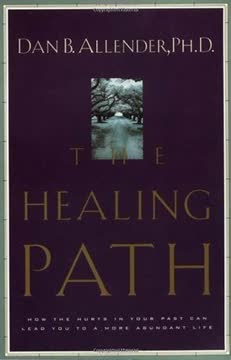
Readers widely praise The Healing Path as a meaningful, challenging resource for processing pain and trauma through a Christian lens. Allender's framework of faith, hope, and love resonates deeply, with many noting its emotional depth and personal stories. Some readers found certain sections overly wordy, sexually descriptive, or lacking clarity, particularly regarding community and the church. Despite minor criticisms, most recommend it for anyone on a healing journey, appreciating its blend of psychological insight, biblical grounding, and hopeful vision for redemptive suffering.