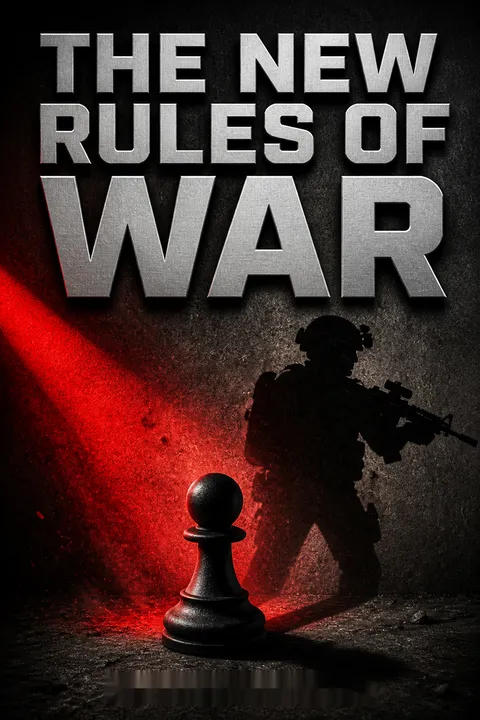

Key Takeaways
1. The West is Losing Wars Due to Strategic Atrophy
The last time the United States won a conflict decisively, the world’s electronics ran on vacuum tubes.
A grim reality. Since World War II, the American military, despite unparalleled resources and training, has consistently failed to achieve its objectives in conflicts from Korea and Vietnam to Iraq and Afghanistan. This isn't a partisan issue but an American one, reflecting a deeper problem: a false concept of victory and a refusal to acknowledge failure. The West, including the UK and NATO, is stuck in quagmires, routinely losing to weaker enemies.
Strategic incompetence. The core issue isn't a lack of superior troops, technology, or budget; it's a fundamental flaw in strategic thinking. Many experts are in denial, clinging to outdated notions of war or dismissing conflict as too chaotic to understand. This "strategic atrophy" stems from a yearning to fight conventional wars like it's 1945, ignoring that war has evolved.
Durable disorder. The 21st century is defined by "durable disorder," a state of perpetual chaos where traditional solutions fail. Armed conflicts have doubled since WWII, peace agreements often collapse, and ancient rifts reignite. This isn't anarchy, but a return to a pre-Westphalian norm where conflict smolders endlessly. The West is dangerously unprepared, as adversaries like Russia, China, and terrorist groups exploit this disorder by playing by new, unrecognized rules.
2. Conventional War is Dead; Future Conflicts are Post-Conventional
Conventional war is dead. Those stuck in the traditional mind-set will probably not even recognize future conflicts as wars at all, until it is too late.
An obsolete model. The Western "conventional war" strategy, modeled on World War II, assumes state-on-state combat where firepower and battlefield victory are supreme. This "Big War" mindset, heavily influenced by Carl von Clausewitz, is now obsolete. The Peace of Westphalia (1648) established states as the sole legitimate actors in war, but this order is dying, with states receding globally and being replaced by other entities.
A dangerous delusion. Despite the bitter lessons of Vietnam, Somalia, Iraq, and Afghanistan, the West continues to design its militaries for a type of war that no one else fights. The number of unconventional wars has sharply risen since 1945, while conventional interstate conflicts are nearly extinct. This fixation on the past ensures failure, as enemies wage war in the present, often without traditional uniforms or clear battle lines.
Transform the military. To win, the West must ditch its outdated approach. This means:
- Stop buying conventional weapons: Billions spent on F-35s and aircraft carriers are irrelevant against modern threats.
- Invest in special operations forces (SOF): They are effective but underfunded.
- Rebalance active/reserve components: Move conventional warfighters to reserves, support functions to active duty.
- Cultivate warrior-diplomats: Individuals immersed in local language, culture, and politics.
- Empower civilian agencies: Information dominance, financial sanctions, strategic messaging are crucial.
3. Technology Will Not Win Wars; Invest in People and Cunning
Sexy technology does not win wars.
Technological utopianism. The West's faith in advanced weaponry, exemplified by the F-35 fighter jet (the most expensive weapon in history at $1.5 trillion), is a form of self-deception. Despite its impressive specs, the F-35 has flown zero combat missions in ongoing wars and struggles against older aircraft. This obsession with "cool stuff" over effective tools is a "technological utopianism" that blinds the West to the realities of modern conflict.
Declining utility of force. Since WWII, high-tech militaries have been routinely stymied by low-tech opponents. The humble roadside bomb often outsmarts "smart weapons," and the AK-47 remains the world's true weapon of mass destruction by body count. The "Third Offset Strategy," promising victory through robotics and AI, is a reboot of failed 1990s theories, ignoring that technology is no longer decisive in warfare.
Invest in gray matter. The USS Fitzgerald collision, caused by untrained personnel despite advanced systems, highlights the danger of over-reliance on technology at the expense of fundamental human skills. Future wars will be low-tech, with enemies weaponizing the mundane. The solution is to invest in people, not platforms, recognizing that human intelligence and adaptability are superior to silicon.
4. War and Peace Coexist; Exploit the "Gray Zone"
Cunning adversaries leverage the space between war and peace for devastating effect.
Blurred lines. The traditional Western dichotomy of "war or peace" is a dangerous illusion. Adversaries like Russia and China exploit the "Gray Zone"—the space between declared war and formal peace—to achieve strategic objectives without triggering a conventional military response. Russia's "New Generation Warfare" in Ukraine and China's "Three Warfares" strategy in the South China Sea are prime examples.
War by other means. China's strategy, for instance, aims to sap the enemy's will to fight before combat even begins, using:
- Psychological warfare: Strategic deception, rumor, false narratives, diplomatic pressure.
- Media warfare: Manipulating public opinion through state-controlled news (CCTV) and influencing Hollywood.
- Lawfare: Bending or rewriting international law to bolster territorial claims and undermine opponents' legitimacy.
Strategic paralysis. The West's "light bulb vision" of war (either on or off) leaves it strategically inert in these non-war wars. While the US builds more conventional arms, China swallows islands and undermines alliances. This highlights the urgent need for a new grand strategy that recognizes the constant coexistence of war and peace, allowing for proactive engagement in the Gray Zone rather than waiting for a formal declaration of hostilities.
5. "Hearts and Minds" Don't Matter; Effective Counterinsurgency is Brutal
Winning hearts and minds, which is how the West conceives of COIN today, is irrelevant.
A failed doctrine. The "population-centric" counterinsurgency (COIN) strategy, popularized by General David Petraeus, promised victory by winning over local populations through nation-building and social services. However, this approach failed spectacularly in Iraq and Afghanistan because it mistakenly assumed populations are bribable and that Western concepts of legitimacy apply universally.
Historical brutality. Successful COIN strategies throughout history have been far more ruthless:
- Drain the swamp: Coercing or eliminating the population that supports insurgents, as Rome did in Judea.
- Export and relocate: Forcibly dispersing ethnic groups to extinguish rebellion, like Stalin with the Chechens.
- Import and dilute: Flooding a region with one's own population to suppress native resistance, as China did in Tibet.
A Hobson's choice. Effective COIN is brutal and heartless, often resembling colonialism. While the West shies away from such methods, its current approach only prolongs conflicts and allows terrorism and insurgencies to fester. The alternative is to accept that a long-term, robust presence is needed, but without risking Western troops in body bags.
Muster a Foreign Legion. The solution is to create foreign legions, modeled after France's, composed of globally recruited enlisted ranks led by Western officers. These units would:
- Provide long-term "boots on the ground" in disordered regions.
- Reduce Western casualties, offering political freedom of maneuver.
- Replace unreliable proxy militias and unaccountable private contractors.
- Offer a pathway to citizenship, attracting dedicated recruits.
6. Mercenaries Are Back and Reshaping Warfare
Mercenaries are back. I know, because I was one.
The second-oldest profession. Mercenaries, or "private military companies," are not a new phenomenon but a return to historical norms. For most of history, renting force was cheaper than owning it, and mercenaries were the primary instrument of war. The Westphalian Order temporarily suppressed them, but they have resurfaced, particularly in the wake of US wars in Iraq and Afghanistan.
A booming, unregulated market. Over half of all military personnel in recent US wars were contractors, a proportion that continues to rise. This has created a multi-billion dollar global market for private force, with companies like Russia's Wagner Group operating with lethal effectiveness. This market is largely unregulated, with no international judiciary or police force to enforce laws, leading to:
- Moral hazard: Clients are more reckless when their own people aren't bleeding.
- Conflict prolongation: Mercenaries are incentivized to start and elongate wars for profit.
- Security dilemmas: The proliferation of private force leads to arms races and accidental escalation.
- Double-crossing: Disputes are settled by treachery, not law.
The futility of law. Attempts to outlaw or regulate mercenaries have largely failed. Many buyers are states, making legal action difficult, and non-state actors simply move offshore. The market for force is here to stay, and its logic—Clausewitz meets Adam Smith—will profoundly distort warfare, making it less about politics and more about political economy.
7. New Non-State Powers Will Rule and Wage Wars Without States
When the super-rich can rent militaries, they become a new kind of superpower, one capable of challenging states and their rules-based order.
The retreat of states. Many of the world's 194 states are fragile or failing, creating a vacuum of authority. This erosion of state power encourages the rise of new global actors who will fill the void, including:
- Insurgents and Caliphates: Like ISIS, establishing de facto rule.
- Corporatocracies: Multinational corporations hiring their own armies to protect assets in dangerous regions.
- Narco-states: Drug cartels becoming de facto rulers, as seen in Mexico's Acapulco.
- Warlord kingdoms: Individuals seizing power and ruling territories.
- Mercenary overlords: Mercenary captains installing themselves as rulers, cutting out the middleman.
The new elite. The global 1% and megacorporations, already more powerful than many states economically, can now rent industrial-strength firepower. This marketization of war means that billionaires, megachurches, and NGOs could potentially launch their own "crusades" or humanitarian interventions, bypassing traditional state actors. The British East India Company serves as a historical precedent for corporations wielding immense military power.
Deep states. Beyond these external actors, "deep states"—institutional alliances within a government (military, intelligence, judiciary) that operate beyond democratic control—are also emerging as new superpowers. These are not conspiracies but established structures that prioritize their own interests, as seen in Turkey, Iran, and even the US military-industrial complex. Their unmasking will accelerate durable disorder.
8. Shadow Wars Will Dominate, Driven by Deception and Information
Plausible deniability is more decisive than firepower in the information age.
War underground. Future conflicts will increasingly be fought in the shadows, where plausible deniability is the center of gravity. Large tank battles are out; masked warriors, special operations forces, mercenaries, and proxy militias are in. This makes war "epistemological"—the ability to discern truth from fiction will determine winners and losers.
Disinformation as a weapon. Russia's "maskirovka" (masquerade) strategy in Ukraine, using "little green men" and denying their presence, exemplifies this. Russia has become a "disinformation superpower," employing "active measures" like the RT news network and "Troll Factories" to manipulate public opinion and sow discord in democracies. The goal is to create a "fog of war" so thick that the international community cannot establish basic facts, thus preventing intervention.
The dark arts. Sun Tzu's ancient wisdom, "All warfare is based on deception," is more relevant than ever. The "indirect approach" aims to outfox enemies, manipulating them into strategic blunders. This requires information supremacy and a cunning mind over a martial one. The West, with its aversion to "knowledge manipulation," is at a disadvantage, but it must learn to fight in the shadows without sacrificing its democratic values.
Western shadow war. Democracies must develop their own version of shadow war, tailored to undermine autocracies. This includes:
- Kinetic tools: Non-attributable forces for "zero-footprint" or false-flag operations.
- Non-kinetic tools: Weaponized information (trolls, bots, covert support for dissent, denigration campaigns against autocrats).
- Economic pressure: Sanctioning elites, crashing oil prices, facilitating kleptocracy to erode governance.
- Diplomatic engagement: Communicating with all relevant actors, including non-state ones.
9. Victory is Fungible and Achieved Through Cunning, Not Just Force
The supreme art of war is to subdue the enemy without fighting.
Beyond battlefield victory. The West's fixation on battlefield victory, as seen in the "Mission Accomplished" banner in Iraq, is a relic of conventional war thinking. Victory is fundamentally political, not purely military. As the Vietnam War demonstrated, winning every tactical engagement means nothing if strategic objectives are not met. The North Vietnamese won by weaponizing information and eroding American political will, not by outfighting the US military.
The weak defeat the strong. Clever strategies allow the weak to reliably defeat the strong, especially when the strong are:
- A large, conventional military.
- A foreign invader.
- Spread too thin.
- Slow to adapt.
- Fighting a war of choice.
Conversely, the weak win if they are fighting for survival, unified, can access sympathetic populations, and are prepared to bleed. The "Fabian strategy"—protracting conflict to exhaust the stronger enemy—is a timeless example, used by George Washington and Mao Zedong.
The "tactization" of strategy. Western militaries often confuse tactics (maneuvering small units) with strategy (achieving political aims using all instruments of power). This "tactization" leads to futile efforts like the "Whac-A-Mole" strategy against terrorists. Strategic education must be reformed to cultivate "war artists"—strategists who can think creatively about complex problems, not just complicated ones. Victory belongs to the cunning mind, not just brute force.
Review Summary
The New Rules of War presents a provocative analysis of modern warfare, arguing that conventional military tactics are obsolete. McFate contends that future conflicts will be dominated by mercenaries, shadow wars, and non-state actors. While some readers praise the book's fresh perspective and thought-provoking ideas, others criticize its inconsistencies and perceived arrogance. The author's emphasis on adapting to new forms of warfare and investing in unconventional strategies resonates with many, though some question the validity of completely abandoning traditional military approaches.
People Also Read





FAQ
What is The New Rules of War by Sean McFate about?
- Modern warfare redefined: The book explains how warfare has fundamentally changed, moving away from conventional state-on-state battles to complex, persistent conflicts involving nonstate actors, mercenaries, and shadow wars.
- Durable disorder concept: Sean McFate introduces "durable disorder," a global state of ongoing instability where traditional state power is declining and new forms of conflict dominate.
- Ten new rules: The author presents ten new rules of war, challenging outdated military thinking and offering a framework for understanding and navigating 21st-century conflict.
- Strategic adaptation needed: McFate argues that Western militaries and policymakers must adapt to these new realities or risk continued failure in modern wars.
Why should I read The New Rules of War by Sean McFate?
- Critical for understanding conflict: The book provides essential insights into why Western powers struggle in modern wars despite technological and numerical superiority.
- Actionable strategic advice: McFate offers practical strategies and frameworks for military professionals, policymakers, and anyone interested in global security.
- Relevance to current events: The analysis is highly relevant to ongoing conflicts in places like the Middle East, Africa, and Ukraine, helping readers make sense of contemporary warfare.
- Challenges conventional wisdom: The book encourages readers to rethink traditional views of war, peace, and victory, making it valuable for both experts and general audiences.
What are the key takeaways and new rules from The New Rules of War by Sean McFate?
- Conventional war is obsolete: Traditional state-on-state warfare is rare; modern conflicts involve nonstate actors, mercenaries, and ambiguous battlefields.
- Victory is multifaceted: Winning wars now depends on political, informational, and economic strategies, not just battlefield dominance.
- Rise of private and shadow wars: Mercenaries and covert operations are increasingly central, complicating conflict dynamics and requiring new approaches.
- Information is a weapon: Controlling narratives and engaging in information warfare are often more decisive than firepower.
What does Sean McFate mean by "durable disorder" in The New Rules of War?
- Persistent global instability: Durable disorder describes a world where conflicts smolder indefinitely, with no clear resolution or return to peace.
- Decline of state power: Traditional state authority is eroding, replaced by a chaotic system involving nonstate actors, criminal cartels, and private armies.
- New conflict landscape: Nearly half the world experiences some form of ongoing conflict, with peace agreements often failing quickly.
- Strategic implications: This environment demands new strategies and tools, as old models of war and peace no longer apply.
How does The New Rules of War by Sean McFate explain the failure of Western militaries in recent conflicts?
- Strategic atrophy: Western militaries are stuck in outdated models, preparing for wars that no longer exist, such as large-scale tank battles.
- Overreliance on technology: Heavy investment in high-tech weapons often proves irrelevant against adaptive, low-tech enemies.
- Lack of grand strategy: Western powers frequently lack coherent, flexible strategies that address the complexities of modern conflict.
- Tactical success, strategic failure: Successes on the battlefield do not translate into lasting political victories, as seen in Iraq and Afghanistan.
What is the significance of mercenaries and private military companies in The New Rules of War by Sean McFate?
- Resurgence of mercenaries: Private military companies are now central players in modern warfare, providing flexible and deniable military power.
- Changing power dynamics: The rise of mercenaries allows billionaires, corporations, and nonstate actors to wield military force, challenging state monopolies.
- Legal and ethical dilemmas: International law struggles to regulate mercenaries, raising questions about accountability and the future of warfare.
- Potential for instability: Mercenaries can both stabilize and destabilize regions, depending on their clients and missions.
How does Sean McFate define and explain "deep state" in The New Rules of War?
- Institutional power brokers: The deep state consists of military, intelligence, and judicial institutions that operate independently of elected governments.
- Not mere conspiracy: Unlike secretive plots, deep states are institutional and act with tacit consensus, often openly influencing national policy.
- Global examples: Countries like Turkey, Iran, Egypt, and Russia exemplify deep states, while the U.S. military-industrial complex is cited as a Western variant.
- Strategic impact: Deep states can undermine democratic control and shape the direction of national security and warfare.
What are "private wars" and how do they affect modern warfare according to The New Rules of War by Sean McFate?
- Marketization of conflict: Private wars are fought by mercenaries and private military companies for profit, turning war into a commodity.
- Lower barriers to conflict: The availability of hired guns makes it easier for various actors to initiate and escalate conflicts.
- Moral hazard and escalation: Clients may take greater risks, and mercenaries may prolong wars for financial gain or switch sides.
- Strategic management needed: Understanding the dynamics of private wars is crucial for both buyers and providers to avoid exploitation and instability.
What are "shadow wars" and why will they dominate future conflicts according to The New Rules of War by Sean McFate?
- Covert and deniable operations: Shadow wars are fought through deception, plausible deniability, and covert actions rather than open battles.
- Information warfare central: Disinformation, propaganda, and narrative control are key tactics in shadow wars.
- Examples in practice: Russian operations in Ukraine and covert CIA missions illustrate the effectiveness of shadow war strategies.
- Democratic challenges: Democracies struggle with shadow wars due to transparency and accountability, requiring new capabilities to compete.
How does Sean McFate in The New Rules of War redefine the concept of victory in modern warfare?
- Victory is fungible: Success can be achieved through political, economic, informational, or subversive means, not just military triumph.
- Narrative control matters: Winning the information war can be more decisive than battlefield victories, as seen in the Tet Offensive.
- Multiple paths to success: Strategic subversion, influence operations, and indirect actions can all lead to victory.
- Need for creative strategists: Militaries must develop "war artists" who can think beyond traditional tactics to achieve strategic goals.
What role do information and disinformation play in modern warfare according to The New Rules of War by Sean McFate?
- Information as a weapon: Propaganda, fake news, and strategic storytelling are central to shaping public opinion and political outcomes.
- Disinformation campaigns: State actors like Russia use media outlets and troll farms to manipulate perceptions and sow discord.
- Vulnerability of democracies: Open societies are particularly susceptible to information warfare, often pressured by public opinion shaped by manipulated narratives.
- Countermeasures required: Effective defense demands aggressive and creative influence operations to counter adversaries' information campaigns.
What strategic education reforms does Sean McFate propose in The New Rules of War?
- Early strategic training: McFate advocates for introducing strategic thinking early in military careers, not just at senior levels.
- Developing "war artists": He calls for cultivating leaders who combine creativity, moral judgment, and strategic insight, drawing from diverse traditions.
- Bridging tactical and strategic gaps: The book warns against confusing tactical success with strategic victory and urges integrated thinking across all levels of war.
- Incorporating liberal arts: Broader education, including the study of Sun Tzu and other non-Western strategists, is recommended to foster adaptable and innovative leaders.
What are the best quotes from The New Rules of War by Sean McFate and what do they mean?
- "War is armed politics." This quote encapsulates the book’s central thesis that war is fundamentally about achieving political objectives, not just military victories.
- "Conventional war is dead." McFate stresses that traditional state-on-state warfare is obsolete, urging readers to rethink how wars are fought and won.
- "Victory is fungible." The author highlights that success in war can take many forms, including information dominance and strategic subversion.
- "Mercenaries will return." This prediction underscores the resurgence of private military actors and their impact on global conflict.
- "There is no such thing as war or peace—both coexist." McFate challenges the binary view of conflict, emphasizing the persistent ambiguity of modern warfare.
Download PDF
Download EPUB
.epub digital book format is ideal for reading ebooks on phones, tablets, and e-readers.








































