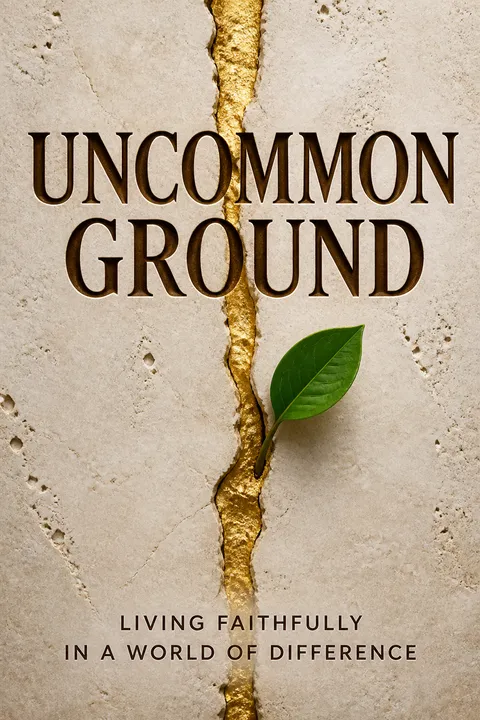
Key Takeaways
1. Pluralism is an undeniable reality, not a battle to be won
This is the fact of pluralism today: deep and irresolvable differences over the things that matter most.
The reality of difference. Modern society is deeply fractured, lacking a shared consensus on the common good, human flourishing, or the purpose of our nation. Rather than trying to force a nostalgic return to a dominant "Christian nation" model—which historically ignored or perpetuated systemic injustices—we must accept pluralism as our current landscape.
A garden, not a war. Viewing culture through the lens of warfare leads to defensiveness, hostility, and a drive to mobilize one's side at all costs. Instead, we should adopt a generative mindset that treats culture as a garden to be cultivated. This shift allows us to:
- Move away from treating those who disagree with us as enemies
- Focus on bringing life-giving beauty and restoration to barren spaces
- Nurture common flourishing even in harsh, divided environments
Rejecting simplistic strategies. To engage faithfully, we must reject the temptation to withdraw into protective enclaves or to compromise our core beliefs just to fit in. True presence requires standing firm in our convictions while actively loving and serving the diverse community around us.
2. Humility, patience, and tolerance are essential civic practices rooted in Christian virtues
The Christian calling is to be shaped and reshaped into people whose every thought and action is characterized by faith, hope, and love—and who then speak and act in the world with humility, patience, and tolerance.
Virtues in action. The civic practices of humility, patience, and tolerance are not mere social etiquette; they are direct expressions of the theological virtues of faith, hope, and love. When we operate from these deep spiritual resources, we can engage with others without the paralyzing anxiety that plagues our polarized culture.
Defining the practices. Each of these three practices serves a distinct purpose in bridging ideological divides:
- Humility: Recognizes the limits of human reason and acknowledges that we are saved by grace, not our own moral superiority.
- Patience: Encourages deep listening and thoughtful questioning, resting in the hope of a story whose end is already known.
- Tolerance: Endures beliefs we do not share, distinguishing the value of the person from the errors of their ideas.
Empathy over technology. In an age where social media and digital communication rapidly erode our capacity for empathy, practicing these virtues face-to-face becomes a revolutionary act. By putting ourselves in others' shoes, we demonstrate a principled empathy that speaks the truth in love.
3. Believers hold dual citizenship, serving the earthly city while anchored in the heavenly one
While we are called to love our neighbors, our proper citizenship is in heaven.
The two cities. Drawing on the theology of Augustine, believers must navigate life as pilgrims belonging to the heavenly city while temporarily residing in the earthly city. This dual citizenship prevents us from placing ultimate hope in political systems, which will always be tainted by a lust for power and domination.
Seeking the welfare. Even as exiles, we are commanded to seek the peace and prosperity of the places where we find ourselves. We contribute to the shared, earthly goods of our society without expecting the secular state to mirror the kingdom of God. This balanced posture involves:
- Contributing to the common good of all citizens, not just Christians
- Remaining discerning about the corrupting nature of political power
- Living distinctively as God's holy people without withdrawing from public life
Salt and light. Jesus' metaphor of believers as the "salt of the earth" means we must disperse into society to preserve it and bring out its best flavors. If we assimilate completely or withdraw into a Christian bubble, we lose our "saltiness" and fail to benefit the world.
4. Faithful engagement requires stepping into the wilderness of cultural adventure
Missions will no longer work along the stream of expanding Western power. . . . And in this situation we shall find that the New Testament speaks to us much more directly than does the nineteenth century . . . as we learn afresh what it means to bear witness to the gospel from a position not of strength but of weakness.
Leaving the familiar. True adventure begins when we leave behind the safety of our cultural comfort zones and step into unfamiliar, risky terrain. For decades, many Western Christians enjoyed a position of social privilege, but the changing cultural landscape now invites us to travel off the grid.
Embracing vulnerability. Stepping into the wilderness requires an entry posture of openness, nimbleness, and a willingness to be vulnerable. When we operate from a position of weakness rather than institutional strength, we are forced to:
- Depend on others and build authentic, reciprocal relationships
- Abandon the "Messiah complex" that often pollutes our outreach efforts
- Allow cultural dissonance to catalyze creative, kingdom-advancing ideas
Resilience in failure. In unfamiliar environments, making mistakes and experiencing cultural friction is inevitable. Resilient faith does not fear discomfort or avoid failure; instead, it views setbacks as invitations to grow in humility, apologize, and deepen relationships.
5. Reluctant entrepreneurship transforms social brokenness through practical, local action
The followers of Jesus Christ are sent on a mission to stimulate growth in the parts of the world that are barren, and to be mixed into the manure piles of the world so that God can use that fertilizer to bring new, virtuous life.
Creating from nothing. When faced with systemic issues and community fractures, we must do more than merely complain or analyze the depth of the problem. Reluctant entrepreneurs are ordinary people who move past their fears to take practical, creative action, building solutions where no precedent exists.
Salt as fertilizer. Understanding salt as an ancient agricultural fertilizer reframes our calling to go where nothing is currently growing and stimulate new life. This hands-on, local engagement requires us to:
- Take personal responsibility for cleaning up messes we did not make
- Collaborate across ideological lines to address pressing community needs
- Build trust through physical proximity and respectful body language
Making the road. There is rarely a perfect, pre-packaged plan for addressing complex social challenges like unemployment, gang violence, or racial tension. We must embrace the reality that "you make the road as you walk," trusting that God's creative Spirit will strengthen us in our weakness.
6. Words are powerful tools for heralding truth, but they must be spoken with charity
Our words, our arguments, our practices of civility and restraint, our habits of word craft and speech work back on us to shape who we are, how we think, and what we are capable of saying in and to our world.
The vocation of naming. Writing and speaking are acts of naming reality, a sacred task that dates back to the Garden of Eden. However, in our hyper-connected digital age, words are often cheapened, weaponized, or used for self-righteous virtue signaling rather than genuine communication.
Heralding the kingdom. As Christian communicators, our role is not to be the heroes of the story, but to act as heralds announcing a greater reality. To do this effectively, we must:
- Cultivate patient silence and deep listening before we speak
- Resist the urge to rush into public debates with shallow "hot takes"
- Upset simplistic cultural categories of Left and Right with eternal truths
Charity in conflict. When we are forced to disagree publicly, the character of our engagement matters as much as the accuracy of our arguments. Committing to speak of our opponents in terms they would recognize actually shapes our own hearts, fostering genuine charity and reducing vitriol.
7. Storytelling subverts simplistic cultural narratives of pure heroes and villains
It’s actually easier for us to believe a false narrative that fits our outlook on the world than a true narrative that shakes and shatters our perspective.
The power of narrative. Humans are hardwired to seek meaning through stories, but we often default to simplistic narratives that divide the world into pure heroes and villains. This tendency blinds us to the complex reality of human nature and prevents us from understanding different worldviews.
The biblical counter-narrative. The Christian worldview subverts conventional storylines by revealing that we are all flawed characters in need of redemption. In this master narrative:
- Sin is the true antagonist, corrupting both individual hearts and social systems
- Jesus is the ultimate, unassuming protagonist who restores what is broken
- Believers are called to be active participants, not self-appointed heroes
Embracing complexity. To build authentic relationships across deep divides, we must listen empathetically to stories that challenge our preconceptions. Recognizing the messy, mixed nature of our own lives enables us to extend grace to others rather than writing them off.
8. The vocation of translation bridges the deep divides of race, culture, and institution
Personal knowledge is impossible without risk; it cannot begin without an act of trust, and trust can be betrayed.
Bilingual living. Many Christians find themselves living between different worlds—such as the secular university and the church, or white and nonwhite communities. Acting as a translator means making the unfamiliar accessible, which requires simultaneous, deep immersion in both contexts rather than keeping one foot in each.
The risk of translation. Translating our core convictions and our lives to an unfamiliar or hostile audience carries significant personal risk. To bridge these relational distances, we must:
- Know ourselves deeply as beloved by God before trying to engage others
- Seek to understand our audience's unique aspirations, confusions, and histories
- Resist the temptation to use stereotypes or defend indefensible institutional behaviors
Overcoming the white baseline. For too long, white evangelical culture has been treated as the default "normal" church experience, marginalizing nonwhite voices. True translation requires white believers to listen to the historical wounds of racism and acknowledge how their own institutions have perpetuated inequality.
9. Bridge building and peacemaking require overcoming personal wounds to seek common ground
The biggest need for bridge building, however, is where the gap is the biggest.
Spanning the widest gaps. It is easy to love and build bridges with those who share our lifestyle, politics, and theology. The true test of our faith is whether we can move toward our opponents—or those we fear—with respect, humility, trustworthiness, and love, imitating Christ's chasm-spanning grace.
Healing personal wounds. We cannot make peace with others if we have not reconciled the unresolved pain and trauma within ourselves. Peacemaking is an active, countercultural pursuit that requires us to:
- Defy the natural pull toward bitterness, self-protection, and recrimination
- Acknowledge how shame drives defensive behaviors in ourselves and our communities
- Address systemic injustices, such as racial inequity, as part of making peace
Finding common ground. Partnering with those who hold different beliefs does not mean compromising our convictions. By building local, interpersonal relationships of trust, we can work together toward shared goals of human flourishing while remaining distinct in our faith.
Review Summary
People Also Read

Download PDF
Download EPUB
.epub digital book format is ideal for reading ebooks on phones, tablets, and e-readers.








































