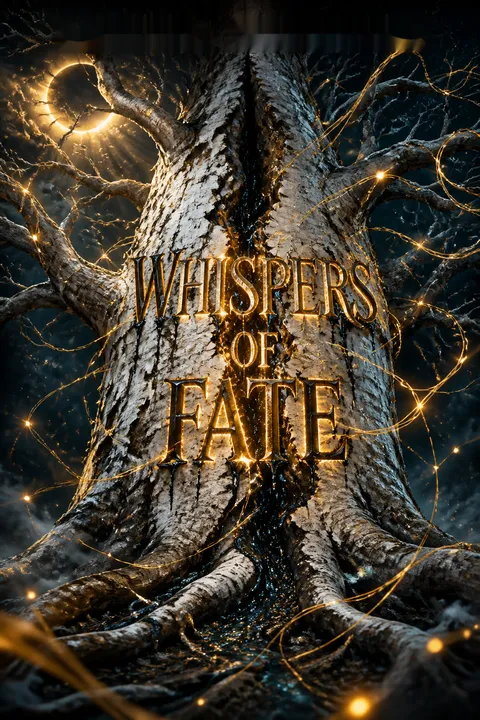

Plot Summary
Shattered Peace in Faery
The fragile peace of Faery shatters as Synthia, queen and goddess, senses encroaching doom on the icy winds that batter her kingdom. Ryder, her mate and High King, is absent, searching for their vanished daughter, Kahleena. Troubles multiply: magical storms, strange uprisings, and the haunting knowledge that ancient barriers—once containing unspeakable things—have begun to fail. Synthia, heavily pregnant, shoulders the burden, fending off creatures seeking chaos or justice. Ominous warnings echo throughout the realm: something old and vengeful stirs, and nothing, not even the victory over past wars, can keep the darkness from creeping in at the kingdom's very heart. Grief and unrest become constant companions as every day brings Synthia closer to the storm—both literal and metaphorical—that she fears is meant for her and all she loves.
Legacy of Grief and Power
The roots of Faery's plight are tangled in blood and betrayal. Erie, a centuries-old goddess and Synthia's confidante, reveals that the goddess Danu did not create Faery but conquered it, exiling the original Etherian people and seeding the land with her own Tree of Life. Danu's twisted actions—war, execution, magical manipulation—created pockets of imprisoned, vengeful beings. With Danu's death, the magical walls have weakened, allowing fractures that now spill ancient monsters and old gods into Faery. Synthia must grapple not only with external threats but with the consequences of her lineage and the limitations—and dangers—of power inherited from flawed, egotistical immortals.
Prison Breaches, Alluring Darkness
As Faery's supernatural world falters, the prison that once held monstrous races and primeval magic begins to breathe and bleed into the land. Zahruk and Alden, close friends and protectors, are both exposed to the corrupting ooze—ink-dark, silver-flecked primal magic—that seeps from these fractures. Their bodies and minds are changing: wings emerge, hunger becomes insatiable, identities blur. Alden especially descends into dangerous instability, consuming those who feed him to shriveled husks. Synthia's attempts to save them are desperate and humane, but she faces the horrifying prospect that friends may be lost—not to death, but to transformation into something ruthlessly inhuman.
The Search for Kahleena
Kahleena, Synthia and Ryder's daughter—the seer, the hope, and the bitter heartache—has vanished without a trace. Ryder searches high and low; Synthia battles despair while holding the kingdom together. Rumors swirl of a powerful, winged being with mercury eyes and ancient magic, presumed to have taken Kahleena as a "bargaining chip" in the coming war. Visions and old secrets haunt Synthia and those around her. The realization dawns that the enemy is not just a kidnapper, but a force intent on reclaiming what was once lost to Danu's conquest: the very soul of Faery, and everything Synthia's family holds dear.
The Old World Stirs
Erie reveals the harrowing full story: Danu waged total war upon Faery's original inhabitants, the Etherians. Those who survived her purge were locked into hidden realms, then layered and barricaded by magical walls that only now begin to break down with Danu's demise. The original races—fierce, predatory beings with the power to drain essence—seek to return in force, recover their lost land, and exact vengeance for centuries of pain. The fractures are not just physical: the very land grows sadistic, unpredictable, as if with a will and hunger of its own, searching for a new source of power and identity.
Transformation and Hunger
Zahruk and Alden's growing instability becomes a microcosm of the larger threat. Zahruk takes on new powers, his mind increasingly touched by something ancient. Alden's transformation is more horrifying—he feeds until death, inciting terror even among the gods' own kind. Synthia's attempts at intervention are met with failure as the corrupted magic proves both tantalizing and toxic. Family and loyalty are tested as friends, once guardians and confidantes, become liabilities or weapons to be used by the old gods now breaking free.
Battle at the Borders
With Ryder's return, the focus shifts to external threats: magical storms cut off supplies, the weaker Courts rebel by withholding tribute, and rumors of war and internal treachery grow. Ristan, Ryder's brother, brings news that the Summer Court's princess has seized power through violence, refusing the authority of Synthia and Ryder. The infectious unrest echoes the magical corruption: loyalty is fleeting and the line between friend and foe blurs, as each claimant to power acts according to their own trauma, hunger, or ambition.
Nightmares and New Life
As Faery reels, Synthia gives birth to another son, Dristan, with Ryder by her side at last. The event, surrounded by uncertainty and the fear of loss, is both a moment of joy and a stark reminder of what is at stake—life is fragile, love is absolute, and parents never cease being warrior-guardians. The jubilation is dimmed by Kahleena's absence and the knowledge that even newborn innocence can be marred by the world's violence and divided loyalties.
The Fate of a Daughter
In captivity, Kahleena faces a world of darkness: hunted and tormented by her captors, she is forced to run for survival and resist both physical and psychic domination by Arius—the powerful, primordial king intent on recapturing the Etherlands. Despite fear and isolation, Kahleena's wit, spirit, and even inexperience become her armor. She learns the scope of her captor's pain and rage, and resolves to meet fate on her own terms, refusing to become a weapon or a victim.
Predator and Prey
As Arius's pursuit grows more intimate and sadistic, Kahleena uncovers that she is both coveted and feared, her very essence representing the potential fusion of old and new power in Faery. Their interactions become a battle of dominance, fear, and reluctant fascination, blurring lines between enemy and fated lover. The maze, the hunt, and the acts of humiliation and pain all serve as metaphors for the ongoing struggle over Faery's future—and who will wield and survive its power.
The Return of the Storm
The magical storm intensifies, and the palace becomes a fortress under siege—not just from external threats but also internal fears. Corrupted allies like Zahruk become unpredictable, sometimes threatening Synthia herself. Old grievances and traumas surface, as even the celebration of new life is sullied by the knowledge that any joy is provisional, every peace a truce, and no one—not even the horde's closest kin—can be trusted blindly any longer.
Bonds of Brotherhood
The males—Ryder, Zahruk, Ristan, and more—are forced to confront loss, rage, and the limits of their own strength. The stories of brotherhood and rivalry are set against changing allegiances, the spiraling infection of the ether-sludge, and the breaking down of old laws and fealties. The threat to Kahleena and to Faery as a whole becomes a test: how much betrayal and transformation can a family—and a realm—endure without shattering beyond repair?
The Queen's Gambit
Synthia's role as queen, mother, and goddess grows heavier: she must comfort and command, weighing the survival of her people against personal heartbreak. Her relentless investigation—into alliances, betrayals, and the magical sources of Faery's malaise—culminates in a gamble for information, potential betrayal, and the bitter acceptance that sometimes, choosing one life over another is the only way to preserve any at all.
The Sleeping Princess
In a hidden, rune-lined room deep beneath the palace, Kahleena's unconscious body lies suspended, soul fractured deliberately to evade Arius's total control. Zander and Cade reveal they have kept her secret on Kahleena's orders—her plan is to be in two places at once, preserving hope for Faery by holding onto both familial love and the possibility of changing Arius from within. Bitterness and hope war within Synthia and Ryder, but the discovery offers a fragment of optimism in the face of annihilating loss.
Heartbreak and Hope
Sacrifice becomes the dark currency of survival as Synthia, forced to choose between her daughter and other innocents, is broken by the choice yet finds the strength to carry on. Ryder and Synthia's bond weathers another storm of guilt and loss, their love as much an act of survival as any battle. The family draws closer, even as each victory and reprieve brings only the promise of greater threats lurking on the horizon.
Destiny Fractured
The true identity of Arius is revealed: a creation of the ancient entity Spyder, made from primordial magic—titan and king of the Etherlands, source of all magic, and a force that cannot simply be killed without unmaking the universe itself. Politics and loyalty become secondary to sheer endurance as Synthia, Ryder, and their allies reckon with treachery inside and out. Kahleena's fate is not her own; neither is Arius's. Faery itself holds its breath, caught between gods, titans, and the fractured destinies of its would-be saviors and destroyers.
The Ether Awakens
Faery's very land stirs as Arius's return reawakens the Ether—the world's original, most powerful magic. The Tree of Life transforms; Malachi is freed from its heart, a living symbol of Faery's constant reinvention. Hope and anxiety mingle: if Arius cannot be destroyed, the only path is through synthesis—either union or obliteration. Children and common folk gather for old celebrations, seeking comfort in tradition even as all that is familiar crumbles.
Choosing Sides
War is no longer a question of if, but when. Synthia and Ryder marshal allies, fortify defenses, and brace themselves for catastrophe. Kahleena's gamble continues: her fractured soul, her solitary defiance inside Arius's domain, and her steadfast refusal to yield may be the keys to redemption or destruction. The borders between love and hate, destiny and agency, are blurred—Faery's future hangs on the blade-edge of what its queen, her family, and their enemies will sacrifice to survive, or what they dare to hope in the face of fate itself.
Analysis
In Whispers of Fate, Amelia Hutchins confronts the reader with a world where power, loss, and survival have become both intimately personal and achingly cosmic. The book's grand tapestry—woven from the threads of ancient magic, divine origins, and familial love—insists that the greatest battles are always fought in the heart: against grief, the self, and the lure of surrender. Through its raw, dark, and often brutally carnal storytelling, the novel refuses safe victories or neat romantic redemption. Instead, it explodes the binary of "hero" and "monster," showing that love can be both hunger and home, and that destiny, however inscribed by gods or titans, is always, at the last, a negotiation between agency and sacrifice. The generational trauma and cycles of conquest reflect not only myth but the psychological inheritance of any survivor: what does it mean to inherit a broken world—to rule, to heal, to forgive, and to choose love (however wounded) in the face of fate's whispers? In the end, the narrative dares to imagine that the act of fighting for hope, and refusing to be defined by the past, is itself the most radical, redeeming magic of all.
Review Summary
Whispers of Fate receives mostly positive reviews, averaging 4.39/5, with fans praising the return to the beloved Fae world and beloved characters like Syn and Ryder. Many readers are excited about Kahleena's emerging storyline and future books. Common criticisms include the book feeling more like a prequel or filler, with too little focus on Kahleena despite being marketed around her, repetitive dialogue and intimate scenes, and an information-heavy narrative with complex, sometimes confusing plot developments.
People Also Read
Characters
Synthia Raine
Synthia is at once a powerful goddess, fierce queen, and a woman perpetually at war with herself and the cosmos. Scarred by the traumas of war and motherhood, she is defined by dogged resilience and a capacity for feral love—for her mate Ryder, her children, and the kingdom she governs. Her psychoanalytic arc is driven by her struggle with inherited power, forced choices, and the endless agony of sacrifice for the sake of others. Her relationships are complex: maternal tenderness for her children, passionate and combative devotion to Ryder, and wary, enduring sisterhoods with other female power-brokers. Over the course of the story, Synthia evolves from survivor to tactician, from mother-wolf to sacrificial queen, learning that leadership is as much about vulnerability and grief as it is about strength.
Ryder
Ryder embodies the archetype of the flawed alpha: a beastly patriarch, tormented by history and the weight of leadership. His connection to Synthia is both carnal and sacramental. He is fiercely protective, often prone to violence, but always returns to his family as a source of light and anchoring. His psychological arc revolves around managing rage, guilt (especially for his inability to save those he loves), and the limits of dominance in a world where even gods can be powerless. Ryder's journey is one of acceptance—of the need to trust, delegate, and sometimes, to grieve openly.
Kahleena
Kahleena is the heart of the narrative's emotional arc. A daughter born to power, marked by prophecy and visions, she is both innocent and steel-willed. Her abduction, trials, and willingness to splinter her own soul to save her people mark her as a tragic, fiercely self-sacrificing figure. She embodies the painful coming-of-age that blends both victimhood and agency, gradually transforming from passive pawn to a cunning, resilient queen-in-the-making capable of meeting fate on her own terms.
Zahruk
Once a loyal brother-in-arms, Zahruk is transformed by the ether's corruption into both threat and symbol of the narrative's central anxiety: what happens when loyalty, memory, and humanity ebb away? His struggle is deeply psychological, as he tries to hold onto slivers of self even as ancient magic warps him. Zahruk's relationships with Synthia and Ryder are defined by love, regret, and the agony of self-betrayal.
Alden
Alden represents the fragility of mortals ensnared in immortal politics. Once the wise elder, his descent into inhuman hunger is rendered in heart-wrenching detail, a warning of the costs of exposure to old magics and ancient vendettas. He evokes themes of the loss of agency and the horror of watching a beloved mentor become a threat.
Erie
Erie is Synthia's advisor and confidante, an ancient being who has seen civilizations rise and fall and carries the scars of countless betrayals. Her history embodies both resilience and the cumulative traumas of immortality; she navigates tragedy with black humor and iron will, aiding Synthia while confronting her own failures and the haunting knowledge that she, too, is a product of a brutal past.
Ristan
Ristan is the kingdom's impulsive agent—half-demon, emotionally raw, fiercely loyal. He alternates between comic relief and a symbol of the cost of loss (especially the death of his mate Olivia). His psychoanalytic motif is about the struggle to channel violence into righteous guardianship, and the perennial search for redemption through love and battle.
Arius
Arius is the story's central antagonist but also an anti-heroic mirror of Synthia: he is both conqueror and exile, created and twisted by powers beyond himself. Crafted by Spyder from the ether itself, Arius is both titan and victim, consumed by rage for what was stolen and an inability to love except by destruction. His obsession with Kahleena is both perverse and pitiable, offering a glimpse into the damage done by being shaped for power but denied the means of peace.
Spyder
The enigmatic Spyder, responsible for Arius's existence, walks a line between mentor and shadowy manipulator. His guilt and pride in Arius's achievements reveal the dangers of unchecked creation and the unintended consequences of playing god. His relationship to the family is complex: both a rescuer (of Kahleena) and the architect of their doom.
Destiny
Destiny embodies the ambiguous morality of gods—her attempts to protect Kahleena result in as much suffering as comfort. She is at once wise and unreliable, often complicit in the cycle of loss. Her presence foregrounds themes of fate versus free will, and the chaos that ensues when immortals meddle in mortal lives.
Plot Devices
Fractured Reality and Splintered Souls
The story's most powerful device is the use of fractured identities and literal soul-splitting—most notably in Kahleena, who hides her essence in two places to escape total domination by Arius. This motif is mirrored in the corrupted transformations of Alden and Zahruk, and in the fusion and division of Faery's own magical essence. The narrative structure leverages shifting viewpoints and overlapping timelines to build a sense of relentless, fracturing pressure—identity, sanity, and loyalty all under siege.
Layered History and Foreshadowing
The book masterfully uses deep history as a living presence: every prophecy, every monster, every act of magic is a ripple from Danu's conquest. The constant references to old gods, prisons, and ancient races foreshadow the inevitability of catastrophic return—not just as plot twists but as warnings that the past is never truly dead.
Ethical Dilemmas and Sacrifice
Synthia's forced decision—choose her daughter or other innocents—is emblematic of the narrative's insistence that agency is often a torment rather than a gift. The use of impossible choices recurs for many characters, from Zahruk's plea for death or freedom to Kahleena's embrace of self-sacrifice. The plot's emotional freight is carried not just by external battle, but by ruthless internal reckonings.
Corruption and Transformation
The primordial ooze/ether functions as a literal and metaphorical device, turning allies into threats, friends into monsters, and ancient wounds into contemporary perils. The infection spreads both physically and psychologically, ensuring that every gain comes with a haunting cost.
Gender and Power Inversion
The narrative frequently overturns traditional gender roles—not only in battle but in the explicit, often brutal, sexual encounters that challenge consent, dominance, vulnerability, and emotional connection. These scenes serve as crucibles where characters negotiate trauma, trust, and the search for genuine union.
Repetition and Mythic Structure
The book is structured not as a straightforward quest, but as a cycle: wars rebirth old wars, victories conceal new wounds, and every end is only a prelude to a new beginning. Narratively, this deepens suspense and lends resonance to each act of rebellion, whether against fate, king, or self.
The Fae Chronicles Series Series
About the Author
Download PDF
Download EPUB
.epub digital book format is ideal for reading ebooks on phones, tablets, and e-readers.








































