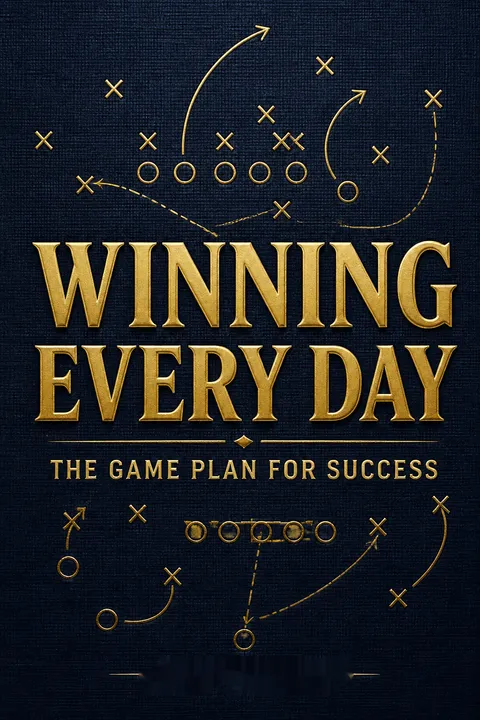

Key Takeaways
1. Your Attitude Determines Your Altitude
Your talent determines what you can do. Your motivation determines how much you are willing to do. Your attitude determines how well you do it.
Mindset matters. Lou Holtz learned this lesson early, contrasting his unhappy, short-lived tenure with the New York Jets, where he suspected failure, with his immediate success at the University of Minnesota, where he was determined to win. The outcome wasn't about talent or resources, but his internal perspective. A positive attitude transforms obstacles into opportunities, allowing you to consistently meet or exceed expectations.
Control your outlook. No one can control your attitude but you. Holtz recounts a waiter's demeaning joke about Notre Dame's Sugar Bowl chances, which initially upset him. Instead of letting it fester, he shrugged off the anger, reminding himself of his team's capabilities. This unwavering belief, despite external negativity, fueled their upset victory, proving that external opinions only become fact when you internalize them.
Leaders inspire. A leader's attitude profoundly impacts those around them. Holtz saw this with Chris Zorich, a player whose raw passion after a tough loss inspired a team-wide shift towards commitment. Even a veteran like Flash Gordon, initially resistant to a new attitude, transformed his play when Holtz's belief in the team's collective spirit became undeniable. Your fervor is infectious; it can rally others to a common cause.
2. Adversity Isn't a Wall, It's a Stepping Stone
The best part of getting knocked down is getting back up.
Expect challenges. Holtz always told his teams to anticipate at least three crises per season, emphasizing that success hinges on their reaction. Adversity is an inherent part of life and achievement; it's not about avoiding it, but learning from it. Thomas Edison's 5,000 failed attempts before the lightbulb exemplify how winners view obstacles as opportunities for growth.
Perspective is power. Holtz learned this on the golf course when, after a bad shot, Johnny Durr told him, "You aren't good enough to get mad. You are just a bad golfer. The minute you understand that you will enjoy your game for what it is." This humbling assessment taught Holtz to accept shortcomings and find enjoyment despite them. Similarly, his job losses and personal setbacks, like his fiancée breaking off their engagement, often led to better opportunities, proving that "catastrophes often disguise blessings."
Unite through hardship. The 1977 Orange Bowl, where Arkansas faced Oklahoma after suspending three key players and a threatened boycott, showcased adversity's power to unite. By focusing on their strengths (a top-ranked defense, strong offensive line) rather than what they lacked, the team transformed its negative mindset into a winning one, securing a decisive victory. As Holtz says, "People don't care how rocky the ocean is, they just want you to bring the ship in."
3. Clarify Your Purpose to Guide Every Choice
All winning teams are goal-oriented.
Purpose drives action. Holtz admits his failure with the New York Jets stemmed from a lack of clear purpose beyond a generic desire to win. Without a defined objective, he couldn't provide direction. In contrast, successful organizations, like the San Francisco 49ers, operate with blinders on, undistracted from their specific aims. When you care passionately about something, it gives you an unwavering sense of purpose.
Serve others' needs. Holtz's experience selling cemetery plots taught him a profound lesson: "You don't sell anything. All you are trying to do is to help people get what they want." This philosophy applies universally. Businesses thrive by satisfying customer needs, not by pushing products. Companies like U.S. Filter and Mortgage America achieved extraordinary success by focusing on a mission beyond profit, addressing critical needs like clean water or accessible homeownership.
Team over self. A football coach's primary objective isn't individual honors, but teaching players how to win in life through loyalty, integrity, and teamwork. Holtz enforced this by not putting names on jerseys, emphasizing the "interlocking ND" as the only necessary identification. Players like Tony Rice, who prioritized winning above personal stats, and Tommy Carter, who studied in the library after a great game to support his roommate, exemplify how individual purpose aligns with team success.
4. Embrace Sacrifice as the Price of Excellence
You might not be able to outthink, outmarket, or outspend your competition, but you can outwork them.
No shortcuts to greatness. Success demands sacrifice. Holtz observed that losing teams often consist of complainers, while superior players take pride in the extra effort and restrictions required. Accepting difficult tasks joyfully and pleading for more builds character, enabling average skills to achieve greatness through sheer willingness to pay the price.
Love fuels sacrifice. Holtz's mother worked the graveyard shift as a nurse's aid to fund his college education, a profound act of love and commitment to his future. Similarly, he and his wife, Beth, made financial sacrifices, like skipping lunches, to take their children to "Disney on Parade," prioritizing their children's happiness. When your priorities are clear, making sacrifices becomes easier and more meaningful.
An edge over the competition. Few people are willing to make sacrifices, giving those who do a tremendous advantage. Victor Kiam, the "Man Who Bought the Company," built his empire by working Saturdays and seeing snowstorms as opportunities to call on accounts when competitors stayed home. This dedication to doing "that little bit extra" ensures you'll never finish second. Holtz's athletic director, Willis Casey, reinforced this by refusing a bonus, stating, "I hired you to do all these things... please don't request a bonus for doing the job you were hired to do."
5. Adapt or Die: The Relentless Pursuit of Improvement
Making voluntary changes now saves you from being forced to make mandatory changes later.
Change is constant. In business and life, change is inevitable. Holtz notes how few Fortune 500 companies from twenty years ago remain on today's list, a testament to the peril of failing to adapt. When you reach the top, complacency becomes your enemy. You become a target, and the pressure to maintain your position can be crushing.
Patton's philosophy. To survive at the summit, you must adopt General George Patton's mindset: "We are attacking day and night!" The time to shift into overdrive is when you are the hunted, not the hunter. This means continually raising your standards and expectations beyond your customers', knowing that your achievements will inspire competitors to do the same.
Fundamentals are your safety net. Organizations must be fundamentally sound to endure change. Holtz meticulously drilled his Notre Dame teams on basics like huddle alignment and set positions, even when players found it boring. These "small things essential to your success" act as a safety net, preventing precipitous falls and ensuring you can always bounce back. As Coach Roy Kidd wisely told Holtz, "I got all I needed" after observing only Notre Dame's huddle, understanding that fundamentals are everything.
6. Dream Big and Fuel Your Life with Passion
Every great accomplishment I've ever heard of stalled with someone's dream.
Dreams ignite life. Holtz argues that chronic fatigue often stems from boredom, recommending that people find something to engage their passions and live their dreams. Visionaries like Dr. Martin Luther King Jr. didn't just have a strategic plan; they had a dream that stirred souls and changed society. Dreams are the best chauffeurs, driving you anywhere you want to go, filling you with youthful excitement regardless of age.
Your past doesn't define your potential. Holtz, a self-proclaimed mediocre athlete with an average IQ from a poor family, became the first in his family to attend college thanks to a high school coach's encouragement. He emphasizes that ordinary people are capable of extraordinary lives if they dare to dream and act on it. Don't let naysayers or perceived limitations dictate your aspirations; surround yourself with encouragers and visualize your goals, like the salesman who manifested a gold Cadillac.
Act on your aspirations. In 1966, unemployed and with a growing family, Holtz made a list of 108 life goals, from skydiving to meeting the Pope. This act transformed him from a spectator to a participant in his own life. He achieved 99 of those dreams, including appearing on the Tonight Show after a strategic "one-man campaign." Whether it's white-water rafting or building a multi-million dollar business like Glen McCusker's Viking Components, acting on your dreams, even with risk, builds courage and makes all things possible.
7. Cultivate a Strong Self-Image from Within
Your self-image should not come from the job you do but from how well you do your job.
Believe in yourself. Holtz's journey began with overcoming negative assessments of his ability, choosing to prove doubters wrong rather than accept a small life. A college diploma, he asserts, is a testament to discipline and perseverance, not just intelligence, and should instill a sense of pride. Cultivating self-confidence means believing in yourself, handling adversity better, and never underestimating your assets or overestimating others'.
Inner beauty shines. Holtz admits to his own insecurities about his appearance, even hiding behind Mickey Mouse and Donald Duck in a photo. He realized that true beauty and confidence come from within, not from physical perfection. Obsessing over external flaws is a losing battle; instead, take pride in who you are and what you accomplish. As the great blues singer Aaron Neville said, "I won't be completely happy until my brothers earn a gold record, too," illustrating the power of rooting for others' success to build your own self-worth.
Project confidence subtly. While great players often question their abilities, they never entertain doubts on the field. Holtz taught his teams to project confidence subtly, not through "hot-dogging" or taunting, but by being accustomed to success. He encouraged players to "wink" at opponents before important games, a quiet declaration of their readiness. Leaders must set this example, remaining cool in a crisis and never letting opponents sense weakness.
8. Build Unshakeable Trust Through Integrity
All relationships are based on mutual trust. Without it there is nothing.
Do what's right. Trust is the bedrock of all relationships, whether personal or professional. Holtz's "Do Right" rules, based on common sense and civility, required players to be prompt, obey coaches, and maintain academic standards. Living an honorable life, doing what is right and avoiding what is wrong, is the simplest way to build trust. Those who cut corners or prevaricate ultimately sabotage themselves, never feeling they genuinely deserve success.
Trust impacts the bottom line. In business, trust is your best product. Holtz recounts a Dayton Hudson department store replacing his worn, mis-sized shoes, even though he admitted his role in the mistake. This act of trust earned his loyalty, demonstrating that standing behind your products creates a bond with customers. Conversely, a single falsehood can squander a lifetime's credibility, as "every lie is the big lie."
Loyalty and accountability. Loyalty to family, friends, country, and colleagues is crucial, but it doesn't demand silence in the face of injustice. However, grievances should first be voiced internally through proper channels. Holtz's poem, "Your Name," emphasizes the lasting impact of one's reputation. He also stresses the importance of punctuality, as being late signals disrespect for others' time. These seemingly small acts of discipline build a foundation of reliability that others can count on.
9. Commit to Excellence in Every Single Endeavor
The standards you set for yourself are the real measures of your dedication.
Actions define commitment. Holtz believes that "can-do" slogans are meaningless without action. True commitment to excellence means giving everything you do your absolute best, not for external approval, but out of self-respect. He challenged his Notre Dame players to be honest with themselves: did they give their all, or did they shortchange themselves and their teammates? Michael Jordan, the best player on the planet, exemplifies this by practicing harder than anyone, constantly striving for improvement.
Leaders demand more. Woody Hayes, Holtz's mentor, was obsessed with excellence, pushing players to achieve A's in academics and All-American status in football, never settling for less. Holtz argues that leaders are obligated to challenge and inspire, leading people out of their comfort zones to achieve the impossible. He learned this firsthand, praying his surgeon at Mayo Clinic was committed to excellence, not just the lowest bidder.
No room for "pretenders." When Notre Dame suffered a devastating loss that cost them a national championship, Holtz didn't lower standards; he raised them. He famously halted practice to confront a "pretender" left guard, telling the team, "We are going to play without a left guard" until they understood that merely showing up wasn't enough. This incident, where the team played without a left guard until they realized the cost of mediocrity, galvanized them to an 18-game winning streak, proving that demanding excellence builds pride and eliminates complacency.
10. Lead with Genuine Care and Compassion
People don't care how much you know, until they know how much you care.
Love is not lax. Holtz asserts that "caring" is the most critical question people ask of you. True compassion in leadership doesn't mean lowering standards or bending rules; that's leniency, which is harmful. Instead, it means investing time and effort to understand the root cause of someone's struggles and inspiring them to exceed their past results. Discipline, when mixed with love, is a tool to spur growth, not harassment.
Listen and connect. Effective communication is about genuine give-and-take, not manipulation. Holtz encourages listening twice as much as speaking, focusing on others' words to evoke deeper responses. He cultivated this with his children, patiently asking about their day until they eagerly shared. He also realized he treated strangers with more patience than his own family, vowing to prioritize those he loved most, treating them as his "most important customer."
Show your affection. Don't wait for a crisis to demonstrate care. Holtz's family celebrated his wife Beth's return from cancer treatment with billboards and yellow ribbons, a powerful reminder to express love daily. He advocates for being a "hugger," initiating affection and appreciation. Compassion extends to everyone, even those who seem callous, as their behavior often shields deeper pain. Helping others, whether through volunteering or simply a kind word, is a wonderful antidote to self-centeredness and builds a world where everyone feels valued.
Review Summary
Winning Every Day receives an overall rating of 4.14/5, with readers praising its blend of humor, wisdom, and practical life lessons. Many appreciate Holtz's use of football anecdotes to illustrate broader principles of leadership, attitude, and success. Reviewers highlight the book's accessibility and easy readability, noting it transcends sports to offer universal guidance. Common themes include its motivational tone, applicable coaching strategies, and Holtz's relatable storytelling. Some critics note excessive football references, minor editorial errors, and occasional lack of clear direction, though most agree it's an inspiring, worthwhile read.
People Also Read







Download PDF
Download EPUB
.epub digital book format is ideal for reading ebooks on phones, tablets, and e-readers.








































