Ideas clave
1. Los cimientos de la IA se basan en imitar la inteligencia humana a través de máquinas
"La IA sería la versión definitiva de Google. El motor de búsqueda supremo que entendería todo lo que hay en la web. Comprendería exactamente lo que quieres y te daría lo correcto."
Contexto histórico. Las raíces de la IA se remontan a los años 50, con pioneros como Alan Turing, John McCarthy y Marvin Minsky que sentaron las bases. Este campo ha vivido ciclos de entusiasmo y “inviernos de la IA”, pero los avances recientes en potencia computacional y disponibilidad de datos han impulsado la IA hacia la corriente principal.
Conceptos clave. La IA abarca varios subcampos:
- Aprendizaje automático
- Aprendizaje profundo
- Procesamiento de lenguaje natural
- Visión por computadora
- Robótica
El objetivo final es crear máquinas capaces de realizar tareas que requieren inteligencia similar a la humana, como razonar, resolver problemas y aprender.
2. La calidad y preparación de los datos son cruciales para el éxito de la IA
"Los datos son la savia vital de la IA. Es así como los algoritmos pueden encontrar patrones y correlaciones para ofrecer insights."
Basura entra, basura sale. El éxito de los modelos de IA depende en gran medida de la calidad y cantidad de datos con los que se entrenan. Datos deficientes pueden generar resultados sesgados o inexactos, poniendo en riesgo todo el proyecto de IA.
Pasos clave en la preparación de datos:
- Recolección de datos de diversas fuentes
- Limpieza y normalización de datos
- Selección y creación de características
- Etiquetado de datos (para aprendizaje supervisado)
- Aumento de datos (cuando es necesario)
Las organizaciones deben invertir tiempo y recursos significativos en preparar los datos para asegurar una base sólida en sus proyectos de IA.
3. El aprendizaje automático permite que las computadoras aprendan sin programación explícita
"El aprendizaje automático consiste en optimizar procesos y manejar grandes volúmenes de datos."
Tipos de aprendizaje automático. Existen tres categorías principales:
- Aprendizaje supervisado: usa datos etiquetados para entrenar modelos
- Aprendizaje no supervisado: encuentra patrones en datos sin etiquetar
- Aprendizaje por refuerzo: aprende mediante prueba y error
Algoritmos comunes. El aprendizaje automático incluye diversas técnicas:
- Regresión lineal
- Regresión logística
- Árboles de decisión
- Bosques aleatorios
- Máquinas de vectores de soporte (SVM)
- K-vecinos más cercanos (KNN)
Estos algoritmos se aplican a problemas variados, desde predecir la pérdida de clientes hasta detectar fraudes.
4. El aprendizaje profundo revoluciona la IA con redes neuronales inspiradas en el cerebro humano
"El aprendizaje profundo es la nueva electricidad de la IA."
Redes neuronales. El aprendizaje profundo utiliza redes neuronales artificiales con múltiples capas para procesar datos complejos. Este enfoque ha impulsado avances en:
- Reconocimiento de imágenes y voz
- Procesamiento de lenguaje natural
- Vehículos autónomos
- IA para juegos (por ejemplo, AlphaGo)
Arquitecturas clave. El aprendizaje profundo incluye varias estructuras de redes neuronales:
- Redes neuronales convolucionales (CNN) para procesamiento de imágenes
- Redes neuronales recurrentes (RNN) para datos secuenciales
- Redes generativas antagónicas (GAN) para crear nuevos datos
Aunque poderosas, estas técnicas requieren recursos computacionales significativos y grandes conjuntos de datos para obtener resultados óptimos.
5. La automatización robótica de procesos (RPA) ofrece una vía accesible para adoptar la IA
"La RPA permite usar sistemas visuales de bajo código con arrastrar y soltar para automatizar el flujo de trabajo de un proceso."
Beneficios para los negocios. La RPA puede:
- Reducir costos al automatizar tareas repetitivas
- Mejorar la precisión y consistencia
- Liberar a los trabajadores para actividades de mayor valor
- Aumentar la satisfacción del cliente con procesos más rápidos
Consideraciones para su implementación. Al adoptar RPA:
- Comenzar con procesos simples y basados en reglas
- Asegurar el apoyo tanto de TI como de las áreas de negocio
- Desarrollar una estructura clara de gobernanza
- Planificar la escalabilidad y el mantenimiento
La RPA es un primer paso hacia aplicaciones de IA más avanzadas, permitiendo a las organizaciones ganar experiencia en automatización antes de abordar proyectos más complejos.
6. El procesamiento de lenguaje natural (PLN) impulsa la comunicación entre humanos y computadoras
"El PLN es el uso de la IA para que las computadoras entiendan a las personas."
Aplicaciones clave. El PLN permite:
- Chatbots y asistentes virtuales
- Traducción automática
- Análisis de sentimientos
- Resumen de textos
- Reconocimiento de voz
Desafíos. El PLN debe superar:
- Ambigüedad en el lenguaje
- Significados dependientes del contexto
- Sarcasmo e idioms
- Múltiples idiomas y dialectos
Los avances recientes en aprendizaje profundo, especialmente con modelos transformadores como BERT y GPT, han mejorado significativamente las capacidades del PLN, logrando una comprensión y generación de lenguaje más natural y contextual.
7. Los robots físicos representan la máxima expresión de la IA en el mundo real
"Los robots pueden variar en tamaño, desde máquinas diminutas que exploran nuestro cuerpo hasta sistemas industriales enormes, máquinas voladoras o vehículos submarinos."
Tipos de robots. El campo abarca diversas categorías:
- Robots industriales para manufactura
- Robots de servicio para tareas como limpieza o atención al cliente
- Robots médicos para cirugía y cuidado de pacientes
- Vehículos autónomos
- Drones y vehículos aéreos no tripulados (UAV)
Integración de la IA. Los robots incorporan cada vez más IA para:
- Percibir y navegar su entorno
- Tomar decisiones y adaptarse a condiciones cambiantes
- Interactuar de forma segura con humanos
- Aprender y mejorar su desempeño con el tiempo
A medida que la IA avanza, los robots se vuelven más versátiles, autónomos y capaces de operar en entornos complejos y no estructurados.
8. Implementar IA requiere planificación estratégica y colaboración interdisciplinaria
"Los líderes empresariales deben entender que la adopción de la Inteligencia Artificial es un viaje, no una carrera de velocidad."
Pasos clave para implementar IA:
- Identificar casos de uso de alto impacto
- Evaluar la preparación de datos e infraestructura
- Formar un equipo interdisciplinario
- Elegir herramientas y plataformas adecuadas
- Desarrollar y probar modelos de IA
- Desplegar y monitorear la solución
- Iterar y mejorar continuamente
Desafíos comunes:
- Falta de experiencia en IA
- Problemas de calidad y disponibilidad de datos
- Integración con sistemas heredados
- Cuestiones éticas y sesgos
- Resistencia al cambio
Adoptar la IA con éxito requiere un enfoque integral que considere tecnología, personas y procesos.
9. El futuro de la IA promete un enorme potencial y grandes desafíos
"La IA ejecutada irresponsablemente tiene el poder de desestabilizar grandes partes de la economía mundial, causando, como temen muchos, una reducción de la fuerza laboral, menor poder adquisitivo para la clase media y una economía sin una base amplia y estable, alimentada por una espiral interminable de deuda."
Beneficios potenciales. La IA podría:
- Revolucionar la salud con medicina personalizada y detección temprana de enfermedades
- Mejorar la educación con sistemas de aprendizaje adaptativo
- Combatir el cambio climático mediante el uso optimizado de energía y recursos
- Transformar el transporte con vehículos autónomos
Preocupaciones éticas. Debemos abordar:
- Desplazamiento laboral y desigualdad económica
- Privacidad y seguridad de datos
- Sesgos y justicia en los algoritmos
- Seguridad y control de la IA
A medida que la IA avanza, la sociedad debe enfrentar sus implicaciones y trabajar para que esta tecnología se desarrolle y utilice de manera responsable, maximizando sus beneficios y minimizando riesgos.
Resumen de reseñas
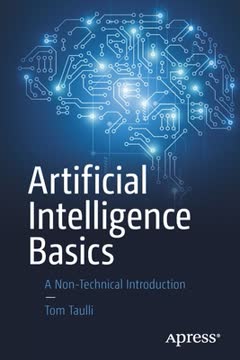
Conceptos Básicos de la Inteligencia Artificial ha recibido opiniones encontradas, con una calificación promedio de 3.55 sobre 5. Los lectores valoran su introducción no técnica a la inteligencia artificial, que abarca desde su historia hasta su estado actual y su potencial futuro. El libro es elogiado por ofrecer una base sólida y un vocabulario común accesible. Mientras algunos consideran que resulta demasiado básico, otros aprecian precisamente su facilidad de comprensión. Entre las críticas se señalan información desactualizada, redacción descuidada y falta de profundidad. Los lectores destacan la cobertura sobre aprendizaje automático, aprendizaje profundo y aplicaciones de la IA, aunque algunos desearían ejemplos más específicos y explicaciones más detalladas.
También leyeron










Preguntas frecuentes
What's "Artificial Intelligence Basics: A Non-Technical Introduction" about?
- Overview: "Artificial Intelligence Basics" by Tom Taulli provides a comprehensive introduction to AI without delving into technical complexities. It covers the history, current applications, and future potential of AI.
- Target Audience: The book is designed for non-technical readers who want to understand AI's impact on various industries and society.
- Content Structure: It includes chapters on AI foundations, data, machine learning, deep learning, robotic process automation, natural language processing, and physical robots.
- Real-World Examples: The book uses case studies and examples to illustrate how AI is being implemented in businesses and everyday life.
Why should I read "Artificial Intelligence Basics: A Non-Technical Introduction"?
- Demystifies AI: The book breaks down complex AI concepts into understandable terms, making it accessible to those without a technical background.
- Broad Coverage: It covers a wide range of AI topics, from foundational concepts to specific applications like NLP and robotics.
- Practical Insights: Readers gain insights into how AI can be applied in various industries, offering practical advice for businesses considering AI adoption.
- Future-Oriented: The book discusses the future of AI, including potential challenges and opportunities, helping readers prepare for upcoming changes.
What are the key takeaways of "Artificial Intelligence Basics: A Non-Technical Introduction"?
- AI's Transformative Power: AI is set to revolutionize industries by automating tasks, improving decision-making, and creating new opportunities.
- Importance of Data: Data is the lifeblood of AI, and understanding how to manage and utilize it is crucial for successful AI implementation.
- Machine Learning and Deep Learning: These are key components of AI, with deep learning offering advanced capabilities through neural networks.
- Ethical Considerations: The book emphasizes the importance of addressing ethical issues, such as bias and privacy, in AI development.
What are the best quotes from "Artificial Intelligence Basics: A Non-Technical Introduction" and what do they mean?
- AI as a Democratizing Force: The foreword suggests that AI, if handled correctly, can democratize access to technology and improve quality of life.
- AI's Historic Impact: The book compares AI's potential impact to that of the steam engine and the internet, highlighting its transformative power.
- Cautionary Notes: Quotes from experts like Stephen Hawking and Elon Musk are used to illustrate the potential risks and ethical concerns associated with AI.
- Optimism and Innovation: The book includes quotes from AI pioneers who express optimism about AI's ability to solve complex problems and drive innovation.
How does Tom Taulli explain the history of AI in "Artificial Intelligence Basics"?
- Early Beginnings: The book traces AI's roots back to the 1950s, highlighting key figures like Alan Turing and John McCarthy.
- Golden Age and AI Winter: It discusses the initial excitement and subsequent disillusionment during the AI winter, when progress stalled.
- Recent Resurgence: The book covers the resurgence of AI in the 21st century, driven by advances in computing power and data availability.
- Key Innovations: It highlights significant breakthroughs, such as machine learning and deep learning, that have propelled AI forward.
What is the role of data in AI according to "Artificial Intelligence Basics"?
- Foundation of AI: Data is essential for training AI models, enabling them to learn and make predictions.
- Types of Data: The book explains different types of data, including structured, unstructured, and semi-structured, and their relevance to AI.
- Data Challenges: It addresses challenges like data quality, bias, and the need for large datasets to train effective AI models.
- Big Data and AI: The book discusses how big data technologies have facilitated the growth and application of AI across industries.
How does "Artificial Intelligence Basics" describe machine learning and its applications?
- Definition and Process: Machine learning is defined as a method where computers learn from data without explicit programming, using algorithms to identify patterns.
- Applications: The book covers various applications, such as predictive maintenance, customer experience enhancement, and fraud detection.
- Algorithm Types: It explains different types of machine learning algorithms, including supervised, unsupervised, and reinforcement learning.
- Real-World Examples: Case studies illustrate how companies like Stitch Fix and Kroger use machine learning to improve operations and customer satisfaction.
What insights does "Artificial Intelligence Basics" provide on deep learning?
- Advanced AI: Deep learning is a subset of machine learning that uses neural networks to process large amounts of data and identify complex patterns.
- Neural Networks: The book explains how neural networks mimic the human brain, with layers of nodes that process information.
- Breakthroughs: It highlights key breakthroughs in deep learning, such as convolutional neural networks (CNNs) and generative adversarial networks (GANs).
- Applications: Deep learning is used in areas like image recognition, natural language processing, and autonomous vehicles.
How does "Artificial Intelligence Basics" address the ethical considerations of AI?
- Bias and Fairness: The book discusses the risk of bias in AI models and the importance of ensuring fairness and transparency.
- Privacy Concerns: It highlights the need to protect user data and maintain privacy in AI applications.
- Ethical Frameworks: The book suggests the establishment of ethics boards and guidelines to govern AI development and deployment.
- Long-Term Implications: It considers the potential societal impacts of AI, such as job displacement and the need for regulatory oversight.
What does "Artificial Intelligence Basics" say about the future of AI?
- Continued Growth: The book predicts that AI will continue to grow and evolve, impacting more industries and aspects of daily life.
- Potential Challenges: It acknowledges potential challenges, such as ethical dilemmas, regulatory hurdles, and technological unemployment.
- Opportunities for Innovation: AI is seen as a driver of innovation, with the potential to solve complex global issues like climate change and healthcare.
- Need for Adaptation: The book emphasizes the need for individuals and organizations to adapt to the changes brought by AI, through education and strategic planning.
How does "Artificial Intelligence Basics" explain the concept of Robotic Process Automation (RPA)?
- Definition and Purpose: RPA is described as software that automates routine tasks, mimicking human actions to improve efficiency.
- Business Benefits: The book highlights benefits such as cost savings, increased accuracy, and improved compliance in business processes.
- AI Integration: It discusses how AI can enhance RPA, leading to more intelligent and adaptable automation solutions.
- Implementation Challenges: The book addresses potential challenges in RPA implementation, such as process brittleness and employee resistance.
What are the practical steps for implementing AI in a business, according to "Artificial Intelligence Basics"?
- Identify Opportunities: The book advises identifying areas where AI can add value, such as improving decision-making or automating tasks.
- Build a Strong Team: It emphasizes the importance of assembling a team with diverse skills, including technical, business, and domain expertise.
- Select the Right Tools: The book suggests choosing appropriate AI tools and platforms, such as TensorFlow and Python, based on business needs.
- Monitor and Adapt: It highlights the need for ongoing monitoring and adaptation of AI models to ensure they remain effective and aligned with business goals.