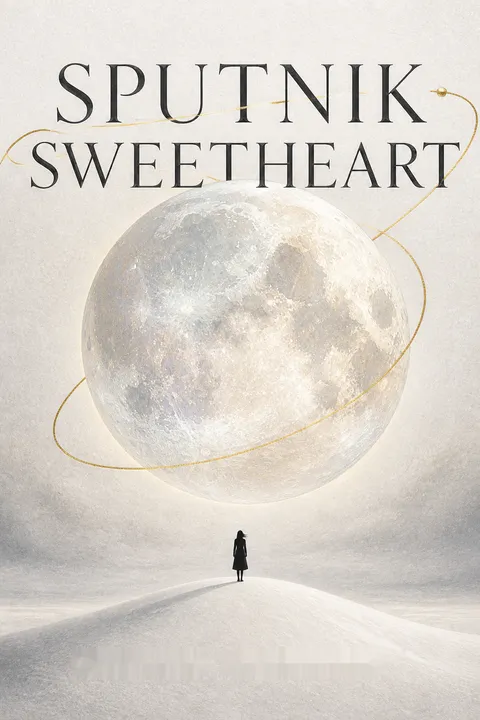
Resumen de la trama
El amor tornado irrumpe
Sumire, una joven de 22 años que sueña con ser novelista, se ve arrastrada por su primer amor: una pasión abrumadora e intensa hacia Miu, una mujer de negocios sofisticada y diecisiete años mayor que ella. Este amor lo consume todo, transformando el mundo y las prioridades de Sumire. El narrador, amigo cercano y confidente de Sumire (un maestro de escuela primaria sin nombre), observa su cambio con una mezcla de admiración y desconsuelo, pues él mismo guarda sentimientos no expresados hacia ella. El núcleo emocional de la historia queda establecido: tres personas, cada una amando a alguien que no puede corresponderles de la misma manera, girando unas alrededor de otras como satélites en el espacio.
Tres corazones no correspondidos
El amor del narrador por Sumire es profundo pero no correspondido; el amor de Sumire por Miu es intenso pero complicado por la distancia emocional de Miu; y Miu, marcada por su propio pasado, no puede corresponder al deseo de Sumire. Cada personaje está aislado por su anhelo, incapaz de salvar las brechas emocionales que los separan. Sus relaciones se caracterizan por conexiones fallidas, malentendidos y el dolor de amar a alguien que no puede amar plenamente. Este triángulo de deseos establece el escenario para la exploración de la soledad y los límites de la intimidad en la novela.
La misteriosa invitación de Miu
Miu ofrece a Sumire un trabajo como su asistente, introduciéndola en un mundo nuevo, refinado, de negocios, viajes y cultura. Sumire, antes una aspirante a escritora bohemia y desaliñada, se transforma bajo la influencia de Miu: mejora su forma de vestir, aprende nuevas habilidades y se vuelve más organizada. Sin embargo, bajo esa superficie, la energía creativa de Sumire se ve sofocada y su anhelo por Miu se vuelve más desesperado. El narrador observa esta transformación con preocupación, intuyendo que Sumire está perdiendo contacto con su verdadero yo.
Convertirse en Sputnik Sweetheart
El apodo privado de Sumire para Miu—“Sputnik Sweetheart”—captura la sensación de soledad en órbita y deseo inalcanzable que define su relación. La referencia a Sputnik, el primer satélite artificial, simboliza tanto la emoción de nuevas fronteras como el frío aislamiento del espacio. A medida que Sumire se enreda más en la vida de Miu, lucha con su propia identidad, sintiéndose a la vez más cerca y más distante de sus ambiciones creativas y necesidades emocionales.
La puerta bloqueada del escritor
A pesar de sus nuevas experiencias, Sumire se encuentra incapaz de escribir. La atormenta la metáfora de la puerta china, que requiere tanto huesos (estructura) como sangre (vida) para hacerse real. Sumire tiene los huesos—ideas, imágenes, fragmentos—pero carece de la “sangre” para dar vida a sus historias. Confía en el narrador, quien la anima a buscar experiencia y pasión, pero Sumire permanece estancada, incapaz de reconciliar su mundo interior con las exigencias de la realidad.
Lecciones en la soledad
El narrador reflexiona sobre su propia infancia solitaria y los límites invisibles que mantiene con los demás. Él y Sumire comparten una intimidad única, pero siempre platónica, teñida de anhelo y arrepentimiento. El tema de la soledad—estar fundamentalmente solo incluso en presencia de otros—permea sus conversaciones. Los intentos del narrador por hallar consuelo en otras relaciones solo resaltan la conexión insustituible que siente con Sumire.
Una escapada europea
Sumire acompaña a Miu en un viaje de negocios por Italia y Francia, descubriendo nuevos lugares y placeres. Escribe largas y detalladas cartas al narrador, describiendo sus aventuras y sus sentimientos cada vez más profundos por Miu. El viaje es a la vez emocionante y desconcertante; Sumire se siente desarmada, como si estuviera perdiendo su sentido de sí misma. La travesía culmina con una invitación a una isla griega, donde los límites entre realidad y sueño comienzan a desdibujarse.
Desaparición en la isla griega
En la idílica isla griega, Sumire y Miu establecen una rutina tranquila. Pero tras una noche de intensa carga emocional—cuando Sumire intenta y fracasa en consumar su amor por Miu—Sumire desaparece. Miu, desconsolada y confundida, contacta al narrador en Tokio, suplicándole que viaje a Grecia. El misterio y la pérdida se profundizan, mientras el narrador emprende un viaje para encontrar a Sumire, sin saber si está viva o muerta.
La búsqueda de Sumire
El narrador llega a la isla y se une a Miu en la búsqueda de Sumire. Repasan sus pasos, interrogan a los lugareños y recurren a las autoridades, pero no hallan pistas. Las pertenencias de Sumire quedan atrás, como si se hubiera evaporado. El narrador descubre un disco flexible con los últimos escritos de Sumire, que ofrecen vislumbres crípticos de su estado mental pero ninguna explicación concreta para su desaparición. La búsqueda se convierte en una meditación sobre los límites de la comprensión y el dolor de la pérdida sin resolver.
El trauma de la noria de Miu
Miu confía al narrador un evento traumático de su juventud: atrapada durante una noche en una noria en Suiza, fue testigo, a través de binoculares, de un doble suyo siendo violado en su propio apartamento. La experiencia la partió en dos: su cabello se volvió blanco, su sexualidad desapareció y quedó emocionalmente insensible. Esta historia ilumina la incapacidad de Miu para conectar con Sumire y su sensación de estar solo medio viva.
La puerta al otro lado
Los escritos y sueños de Sumire, así como el trauma de Miu, giran en torno a la idea de “el otro lado” (#the-other-side--doppelganger-motif)—un mundo paralelo de posibilidades perdidas, deseos inalcanzables y yos alternativos. La puerta metafórica entre mundos se vuelve central: Sumire, incapaz de hallar plenitud en la realidad, podría haber cruzado a ese otro lado, dejando solo rastros de su existencia. El narrador lucha con la posibilidad de que algunas pérdidas sean absolutas y algunos misterios irresolubles.
Cartas, sueños y pérdida
El narrador examina las cartas y el disco de Sumire, buscando sentido. Sus textos están llenos de sueños, metáforas y reflexiones filosóficas sobre la identidad, el amor y los límites entre el yo y el otro. Los documentos son tanto un testimonio de su vida interior como una despedida final, dejando al narrador con más preguntas que respuestas. Leer se convierte en un acto de duelo, una forma de mantener viva la memoria de Sumire.
El mundo sin Sumire
El narrador regresa a Tokio, cambiado por sus experiencias. Retoma su trabajo como maestro, pero todo se siente distinto—más vacío, más frágil. Reflexiona sobre la naturaleza de la pérdida, el paso del tiempo y la imposibilidad de volver a ser quien fue antes. El mundo sin Sumire es un lugar más frío y solitario, y el narrador lucha por encontrar sentido en lo cotidiano.
El niño que robó
Un subargumento involucra a un alumno, Carrot, sorprendido robando en tiendas, que refleja los temas de alienación y búsqueda de conexión de la novela. Los intentos del narrador por acercarse al chico se topan con el silencio, pero un momento de vulnerabilidad compartida crea una efímera sensación de entendimiento. El incidente funciona como metáfora de las pequeñas y a menudo inadvertidas maneras en que las personas intentan salvar las distancias emocionales.
Soltar el amor
El narrador pone fin a su aventura con la madre de Carrot, reconociendo que no puede ser parte del problema y la solución a la vez. La ruptura es dolorosa pero necesaria, otro acto de dejar ir algo valioso. El narrador queda con recuerdos, arrepentimientos y la certeza de que algunas conexiones no pueden sostenerse, por mucho que se necesiten.
El teléfono que suena
Tarde en la noche, el narrador sueña—o tal vez experimenta—una llamada telefónica de Sumire. Ella le habla como si nada hubiera cambiado, pidiéndole que vaya a buscarla. La conversación es surrealista, mezcla de realidad y fantasía, esperanza y desesperación. La llamada se convierte en símbolo del vínculo perdurable entre ellos, incluso más allá de las fronteras de la vida y la muerte, la presencia y la ausencia.
Esperando el regreso
El narrador espera la llamada prometida de Sumire, suspendido entre la esperanza y la resignación. Reflexiona sobre la naturaleza de la espera, la persistencia del anhelo y las formas en que el pasado sigue moldeando el presente. Esperar se vuelve un acto de fe, una negativa a aceptar la finalización ante la pérdida.
Unidos por la luna
La novela concluye con el narrador mirando la luna, sabiendo que en algún lugar, Sumire contempla la misma luna. A pesar de las vastas distancias—físicas, emocionales, existenciales—que los separan, permanecen conectados por la memoria, el deseo y la experiencia compartida de la soledad. La historia cierra con una nota de esperanza silenciosa, sugiriendo que incluso en el aislamiento, los seres humanos pueden hallar sentido en sus vínculos con los demás.
Personajes
Sumire
Sumire es una joven intensamente inteligente y excéntrica, obsesionada con la literatura y la idea de convertirse en novelista. Es emocionalmente intensa, socialmente torpe y profundamente romántica, pero lucha por traducir su mundo interior en historias terminadas. Su amor por Miu es transformador pero finalmente no correspondido, llevándola a cuestionar su identidad y propósito. El viaje psicológico de Sumire está marcado por el anhelo, la confusión y la búsqueda de un sentido más allá de lo ordinario. Su desaparición es tanto literal como simbólica—un cruce hacia “el otro lado” (#the-other-side--doppelganger-motif) donde habitan deseos no cumplidos y yos alternativos. A través de sus cartas y escritos, permanece como una presencia inquietante, encarnando los temas de soledad, creatividad y los límites de la conexión.
El narrador (K)
El narrador, sin nombre, es el amigo más cercano y confidente de Sumire, un maestro de escuela primaria amable e introspectivo. Se define por su silencioso anhelo hacia Sumire, su capacidad de empatía y su agudo sentido de aislamiento. Aunque ama profundamente a Sumire, no logra salvar la distancia emocional entre ellos. Su papel es el de testigo y cuidador, ofreciendo apoyo y comprensión mientras lidia con su propia soledad. El arco psicológico del narrador es uno de aceptación—aprender a vivir con la pérdida, encontrar sentido en la memoria y soportar la soledad que implica amar a alguien que no puede corresponder.
Miu
Miu es una mujer de negocios sofisticada y enigmática, cuya vida está marcada por un evento traumático en su pasado. Tras quedar atrapada en una noria y presenciar, a través de binoculares, la violación de un doble suyo en su propio apartamento, quedó emocionalmente insensible, con el cabello vuelto blanco de la noche a la mañana. Miu es a la vez cariñosa y distante, capaz de afecto profundo pero incapaz de corresponder al deseo de Sumire. Su relación con Sumire está marcada por ternura, arrepentimiento y una brecha insalvable. La complejidad psicológica de Miu reside en su sensación de estar partida en dos—media viva, media perdida en “el otro lado” (#the-other-side--doppelganger-motif). Es tanto catalizadora de la transformación de Sumire como símbolo de los misterios centrales de la novela.
Carrot (Shin’ichi Nimura)
Carrot es un alumno callado y retraído en la clase del narrador, sorprendido robando en tiendas en varias ocasiones. Sus acciones son un grito silencioso de ayuda, reflejando los temas de alienación y dificultad para comunicarse de la novela. La relación de Carrot con el narrador se convierte en un sutil paralelo a la historia principal—un pequeño y conmovedor ejemplo de la lucha por salvar las distancias emocionales. Su presencia subraya la universalidad de la soledad y el anhelo de comprensión.
La madre de Carrot
La madre de Carrot es una mujer hermosa e inteligente atrapada en un matrimonio infeliz. Busca consuelo y conexión en una aventura con el narrador, pero su relación resulta insostenible. Su vulnerabilidad emocional y sensación de invisibilidad reflejan las luchas de los personajes principales, destacando la naturaleza omnipresente de la soledad y la dificultad para encontrar intimidad duradera.
El padre de Sumire
El padre de Sumire es un dentista exitoso, admirado por su apariencia pero emocionalmente inaccesible. Su incapacidad para brindar calidez o conexión significativa deja a Sumire con un sentimiento de desarraigo y anhelo. Representa las barreras generacionales y culturales que contribuyen al aislamiento de los personajes.
La madrastra de Sumire
La madrastra de Sumire es una presencia estabilizadora en su vida, ofreciendo apoyo financiero y emocional sin juzgar. Su aceptación de las elecciones poco convencionales de Sumire brinda un raro ejemplo de amor incondicional en la novela, aunque permanece algo al margen del drama principal.
El guardia de seguridad (Nakamura)
Nakamura es el guardia de seguridad del supermercado que enfrenta a Carrot y al narrador por el robo. Su visión del mundo, directa y escéptica, contrasta con el idealismo del narrador, sirviendo como contrapunto y recordatorio de las duras realidades fuera de los mundos privados de los personajes.
Ferdinando
Ferdinando es el hombre del recuerdo traumático de Miu en la noria—una figura de deseo y violación, tanto real como imaginada. Representa las fuerzas que partieron la identidad y sexualidad de Miu, encarnando los temas de duplicidad, trauma y la permeabilidad de los límites entre el yo y el otro.
El inglés
El inglés es un personaje menor que ofrece a Miu y Sumire el uso de su cabaña en la isla griega. Su papel es principalmente funcional, facilitando el cambio de escenario y el posterior desenlace del misterio central.
Recursos narrativos
Triángulo amoroso no correspondido
El dispositivo narrativo central es el triángulo de amor no correspondido: el narrador ama a Sumire, Sumire ama a Miu, y Miu está emocionalmente inaccesible. Esta estructura crea una sensación de movimiento perpetuo y tensión irresuelta, reflejando los satélites y órbitas mencionados a lo largo de la novela. La incapacidad de los personajes para conectarse plenamente impulsa la trama y profundiza la exploración de la soledad.
El otro lado / motivo del doble
La idea de “el otro lado”—un mundo paralelo donde existen posibilidades perdidas y yos alternativos—se repite en toda la novela. El trauma de la noria de Miu, los sueños de Sumire y las puertas metafóricas entre mundos difuminan los límites entre realidad y fantasía, yo y otro. El motivo del doble subraya la sensación de los personajes de estar divididos, incompletos y perseguidos por lo que pudo haber sido.
Cartas y escritos
Las cartas y escritos finales de Sumire funcionan como dispositivos narrativos y ventanas a su psique. Proporcionan pistas sobre su desaparición, revelan sus luchas internas y permiten al narrador (y al lector) mantener una conexión con ella después de su partida. Escribir se convierte en metáfora de la búsqueda de sentido y el intento de salvar las distancias emocionales.
Presagios y simbolismo
Símbolos recurrentes—Sputnik, puertas chinas, música, la luna—presagian eventos clave y refuerzan los temas de la novela. El satélite Sputnik representa tanto conexión como aislamiento; la puerta china ilustra la necesidad de estructura y vida en el arte y las relaciones; la música evoca memoria y anhelo; la luna se convierte en un punto de referencia compartido para almas separadas. Estos símbolos crean una sensación de inevitabilidad y resonancia a lo largo de la narrativa.
Misterio abierto
El misterio central de la novela—la desaparición de Sumire—nunca se explica completamente. Esta apertura es una elección narrativa deliberada, que enfatiza los límites de la comprensión y la persistencia del anhelo. La trama sin resolver invita a los lectores a enfrentar la ambigüedad y aceptar que algunas preguntas no tienen respuesta.
Análisis
Sputnik Sweetheart es una exploración silenciosamente devastadora de lo que significa amar, perder y existir en el espacio entre la conexión y el aislamiento. A través de su trío de personajes anhelantes e incompletos, la novela examina las maneras en que las personas orbitan unas alrededor de otras, a veces acercándose, pero sin salvar nunca del todo las distancias que las separan. Murakami utiliza motivos de satélites, mundos paralelos y dobles para sugerir que cada persona contiene multitudes—yos que están perdidos, ocultos o inaccesibles incluso para quienes les son más cercanos. El misterio sin resolver y el final abierto refuerzan la idea de que algunas pérdidas son irreparables y algunas preguntas, imposibles de contestar. Sin embargo, en medio de la tristeza, hay una esperanza silenciosa: la posibilidad de conexión, aunque fugaz, y el poder duradero de la memoria, el arte y la experiencia compartida. En un mundo definido por la soledad, Sputnik Sweetheart sugiere que es el acto de extender la mano—de amar, escribir, esperar y soñar—lo que da sentido a la vida.
Resumen de reseñas
Sputnik, mi amor recibe opiniones encontradas, con una calificación promedio de 3.83 sobre 5. Muchos lectores valoran el estilo onírico de Murakami, su exploración de la soledad y los elementos surrealistas que atraviesan la historia. Los temas del amor no correspondido y la difusa frontera entre realidad y fantasía conectan profundamente con sus seguidores. Sin embargo, algunos críticos consideran que el libro resulta repetitivo respecto a obras anteriores de Murakami, con tipos de personajes y recursos narrativos ya conocidos. El final abierto de la historia y la manera en que Murakami retrata a las mujeres son puntos que generan controversia entre los lectores.
También leyeron







Preguntas frecuentes
0. Synopsis & Basic Details
What is Sputnik Sweetheart about?
- Unrequited Love's Orbit: Sputnik Sweetheart follows the unnamed narrator, an elementary school teacher, as he navigates his unrequited love for Sumire, a fiercely independent aspiring novelist. Sumire, in turn, falls intensely in love with Miu, an older, enigmatic businesswoman who is emotionally distant due to a past trauma.
- Search for Self & Connection: The narrative explores themes of loneliness, identity, and the elusive nature of connection as Sumire abandons her writing to work for Miu, eventually accompanying her on a business trip to Europe and a Greek island.
- Disappearance and Mystery: The story deepens when Sumire mysteriously vanishes from the Greek island, prompting the narrator to travel there and join Miu in a desperate search, uncovering Miu's traumatic past and Sumire's cryptic writings about parallel worlds and "the other side".
Why should I read Sputnik Sweetheart?
- Haunting Emotional Depth: Readers should delve into Sputnik Sweetheart for its profound exploration of unrequited love, loneliness, and the human yearning for connection, rendered with Murakami's signature blend of the mundane and the surreal. The novel offers a deeply empathetic look at characters grappling with their inner worlds and the pain of emotional distance.
- Intriguing Psychological Mystery: Beyond the love story, the book presents a compelling mystery surrounding Sumire's disappearance and Miu's past trauma, inviting readers to interpret ambiguous events and ponder the nature of reality, identity, and the subconscious.
- Murakami's Signature Style: Fans of Haruki Murakami will appreciate the dreamlike atmosphere, philosophical musings, subtle symbolism, and evocative prose that characterize his work, making it a rich and thought-provoking reading experience.
What is the background of Sputnik Sweetheart?
- Post-War Japanese Context: While not overtly political, the novel subtly reflects a post-war Japanese sensibility of individual alienation amidst societal expectations, particularly through Sumire's struggle against conventional life paths and the narrator's quiet, observational existence.
- European Cultural Allusions: The story's settings in Europe (Italy, France, a Greek island, Switzerland for Miu's past) are not mere backdrops but active participants, imbued with cultural references from classical music (Mozart, Brahms, Vivaldi) to literature (Kerouac, Goethe, Pushkin), enriching the characters' inner lives and thematic explorations.
- Technological & Existential Disconnect: The "Sputnik" motif, referencing the first artificial satellite, grounds the story in a mid-20th century technological marvel that paradoxically symbolizes both human ambition and profound isolation, echoing the characters' emotional orbits and their struggle to connect across vast internal distances.
What are the most memorable quotes in Sputnik Sweetheart?
- "We were wonderful travelling companions, but in the end no more than lonely lumps of metal on their own separate orbits.": This quote, spoken by Miu, encapsulates the core theme of Sputnik Sweetheart analysis, highlighting the inherent loneliness of human existence and the fleeting nature of even the deepest connections, like satellites passing in the vastness of space.
- "Did you ever see anyone shot by a gun without bleeding?": Sumire's powerful rhetorical question, inspired by Ernest Borgnine, becomes a mantra for her, signifying her embrace of painful reality and the necessity of confronting difficult truths for genuine growth or artistic creation, even if it means "bleeding."
- "Why do people have to be this lonely? What's the point of it all? Millions of people in this world, all of them yearning, looking to others to satisfy them, yet isolating themselves.": The narrator's poignant reflection on the Acropolis captures the novel's central philosophical inquiry into the pervasive nature of human loneliness and the paradox of seeking connection while remaining fundamentally isolated.
What writing style, narrative choices, and literary techniques does Haruki Murakami use?
- First-Person, Detached Narration: Murakami employs a first-person narrator (K) who is both intimately involved in the story and yet maintains a detached, observational tone, allowing for deep psychological insight into the characters while also emphasizing the narrator's own sense of isolation and unrequited longing.
- Surrealism and Magical Realism: The novel seamlessly blends everyday reality with dreamlike, often inexplicable events, such as Miu's doppelgänger experience and Sumire's disappearance, creating an atmosphere where the boundaries between the real and the imagined are constantly blurred, inviting interpretive engagement.
- Recurring Motifs and Symbolism: Murakami masterfully uses recurring symbols like the Sputnik satellite, the Chinese city gate, cats, and specific pieces of classical music to weave a rich tapestry of meaning, foreshadowing events and deepening the thematic exploration of identity, loss, and the search for meaning.
1. Hidden Details & Subtle Connections
What are some minor details that add significant meaning?
- Sumire's Name and the Goethe Poem: Sumire's Japanese name, "Violet," and her shock upon discovering the Goethe poem about a violet being trampled by a shepherd's daughter (Chapter 1) subtly foreshadows her own emotional vulnerability and the potential for her intense love to lead to her being "flattened" or overlooked by Miu, despite her initial romantic idealization.
- The Narrator's "Cucumber" Advice: The narrator's seemingly mundane advice to Sumire about imagining "cucumbers in a fridge on a summer afternoon" to stay "alert" during moments of intense emotion (Chapter 4) becomes a poignant callback when Sumire reveals she used this exact image while Miu held her hand, highlighting her internalization of his guidance even as her affections lie elsewhere.
- Miu's White Hair and Human Bones: Miu's pure white hair, which she usually dyes black, is described by the narrator as making him "imagine the colour of human bones, bleached by the passage of time" (Chapter 16). This subtle detail connects her physical transformation directly to a sense of living death and the profound, irreversible loss of her former self, reinforcing her "empty shell" state.
What are some subtle foreshadowing and callbacks?
- The Disappearing Cat Motif: Sumire's childhood story of her cat disappearing up a pine tree and never returning (Chapter 6) subtly foreshadows her own inexplicable disappearance, linking her fate to an early, unresolved experience of loss and the idea of vanishing into an unseen "other side".
- Miu's "Half the Person" Revelation: Miu's early, enigmatic statement that "The person here now isn't the real me. Fourteen years ago I became half the person I used to be" (Chapter 4) serves as a powerful piece of foreshadowing for the later revelation of her Ferris wheel trauma, establishing her fragmented identity long before the full story is told.
- The Narrator's "Plaster Puppet" Experience: On the Greek mountain, the narrator experiences a moment of disembodiment, feeling his body become a "plaster puppet" and his "real life had fallen asleep somewhere" (Chapter 13). This mirrors Miu's split self and Sumire's journey to "the other side", suggesting a shared vulnerability to existential fragmentation that transcends individual trauma.
What are some unexpected character connections?
- The Security Guard's Intuition about the Narrator: The supermarket security guard, Nakamura, tells the narrator, "Since I laid eyes on you there's something just not quite right... Something I just can't swallow" (Chapter 15). This unexpected observation from a cynical stranger suggests that the narrator's internal transformation and the profound emptiness he feels after Sumire's disappearance are palpable, even to those outside his intimate circle, hinting at a deeper, shared human experience of loss.
- Carrot's Theft and the Lost Storeroom Key: Carrot's act of stealing the storeroom key and the narrator's subsequent decision to drop it into the river (Chapter 15) creates a subtle connection between the boy's "subtle emotional imbalance" and the narrator's own moral ambiguity and sense of liberation from societal expectations, mirroring the larger themes of loss and letting go.
- Miu's Father's Statue and Miu's Final Image: The description of Miu's father's bronze statue in a remote Korean village, "dust-covered" and "twisting the trees into surreal shapes," is unexpectedly linked to Miu's final appearance in Tokyo, where she and the statue "melted into one in my mind" (Chapter 16). This connection suggests Miu's ultimate fate is to become a static, monumental figure of memory and loss, much like her father, embodying a quiet, distant disappearance of her vibrant self.
2. Psychological, Emotional, & Relational Analysis
What are some unspoken motivations of the characters?
- Sumire's Quest for Authenticity: Beyond simply wanting to be a novelist, Sumire's intense desire to write and her later infatuation with Miu are driven by an unspoken motivation to find an authentic self and a "real story" that can bridge the gap between her inner world and external reality, as hinted by her "Chinese gate" metaphor (Chapter 1).
- Miu's Search for Wholeness: Miu's decision to hire Sumire and bring her into her life, despite her emotional distance, can be interpreted as an unspoken motivation to unconsciously seek a reflection or a path back to the "half" of herself she lost. Sumire's vibrant, uninhibited nature might have represented a lost aspect of Miu's own youth and passion.
- The Narrator's Need for an Anchor: The narrator's deep, unrequited love for Sumire, and his later, more complex feelings for Miu, are driven by an unspoken need for an emotional anchor in a life he perceives as lonely and directionless. Sumire's presence "expanded the outer edges of my world, helped me draw a deep, soothing breath" (Chapter 5), fulfilling a profound existential void.
What psychological complexities do the characters exhibit?
- Sumire's Identity Fragmentation: Sumire exhibits a complex psychological state of identity fragmentation, particularly evident in her "deconstructive illusion" in Rome where she feels "disassembled" and "not myself any more" (Chapter 6). This foreshadows her eventual "crossing over" to "the other side", suggesting a deep-seated struggle to reconcile her inner self with external expectations and unfulfilled desires.
- Miu's Traumatic Dissociation: Miu's experience of witnessing her own doppelgänger's violation on the Ferris wheel (Chapter 12) results in a profound traumatic dissociation, where she feels "split in two" and loses her sexual desire and "will to live." This psychological defense mechanism explains her emotional frigidity and her inability to fully connect, making her a figure of both strength and profound internal brokenness.
- The Narrator's Vicarious Existence: The narrator's psychological complexity lies in his tendency towards a vicarious existence, living much of his emotional life through Sumire. His intense "rock-hard erection" while imagining making love to Sumire (Chapter 13) and his later feeling of "a thousand strings tugging at me" for Miu (Chapter 14) reveal a deep emotional capacity that struggles to find direct, reciprocal expression, often manifesting in internal fantasies and observations.
What are the major emotional turning points?
- Sumire's "Tornado Love" for Miu: The moment Miu touches Sumire's hair at the wedding reception, triggering an immediate, overwhelming "tornado-like love" (Chapter 1), is a pivotal emotional turning point, redirecting Sumire's entire life path from aspiring writer to Miu's devoted companion and setting the stage for her subsequent identity crisis.
- Miu's Confession of Her Split Self: Miu's revelation to Sumire that "The person here now isn't the real me. Fourteen years ago I became half the person I used to be" (Chapter 4) is a crucial emotional turning point, deepening Sumire's fascination and love while also establishing the insurmountable barrier to their physical intimacy, leading to Sumire's desperate act on the island.
- The Narrator's Decision to End His Affair: The narrator's decision to end his affair with Carrot's mother, stating "I don't think it's right that I'm part of the problem. I can't be part of the solution if I'm part of the problem" (Chapter 15), marks a significant emotional turning point for him, signifying a moral awakening and a commitment to integrity, influenced by his profound loss of Sumire.
How do relationship dynamics evolve?
- From Platonic Anchor to Unrequited Longing: The narrator and Sumire's relationship evolves from a comfortable, intellectually stimulating platonic friendship, where the narrator serves as Sumire's emotional anchor and literary confidant, into a more painful dynamic of unrequited longing for the narrator, especially as Sumire's affections shift entirely to Miu.
- Sumire's Idealization to Desperate Pursuit: Sumire's relationship with Miu transforms from an initial idealization of Miu's sophistication and beauty into a desperate, all-consuming romantic and sexual pursuit, culminating in her attempt to physically connect with Miu on the island, which ultimately leads to her disappearance.
- Miu's Nurturing Distance to Shared Vulnerability: Miu's dynamic with Sumire begins as a nurturing, almost mentorship-like relationship, characterized by Miu's emotional distance. However, Sumire's disappearance and the narrator's arrival force Miu into a state of shared vulnerability, where she confides her deepest trauma, revealing a hidden emotional depth beneath her composed exterior.
4. Interpretation & Debate
Which parts of the story remain ambiguous or open-ended?
- Sumire's True Fate: The most significant ambiguity in Sputnik Sweetheart is Sumire's ultimate fate. Whether she literally crossed into a parallel dimension, committed suicide, or simply disappeared to start a new life remains unresolved, leaving readers to grapple with the limits of rational explanation and the power of metaphorical truth.
- The Nature of the Final Phone Call: The concluding phone call from Sumire to the narrator is highly ambiguous. It could be a dream, a hallucation, a symbolic return from "the other side", or a literal return to reality, challenging the reader to decide if hope or delusion prevails in the narrator's mind.
- Miu's "Other Side" and the Narrator's Experience: The exact nature of Miu's "other side" and the narrator's own moment of disembodiment on the Greek mountain remain open to interpretation. Are these literal parallel dimensions, psychological states, or a blend of both, reflecting the characters' internal struggles with identity and reality?
What are some debatable, controversial scenes or moments in Sputnik Sweetheart?
- Sumire's "Blood Must Be Shed" Metaphor: Sumire's declaration in her writing, "Blood must be shed. I'll sharpen my knife, ready to slit a dog's throat somewhere" (Chapter 11), is a highly debatable moment. While the narrator interprets it as a metaphor for creative sacrifice and a new beginning, some readers might view it as a disturbing hint of self-harm or a violent act, fueling the ambiguity around her disappearance.
- Miu's Ferris Wheel Trauma and Sexual Frigidity: The scene where Miu witnesses her doppelgänger being violated (Chapter 12) and her subsequent sexual frigidity is controversial. It raises questions about the nature of trauma, the loss of self, and whether her experience is a literal event, a psychological manifestation, or a symbolic representation of a deeper, pre-existing emotional block.
- The Narrator's Decision to Drop the Storeroom Key: The narrator's impulsive act of dropping the stolen storeroom key into the river (Chapter 15), after reflecting on its "wretched, dirty, small-minded" weight, is debatable. While it brings him a feeling of "cheerfulness
Sobre el autor







Descargar PDF
Descargar EPUB
.epub digital book format is ideal for reading ebooks on phones, tablets, and e-readers.








































