Resumen de la trama
Noticias Trágicas en la Playa
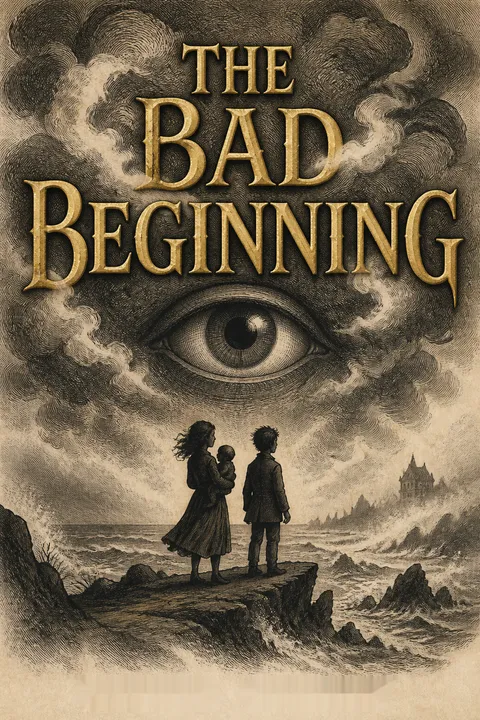
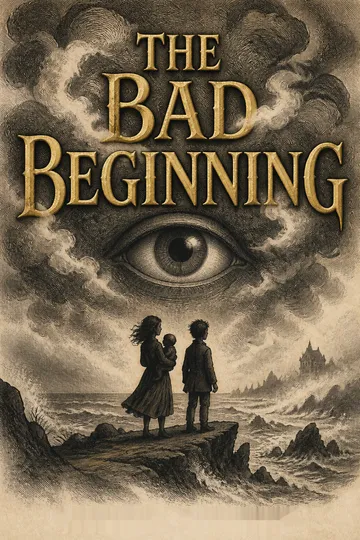
Violet, Klaus y Sunny Baudelaire disfrutan de un día gris en la playa Briny, sin imaginar que sus vidas están a punto de cambiar para siempre. El señor Poe, amigo de la familia, se acerca con noticias sombrías: sus padres han fallecido en un incendio que destruyó su hogar. Los niños quedan huérfanos, y el señor Poe, albacea de la herencia de sus padres, se encargará de sus asuntos. Los hermanos Baudelaire quedan en estado de shock, enfrentando la pérdida de sus padres y la incertidumbre de su futuro.
La Llegada del Conde Olaf
Los Baudelaire son puestos al cuidado del Conde Olaf, un pariente lejano. Su casa está en ruinas, y él es un hombre cruel y codicioso, interesado únicamente en la fortuna de los Baudelaire. Los niños se ven obligados a realizar tareas difíciles y vivir en la miseria. La casa del Conde Olaf está llena de ojos inquietantes, y su comportamiento es amenazante. Los hermanos pronto se dan cuenta de que no pueden confiar en su nuevo tutor y deben ser cautelosos en sus interacciones con él.
Un Nuevo Hogar Miserable
Los Baudelaire luchan por adaptarse a su nueva vida. Les asignan una cama incómoda para compartir y tareas interminables. La troupe teatral del Conde Olaf es igualmente desagradable, y los niños se sienten aislados y desdichados. A pesar de sus circunstancias desesperadas, los hermanos encuentran consuelo en la compañía mutua y en la amabilidad de su vecina, la jueza Strauss, quien les permite usar su biblioteca. Los niños se aferran a la esperanza de escapar de las garras del Conde Olaf.
El Plan Siniestro
Klaus descubre el plan del Conde Olaf para casarse con Violet en una obra falsa y así obtener el control de la fortuna Baudelaire. El matrimonio sería legalmente vinculante, permitiendo a Olaf reclamar la herencia. Los hermanos quedan horrorizados y comprenden que deben actuar rápido para frustrar su esquema. Intentan buscar ayuda del señor Poe, pero él desestima sus preocupaciones, dejándolos a merced de las maquinaciones de Olaf.
Un Intento Desesperado de Rescate
Violet idea un plan para rescatar a Sunny, quien está cautiva en una torre. Construye un garfio para escalar la torre, pero su intento es frustrado por el secuaz de Olaf. Los hermanos quedan encerrados en la habitación de la torre, y la esperanza de Violet se desvanece. A pesar del revés, la mente inventiva de Violet sigue trabajando en una solución, decidida a salvar a su hermana y detener el plan de Olaf.
La Trama de la Boda
Llega la noche de la obra, y Violet se ve obligada a participar en la escena de la boda. La jueza Strauss, sin saberlo, oficia la ceremonia, creyendo que es parte de la representación. Violet firma astutamente el documento matrimonial con la mano izquierda, invalidándolo. El público queda impactado cuando Olaf revela sus verdaderas intenciones, pero la rápida inteligencia de Violet salva el día y el matrimonio es declarado nulo.
Una Escapada por Poco
Mientras el teatro se sumerge en el caos, el Conde Olaf y su troupe logran escapar. El señor Poe y la jueza Strauss quedan para consolar a los Baudelaire, quienes se sienten aliviados pero aún sin un hogar permanente. La jueza Strauss ofrece acogerlos, pero el señor Poe insiste en que deben vivir con un pariente. Los niños quedan en la incertidumbre, pero han frustrado el plan de Olaf y mantienen la esperanza de un futuro mejor.
Personajes
Violet Baudelaire
Violet tiene 14 años y un talento especial para inventar. Protege a sus hermanos y está decidida a mantenerlos a salvo. Su rapidez mental y creatividad son cruciales para frustrar los planes del Conde Olaf. El liderazgo e ingenio de Violet son fundamentales para la supervivencia de los hermanos.
Klaus Baudelaire
Klaus tiene 12 años y ama la lectura. Su vasto conocimiento adquirido en los libros ayuda a los hermanos a entender el plan del Conde Olaf. Klaus es lógico y analítico, proporcionando a menudo la información necesaria para resolver problemas. La muerte de sus padres lo afecta profundamente y está decidido a proteger a sus hermanas.
Sunny Baudelaire
Sunny es la más pequeña de los Baudelaire, conocida por sus afilados dientes y su hábito de morder. A pesar de su edad, es valiente y resistente. La presencia de Sunny motiva a sus hermanos a luchar contra los planes del Conde Olaf, y su espíritu brinda consuelo y fortaleza a Violet y Klaus.
Conde Olaf
El Conde Olaf es un pariente lejano de los Baudelaire que busca robar su fortuna. Es cruel, manipulador y está dispuesto a hacer cualquier cosa para lograr sus objetivos. Su naturaleza siniestra y su pasado teatral lo convierten en un adversario formidable para los hermanos.
Señor Poe
El señor Poe es responsable de los asuntos de los huérfanos Baudelaire. A pesar de sus buenas intenciones, no reconoce la verdadera naturaleza del Conde Olaf y desestima las preocupaciones de los niños. Su incapacidad para actuar con decisión deja a los Baudelaire vulnerables a los planes de Olaf.
Jueza Strauss
La jueza Strauss vive al lado del Conde Olaf y se hace amiga de los niños Baudelaire. Les brinda acceso a su biblioteca y ofrece un rayo de bondad en sus vidas difíciles. Aunque desconoce el plan de Olaf, su apoyo es invaluable para los hermanos.
Hombre del Gancho
Miembro de la troupe teatral del Conde Olaf, tiene la tarea de vigilar a Sunny y asegurar la obediencia de los hermanos. Su presencia es una amenaza constante para los Baudelaire y juega un papel clave en el plan de Olaf.
Recursos Narrativos
Presagios y Simbolismo
El motivo recurrente de los ojos simboliza la presencia vigilante del Conde Olaf y la falta de privacidad de los niños. La historia está llena de presagios que anticipan las desgracias que sufrirán los Baudelaire. Estos elementos crean una sensación de inquietud y tensión a lo largo de la narrativa.
Vacíos Legales
El plan del Conde Olaf se basa en manipular tecnicismos legales para casarse con Violet y reclamar la fortuna Baudelaire. El uso de vacíos legales resalta la vulnerabilidad de los niños y la astucia del carácter de Olaf. Este recurso subraya el tema del poder y el control.
Análisis
"El mal comienzo" explora temas como la pérdida, la resistencia y la lucha por el control. Los huérfanos Baudelaire enfrentan enormes desafíos, pero confían en su inteligencia y recursos para navegar sus circunstancias desesperadas. La historia critica las deficiencias del mundo adulto, ya que figuras como el señor Poe no logran proteger a los niños. El Conde Olaf encarna la codicia y la manipulación, sirviendo como una figura de advertencia sobre la ambición desmedida. En última instancia, la narrativa enfatiza la importancia de la familia, la inventiva y la perseverancia ante la adversidad.
También leyeron



Preguntas frecuentes
Synopsis & Basic Details
What is The Bad Beginning about?
- Orphaned siblings face peril: The Bad Beginning tells the story of the Baudelaire children—Violet, Klaus, and Sunny—who become orphans after their parents die in a fire and are placed under the care of the villainous Count Olaf.
- Count Olaf's sinister plot: Count Olaf, their distant relative, is not interested in their well-being but in their vast fortune, which he schemes to obtain through a deceptive marriage plot.
- Children's resilience and struggle: The children must use their intelligence and resourcefulness to navigate the dangers and injustices they face, while also dealing with the grief of losing their parents and home.
Why should I read The Bad Beginning?
- Unique narrative voice: Lemony Snicket's distinctive, darkly humorous, and meta-narrative style offers a refreshing and engaging reading experience, constantly reminding the reader of the story's tragic nature.
- Intriguing characters: The Baudelaire children are intelligent and resourceful, while Count Olaf is a memorable villain, making for a compelling dynamic between good and evil.
- Exploration of themes: The book delves into themes of loss, injustice, and the importance of family, making it a thought-provoking read beyond its surface plot.
What is the background of The Bad Beginning?
- No specific historical setting: The story is set in a vaguely modern, yet timeless, urban environment, with elements of both old-world charm and contemporary life, creating a slightly surreal atmosphere.
- Focus on social commentary: The book critiques the ineffectiveness of adults and the legal system, highlighting how they often fail to protect children, reflecting a broader social commentary.
- Gothic and theatrical influences: The story incorporates elements of gothic literature, such as a dilapidated mansion and a sinister villain, alongside theatrical elements, like the play within the story, creating a unique blend of genres.
What are the most memorable quotes in The Bad Beginning?
- "If you are interested in stories with happy endings, you would be better off reading some other book.": This opening line immediately establishes the tone of the series, warning readers of the misfortunes to come and setting the stage for a non-traditional narrative.
- "Although he said he was the executor, Violet felt like Mr. Poe was the executioner.": This quote highlights Violet's astute perception of Mr. Poe's role in their lives, revealing the subtle ways in which adults can fail children, despite their intentions.
- "Your initial opinion on just about anything may change over time.": This quote, while seemingly simple, underscores the unreliable nature of first impressions, a theme that is central to the story and the children's experiences with Count Olaf.
What writing style, narrative choices, and literary techniques does Lemony Snicket use?
- Meta-narrative and direct address: Snicket frequently breaks the fourth wall, directly addressing the reader, offering commentary, and warning them about the story's unpleasantness, creating a unique and engaging reading experience.
- Dark humor and irony: The narrative is filled with dark humor and irony, often juxtaposing tragic events with humorous observations, creating a distinctive tone that is both entertaining and unsettling.
- Extensive use of vocabulary and definitions: Snicket often interrupts the narrative to define words, not only enriching the reader's vocabulary but also adding to the book's unique style and highlighting the importance of language.
Hidden Details & Subtle Connections
What are some minor details that add significant meaning?
- The eye motif: The recurring image of an eye, found on Count Olaf's door, his tattoo, and throughout his house, symbolizes his constant surveillance and the lack of privacy the children experience, foreshadowing his manipulative nature.
- Justice Strauss's name: Her title, "Justice," is ironic given the injustices the children face, highlighting the failure of the legal system to protect them, and her first name is never revealed, emphasizing her role as a symbol of justice rather than an individual.
- The children's possessions: The destruction of the children's belongings in the fire, such as Violet's microscope and Klaus's pen, symbolizes the loss of their past lives and the disruption of their identities, emphasizing the depth of their loss.
What are some subtle foreshadowing and callbacks?
- Mr. Poe's cough: Mr. Poe's constant coughing fits, often interrupting important conversations, foreshadow his ineffectiveness and inability to help the children, highlighting his role as a well-meaning but ultimately useless adult.
- The mention of Al Funcoot: The name of the playwright, Al Funcoot, is a subtle nod to the absurdity of the play and the ridiculousness of Count Olaf's scheme, foreshadowing the farcical nature of the wedding plot.
- The children's skills: The children's individual skills, such as Violet's inventing, Klaus's reading, and Sunny's biting, are subtly foreshadowed early on and become crucial to their survival and attempts to thwart Count Olaf's plans.
What are some unexpected character connections?
- Justice Strauss and Count Olaf: The fact that Justice Strauss is Count Olaf's neighbor, yet completely unaware of his true nature, highlights the theme of deception and the ability of evil to hide in plain sight, creating a sense of unease.
- Mr. Poe and Count Olaf: Mr. Poe's unwitting role in facilitating Count Olaf's guardianship, despite his supposed responsibility to protect the children, reveals the systemic failures that allow Count Olaf to exploit the legal system.
- The hook-handed man and the library: The hook-handed man's presence in Justice Strauss's library, and his threat to Klaus, reveals the extent of Count Olaf's reach and the danger the children are in, even in seemingly safe spaces.
Who are the most significant supporting characters?
- Justice Strauss: She provides a temporary haven and a source of knowledge for the children, representing the potential for kindness and support in a world filled with cruelty, and her library becomes a symbol of hope and escape.
- Mr. Poe: Despite his ineffectiveness, he represents the flawed adult world and the legal system that fails to protect the children, highlighting the theme of adult incompetence and the children's vulnerability.
- The hook-handed man: As a menacing henchman, he embodies the constant threat of violence and the lengths to which Count Olaf will go to achieve his goals, serving as a physical manifestation of the danger the children face.
Psychological, Emotional, & Relational Analysis
What are some unspoken motivations of the characters?
- Count Olaf's insecurity: Beneath his greed, Count Olaf's actions are driven by a deep-seated insecurity and a need for power, which he attempts to fulfill by controlling the Baudelaire fortune and manipulating those around him.
- Mr. Poe's fear of responsibility: Mr. Poe's reluctance to intervene is motivated by a fear of taking responsibility and a desire to avoid conflict, highlighting his inability to act as a true guardian for the children.
- Justice Strauss's desire for purpose: Justice Strauss's eagerness to participate in the play stems from a desire for purpose and recognition, revealing her own vulnerabilities and her susceptibility to Count Olaf's manipulation.
What psychological complexities do the characters exhibit?
- Violet's burden of responsibility: Violet carries the weight of her siblings' safety, often suppressing her own emotions to focus on problem-solving, revealing her complex mix of strength and vulnerability.
- Klaus's intellectual frustration: Klaus's reliance on books and knowledge is both a strength and a source of frustration, as he struggles to reconcile his intellectual understanding with the harsh realities of their situation.
- Sunny's emotional resilience: Despite her infancy, Sunny exhibits a remarkable resilience and a strong will, using her biting as a form of communication and resistance, revealing her emotional depth beyond her age.
What are the major emotional turning points?
- The news of their parents' death: The children's initial shock and grief at the news of their parents' death is a major emotional turning point, setting the stage for their subsequent struggles and highlighting the depth of their loss.
- The discovery of Count Olaf's plan: The revelation of Count Olaf's marriage plot is a turning point, shifting the children's focus from grief to survival and forcing them to confront the immediate danger they face.
- Violet's decision to marry Count Olaf: Violet's decision to sacrifice herself to save Sunny is a major emotional turning point, highlighting her selflessness and the lengths she will go to protect her siblings.
How do relationship dynamics evolve?
- Sibling bond strengthens: The children's shared experiences of loss and adversity strengthen their bond, as they rely on each other for support and comfort, highlighting the importance of family in the face of hardship.
- Distrust of adults grows: The children's experiences with Mr. Poe and other adults lead to a growing distrust of authority figures, as they realize they must rely on their own abilities to survive.
- Justice Strauss as a temporary ally: The children's relationship with Justice Strauss offers a glimpse of kindness and support, but her inability to protect them ultimately highlights the limitations of adult intervention and the children's isolation.
Interpretation & Debate
Which parts of the story remain ambiguous or open-ended?
- The nature of the fire: The exact cause of the fire that killed the Baudelaire parents is never revealed, leaving the reader to wonder if it was truly an accident or something more sinister, adding to the overall mystery.
- Count Olaf's motivations: While his greed is apparent, the deeper reasons behind Count Olaf's obsession with the Baudelaire fortune and his cruelty remain somewhat ambiguous, leaving room for interpretation about his character.
- The future of the Baudelaires: The ending leaves the children's future uncertain, as they are once again without a guardian and facing an unknown fate, emphasizing the ongoing nature of their misfortunes and the lack of a true resolution.
What are some debatable, controversial scenes or moments in The Bad Beginning?
- Mr. Poe's inaction: Mr. Poe's repeated dismissal of the children's concerns and his failure to protect them is a controversial aspect of the story, raising questions about the responsibility of adults and the effectiveness of the legal system.
- Justice Strauss's naivete: Justice Strauss's blind faith in Count Olaf and her inability to see his true nature is a controversial element, highlighting the dangers of naivete and the ease with which evil can manipulate good intentions.
- Violet's forced marriage: The forced marriage plot is a controversial element, raising questions about the exploitation of children and the lengths to which villains will go to achieve their goals, making it a disturbing and thought-provoking aspect of the story.
The Bad Beginning Ending Explained: How It Ends & What It Means
- Count Olaf's escape: Count Olaf's escape at the end of the book signifies that evil is not easily defeated and that the children's troubles are far from over, setting the stage for future conflicts and highlighting the ongoing nature of their misfortunes.
- Loss of Justice Strauss: The children's forced separation from Justice Strauss underscores the theme of injustice and the limitations of the legal system, as they are once again placed in an uncertain situation despite her kindness and support.
- Cycle of misfortune: The ending reinforces the cyclical nature of the children's misfortunes, as they are once again left without a home or a reliable guardian, emphasizing the tragic tone of the series and the ongoing challenges they face.
Una serie de catastróficas desdichas Serie
Descargar PDF
Descargar EPUB
.epub digital book format is ideal for reading ebooks on phones, tablets, and e-readers.








































