मुख्य बातें
1. जानकारी मूलतः बिट्स और संदर्भ का संयोजन है।
विभिन्न डेटा वस्तुओं को अलग करने वाली एकमात्र चीज़ वह संदर्भ है जिसमें हम उन्हें देखते हैं।
बिट्स की व्याख्या की आवश्यकता है। अपने मूल में, कंप्यूटर प्रणाली के भीतर सभी डेटा—डिस्क पर फ़ाइलों से लेकर मेमोरी में प्रोग्राम तक—बिट्स (0 और 1) के रूप में प्रदर्शित होते हैं। इन बिट्स का अर्थ पूरी तरह से उस संदर्भ से निकाला जाता है जिसमें उन्हें व्याख्यायित किया जाता है। एक ही बाइट्स की श्रृंखला एक पूर्णांक, एक फ्लोटिंग-पॉइंट संख्या, एक वर्ण स्ट्रिंग, या यहां तक कि एक मशीन निर्देश का प्रतिनिधित्व कर सकती है।
संदर्भ महत्वपूर्ण है। यह अवधारणा प्रोग्रामरों के लिए समझना आवश्यक है। उदाहरण के लिए, एक संख्या का प्रतिनिधित्व करने वाली बाइट्स की श्रृंखला को साइन किए गए या अनसाइन किए गए रूप में माना जा सकता है, जिससे व्याख्याओं में काफी भिन्नता आ सकती है। इसी तरह, एक प्रोग्राम द्वारा डेटा को संभालने का तरीका इसके प्रकार पर निर्भर करता है, जिसका उपयोग कंपाइलर उपयुक्त मशीन कोड उत्पन्न करने के लिए करता है।
प्रतिनिधित्व को समझना। विभिन्न डेटा प्रकारों के बिट स्तर पर प्रतिनिधित्व को समझकर, प्रोग्रामर अधिक विश्वसनीय और कुशल कोड लिख सकते हैं। यह ज्ञान सामान्य समस्याओं जैसे पूर्णांक ओवरफ्लो, फ्लोटिंग-पॉइंट की अशुद्धियों, और बफर ओवरफ्लो जैसी सुरक्षा कमजोरियों से बचने में मदद करता है।
2. संकलन प्रणाली मानव-पठनीय प्रोग्रामों को निष्पादन योग्य मशीन कोड में अनुवादित करती है।
एक यूनिक्स प्रणाली पर, स्रोत फ़ाइल से ऑब्जेक्ट फ़ाइल में अनुवाद एक कंपाइलर ड्राइवर द्वारा किया जाता है।
स्रोत से निष्पादन तक। एक C प्रोग्राम का स्रोत कोड से उसके निष्पादन तक का सफर संकलन प्रणाली द्वारा किए गए परिवर्तनों की एक श्रृंखला में शामिल होता है। यह प्रणाली आमतौर पर एक प्रीप्रोसेसर, कंपाइलर, असेंबलर, और लिंकर्स से मिलकर बनी होती है, जो उच्च-स्तरीय कोड को निम्न-स्तरीय मशीन निर्देशों में परिवर्तित करने में महत्वपूर्ण भूमिका निभाते हैं।
संकलन के चरण। प्रीप्रोसेसर निर्देशों को संभालता है जैसे #include, कंपाइलर C कोड को असेंबली भाषा में अनुवादित करता है, असेंबलर असेंबली कोड को पुनःस्थापनीय ऑब्जेक्ट कोड में परिवर्तित करता है, और लिंकर्स ऑब्जेक्ट फ़ाइलों और पुस्तकालयों को मिलाकर एक निष्पादन योग्य फ़ाइल बनाते हैं। प्रत्येक चरण जटिलता और विवरण जोड़ता है, मशीन की समझ के करीब ले जाता है।
निष्पादन योग्य ऑब्जेक्ट फ़ाइलें। संकलन प्रणाली का अंतिम आउटपुट एक निष्पादन योग्य ऑब्जेक्ट फ़ाइल है, जिसमें मशीन कोड निर्देश, डेटा, और प्रोग्राम को चलाने के लिए आवश्यक प्रतीक जानकारी होती है। यह फ़ाइल फिर ऑपरेटिंग सिस्टम द्वारा मेमोरी में लोड की जाती है और प्रोसेसर द्वारा निष्पादित की जाती है।
3. संकलन प्रणालियों को समझना प्रदर्शन को अनुकूलित करने और त्रुटियों से बचने में मदद करता है।
सरल प्रोग्रामों जैसे
hello.cके लिए, हम संकलन प्रणाली पर सही और कुशल मशीन कोड उत्पन्न करने के लिए भरोसा कर सकते हैं।
कंपाइलर की सीमाएँ। जबकि आधुनिक कंपाइलर जटिल होते हैं, उनकी सीमाएँ होती हैं। प्रोग्रामरों को मशीन-स्तरीय कोड की मूल बातें समझनी चाहिए ताकि वे अच्छे कोडिंग निर्णय ले सकें, जैसे कुशल डेटा संरचनाओं और एल्गोरिदम का चयन करना।
लिंक-समय त्रुटियाँ। कुछ सबसे पेचीदा प्रोग्रामिंग त्रुटियाँ लिंकर्स से संबंधित होती हैं, विशेष रूप से बड़े सॉफ़्टवेयर सिस्टम में। यह समझना कि लिंकर्स संदर्भों को कैसे हल करते हैं, स्थिर और गतिशील पुस्तकालयों को कैसे संभालते हैं, और स्थिति-स्वतंत्र कोड कैसे बनाते हैं, इन त्रुटियों से बचने के लिए महत्वपूर्ण है।
सुरक्षा कमजोरियाँ। बफर ओवरफ्लो कमजोरियाँ, जो सुरक्षा छिद्रों का एक सामान्य स्रोत हैं, प्रोग्राम स्टैक पर डेटा और नियंत्रण जानकारी के भंडारण के तरीके की समझ की कमी से उत्पन्न होती हैं। प्रोग्रामरों को सुरक्षित कोड लिखने के लिए इन अवधारणाओं को समझना आवश्यक है।
4. प्रोसेसर मेमोरी में संग्रहीत निर्देशों को निष्पादित करते हैं, जिन्हें ऑपरेटिंग सिस्टम द्वारा प्रबंधित किया जाता है।
इसके मूल में एक शब्द-आकार का भंडारण उपकरण (या रजिस्टर) होता है जिसे प्रोग्राम काउंटर (PC) कहा जाता है।
CPU की भूमिका। केंद्रीय प्रसंस्करण इकाई (CPU) वह इंजन है जो मुख्य मेमोरी में संग्रहीत निर्देशों को व्याख्यायित और निष्पादित करता है। यह बार-बार निर्देशों को लाने, उन्हें व्याख्यायित करने, और डेटा पर सरल संचालन करने के द्वारा कार्य करता है।
हार्डवेयर संगठन। CPU मुख्य मेमोरी, I/O उपकरणों, और अन्य घटकों के साथ बसों के एक प्रणाली के माध्यम से बातचीत करता है। रजिस्टर फ़ाइल, जो CPU के भीतर एक छोटा भंडारण उपकरण है, अक्सर एक्सेस किए गए डेटा को रखता है। अंकगणितीय/तर्क इकाई (ALU) अंकगणितीय और तार्किक संचालन करती है।
निर्देश निष्पादन। CPU एक सरल निर्देश निष्पादन मॉडल का पालन करता है, जिसे इसके निर्देश सेट आर्किटेक्चर (ISA) द्वारा परिभाषित किया गया है। निर्देशों को सख्त अनुक्रम में निष्पादित किया जाता है, जिसमें डेटा लोड करना, डेटा संग्रहीत करना, डेटा पर संचालन करना, और विभिन्न निर्देशों पर कूदना शामिल है।
5. कैश मेमोरी प्रोसेसर-मेमोरी गति के अंतर को पाटने के लिए आवश्यक हैं।
प्रोसेसर-मेमोरी अंतर से निपटने के लिए, प्रणाली डिजाइनर छोटे, तेज़ भंडारण उपकरणों को शामिल करते हैं जिन्हें कैश मेमोरी (या बस कैश) कहा जाता है, जो जानकारी के लिए अस्थायी स्टेजिंग क्षेत्रों के रूप में कार्य करते हैं, जिसकी प्रोसेसर को निकट भविष्य में आवश्यकता होने की संभावना होती है।
प्रोसेसर-मेमोरी अंतर। भौतिक कानूनों के कारण, बड़े भंडारण उपकरण छोटे भंडारण उपकरणों की तुलना में धीमे होते हैं। तेज़ उपकरणों का निर्माण धीमे उपकरणों की तुलना में अधिक महंगा होता है। इससे प्रोसेसर की गति और मेमोरी एक्सेस समय के बीच एक महत्वपूर्ण अंतर उत्पन्न होता है।
कैश पदानुक्रम। इस अंतर को पाटने के लिए, प्रणाली डिजाइनर कैश मेमोरी के एक पदानुक्रम का उपयोग करते हैं। छोटे, तेज़ कैश (L1, L2, L3) अक्सर एक्सेस किए गए डेटा को संग्रहीत करते हैं, जिससे प्रोसेसर उन्हें तेजी से एक्सेस कर सकता है।
स्थानीयता। कैशिंग स्थानीयता के कारण संभव है, जो इस प्रवृत्ति को संदर्भित करता है कि प्रोग्राम डेटा और कोड को स्थानीयकृत क्षेत्रों में एक्सेस करते हैं। अस्थायी और स्थानिक स्थानीयता का लाभ उठाकर, कैश प्रोग्राम के प्रदर्शन में महत्वपूर्ण सुधार कर सकते हैं।
6. भंडारण उपकरणों को गति, लागत, और क्षमता के आधार पर एक पदानुक्रम में व्यवस्थित किया जाता है।
जैसे-जैसे हम पदानुक्रम के शीर्ष से नीचे की ओर बढ़ते हैं, उपकरण धीमे, बड़े, और प्रति बाइट कम महंगे होते जाते हैं।
मेमोरी पदानुक्रम। कंप्यूटर सिस्टम भंडारण उपकरणों को एक पदानुक्रम में व्यवस्थित करते हैं, जिसमें तेज़, छोटे, और महंगे उपकरण शीर्ष पर होते हैं और धीमे, बड़े, और कम महंगे उपकरण नीचे होते हैं। इस पदानुक्रम में रजिस्टर, कैश, मुख्य मेमोरी, ठोस-राज्य डिस्क, और घूर्णन डिस्क शामिल हैं।
प्रत्येक स्तर पर कैशिंग। पदानुक्रम का प्रत्येक स्तर अगले निचले स्तर के लिए एक कैश के रूप में कार्य करता है। रजिस्टर फ़ाइल L1 कैश से डेटा कैश करती है, L1 कैश L2 कैश से डेटा कैश करती है, और इसी तरह।
पदानुक्रम का लाभ उठाना। प्रोग्रामर प्रदर्शन में सुधार कर सकते हैं यदि वे मेमोरी पदानुक्रम को समझते हैं और उसका लाभ उठाते हैं। इसमें ऐसा कोड लिखना शामिल है जो अच्छी स्थानीयता प्रदर्शित करता है और धीमे भंडारण उपकरणों तक पहुँचने की संख्या को न्यूनतम करता है।
7. ऑपरेटिंग सिस्टम हार्डवेयर संसाधनों का प्रबंधन प्रक्रियाओं, आभासी मेमोरी, और फ़ाइलों जैसी अमूर्तताओं के माध्यम से करता है।
हम ऑपरेटिंग सिस्टम को एक सॉफ़्टवेयर परत के रूप में सोच सकते हैं जो अनुप्रयोग प्रोग्राम और हार्डवेयर के बीच होती है।
अमूर्तता परत। ऑपरेटिंग सिस्टम (OS) अनुप्रयोग प्रोग्रामों और हार्डवेयर के बीच एक मध्यस्थ के रूप में कार्य करता है। यह हार्डवेयर को दुरुपयोग से बचाता है और अनुप्रयोगों को जटिल हार्डवेयर उपकरणों को संभालने के लिए सरल, समान तंत्र प्रदान करता है।
मुख्य अमूर्तताएँ। OS अपने लक्ष्यों को तीन मौलिक अमूर्तताओं के माध्यम से प्राप्त करता है: प्रक्रियाएँ, आभासी मेमोरी, और फ़ाइलें। प्रक्रियाएँ प्रोसेसर, मुख्य मेमोरी, और I/O उपकरणों के विशेष उपयोग का भ्रम प्रदान करती हैं। आभासी मेमोरी मुख्य मेमोरी के विशेष उपयोग का भ्रम प्रदान करती है। फ़ाइलें सभी I/O उपकरणों का एक समान दृश्य प्रदान करती हैं।
कर्नेल की भूमिका। OS कर्नेल इन अमूर्तताओं का प्रबंधन करता है, प्रक्रियाओं के बीच संदर्भ स्विच को संभालता है, आभासी पते को भौतिक पते में अनुवाद करता है, और I/O उपकरणों तक पहुँचने के लिए एक समान इंटरफ़ेस प्रदान करता है।
8. सिस्टम अन्य सिस्टमों के साथ नेटवर्क के माध्यम से संवाद करते हैं, जिन्हें I/O उपकरणों के रूप में देखा जाता है।
जब सिस्टम मुख्य मेमोरी से नेटवर्क एडाप्टर में बाइट्स की एक श्रृंखला की कॉपी करता है, तो डेटा नेटवर्क के पार दूसरे मशीन तक प्रवाहित होता है, न कि, उदाहरण के लिए, एक स्थानीय डिस्क ड्राइव तक।
नेटवर्क को I/O उपकरणों के रूप में देखना। एक व्यक्तिगत सिस्टम के दृष्टिकोण से, एक नेटवर्क को बस एक और I/O उपकरण के रूप में देखा जा सकता है। डेटा को मुख्य मेमोरी से नेटवर्क एडाप्टर में कॉपी किया जा सकता है ताकि इसे अन्य मशीनों पर भेजा जा सके।
क्लाइंट-सेर्वर मॉडल। नेटवर्क अनुप्रयोग क्लाइंट-सेर्वर मॉडल पर आधारित होते हैं, जहां क्लाइंट सर्वरों से सेवाएँ मांगते हैं। यह मॉडल नेटवर्क पर जानकारी की कॉपी करने की क्षमता पर निर्भर करता है।
टेलनेट उदाहरण। telnet अनुप्रयोग यह प्रदर्शित करता है कि कैसे एक नेटवर्क का उपयोग दूरस्थ रूप से प्रोग्राम चलाने के लिए किया जा सकता है। टेलनेट क्लाइंट टेलनेट सर्वर को आदेश भेजता है, जो आदेशों को निष्पादित करता है और आउटपुट को क्लाइंट को वापस भेजता है।
9. एंढल का नियम एकल घटक के अनुकूलन से प्रदर्शन सुधार की सीमाएँ निर्धारित करता है।
मुख्य विचार यह है कि जब हम सिस्टम के एक भाग को तेज करते हैं, तो समग्र सिस्टम प्रदर्शन पर प्रभाव इस भाग की महत्वपूर्णता और इसकी गति में सुधार पर निर्भर करता है।
कम होती वापसी। एंढल का नियम कहता है कि सिस्टम की समग्र गति में सुधार उस समय के अंश द्वारा सीमित होता है जब सुधारित घटक का उपयोग किया जाता है। भले ही हम सिस्टम के एक प्रमुख भाग में महत्वपूर्ण सुधार करें, शुद्ध गति में सुधार उस एक भाग के लिए गति में सुधार से कम होगा।
बड़ी तस्वीर पर ध्यान केंद्रित करना। पूरे सिस्टम को महत्वपूर्ण रूप से तेज करने के लिए, हमें समग्र सिस्टम के एक बहुत बड़े अंश की गति में सुधार करना होगा। इसके लिए सबसे समय-खपत करने वाले घटकों की पहचान और अनुकूलन करना आवश्यक है।
सामान्य सिद्धांत। एंढल का नियम किसी भी प्रक्रिया में सुधार के लिए एक सामान्य सिद्धांत है, केवल कंप्यूटर सिस्टम के लिए नहीं। यह निर्माण लागत को कम करने या शैक्षणिक प्रदर्शन में सुधार के प्रयासों को मार्गदर्शित कर सकता है।
10. समवर्तीता और समानांतरता कई स्तरों पर सिस्टम प्रदर्शन को बढ़ाती हैं।
हम समवर्तीता शब्द का उपयोग एक प्रणाली में कई, समानांतर गतिविधियों के सामान्य विचार को संदर्भित करने के लिए करते हैं, और समानांतरता शब्द का उपयोग समवर्तीता का उपयोग करके एक प्रणाली को तेज़ बनाने के लिए करते हैं।
समवर्तीता बनाम समानांतरता। समवर्तीता एक प्रणाली में कई, समानांतर गतिविधियों के सामान्य विचार को संदर्भित करती है। समानांतरता का अर्थ है समवर्तीता का उपयोग करके एक प्रणाली को तेज़ बनाना।
समानांतरता के स्तर:
- थ्रेड-स्तरीय समवर्तीता: कई प्रक्रियाओं या थ्रेड्स के माध्यम से प्राप्त की जाती है, जिससे कई उपयोगकर्ता या कार्य एक साथ चल सकते हैं।
- निर्देश-स्तरीय समानांतरता: आधुनिक प्रोसेसर एक साथ कई निर्देशों को निष्पादित करते हैं, प्रदर्शन में सुधार करते हैं।
- SIMD समानांतरता: एकल निर्देश कई डेटा बिंदुओं पर एक साथ कार्य करते हैं, छवि, ध्वनि, और वीडियो प्रसंस्करण को तेज करते हैं।
मल्टीप्रोसेसर सिस्टम। मल्टीप्रोसेसर सिस्टम, जिसमें मल्टी-कोर प्रोसेसर और हाइपरथ्रेडिंग शामिल हैं, वास्तविक समानांतर निष्पादन की अनुमति देते हैं, सिस्टम प्रदर्शन में सुधार करते हैं और समवर्तीता का अनुकरण करने की आवश्यकता को कम करते हैं।
11. अमूर्तताएँ कंप्यूटर सिस्टम में जटिलता को प्रबंधित करने के लिए महत्वपूर्ण हैं।
अमूर्तताओं का उपयोग कंप्यूटर विज्ञान में सबसे महत्वपूर्ण अवधारणाओं में से एक है।
जटिलता को सरल बनाना। अमूर्तताएँ जटिल प्रणालियों के सरल दृष्टिकोण प्रदान करती हैं, जिससे प्रोग्रामर कोड का उपयोग कर सकते हैं बिना इसके आंतरिक कार्यों में गहराई से जाने। यह अच्छे प्रोग्रामिंग अभ्यास का एक प्रमुख पहलू है।
अमूर्तताओं के उदाहरण:
- निर्देश सेट आर्किटेक्चर (ISA): प्रोसेसर हार्डवेयर का एक अमूर्तता प्रदान करता है।
- ऑपरेटिंग सिस्टम: I/O उपकरणों (फ़ाइलें), प्रोग्राम मेमोरी (आभासी मेमोरी), और चल रहे प्रोग्रामों (प्रक्रियाएँ) के लिए अमूर्तताएँ प्रदान करता है।
- वर्चुअल मशीनें: पूरे कंप्यूटर का एक अमूर्तता प्रदान करती हैं, जिसमें OS, प्रोसेसर, और प्रोग्राम शामिल हैं।
अमूर्तताओं के लाभ। अमूर्तताएँ प्रोग्रामरों को ऐसा कोड लिखने में सक्षम बनाती हैं जो पोर्टेबल, विश्वसनीय, और कुशल हो, बिना यह समझे कि अंतर्निहित हार्डवेयर और सॉफ़्टवेयर का विस्तार से ज्ञान होना आवश्यक है।
12. संख्या का प्रतिनिधित्व प्रोग्राम की विश्वसनीयता और सुरक्षा को प्रभावित करता है।
कंप्यूटर अंकगणित की ठोस समझ होना विश्वसनीय प्रोग्राम लिखने के लिए महत्वपूर्ण है।
सीमित अनुमानों। संख्याओं का कंप्यूटर प्रतिनिधित्व पूर्णांक और वास्तविक संख्याओं के सीमित अनुमानों होते हैं। इससे अप्रत्याशित व्यवहार उत्पन्न हो सकता है, जैसे अंकगणितीय ओवरफ्लो और फ्लोटिंग-पॉइंट की अशुद्धियाँ।
पूर्णांक प्रतिनिधित्व। अनसाइन किए गए एन्कोडिंग गैर-नकारात्मक संख्याओं का प्रतिनिधित्व करते हैं, जबकि दो के पूरक एन्कोडिंग साइन किए गए पूर्णांकों का प्रतिनिधित्व करते हैं। इन प्रतिनिधित्वों के गुणों को समझना विश्वसनीय कोड लिखने के लिए महत्वपूर्ण है।
फ्लोटिंग-पॉइंट प्रतिनिधित्व। IEEE फ्लोटिंग-पॉइंट प्रारूप वास्तविक संख्याओं का प्रतिनिधित्व करने के लिए वैज्ञानिक नोटेशन का एक आधार-2 संस्करण है। फ्लोटिंग-पॉइंट संख्याओं के प्रतिनिधित्व और हेरफेर को समझना संख्यात्मक गणनाओं में त्रुटियों से बचने के लिए आवश्यक है।
समीक्षा सारांश
कंप्यूटर सिस्टम: एक प्रोग्रामर का दृष्टिकोण को कंप्यूटर सिस्टम के सिद्धांतों की व्यापक और स्पष्ट व्याख्याओं के लिए अत्यधिक सराहा जाता है। पाठक इसकी व्यावहारिक दृष्टिकोण, C उदाहरणों के उपयोग, और मेमोरी हायरार्की तथा वर्चुअल मेमोरी जैसे विषयों के कवरेज की प्रशंसा करते हैं। कई लोग इसे कंप्यूटर विज्ञान के छात्रों और पेशेवरों के लिए अनिवार्य पठन मानते हैं। यह पुस्तक सिद्धांतात्मक अवधारणाओं को वास्तविक दुनिया के अनुप्रयोगों के साथ जोड़ने की अपनी क्षमता के लिए प्रशंसा प्राप्त करती है। जबकि कुछ इसे चुनौतीपूर्ण मानते हैं, अधिकांश समीक्षक इसकी गहराई और स्पष्टता की सराहना करते हैं। कुछ आलोचनाएँ पुरानी जानकारी और कोड उदाहरणों में अनिर्धारित व्यवहार के संभावित मुद्दों का उल्लेख करती हैं।
लोग यह भी पढ़ते हैं



अक्सर पूछे जाने वाले प्रश्न
What is "Computer Systems: A Programmer's Perspective" by Randal E. Bryant about?
- Comprehensive systems overview: The book offers a deep dive into how computer systems work from a programmer’s perspective, covering hardware, operating systems, compilers, and networking.
- Bridging hardware and software: It explains how software maps onto hardware, demystifying the execution of programs at the machine level.
- Practical focus: Through real code examples and hands-on labs, it teaches how system-level details impact program correctness, performance, and security.
- Holistic approach: Unlike many texts, it unifies all major system components to help programmers understand the full stack.
Why should I read "Computer Systems: A Programmer's Perspective" by Randal E. Bryant and David R. O'Hallaron?
- Become a power programmer: The book equips readers with rare skills to understand and debug systems "under the hood," leading to more efficient, reliable, and secure code.
- Bridges theory and practice: It connects low-level system concepts with high-level programming, making complex topics accessible and actionable.
- Preparation for advanced topics: The material lays a solid foundation for further study in compilers, operating systems, architecture, networking, and cybersecurity.
- Authoritative and widely used: Written by leading experts, it is a trusted resource in both academia and industry.
What are the key takeaways from "Computer Systems: A Programmer's Perspective"?
- Systems thinking for programmers: Understanding system internals helps write better, faster, and safer programs.
- Impact of hardware on software: The book shows how hardware features like caches, pipelines, and memory hierarchies affect program performance.
- Security awareness: It highlights common vulnerabilities such as buffer overflows and teaches how to avoid them.
- Hands-on learning: Practice problems, labs, and real-world examples reinforce theoretical concepts.
What are the best quotes from "Computer Systems: A Programmer's Perspective" and what do they mean?
- "All information in a system is represented as bits, and the meaning depends on context." This emphasizes the importance of understanding data representation for correct and efficient programming.
- "Most execution time is spent in core loops; optimize these for cache performance." This highlights the practical impact of memory hierarchy and locality on real-world program speed.
- "The processor need not implement the ISA sequentially; hardware can exploit parallelism while preserving ISA semantics." This quote underlines the abstraction provided by ISAs and the power of hardware-level optimizations.
- "Handlers should be minimal, often just setting flags and returning quickly to avoid concurrency issues." This advice is crucial for writing safe and reliable signal handlers in concurrent systems.
How does "Computer Systems: A Programmer's Perspective" by Bryant explain data representation and manipulation in computer systems?
- Bits and context: The book teaches that all data—integers, floating-point numbers, characters, instructions—are just bits whose meaning depends on context.
- Integer and floating-point formats: It covers two's-complement for signed integers, unsigned integers, and IEEE 754 floating-point formats, including normalized and denormalized numbers.
- Bit-level operations: Boolean algebra, bit masking, shifting, and arithmetic at the bit level are explained for low-level programming and understanding compiler output.
- Data alignment and endianness: The text discusses how data is aligned in memory and the impact of byte ordering on program behavior.
What does "Computer Systems: A Programmer's Perspective" teach about the relationship between C code, assembly, and machine code?
- Compilation stages: The book details the journey from C source code through preprocessing, assembly, object code, and linking to executable machine code.
- Assembly code analysis: It shows how high-level constructs like loops and function calls are translated into machine instructions, teaching readers to read and reason about assembly.
- Reverse engineering: Readers learn to map assembly instructions back to C code, gaining insight into compiler optimizations and hardware operations.
- Security implications: Understanding this mapping helps identify vulnerabilities such as buffer overflows.
How does "Computer Systems: A Programmer's Perspective" by Bryant and O'Hallaron explain processor architecture and pipelining?
- Y86-64 as a teaching tool: The book introduces a simplified instruction set architecture to clarify processor design concepts without the complexity of x86-64.
- Pipeline stages: It explains the six-stage pipeline (Fetch, Decode, Execute, Memory, Write-back, PC Update) and how instructions flow through hardware.
- Hazard management: Data and control hazards are addressed with techniques like forwarding, stalling, and branch prediction.
- Performance considerations: The text discusses clock cycle limitations, pipeline overhead, and the trade-offs of deep pipelines.
What optimization techniques and performance advice does "Computer Systems: A Programmer's Perspective" provide for programmers?
- Algorithm and data structure choice: The book stresses the importance of high-level design to avoid asymptotic inefficiencies.
- Code transformations: Techniques like loop unrolling, multiple accumulators, and reassociation are recommended to exploit instruction-level parallelism.
- Cache-friendly coding: Maximizing spatial and temporal locality in inner loops is emphasized for better cache performance.
- Profiling and bottleneck identification: Tools like GPROF are suggested to focus optimization efforts where they matter most.
How does "Computer Systems: A Programmer's Perspective" by Bryant describe the memory hierarchy and its impact on program performance?
- Hierarchy structure: The book explains the organization from CPU registers to caches, main memory, and disk, each with different speed, size, and cost.
- Locality principle: Temporal and spatial locality are key to writing programs that make effective use of caches.
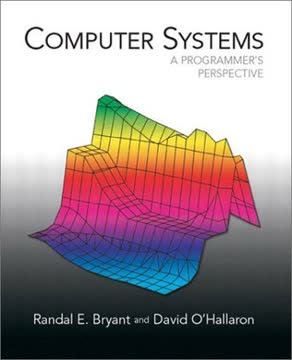
- Memory mountain visualization: A unique "memory mountain" graph illustrates how locality affects memory throughput and guides efficient coding.
- Caching mechanism: The text details how each level caches data from the next, with hits and misses determining access speed.
What operating system concepts are covered in "Computer Systems: A Programmer's Perspective" by Bryant and O'Hallaron?
- Processes and threads: The book explains process abstraction, context switching, and the use of threads for concurrency and parallelism.
- Virtual memory: It covers address translation, page tables, TLBs, and memory protection, showing how each process gets its own address space.
- Files and I/O: Unix I/O, file descriptors, and device abstractions are introduced, preparing readers for system-level and network programming.
- Exceptional control flow: The text discusses interrupts, traps, faults, and signals, and their role in process management and system calls.
How does "Computer Systems: A Programmer's Perspective" by Bryant and O'Hallaron explain concurrency, threads, and synchronization?
- Concurrency models: The book compares processes, I/O multiplexing, and threads, explaining their trade-offs in isolation, communication, and performance.
- Thread creation and management: It covers thread creation, termination, and synchronization, including mutexes and semaphores.
- Race conditions and deadlocks: Common concurrency bugs are illustrated, with advice on avoiding races and deadlocks through careful synchronization and lock ordering.
- Thread safety and reentrancy: The text distinguishes between thread-safe and reentrant functions, offering practical techniques for writing safe concurrent code.
What does "Computer Systems: A Programmer's Perspective" by Bryant teach about network programming and the client-server model?
- Sockets interface: The book introduces the sockets API for network communication, detailing socket creation, connection, binding, listening, and accepting.
- Client-server transactions: It defines the model as clients sending requests and servers responding, emphasizing that clients and servers are processes, not machines.
- Concurrent servers: Techniques for building concurrent network servers using processes, threads, or I/O multiplexing are explained, with practical examples like a simple web server.
- Robust I/O: The RIO package is introduced to handle short counts and buffering issues, improving reliability in network and file I/O.
How does "Computer Systems: A Programmer's Perspective" by Bryant and O'Hallaron address security vulnerabilities and defensive programming?
- Buffer overflows: The book illustrates how out-of-bounds memory writes can corrupt stack state, leading to crashes or exploits.
- Attack mechanisms: It explains how attackers exploit buffer overflows to inject and execute malicious code by overwriting return addresses.
- Defensive techniques: Modern defenses such as stack randomization (ASLR), stack canaries, and non-executable stack regions are covered.
- Secure coding practices: The text emphasizes understanding system internals to write code that avoids common vulnerabilities and withstands attacks.








































