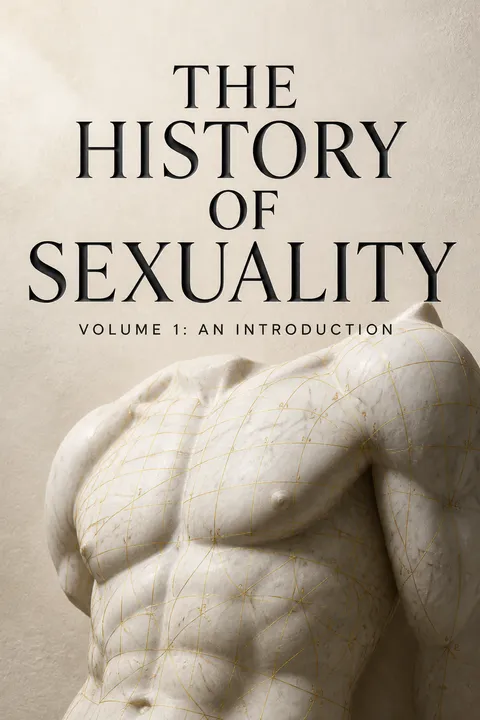

मुख्य बातें
1. यौनिकता एक सामाजिक निर्माण है, कोई प्राकृतिक तथ्य नहीं।
यौनिकता को किसी प्राकृतिक तथ्य के रूप में नहीं समझना चाहिए जिसे सत्ता नियंत्रित करने की कोशिश करती है, न ही इसे किसी अस्पष्ट क्षेत्र के रूप में देखना चाहिए जिसे ज्ञान धीरे-धीरे उजागर करता है।
मूलभूतता की चुनौती। फूको का तर्क है कि यौनिकता कोई पूर्व-निर्धारित, प्राकृतिक शक्ति नहीं है जिसे समाज नियंत्रित करता है। बल्कि यह एक ऐतिहासिक निर्माण है, जो विशिष्ट सत्ता संबंधों और विमर्शों का परिणाम है। इसका मतलब है कि हम सेक्स को जिस तरह समझते और अनुभव करते हैं, वह केवल जैविकी नहीं, बल्कि सामाजिक और सांस्कृतिक शक्तियों द्वारा आकारित होता है।
विमर्श वास्तविकता को आकार देते हैं। यौनिकता की अवधारणा विभिन्न विमर्शों के माध्यम से निर्मित और पुष्ट होती है, जैसे चिकित्सा, कानून और धर्म के विमर्श। ये विमर्श यह तय करते हैं कि क्या सामान्य, असामान्य, स्वस्थ या विकृत माना जाएगा, और इस प्रकार यौन इच्छा और व्यवहार की हमारी समझ को आकार देते हैं। उदाहरण के लिए:
- 19वीं सदी में समलैंगिकता का चिकित्सीयकरण इसे एक व्यवहार से पहचान में बदल गया, जिसे फूको "प्रजाति" कहते हैं।
- 18वीं और 19वीं सदी में बाल यौनिकता पर ध्यान देने से बच्चे को एक यौन प्राणी के रूप में देखा गया, जिसे विशेष खतरों से बचाने और सतत निगरानी की आवश्यकता थी।
मुक्ति के लिए निहितार्थ। यौनिकता को एक निर्माण मानकर हम उन मानदंडों और सत्ता संरचनाओं को चुनौती दे सकते हैं जो इसे आकार देते हैं। इससे पारंपरिक नैतिकता और सामाजिक नियंत्रण की सीमाओं से मुक्त, अधिक समावेशी और मुक्तिदायक यौन और इच्छा की समझ विकसित करने की संभावना खुलती है।
2. सत्ता केवल दमन से नहीं, प्रोत्साहन से भी संचालित होती है।
बोलने के लिए प्रोत्साहन हर ओर से आयोजित किए गए, सुनने और रिकॉर्ड करने के उपकरण हर जगह, निरीक्षण, प्रश्न और सूत्रीकरण की प्रक्रियाएं।
दमनात्मक परिकल्पना से परे। फूको उस सामान्य धारणा की आलोचना करते हैं कि सत्ता मुख्यतः दमन के माध्यम से काम करती है, यौनिकता को नकारती या दबाती है। वे कहते हैं कि सत्ता अधिक उत्पादक है, जो प्रोत्साहन के माध्यम से यौनिकता को सक्रिय रूप से आकार देती और उत्पन्न करती है।
"विमर्शीय विस्फोट"। सेक्स को चुप कराने के बजाय, आधुनिक समाजों ने सेक्स के बारे में विभिन्न रूपों में विमर्शों की एक "विमर्शीय विस्फोट" उत्पन्न की है। इसमें शामिल हैं:
- कैथोलिक चर्च में स्वीकारोक्ति के नियम
- यौन विकृतियों पर चिकित्सा और मनोवैज्ञानिक विमर्श
- बाल यौनिकता पर शैक्षिक विमर्श
- जनसंख्या और प्रजनन पर जनसांख्यिकीय अध्ययन
सत्ता की उत्पादक भूमिका। यह विमर्श के लिए प्रोत्साहन केवल सेक्स को नियंत्रित करने के लिए नहीं, बल्कि इसे ज्ञान और सत्ता का विषय बनाने के लिए है। लोगों को सेक्स के बारे में बात करने के लिए प्रोत्साहित करके, सत्ता नई श्रेणियां, पहचानें और अनुभव बनाती है, और यौनिकता की प्रकृति को ही आकार देती है।
3. स्वीकारोक्ति आधुनिक यौनिकता की एक प्रमुख तकनीक है।
पश्चिमी मनुष्य एक स्वीकारोक्ति करने वाला प्राणी बन गया है।
धार्मिक से सांसारिक तक। फूको आधुनिक सेक्स के प्रति इस जुनून की जड़ें ईसाई स्वीकारोक्ति की प्रथा में पाते हैं। मूल रूप से यह क्षमा मांगने का धार्मिक अनुष्ठान था, जो अब एक व्यापक सांस्कृतिक अभ्यास बन गया है, जो जीवन के विभिन्न पहलुओं में व्याप्त है।
बोलने का अनिवार्य होना। आधुनिक समाजों में अपनी गहरी इच्छाओं और विचारों, विशेषकर यौन संबंधी, को स्वीकार करने पर जोर दिया जाता है। यह अनिवार्यता निम्न में स्पष्ट होती है:
- चिकित्सा और मनोविश्लेषण में, जहां व्यक्ति अपने गुप्त रहस्यों को प्रकट करने के लिए प्रोत्साहित होते हैं
- आत्मकथाओं और व्यक्तिगत कथाओं में, जहां व्यक्ति अपने अनुभव साझा करते हैं
- सर्वेक्षणों और प्रश्नावली में, जो यौन व्यवहार और दृष्टिकोणों का डेटा इकट्ठा करते हैं
सत्ता और सत्य। स्वीकारोक्ति केवल सत्य प्रकट करने के लिए नहीं, बल्कि उसे उत्पन्न करने के लिए है। स्वीकारोक्ति के माध्यम से व्यक्ति सत्ता के अधीन होते हैं, क्योंकि उनके शब्दों की व्याख्या और वर्गीकरण प्राधिकरण द्वारा किया जाता है। यह प्रक्रिया उनके स्वयं के और उनकी यौनिकता की समझ को आकार देती है।
4. पश्चिम में 'साइंटिया सेक्सुअलिस' ने 'आर्स इरोटिका' की जगह ली।
कम से कम सतह पर, हमारी सभ्यता के पास कोई आर्स इरोटिका नहीं है। इसके बदले, यह निस्संदेह एकमात्र सभ्यता है जो साइंटिया सेक्सुअलिस का अभ्यास करती है।
सेक्स के दो दृष्टिकोण। फूको दो भिन्न दृष्टिकोणों की तुलना करते हैं: आर्स इरोटिका और साइंटिया सेक्सुअलिस। आर्स इरोटिका, जो चीन और जापान जैसे समाजों में पाया जाता है, आनंद और अनुभव पर केंद्रित है, और ज्ञान तथा कौशल के माध्यम से यौन अभ्यास को बेहतर बनाने का प्रयास करता है।
पश्चिमी सत्य की आसक्ति। साइंटिया सेक्सुअलिस, जो पश्चिम में विशिष्ट है, सेक्स के "सत्य" को वैज्ञानिक जांच और विश्लेषण के माध्यम से खोजने का प्रयास करता है। यह दृष्टिकोण निम्न बातों पर जोर देता है:
- यौन व्यवहारों का अवलोकन और वर्गीकरण
- यौन इच्छा के चिकित्सा और मनोवैज्ञानिक स्पष्टीकरण
- यौनिकता के "रहस्य" की खोज
साइंटिया सेक्सुअलिस के परिणाम। पश्चिमी समाज में साइंटिया सेक्सुअलिस की आसक्ति ने सेक्स पर विमर्शों की वृद्धि की, लेकिन साथ ही रोग विज्ञान और नियंत्रण पर भी ध्यान केंद्रित किया। सेक्स को समझने और वर्गीकृत करने के प्रयास में सत्ता ने उस पर अधिक प्रभाव डाला।
5. यौनिकता विभिन्न रणनीतियों के माध्यम से लागू की जाती है।
ये बहुरूपीय व्यवहार वास्तव में लोगों के शरीरों और उनके सुखों से निकाले गए थे; या बल्कि, वे उनमें सघन हो गए थे; उन्हें बहुमुखी सत्ता उपकरणों द्वारा बाहर निकाला, प्रकट किया, अलग किया, तीव्र किया, और समाहित किया गया।
एकल शक्ति नहीं, कई रणनीतियाँ। फूको आधुनिक समाजों में यौनिकता को लागू करने के चार मुख्य रणनीतियों की पहचान करते हैं, जो विभिन्न जनसंख्या समूहों को लक्षित करती हैं और अलग-अलग उद्देश्यों की पूर्ति करती हैं। ये रणनीतियाँ एकीकृत या समन्वित नहीं हैं, बल्कि सत्ता के अलग-अलग संचालन के तरीके हैं।
चार मुख्य रणनीतियाँ:
- महिलाओं के शरीरों का हिस्टीराइजेशन: महिलाओं को स्वाभाविक रूप से यौन प्राणी और विशिष्ट रोगों के अधीन परिभाषित करना।
- बच्चों के यौन व्यवहार का शिक्षण: बच्चों को यौन प्राणी के रूप में बनाना, जिन्हें सतत निगरानी और नियंत्रण की आवश्यकता है।
- प्रजनन व्यवहार का सामाजिकीकरण: आर्थिक प्रोत्साहनों और चिकित्सा हस्तक्षेपों के माध्यम से प्रजनन को नियंत्रित करना।
- विकृत सुख का मनोचिकित्सा: गैर-प्रजनन यौन व्यवहारों को मानसिक विकार के रूप में वर्गीकृत और उपचारित करना।
सत्ता और ज्ञान का अंतर्संबंध। ये रणनीतियाँ केवल यौनिकता को दबाने के लिए नहीं, बल्कि इसे ज्ञान और सत्ता का विषय बनाने के लिए हैं। विभिन्न यौन रूपों को परिभाषित और वर्गीकृत करके, सत्ता नई पहचानें और अनुभव बनाती है, और इच्छा की प्रकृति को आकार देती है।
6. जैव-शक्ति ने मृत्यु से जीवन प्रबंधन की ओर ध्यान केंद्रित किया।
मृत्यु की पुरानी शक्ति, जो संप्रभु शक्ति का प्रतीक थी, अब सावधानीपूर्वक शरीरों के प्रशासन और जीवन के गणनात्मक प्रबंधन द्वारा प्रतिस्थापित हो गई है।
संप्रभु शक्ति से जैव-शक्ति तक। फूको का तर्क है कि आधुनिक सत्ता ने मृत्यु से जीवन पर ध्यान केंद्रित करना शुरू किया। पारंपरिक संप्रभु शक्ति में जीवन लेने या छोड़ने का अधिकार था, जबकि जैव-शक्ति जनसंख्या के जीवन का प्रबंधन और अनुकूलन करती है।
जैव-शक्ति की तकनीकें। जैव-शक्ति दो मुख्य तकनीकों के माध्यम से काम करती है:
- एनाटोमो-राजनीति: स्कूल और सेना जैसे संस्थानों के माध्यम से व्यक्तिगत शरीर का अनुशासन और प्रशिक्षण।
- जैव-राजनीति: जन्म दर, स्वास्थ्य और स्वच्छता से संबंधित उपायों के माध्यम से जनसंख्या का नियंत्रण।
समाज के लिए निहितार्थ। जैव-शक्ति के उदय ने एक ऐसा समाज बनाया है जो सामान्यीकरण पर केंद्रित है, जहां व्यक्तियों को कुछ मानकों के अनुसार आंका और वर्गीकृत किया जाता है। इससे नए प्रकार के सामाजिक नियंत्रण और बहिष्कार भी उत्पन्न हुए हैं, क्योंकि जो लोग मानक से भटकते हैं उन्हें हाशिए पर रखा जाता है या रोगी माना जाता है।
7. सेक्स सामाजिक नियंत्रण के लिए एक राजनीतिक उपकरण बन गया।
यह आवश्यक था कि राज्य को पता हो कि उसके नागरिकों का सेक्स क्या हो रहा है, और वे इसका उपयोग कैसे कर रहे हैं, साथ ही प्रत्येक व्यक्ति को यह नियंत्रित करने में सक्षम होना चाहिए कि वह इसका उपयोग कैसे करता है।
सेक्स हस्तक्षेप का क्षेत्र। फूको बताते हैं कि सेक्स राजनीतिक हस्तक्षेप और सामाजिक नियंत्रण के लिए एक महत्वपूर्ण क्षेत्र बन गया। राज्य और अन्य संस्थान यौन व्यवहार को नियंत्रित करने के लिए विभिन्न उद्देश्यों को पूरा करना चाहते थे, जैसे:
- जनसंख्या वृद्धि बढ़ाना
- सार्वजनिक स्वास्थ्य को बढ़ावा देना
- सामाजिक व्यवस्था बनाए रखना
- श्रम शक्ति के प्रजनन को सुनिश्चित करना
परिवार एक प्रमुख संस्था। परिवार इस प्रक्रिया में केंद्रीय भूमिका निभाता है, जहां यौनिकता को लागू किया जाता है और सामाजिक मानदंडों और मूल्यों को स्थानांतरित किया जाता है। माता-पिता को अपने बच्चों की यौनिकता की निगरानी और नियंत्रण करने के लिए प्रोत्साहित किया गया, जबकि दंपतियों को विवाह के दायरे में प्रजनन यौन संबंध बनाने के लिए कहा गया।
विशेषज्ञों का उदय। यौनिकता के नियंत्रण ने डॉक्टरों, मनोचिकित्सकों और सामाजिक कार्यकर्ताओं जैसे विशेषज्ञों का उदय किया, जो सेक्स के बारे में विशेष ज्ञान और यौन "विकृतियों" का निदान और उपचार करने की शक्ति का दावा करते थे। ये विशेषज्ञ सार्वजनिक दृष्टिकोण को आकार देने और सामाजिक मानदंडों को लागू करने में महत्वपूर्ण भूमिका निभाते हैं।
8. सत्ता के प्रति प्रतिरोध अंतर्निहित और बहुआयामी है।
जहां सत्ता है, वहां प्रतिरोध भी है, और फिर भी, या बल्कि इसके परिणामस्वरूप, यह प्रतिरोध कभी सत्ता के बाहर की स्थिति में नहीं होता।
सत्ता और प्रतिरोध का अंतर्संबंध। फूको का तर्क है कि सत्ता और प्रतिरोध अलग-अलग शक्तियां नहीं हैं, बल्कि वे अंतर्संबद्ध और परस्पर निर्माणकारी हैं। सत्ता हमेशा प्रतिरोध उत्पन्न करती है, और प्रतिरोध हमेशा उस सत्ता द्वारा आकारित होता है जिसका वह विरोध करता है।
प्रतिरोध के अनेक बिंदु। प्रतिरोध एक एकीकृत शक्ति नहीं, बल्कि सामाजिक शरीर में उत्पन्न होने वाले विरोध के अनेक बिंदु हैं। ये प्रतिरोध विभिन्न रूप ले सकते हैं, जैसे:
- व्यक्तिगत अवज्ञा के कार्य
- सामाजिक आंदोलन और विरोध प्रदर्शन
- वैकल्पिक विमर्श और प्रथाओं का निर्माण
स्थानीय संघर्षों का महत्व। फूको स्थानीय संघर्षों के महत्व पर जोर देते हैं जो विशिष्ट सत्ता रूपों के खिलाफ होते हैं। ये संघर्ष हमेशा समन्वित या एकीकृत नहीं हो सकते, लेकिन वे सत्ता संबंधों को चुनौती देने और बदलने के लिए आवश्यक हैं।
समीक्षा सारांश
सेक्सुअलिटी का इतिहास, खंड 1 एक जटिल दार्शनिक ग्रंथ है जो सत्ता, ज्ञान और यौनिकता की पड़ताल करता है। फूको ने उस धारणा को चुनौती दी है जो यौनिकता को दबाने वाली मानती है, और उनका तर्क है कि 17वीं सदी के बाद यौन विषय पर चर्चा कम होने के बजाय बढ़ी है। वे बताते हैं कि कैसे यौनिकता वैज्ञानिक अध्ययन का विषय बनी और सामाजिक नियंत्रण का एक माध्यम बन गई। पाठक इस पुस्तक को विचारोत्तेजक पाते हैं, हालांकि इसे पढ़ना कठिन भी मानते हैं। फूको की सूक्ष्म समझ की प्रशंसा की जाती है, लेकिन उनकी लेखन शैली पर कुछ आलोचनाएँ भी होती हैं। कुछ इसे क्रांतिकारी मानते हैं, तो कुछ इसे पुरातन या दिखावटी भी समझते हैं। यह ग्रंथ उन लोगों के लिए अनिवार्य पढ़ाई माना जाता है जो यौनिकता, सत्ता और समाज के बीच के संबंधों में रुचि रखते हैं।
लोग यह भी पढ़ते हैं








अक्सर पूछे जाने वाले प्रश्न
What is "The History of Sexuality, Volume 1: An Introduction" by Michel Foucault about?
- Foucault challenges the common belief that Western society has historically repressed sexuality, arguing instead that there has been a proliferation of discourses about sex since the 17th century.
- The book investigates how sexuality became a central topic for knowledge, power, and social control, especially in modern Western societies.
- Foucault introduces the concept of the "deployment of sexuality," examining how institutions like the family, medicine, and education have shaped sexual norms and behaviors.
- He explores the relationship between power, knowledge, and sexuality, suggesting that talking about sex has been a means of exercising power rather than simply repressing it.
Why should I read "The History of Sexuality, Volume 1" by Michel Foucault?
- Foundational text: It is a foundational work in the fields of gender studies, queer theory, and the history of sexuality.
- Challenges assumptions: Foucault’s arguments challenge widely held beliefs about sexual repression and liberation, prompting readers to rethink the history and politics of sexuality.
- Influential concepts: The book introduces influential concepts such as "bio-power," "the repressive hypothesis," and the "deployment of sexuality."
- Interdisciplinary relevance: Its insights are relevant to philosophy, sociology, history, political science, and cultural studies.
What are the key takeaways from "The History of Sexuality, Volume 1" by Michel Foucault?
- The "repressive hypothesis"—the idea that sexuality was repressed in the West—is questioned and largely refuted.
- Foucault argues that modern society has incited more discourse about sex, not less, making sexuality a central object of knowledge and power.
- The book introduces the concept of "bio-power," where power is exercised through the regulation of bodies and populations.
- Sexuality is not a natural given but a historical construct shaped by various power relations and discourses.
What is the "repressive hypothesis" in Foucault's "The History of Sexuality, Volume 1"?
- The "repressive hypothesis" is the belief that Western society, especially since the 17th century, has repressed sexuality through silence, censorship, and taboo.
- Foucault critiques this idea, arguing that, in fact, there has been a proliferation of discourses about sex, especially in institutions like medicine, education, and the family.
- He suggests that the narrative of repression actually serves to incite more discussion and regulation of sexuality.
- The hypothesis is central to Foucault’s argument, as he uses it to demonstrate how power operates not just by forbidding but by producing knowledge and discourse.
How does Foucault define "power" in relation to sexuality in "The History of Sexuality, Volume 1"?
- Power is not just repressive: Foucault argues that power is productive, creating new forms of knowledge, discourse, and social relations around sexuality.
- Power is diffuse: It operates through a network of relationships, not just from the top down (e.g., from the state), but through families, schools, and medical institutions.
- Power and knowledge are linked: The production of knowledge about sex is itself a form of power, shaping how people understand and experience their sexuality.
- Power is relational and strategic: It is exercised through various tactics and strategies, rather than being a fixed or monolithic force.
What is the "deployment of sexuality" according to Foucault in "The History of Sexuality, Volume 1"?
- The "deployment of sexuality" refers to the historical process by which sexuality became a central concern for various institutions and forms of knowledge.
- It contrasts with the "deployment of alliance," which focused on kinship, marriage, and inheritance in earlier societies.
- The deployment of sexuality involves the regulation, surveillance, and normalization of sexual behaviors, especially through the family, medicine, psychiatry, and education.
- Foucault identifies four main strategies: the hysterization of women’s bodies, the pedagogization of children’s sex, the socialization of procreative behavior, and the psychiatrization of perverse pleasure.
What is "bio-power" in Foucault's "The History of Sexuality, Volume 1"?
- "Bio-power" is a form of power that focuses on managing populations and individual bodies, especially through health, reproduction, and sexuality.
- It marks a shift from sovereign power (the right to take life or let live) to a power that fosters life or disallows it to the point of death.
- Bio-power operates through two poles: the disciplining of individual bodies (anatomo-politics) and the regulation of populations (bio-politics).
- This concept is central to understanding how modern states and institutions exercise control over life, health, and sexuality.
How does Foucault contrast "ars erotica" and "scientia sexualis" in "The History of Sexuality, Volume 1"?
- "Ars erotica" refers to erotic arts found in ancient and non-Western societies, where knowledge about sex is experiential, secret, and focused on pleasure.
- "Scientia sexualis" is the Western tradition of producing truth about sex through confession, examination, and scientific discourse.
- Foucault argues that Western societies have developed a "science of sexuality" that relies on extracting confessions and producing knowledge about sexual behavior.
- This distinction highlights different cultural approaches to sexuality and the production of sexual knowledge.
What role does confession play in the history of sexuality according to Foucault?
- Confession is a central technique in Western societies for producing truth about sex, originating in Christian penance and spreading to medicine, psychiatry, and education.
- The act of confessing sexual thoughts, desires, and acts became a way for individuals to be subjected to power and knowledge.
- Confession is not just about revealing secrets but about creating subjects who are defined by their sexuality.
- Foucault argues that the obligation to confess has led to an explosion of discourse about sex, rather than its repression.
What are the four main strategies of the "deployment of sexuality" identified by Foucault?
- Hysterization of women’s bodies: Women’s bodies were medicalized and seen as inherently sexual and pathological, especially in relation to reproduction and motherhood.
- Pedagogization of children’s sex: Children’s sexuality became a focus of concern, surveillance, and intervention by parents, educators, and doctors.
- Socialization of procreative behavior: Reproduction and birth control became matters of public policy, medical intervention, and social regulation.
- Psychiatrization of perverse pleasure: Non-normative sexualities were classified, studied, and managed by psychiatry and medicine, leading to the creation of sexual "types" and "perversions."
How does Foucault’s analysis in "The History of Sexuality, Volume 1" change our understanding of sexuality and society?
- Foucault shows that sexuality is not a natural or universal given but a product of historical processes and power relations.
- He reveals how talking about sex, rather than being a form of liberation, can be a means of social control and normalization.
- The book encourages readers to question taken-for-granted ideas about sexual repression, liberation, and identity.
- Foucault’s analysis opens up new ways of thinking about the relationship between individuals, society, and power.
What are some of the best quotes from "The History of Sexuality, Volume 1" by Michel Foucault, and what do they mean?
- "Where there is power, there is resistance." — This highlights Foucault’s view that power is not absolute; wherever power is exercised, there are also possibilities for resistance and change.
- "We must not think that by saying yes to sex, one says no to power." — Foucault warns that simply talking about sex or seeking sexual liberation does not escape the networks of power that shape sexuality.
- "Sex is worth dying for." — This phrase encapsulates how sexuality has become central to personal identity and social meaning in modern Western societies.
- "The irony of this deployment is in having us believe that our 'liberation' is in the balance." — Foucault suggests that the very discourse of sexual liberation may be part of the same mechanisms of power it claims to oppose.
यौनिकता का इतिहास श्रृंखला
लेखक के बारे में
अन्य किताबें — मिशेल फूको




PDF डाउनलोड करें
EPUB डाउनलोड करें
.epub digital book format is ideal for reading ebooks on phones, tablets, and e-readers.








































