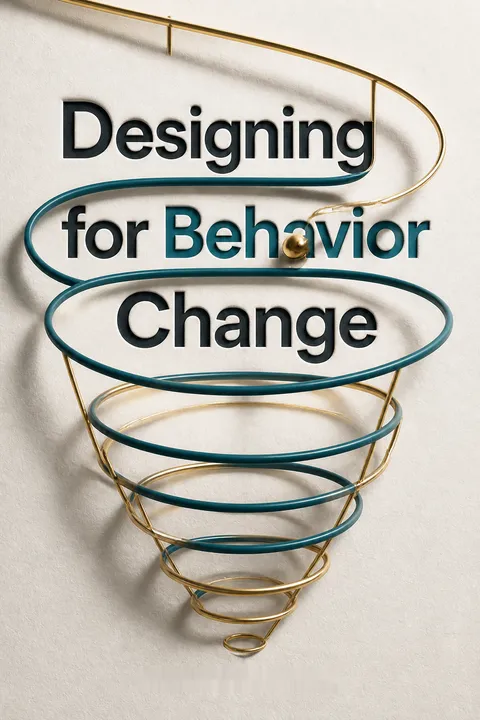

核心要点
Characters
Plot Devices
Analysis
1. 理解大脑如何决定行动,以实现有效的行为改变
大多数时候,我们并不是在有意识地决定下一步要做什么。
双系统理论。 我们的脑部运作分为两种模式:直觉性的系统1(快速、自动、情绪化)和审慎性的系统2(慢速、有意识、理性)。我们日常的大部分行为都由系统1主导,依赖于习惯、本能和认知捷径。系统2只有在面对新情况或我们刻意引导注意力时才会参与。
决策机制:
- 习惯:由环境提示触发的习得性模式
- 直觉反应:基于过去经验的快速评估
- 启发法:简化决策过程的认知捷径
- 有意识的计算:针对陌生或重要决策的审慎分析
理解这些机制,能让产品设计者针对相应的认知过程,实现有效的行为改变。
2. 明确目标结果、行动主体和具体行动
你知道自己想要衡量什么。现在,你需要去衡量它:通过在产品中埋点,或者以其他方式收集关于用户行为和目标结果的数据。
明确的目标。 成功的行为改变产品需要定义清晰的目标:
- 结果:你想要实现的、可衡量的现实世界改变
- 行动主体:你所针对的特定用户群体
- 行动:你希望用户执行的具体行为
用户研究。 进行深入的研究以了解你的目标用户:
- 过去针对类似行动和产品的经验
- 现有的行动动机与阻碍
- 与贵公司或产品的关系
列出多种潜在的行动,并根据影响力、动机、难易程度和成本效益进行评估。选择“最小可行行动”——即能让你测试产品核心假设的最简单版本。
3. 规划行动结构,使其可行且具吸引力
将其精简为最小可行行动。
简化与定制。 将目标行动分解为独立的步骤,并优化每一步:
- 让步骤简单直接
- 确保步骤看起来容易完成
- 创造“微小的胜利”以积累势头
- 提供清晰的成功指标
减轻用户负担。 寻找以下机会:
- 将部分流程自动化
- 使用智能默认设置
- 将重复的行动转化为习惯
制定一份行为计划,描绘出用户从不行动到持续改变行为的理想路径。该计划将作为产品开发的蓝图,并有助于识别潜在的障碍。
4. 构建支持目标行为的环境
理想情况下,页面上的行动本身就具有时效性:人们需要立即采取行动,因为存在某种既有的、外部的合理依据——比如4月15日的税收截止日。
动机。 通过以下方式提升用户动机:
- 利用现有的动机
- 利用社会认同和同伴对比
- 从避免损失的角度来阐述益处
提示。 为行动提供清晰的触发点:
- 将提示融入用户的日常环境中
- 使用多样化的提示以防被忽视
- 与现有的日常惯例建立关联
反馈。 建立有效的反馈回路:
- 提供及时、清晰且具指导意义的反馈
- 确保用户在意并能针对反馈采取行动
消除障碍。 识别并解决潜在的阻碍:
- 消除产品内部的干扰因素
- 解决可能阻碍行动的外部因素
5. 做好用户的行动心理准备
改变用户对自己的看法。
自我叙事。 帮助用户建立积极的自我形象:
- 强调过去在相关领域的成功经验
- 将挫折视为可以克服的挑战
- 鼓励用户将自己视为自然而然会采取目标行动的人
行为桥梁。 将新行动与熟悉、积极的体验联系起来:
- 使用类比让新行为感觉更自然舒适
- 强调新行为与用户已成功执行的行动之间的相似性
教育。 策略性地提供核心信息:
- 专注于具有可操作性的知识
- 在临近决策的时刻传递信息
- 避免用不必要的细节让用户无所适从
循序渐进地培养用户的技能,融入微小的挑战,为他们日后应对更困难的行动做好准备。
6. 设计促进行为改变的引人入胜的界面
用户在每个页面上是否有明确的动力继续下去?她当时是否在思考这个动力?
用户故事。 将行为计划转化为具体的用户故事或产品需求,以指导界面设计。
行为策略。 应用心理学原理来优化每一次交互:
- 启动相关的联想
- 利用损失厌恶
- 使用社会对比
- 避免认知超载和选择瘫痪
设计模式。 考虑采用已成熟的行为改变产品设计模式:
- 决策支持工具
- 培养习惯的游戏
- 目标追踪界面
- 社交分享平台
在行为效果与优秀产品设计的一般原则之间取得平衡,确保应用直观、视觉上吸引人且使用愉快。
7. 衡量影响力并迭代优化产品
葛丽丝·霍普说得好:“一次准确的测量抵得上千个专家的意见。”
基准影响力。 为你的目标结果和行动建立清晰的衡量指标。尽可能使用实验方法(如A/B测试)来衡量因果效应。
识别障碍。 分析用户行为以找出瓶颈:
- 使用“创造行动漏斗”来诊断问题
- 将定量数据分析与定性用户研究相结合
制定解决方案。 基于行为洞察开发潜在的改进方案:
- 重新审视“行动-环境-用户”框架
- 应用具体的行为策略来解决已识别的问题
测试与迭代。 衡量每一次重大调整的影响:
- 将测试作为开发流程的常规部分
- 结合定量和定性方法来评估调整效果
根据真实世界的数据持续优化产品,始终将目标结果作为衡量成功的终极标准。
读者评价
《设计改变行为》(Designing for Behavior Change)收获了绝大多数好评,平均评分为4.11/5。读者们称赞它为将行为科学应用于产品设计提供了实用的框架,尽管也有人认为内容有些重复,且篇幅冗长。这本书因其详尽的方法论、学术严谨性以及实际应用价值而备受推崇。许多评论者对CREATE行动漏斗以及与敏捷流程的整合表示赞赏。批评意见则包括写作风格晦涩、对习惯养成的关注不足,以及对行为改变设计中伦理道德问题的探讨有限。
其他人还在读






常见问题
What's Designing for Behavior Change about?
- Focus on Behavior Change: The book explores designing products that effectively change user behavior by applying principles from psychology and behavioral economics.
- Four Phases of Design: It outlines a four-phase process: understanding the mind, discovering the right behavior, designing the product, and refining it based on user feedback.
- Practical Application: Stephen Wendel shares insights from his experience at HelloWallet, emphasizing creating products that help users achieve their goals.
Why should I read Designing for Behavior Change?
- Real-World Impact: The book provides actionable strategies for creating products that can significantly improve users' lives, making it relevant for designers, product managers, and social scientists.
- Evidence-Based Techniques: It is grounded in research, offering evidence-based methods to understand and influence behavior effectively.
- Comprehensive Framework: Readers will gain a structured approach to behavior change, applicable across various domains, from health to finance.
What are the key takeaways of Designing for Behavior Change?
- Behavior Grid: Introduces the Behavior Grid, mapping out 15 ways behaviors can change, helping designers identify effective strategies.
- Behavior Model (B=MAT): Emphasizes the Behavior Model, stating that behavior occurs when motivation, ability, and a trigger converge simultaneously.
- Tiny Habits Method: Discusses the Tiny Habits method, simplifying habit formation by breaking down behaviors into manageable steps.
What is the Behavior Model (B=MAT) in Designing for Behavior Change?
- Three Components: The Behavior Model consists of Motivation (desire to perform the behavior), Ability (capacity to perform the behavior), and Trigger (prompt to act).
- Convergence Required: For a behavior to occur, all three components must be present simultaneously; if one is missing, the behavior is unlikely to happen.
- Practical Application: This model helps designers create interventions ensuring users are motivated, capable, and prompted to take action.
How does Designing for Behavior Change define "Tiny Habits"?
- Simplified Habit Formation: Tiny Habits is a method encouraging users to start with very small, easily achievable behaviors leading to larger changes over time.
- Two-Step Process: Involves scaling back the desired behavior to something manageable and finding an existing routine to serve as a trigger.
- User Empowerment: This approach empowers users by allowing them to experience quick wins, building confidence and encouraging further behavior change.
What is the Create Action Funnel in Designing for Behavior Change?
- Five Stages of Action: Consists of Cue, Reaction, Evaluation, Ability, and Timing, each representing a critical component influencing user action.
- User-Centric Design: Helps designers focus on the user's experience and psychological factors driving behavior, creating more effective products.
- Framework for Analysis: Serves as a framework for analyzing user interactions and identifying potential barriers to action.
How can I apply principles from Designing for Behavior Change to my product?
- Understand Your Users: Begin by deeply understanding your target users, their motivations, and the barriers they face through user research.
- Develop a Behavioral Plan: Create a plan outlining desired actions, outcomes, and steps users need to take, tailored to their specific needs and contexts.
- Iterate and Test: Implement an iterative design process, continuously testing and refining your product based on user feedback and behavioral data.
How does Designing for Behavior Change suggest increasing motivation?
- Leverage Existing Motivations: Identify and highlight users' existing motivations to act, rather than trying to create new ones from scratch.
- Use Rewards: Implement rewards that resonate with users, whether monetary, social, or intrinsic, to encourage action.
- Create Urgency: Frame the action to emphasize immediate benefits or consequences, making it feel more pressing.
What strategies does Designing for Behavior Change suggest for changing existing habits?
- Avoid the Cue: Help users identify and avoid triggers that prompt the unwanted habit, reducing the likelihood of engaging in it.
- Replace the Routine: Encourage users to substitute the unwanted behavior with a new, healthier routine that provides a similar reward.
- Mindfulness Techniques: Promote mindfulness to help users become aware of their habits and make conscious choices to change them.
What is the significance of user personas in Designing for Behavior Change?
- Understanding Users: User personas help designers understand the diverse motivations, experiences, and behaviors of different user groups.
- Tailoring Solutions: Allow for the customization of interventions and product features to better meet the needs of specific user segments.
- Guiding Design Decisions: Serve as a reference point throughout the design process, ensuring user needs remain central to product development.
How does Designing for Behavior Change recommend structuring the action for behavior change?
- Break Down Steps: Decompose the target action into manageable steps that users can easily follow, ensuring clarity and simplicity.
- Automate Where Possible: Identify opportunities to automate parts of the action, reducing the burden on users and increasing the likelihood of completion.
- Provide Feedback: Implement feedback mechanisms that inform users of their progress, reinforcing positive behavior and encouraging continued engagement.
What are some common pitfalls to avoid when designing for behavior change according to Designing for Behavior Change?
- Ignoring User Feedback: Failing to incorporate user feedback into the design process can lead to products that do not meet user needs.
- Overcomplicating the User Experience: Making the product too complex can deter users from taking action; focus on simplicity and clarity.
- Neglecting the Emotional Aspect: Underestimating emotional factors influencing decision-making can hinder product effectiveness.
下载 PDF
下载 EPUB
.epub digital book format is ideal for reading ebooks on phones, tablets, and e-readers.








































