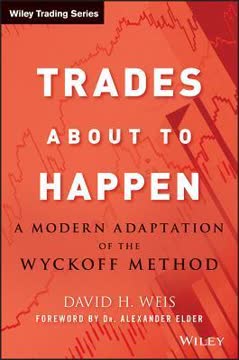
核心要点
1. 怀科夫方法:理解市场力量
成功的盘口阅读(图表阅读)是对力量的研究。
怀科夫核心原则。 理查德·怀科夫的方法强调通过价格和成交量反映的供需力量,去洞察大资金操盘者的意图,而不仅仅是识别图形模式。怀科夫致力于培养交易者的“训练判断力”,关注市场运动背后的逻辑,而非死板的规则。
方法演变。 随着市场波动加剧,怀科夫的方法从盘口阅读发展到图表分析。他强调价格区间、收盘位置和成交量在解读柱状图中的重要性。现代解读多聚焦于积累与分配模型,但怀科夫的初衷是培养交易者的直觉。
现代应用。 现代怀科夫方法结合价格区间、收盘价和成交量,并引入“线的故事”,通过图表上绘制的线条框定并连接价格运动,引导交易者识别促使市场行动的行为。
2. 线的力量:框定市场行为
线是用来被突破的。
线作为指引。 绘制支撑阻力线、趋势线和通道线,是理解市场行为的关键。这些线帮助界定上涨或下跌的角度,识别超买或超卖状态,框定交易区间,并预测潜在的支撑或阻力位。
线的类型。 水平线框定交易区间,趋势线描绘上涨或下跌的角度。通道线由平行线组成,指示潜在的支撑和阻力区域。反向趋势线和通道则揭示可能的趋势反转。
线的故事。 线的真正价值在于它们讲述的价格与成交量行为故事。它们揭示假突破、转折点以及价格与关键水平的互动。识别这些线性关系是怀科夫分析的第一步。
3. 读柱状图:解码价格与成交量
市场如同缓缓旋转的轮子:轮子是否继续同向旋转、停滞或反转,全凭作用于轮毂和轮辋的力量。
顺序评估。 读柱状图需按顺序评估价格走势,将当前价格行为与近期柱状图对比,推断未来方向。这包括考虑价格区间、收盘位置和成交量。
成交量即力量。 成交量衡量买卖的努力程度。将努力与价格涨跌结果对比,揭示主导力量。成交量上升且价格上涨通常看涨,成交量上升且价格下跌则看跌。
情境为王。 成交量需结合价格区间和收盘位置解读。窄幅区间伴随低成交量常示疲软,宽幅区间伴随高成交量则可能预示高潮。整体图表情境,包括趋势线和支撑阻力位,是准确解读的关键。
4. 弹簧:识别假跌破
通过交易弹簧和上冲可以谋生。
弹簧定义。 弹簧是指价格突破交易区间或支撑位后未能持续下跌,反而向上反转。它表明卖方未能维持下跌,为买方创造机会。
弹簧特征。 弹簧常伴随大成交量,反映出推动价格下跌的巨大努力最终失败。跌破后无持续下行是关键信号。上升趋势中的弹簧成功概率更高。
弹簧交易。 当市场跌破支撑线但无下行延续时,形成潜在弹簧。交易者可在突破低点下方设止损做多。弹簧的二次测试,即价格在成交量减弱时回测低点,提供额外买入机会。
5. 上冲:识别假突破
股市中难以接受的巨大悖论是:多数人认为高且风险大的通常会更高,而认为低且便宜的通常会更低。
上冲定义。 上冲是指价格突破前阻力线后未能持续上涨,形成失败的突破。它表明买方未能维持上涨,为卖方创造机会。
上冲特征。 上冲常出现在窄幅区间且收盘弱势,显示需求不足。随后的下跌确认了突破失败。下降趋势中的上冲成功概率更高。
上冲交易。 交易者可在上冲后做空,止损设在突破高点之上。关键是寻找看跌行为变化,如大阴线或跌破关键支撑位。
6. 吸收:衡量趋势强度
有趣且重要的事实是,许多随意观察图表者似乎从未理解:这些关键价格水平不断在支撑与阻力之间转换角色。
吸收定义。 吸收是指买卖压力被克服,趋势得以延续的过程。它涉及市场吸收清算、获利了结和新建仓位。
吸收特征。 吸收区通常表现为支撑上升、成交量增加,以及威胁性价格柱后无下行延续。价格往往紧贴阻力线而不退让。
吸收交易。 识别吸收帮助交易者判断突破是成功还是失败。市场处于吸收阶段时,更可能突破阻力并延续趋势。
7. 盘口阅读:培养直觉判断
对于认为盘口阅读已过时者,我坚信其知识是华尔街交易者最宝贵的装备。
盘口阅读原则。 盘口阅读研究订单流动,洞察市场参与者意图。需判断哪方力量更强,并以冷静精准的态度行动。
波浪图。 怀科夫设计波浪图以可视化买卖波段。通过跟踪波段长度、持续时间、成交量和活动,确定主导趋势并识别潜在趋势变化。
现代应用。 现代盘口阅读利用日内图表和精准的价格/成交量数据。交易者关注价格区间、收盘位置和成交量,解读市场行为。目标是培养交易直觉。
8. 点数图:预测价格目标
当市场乏力无法维持反弹,或对利好消息无反应时,技术上即显疲弱。
点数图基础。 点数图是一种技术分析方法,不考虑时间,仅绘制价格变动。用X表示上涨,O表示下跌。
价格预测。 点数图可用于预测潜在价格目标。通过计算盘整区的格数乘以格子大小,交易者估算未来走势幅度。
怀科夫方法。 怀科夫利用点数图识别积累与分配形态,并结合成交量,提供对市场行为的深入洞察。
9. 砖块图:直观呈现纯价格动作
与剧烈且大幅价格变动相比,成交量稳定且缓慢上涨显示买盘质量更佳。
砖块图基础。 砖块图通过仅绘制达到设定格子大小的价格变动,过滤噪音,呈现更清晰、直观的趋势图。
砖块图优势。 砖块图帮助交易者识别支撑阻力位、趋势线和图形形态,更易发现突破与跌破。
结合成交量。 虽然砖块图聚焦价格动作,结合成交量可进一步确认趋势强度。成交量上升伴随砖块上涨通常看涨,成交量上升伴随砖块下跌则看跌。
读者评价
《即将成交的交易》评价褒贬不一,平均评分为3.70。读者普遍认可其对Wyckoff方法、柱状图与成交量分析以及交易布局的深刻见解,认为有助于理解图表形态与价格行为。然而,也有批评指出内容较为复杂,信息密集且结构偶有混乱。该书因其专业交易员视角而受到赞赏,但对初学者而言可能较为艰难。一些读者认为后半部分偏离了核心主题。总体来看,对于关注Wyckoff理论与技术分析的人来说,这本书仍然值得一读。
其他人还在读
 沉浸式
沉浸式
 沉浸式
沉浸式
 沉浸式
沉浸式
常见问题
1. What is "Trades About to Happen" by David H. Weis about?
- Modern Wyckoff Adaptation: The book is a modern adaptation of the Wyckoff Method, focusing on logical interpretation of price/volume behavior to identify trades about to happen.
- Chart Reading Emphasis: Weis emphasizes the art of reading bar charts and wave charts, rather than relying solely on pattern recognition or rigid models.
- Practical Trading Guidance: The book provides actionable techniques for finding high-probability trades using support/resistance lines, trend lines, springs, upthrusts, and absorption.
- Integration of Classic and Modern: Weis blends Richard Wyckoff’s original teachings with his own adaptations, making the method relevant for today’s volatile markets.
2. Why should I read "Trades About to Happen" by David H. Weis?
- Learn a Proven Method: The book teaches a time-tested approach to market analysis that has helped traders for over a century.
- Develop Intuitive Judgment: Weis aims to help readers develop a trader’s intuition, moving beyond mechanical systems to understand market behavior.
- Applicable to All Markets: The Wyckoff/Weis approach works across stocks, futures, forex, and all timeframes, making it versatile for any trader.
- Actionable, Not Theoretical: The book is filled with real chart examples and step-by-step logic, making it practical for immediate application.
3. What are the key takeaways from "Trades About to Happen"?
- Focus on Price/Volume: The most important information comes from analyzing price range, position of the close, and volume in context.
- Lines Tell the Story: Drawing support/resistance lines, trend lines, and channels is essential for framing price action and identifying trade opportunities.
- Springs and Upthrusts Matter: Recognizing and trading springs (false breakdowns) and upthrusts (false breakouts) can be highly profitable.
- Absorption and Tests: Understanding absorption (where one side overcomes the other) and tests of breakouts/breakdowns is crucial for timing entries and exits.
4. How does David H. Weis adapt the Wyckoff Method in "Trades About to Happen"?
- Modern Chart Tools: Weis introduces adaptations like the Weis Wave and uses modern charting software to analyze intraday and daily price movement.
- Emphasis on Bar-by-Bar Reading: He moves away from rigid accumulation/distribution models, focusing instead on logical, sequential reading of price bars.
- Flexible Line Drawing: Weis encourages creative, context-driven placement of lines and channels, rather than strict geometric patterns.
- Real-Time Application: The book provides tools and techniques suitable for today’s high-volatility, fast-moving markets.
5. What is the importance of drawing lines (support, resistance, trend lines) in Weis’s method?
- Framework for Analysis: Lines help frame trading ranges, trends, and turning points, making price/volume behavior more visible and actionable.
- Highlight Key Battles: Support and resistance lines reveal where buyers and sellers are struggling for dominance, often leading to trade setups.
- Dynamic vs. Static Lines: Trend lines and channels (dynamic) show the angle of advance/decline, while horizontal lines (static) mark key price levels.
- Axis and Reverse Lines: Weis introduces concepts like axis lines (levels that alternate between support and resistance) and reverse trend lines for deeper analysis.
6. How does "Trades About to Happen" define and use the concepts of springs and upthrusts?
- Spring Definition: A spring is a false breakdown below support that fails to follow through and reverses upward, signaling a potential long trade.
- Upthrust Definition: An upthrust is a false breakout above resistance that fails to follow through and reverses downward, signaling a potential short trade.
- Action Signals: Both are considered “action signals” that work across all timeframes and can be used for both short-term and long-term trades.
- Context Matters: The probability of success for springs and upthrusts depends on the underlying trend, volume, and broader market context.
7. What is absorption, and how does Weis identify it in "Trades About to Happen"?
- Absorption Defined: Absorption is the process where one side (buyers or sellers) overcomes the opposing force, often seen as the market “soaking up” supply or demand.
- Key Clues: Rising supports, increased volume at resistance, lack of follow-through after threatening bars, and prices pressing against a level without giving ground.
- Shallow Corrections: Absorption areas are typically shallow and often occur at the top of trading ranges before breakouts.
- Failed Springs/Upthrusts: In absorption, failed springs or upthrusts can indicate which side is absorbing the other’s pressure.
8. How does Weis approach reading bar charts and volume in "Trades About to Happen"?
- Sequential Evaluation: Weis advocates comparing each price bar to recent bars, focusing on range, close position, and volume to infer likely next moves.
- Effort vs. Reward: He stresses comparing the effort (volume) to the reward (price movement) to judge which side is dominant.
- Ease of Movement: Wide bars with strong closes indicate ease of movement; narrow bars or lack of follow-through suggest exhaustion or absorption.
- Volume Nuance: Weis warns against simplistic volume formulas, emphasizing context and the interplay between price and volume.
9. What is the Weis Wave, and how does it relate to Wyckoff’s tape reading?
- Weis Wave Overview: The Weis Wave is a modern adaptation of Wyckoff’s tape reading chart, plotting cumulative volume on price waves rather than time-based bars.
- Wave Analysis: It helps identify the strength of buying and selling waves, showing where demand or supply is entering the market.
- Filtering Noise: By focusing on waves, the Weis Wave filters out much of the noise and highlights significant shifts in market behavior.
- Practical Application: The Weis Wave can be used on any timeframe and is especially useful for intraday traders seeking to spot turning points.
10. How does "Trades About to Happen" use point-and-figure and Renko charts?
- Filtering Price Action: Both chart types filter out minor price fluctuations, making major support/resistance and congestion areas more visible.
- Projections and Targets: Point-and-figure charts are used to make price projections based on the width of congestion areas.
- Volume and Time Integration: Weis shows how to incorporate volume and time per brick/column into Renko and point-and-figure charts for deeper tape reading.
- Modern Adaptation: The book demonstrates how these classic tools can be adapted for today’s markets using modern data and software.
11. What are the most actionable trading setups in "Trades About to Happen"?
- Springs and Upthrusts: Trading false breakouts and breakdowns at the edges of trading ranges.
- Absorption Areas: Entering trades when one side is clearly absorbing the other, often before a breakout.
- Tests of Breakouts/Breakdowns: Buying pullbacks to breakout areas or selling rallies to breakdown areas after high-volume moves.
- Shortening of the Thrust: Recognizing when price waves make less progress, signaling trend exhaustion and potential reversals.
12. What are the best quotes from "Trades About to Happen" and what do they mean?
- “All trades leave indelible tracks on price and volume charts. David focuses on them—and these charts speak to him.” (Dr. Alexander Elder, Foreword) – Emphasizes the importance of reading the market’s own language rather than relying on external indicators.
- “You can make a living by trading springs and upthrusts.” (Weis) – Highlights the practical profitability of mastering these two setups.
- “Successful tape reading [chart reading] is a study of Force. It requires ability to judge which side has the greatest pulling power and one must have the courage to go with that side.” (Wyckoff, quoted by Weis) – Underlines the core principle of aligning with the dominant market force.
- “A true teacher is one who knows (and makes known) the New, by revitalizing the Old.” (Confucius, quoted by Weis) – Reflects Weis’s mission to modernize and teach Wyckoff’s classic methods for today’s traders.








































