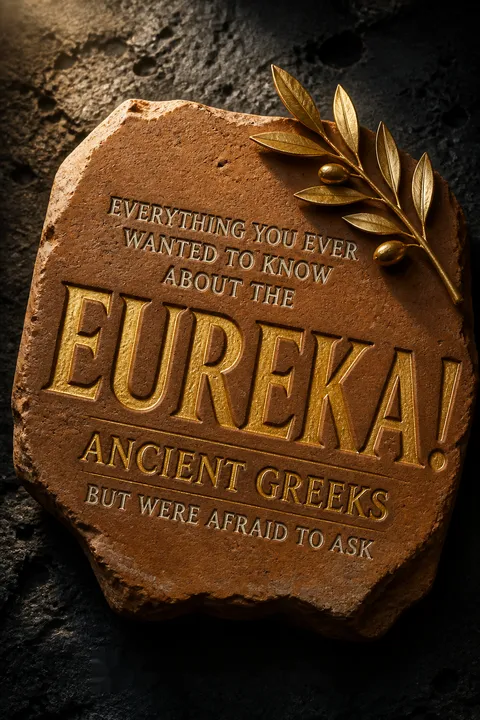

Key Takeaways
1. The Fragmented Greek World: A Tapestry of Independent Poleis
So to talk of 'ancient Greece' and 'ancient Greeks', is not to imply a politically unified country and people as in, for instance, 'England' and 'the English', but people who spoke Greek and lived, in their own separate, autonomous Greek communities, not only on the Greek mainland but also (in time) in Asia Minor (roughly modern Turkey), the Black Sea, the Near East, parts of North Africa, southern Italy, Sicily and the coastal regions of southern France (Gaul) and Spain.
A mosaic of communities. Unlike the unified Roman Empire, ancient Greece was a collection of fiercely independent city-states, or poleis, each with its own laws, customs, and political systems. This fragmentation meant constant competition and frequent warfare among them, even as they shared a common language, culture, and gods. This inherent disunity often led to shifting alliances and a pragmatic approach to foreign policy, where self-interest frequently trumped any notion of pan-Hellenic solidarity.
Early civilizations. The Bronze Age saw the rise of two significant cultures: the Minoans of Crete and the Mycenaean Greeks. The Minoans, a non-Greek people, developed impressive palace-centered societies like Knossos, thriving on trade across the eastern Mediterranean. Their undeciphered Linear A script managed a command economy. Following the Thera volcanic eruption, Mycenaean Greeks, a warrior and trading people, took over Crete, adapting Linear A into Linear B, an early form of Greek used for administrative records.
Collapse and rebirth. Around 1200 BC, the Bronze Age civilizations collapsed due to mysterious reasons, ushering in the "Dark Ages" where writing and complex societal structures were lost. However, the Greek language, Olympian gods, and heroic myths survived. From this period of decentralization, the independent polis emerged as the dominant form of social and political organization, fostering a unique environment for innovation and intense local identity, rather than a unified national one.
2. Foundational Innovations: Alphabet, Olympics, and Early Thought
The alphabet was Greece's most influential export: within forty years it had spread throughout the Greek world and made literacy for everyone a real possibility.
Literacy for all. Around 750 BC, Greeks adapted the Phoenician consonantal alphabet, crucially adding vowels, creating the world's first truly alphabetic script. This innovation democratized literacy, making it accessible beyond a priestly or bureaucratic class. Laws could now be written and displayed publicly, challenging aristocratic power and laying the groundwork for broader civic participation. Early Greek writing, often found on pottery, reveals a society engaged in poetry, drinking, and social commentary.
The spirit of competition. The Olympic Games, starting in 776 BC with a single 200-meter race, embodied the Greek passion for agon (competition) and individual glory. Winning, often at any cost, was paramount, and second place was considered a loss. These games, initially local, quickly expanded into pan-Hellenic celebrations, attracting competitors from across the Greek world and fostering a shared cultural identity, even amidst political fragmentation.
Seeds of philosophy. The 8th century BC also saw the emergence of foundational texts like Hesiod's Theogony, which provided a secular, albeit often contradictory, account of the gods' origins and the cosmos. Unlike other cultures with sacred texts and priestly authority, Greeks were accustomed to diverse interpretations of their myths, fostering a culture of public debate and rational inquiry. This intellectual freedom paved the way for early philosophers like Thales, who sought natural, rather than supernatural, explanations for the world's phenomena.
3. Homer's Enduring Narrative: Shaping Greek Identity and Values
Homer's picture of human and divine activity was hugely influential in shaping Greek values.
Epic tales, lasting impact. Homer's Iliad and Odyssey, composed around 700 BC, became the definitive historical and cultural reference points for Greeks for a millennium. The Iliad explored the complexities of heroic honor (time), wrath, and the human cost of war, while the Odyssey celebrated cunning, endurance, and the longing for home. These epics provided a shared narrative of a heroic past, influencing Greek art, literature, and ethical thought, even as they depicted gods with very human flaws and motivations.
Myth versus history. The question of whether the Trojan War, as depicted by Homer, was a real historical event remains debated. While archaeological sites like Hisarlik (Troy) show evidence of destruction, and linguistic links exist between Homeric names and Hittite documents, the scale and details of Homer's narrative are likely poetic embellishments. Homer, an oral poet, drew on centuries of tradition, weaving Bronze Age elements into his Iron Age context, creating a compelling story rather than a factual historical record.
Values in daily life. Beyond the grand narratives of heroes, Hesiod's Works and Days offered a contrasting, yet equally influential, perspective on peasant life. It emphasized the relentless toil of agriculture, the importance of hard work, and practical wisdom. Hesiod also highlighted the dual nature of Greek social values: the necessity of community cooperation alongside fierce individual competition, and the importance of helping friends while harming enemies—a principle that permeated Greek ethics and politics.
4. Athens' Democratic Experiment: Citizen Power and its Perils
The word 'democracy' derives from the ancient Greek demos, 'citizen body', and kratos, 'power'.
Laying the groundwork. Athens' journey to democracy began with Solon's reforms in 594 BC, which addressed social unrest by abolishing debt-slavery, widening political participation based on wealth rather than birth, and establishing a council and people's courts. Though not a full democracy, Solon's measures created a foundation. The subsequent tyranny of Pisistratus, while unconstitutional, brought stability, public works, and cultural flourishing, including the Dionysia festival, further unifying Athens.
Cleisthenes' revolution. In 508 BC, Cleisthenes, an Alcmaeonid, introduced radical reforms that established the world's first democracy. He reorganized citizens into ten tribes, each composed of demes (villages) from different regions of Attica, ensuring broad representation. The Boule (Steering Committee) of 500, selected by lot from these demes, prepared business for the Ekklesia (Assembly), where all male citizens over 18 made final decisions. This system aimed to break down aristocratic power and empower the demos.
Radical and direct. Athenian democracy was direct, not representative. Citizens actively participated in law-making and judicial processes, with juries (dikasts) numbering in the hundreds or thousands. Officials were largely chosen by lot, serving for one year, and subject to intense public scrutiny and accountability, with severe penalties for incompetence. This system, while unique in its commitment to citizen sovereignty, was also susceptible to demagoguery and the swift, often emotional, will of the people, as seen in the trials of generals or the ostracism of prominent figures like Themistocles.
5. The Peloponnesian War: A Struggle for Hegemony
Our constitution does not copy the laws of neighbouring states; we are rather a pattern to others than imitators ourselves.
Clash of titans. The Peloponnesian War (431-404 BC) was not a typical inter-polis skirmish but a protracted, brutal conflict between two great alliances: the land-based Spartan League and the naval Athenian Empire. Athens, under Pericles, celebrated its unique democratic values and cultural achievements, epitomized by the Parthenon and his famous Funeral Oration. However, Pericles also acknowledged Athens' imperial rule as a "tyranny" over its allies, a reality that fueled resentment and revolts.
The brutal logic of power. Thucydides, the war's contemporary historian, meticulously documented the conflict, focusing on human agency and political realities rather than divine intervention. His Melian Dialogue starkly illustrated the Athenian belief that "the strong do what they have the power to do, and the weak accept whatever they have to accept," justifying their imperial aggression. This pragmatic, often ruthless, approach to power politics defined the war's trajectory and the moral compromises made by both sides.
War's devastating impact. The war brought immense suffering, including the devastating plague in Athens that killed Pericles and a third of the population. It also exposed the fragility of democratic ideals, leading to moral decay, as Thucydides observed in the Corcyraean civil war, where traditional values were inverted. The Athenian disaster in Sicily, a hubristic attempt to expand their empire, proved a turning point, ultimately leading to Athens' defeat, the demolition of its Long Walls, and a brief, violent oligarchic rule by the Thirty Tyrants.
6. Socrates' Ethical Revolution: The Unexamined Life
for a human, the unexamined life is not worth living.
A new philosophical focus. While earlier Greek thinkers pondered the nature of the cosmos, Socrates (469-399 BC) shifted philosophy's focus to human ethics and the pursuit of goodness. He famously claimed ignorance, using his "dialectic method" of questioning to expose others' false claims to knowledge and to clarify the true meaning of concepts like courage and justice. His relentless questioning challenged conventional wisdom and the sophists' relativistic views, asserting that true happiness stemmed from virtue and self-knowledge.
Paradoxes of virtue. Socrates' philosophy was characterized by provocative paradoxes, such as "No one goes/does wrong intentionally" and that a punished criminal is happier than an unpunished one. He believed that if one truly understood what was good, they would automatically pursue it, and that punishment, by correcting moral ignorance, ultimately led to greater happiness. These ideas, though often counter-intuitive, underscored his conviction that virtue was knowledge and that moral failings were a result of ignorance.
Trial and execution. Socrates' unconventional methods and association with controversial figures like Alcibiades, combined with the volatile political climate after Athens' defeat, led to his trial in 399 BC on charges of impiety and corrupting the youth. Despite his powerful "Apology" (defense speech), he was found guilty and sentenced to death by hemlock. His execution, meticulously documented by Plato, became a defining moment in Western thought, symbolizing the conflict between individual intellectual freedom and the authority of the state.
7. Macedonian Ascendancy: Philip, Alexander, and the Hellenistic Age
Philip knew that the Greek poleis would, as usual, jockey among themselves in relation to him, changing sides at will in accordance with their own perceived interests, but would never unite significantly against him.
The rise of a new power. While Greek city-states continued their internecine conflicts, a new power emerged to the north: Macedon. Philip II, a brilliant military and diplomatic strategist, transformed Macedon from a collection of warlords into a formidable kingdom with an unbeatable professional army, featuring the innovative sarisa phalanx and advanced siege engines. He shrewdly exploited Greek disunity, expanding his influence through alliances, conquests, and even bribery, despite the fervent warnings of Athenian orators like Demosthenes.
End of an era. Philip's decisive victory over a combined Greek force at Chaeronea in 338 BC marked the end of independent city-state politics in Greece. He established the League of Corinth, uniting all Greek states (except Sparta) under his leadership, ostensibly to launch a pan-Hellenic war of revenge against Persia. His assassination in 336 BC, however, thrust his 20-year-old son, Alexander, onto the stage, who ruthlessly consolidated power, crushing Theban revolt and preparing for the grand Persian campaign.
Alexander's vision and legacy. Alexander the Great's conquests, from Asia Minor to India, created a vast Hellenistic empire, spreading Greek language and culture across the East. A Graecophile who admired Homer and Achilles, Alexander sought eternal glory, but also aimed for a fusion of East and West, incorporating local elites and customs, much to the resentment of his Macedonian loyalists. His death in 323 BC, at age 33, led to the empire's division among his generals, ushering in the Hellenistic Age, characterized by absolutist monarchies and the widespread influence of Greek culture.
8. Alexandria's Intellectual Hub: Science, Scholarship, and Philosophy
Ptolemy would rival the Egyptians as well, and decided to use their fabulous wealth to make Alexandria the greatest cultural and scientific centre in the world.
A new center of learning. Following Alexander's death, his general Ptolemy established the Ptolemaic dynasty in Egypt, making Alexandria its capital. This city became the preeminent intellectual and cultural hub of the Hellenistic world, rivaling Athens. Ptolemy founded the Alexandrian Museum, the world's first scientific research institute, and the Alexandrian Library, the largest collection of ancient Greek texts, attracting the finest minds of the era.
Pioneering scientific inquiry. Alexandria fostered groundbreaking advancements in science and mathematics. Euclid systematized geometry, Archimedes made monumental contributions to mathematics and physics (e.g., hydrostatics, calculating pi), and Aristarchus proposed a heliocentric model of the universe centuries before Copernicus. Doctors like Herophilus and Erasistratus advanced anatomy and physiology through human dissection, making discoveries about the heart, brain, and nervous system.
Preserving the past. The Alexandrian Library's scholars were instrumental in preserving classical Greek literature. They pioneered textual criticism, creating authoritative editions of works that became the basis for all subsequent copies. Their relentless pursuit of manuscripts, even through questionable means, ensured that a vast body of Greek knowledge survived. This era also saw the widespread adoption of koine (common) Greek as the lingua franca across the Hellenistic world, further cementing Greek cultural influence.
9. Rome's Cultural Conquest: Preserving the Greek Legacy
Captured Greece took captive its savage victor and Brought culture to unsophisticated Latium.
The inevitable conquest. Over two centuries, the rising power of Rome gradually absorbed the Hellenistic kingdoms. Through a series of Macedonian Wars, Rome dismantled Philip V's kingdom, humiliated Antiochus IV, and eventually, with Octavian's conquest of Egypt in 30 BC, brought the last Ptolemaic ruler, Cleopatra, to an end. Southern Greece became the Roman province of Achaea in 27 BC, marking the formal end of Alexander's independent empire.
Cultural absorption. Despite military conquest, Rome was profoundly captivated by Greek culture. As the poet Horace famously noted, "Captured Greece took captive its savage victor." Roman elites flocked to Greece for education, and Greek literature, philosophy, art, and architecture became central to Roman cultural life. Roman generals liberally looted Greek art, bringing it to Rome and transforming Roman aesthetic tastes.
A lasting synthesis. The Romans, while adapting Greek culture to their own world, also played a crucial role in its preservation. Scholars like Cicero and Varro translated and integrated Greek thought into Latin, ensuring its transmission. The eventual Graeco-Roman-Christian synthesis, with the New Testament written in koine Greek, laid the deep cultural, intellectual, and educational foundations of the West. Without the dedicated efforts of Alexandrian scholars and later Roman and Byzantine copyists, much of the ancient Greek literary heritage, from Homer to the philosophers, would have been lost to time.
Review Summary
Eureka! receives mixed reviews, averaging 3.53/5. Many readers appreciate its accessible, bite-sized format covering Ancient Greek history, making it ideal for newcomers. Positive reviewers praise its engaging analogies, wit, and broad coverage of culture, philosophy, and history. However, a recurring criticism is its disjointed, fragmented structure, with sections feeling disconnected and lacking depth. Some readers wanted more substance, particularly in later chapters. It is widely regarded as a solid introductory primer, though those with existing knowledge may find it too superficial.
People Also Read



Download PDF
Download EPUB
.epub digital book format is ideal for reading ebooks on phones, tablets, and e-readers.








































