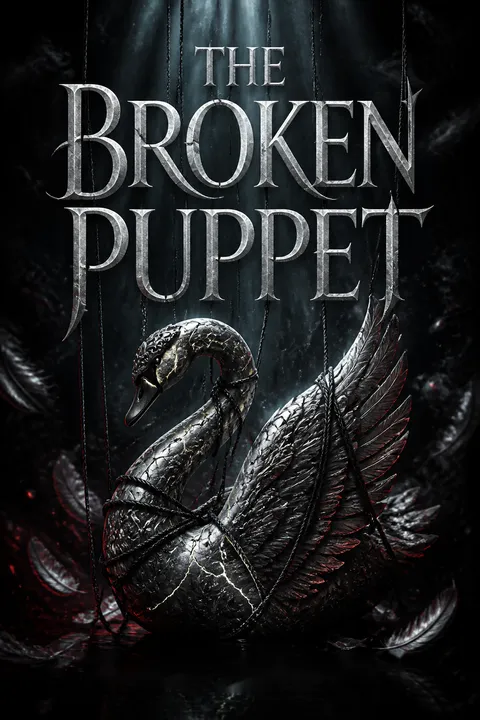

Plot Summary
Black Friday's Shadows Return
Every night, Madison relives the darkest moments of her childhood, haunted by the hands that stole her innocence. The secrets her mother and a mysterious man, Lucan, whispered about—her being the "Silver Swan"—cast long shadows across her psyche. Each memory, sharp as glass, keeps her locked in a cycle of distrust and self-loathing. Her solace is sparse: clutching the ragged puppet gifted at birth, and the hope of one day claiming power over her own narrative. The resounding voice in the darkness, "You're not your own," shapes not only her nightmares, but her struggle for autonomy. Even as the pain threatens to break her, a smoldering desire for vengeance flickers—Madison swears to never again be anyone's puppet.
Running From The Kings
Traumatized and suffocated by the relentless secrets lurking in Riverside's shadows, Madison convinces her only true friend, Tatum, to run with her. Their friendship, built on mutual loneliness, forges quickly into a fierce alliance. Madison can no longer endure the suffocating lies of The Elite Kings and those meant to protect her—especially after learning of Bishop's violence and seeing a future written in blood. Their plan is desperate and haphazard, a frantic dash for freedom that requires ditching all traces—their phones, their identities, even their pasts. But Madison knows the Kings' reach is vast, and she must rely on her wits and allies to vanish from their grasp, or risk being just another expendable secret.
Library Secrets Unveiled
Hoping for guidance, Madison approaches Miss Winters, her school librarian, only to unearth more peril. Miss Winters confesses to knowing about Madison's true legacy as the "Silver Swan," warning her about the Kings and the deadly fate of those before her. She helps Madison connect with a shady contact, Benny, who can provide forged documents—but at a steep price. The urgency grows as Madison sees how everyone spins their own web of half-truths: the price of knowledge is steep and isolation, deeper. Secrets intertwine, loyalty shifts, and even those who seem to help—like Miss Winters—are driven by fear for their own lives. Madison understands she has no savior, only herself.
Forged Identities, Fleeing Truth
With new identities—Amira and Atalia Maddox—Madison and Tatum become sisters on paper and ghosts to their past. The disorienting thrill of evasion mingles with anxiety; survival demands shrewd calculation. A streetwise forger offers aliases and warnings, and every step reinforces an agonizing reality: they are hunted. Even as they board an outbound plane, dread gnaws at their resolve. For Madison, creating a new self can't erase the past or the people trailing them. Each discarded phone, each false name, feels less like freedom and more like exile—not only from danger, but from any hope of trust or belonging.
Exile On Distant Shores
In New Zealand, Madison and Tatum try desperately to build normalcy—crashing on the shores of a stunning, unfamiliar world. Their beachside flat is beautiful, but the cost of escape isn't cheap: Madison struggles to find work and meaning, while Tatum plunges into bartending and dancing to numb her own pain. As days pass and the threat feels less immediate, Madison senses the cost of her trauma morphing into numbness. Her connection to Tatum grows complicated by mutual dependency and spiraling self-destruction. Even in paradise, Madison cannot outrun what's inside her. Her search for identity—on canvas and skin—remains haunted by the roles others forced upon her.
New Zealand Nights
A stranger named Jesse, tattoo artist and owner of "Inked," offers Madison a job and a spark of hope. There, she channels her pain into art, finding fleeting purpose and distraction. Tatum fragments herself through liquor, joints, and one-night stands—her bravado masking a deep ache for belonging. Nights on the sand blur into laughter and tears, as the two women face their ghosts. The sweetness of new beginnings battles the certainty that pursuit—and pain—are not far behind. A call from home, a sinister voice, shatters Madison's illusions: Bishop has found her. Once again, running becomes not just an act of desperation, but a necessity for survival.
Encounters And Revelations
When predatory men corner Madison and Tatum, their world erupts in violence. At the edge of violation, salvation arrives in Bishop's lethal hands, exposing Madison's inextricable link to the violence she despises. Their "rescue" is no deliverance—Bishop drags them back into the fold, torn between gentle concern and cold dominance. Madison oscillates between craving control and submitting to a force she both hates and desires. Questions roil: where is Tillie, what happened to Ally, what does her legacy as Silver Swan—marked for death by the Kings—truly mean? Every answer Bishop or Nate provides is laced with threats, half-truths, and emotional blows.
Unbreakable Ties That Bind
Back in the Hamptons, Madison confronts a complex tapestry of abandonment, manipulation, and conditional family love. Her father can provide no clarity, only cycles of cold protection. The secrets in the family book—about girls killed, lines not to be crossed, and the purpose of Swans and Lost Boys—unravel Madison's sense of safety. She learns she survived only by accident or defiance; her mother's death is another wound, impossible to parse. In the halls of the Kings' power, loyalty is a double-edged sword: siblings become strangers, and friends potential betrayers. Madison's own mind isn't even safe territory.
Pulled Back To Chaos
Despite minor attempts at rebellion, Madison is drawn back into a world ruled by violence, erotic manipulation, and relentless mind games. Her basic agency is gone; the Kings decree her fate. Allies and enemies—the lines blur. A party at her house spirals into a haze of sex, anger, and self-destruction, culminating in a dangerous, hallucinatory ride with Brantley that teeters between seduction and literal threat. All around her, trust corrodes. When forced to relive childhood memories, Madison's fragile identity splinters further, especially as the Kings reveal how deep her past ties run and how every event is linked to their poisonous legacy.
The Elite Kings' Court
Within the Kings' circle, Madison navigates a treacherous court of power plays and coded violence. Her connection to Bishop is electric—domineering, antagonistic, fueled by equal parts passion and resentment. Each interaction with the Kings, especially Bishop, Nate, Brantley, and the rest, exposes deeper truths about dominance and vulnerability, and the price of being a "pawn" in their game. The Kings' world is lush in influence but barren of true loyalty. To protect herself and those she might love, Madison learns to mimic their ruthlessness, but at cost to her soul. Forbidden love threads through every exchange, leaving her more entangled each day.
Unearthing Lost Memories
The arrival of Damon—her enigmatic twin, a "Lost Boy"—shatters Madison's constructed reality. Communication is stilted; he is a shadowy reflection with his own coded trauma and secrets. The revelation that she is not the biological child of her parents, that her family is rooted in a legacy designed to destroy girls like her, guts Madison's sense of worth. Damon's presence evokes both kinship and an unspeakable threat: as an "Alpha Lost Boy," he was trained for violence, and even his help comes at tremendous risk. Madison yearns to trust him, but fear—planted from birth—snakes through every word.
Twin Truths Collide
As Madison and Damon uncover the depth of the Kings' machinations, the mythic history of "Silver Swans" and "Lost Boys" comes brutally to light. The Swans, marked as dangerous solely for being women born to lines of power, are hunted from birth—often by their own kin. Damon, split by his own monstrous conditioning, symbolizes Madison's internal conflict: between innocence clinging to hope, and darkness clinging to survival. Mysterious figures like Katsia manipulate them toward secret ends, while the boundaries between enemy and family disintegrate. Revelation brings not peace, but an urgent need to defend what remains of herself and her twin.
Blood, Loyalty, Betrayal
The betrayal runs bone-deep: adopted origins, secret murders, alliances within alliances. Madison—always the pawn—is now the key to more than her own fate. The court of the Kings, especially Bishop and Nate, unravel. Old passions ignite, jealousy rages, and the brotherhood turns inwards. Madison's relationships with everyone—Tatum, her fathers, Bishop, Nate, Damon—twist under the knowledge of what has been done and what may yet be done to her. Loyalty, eroticism, rage, and trauma mix until identities blur. Acts of revenge escalate, and the stakes become mortal: only the strongest, and most ruthless, survive.
Shadows Of The Past
The narrative rushes toward its emotional and violent crux: Madison's fragmented memories coalesce into crushing clarity. She recalls the abuser, Lucan, and the orchestrated atrocities inflicted on her and others—many of whom are in the Kings' orbit. In confronting Lucan face to face, Madison's pain explodes into righteous violence and she claims agency with blood. Yet, the catharsis doesn't heal: her relationships with Brantley, and her new understanding of the interwoven traumas all the Kings hide, reveal a legacy of shared suffering. Madison is both vindicated and devastated—violence as the only answer left to her.
The Puppetmaster Unmasked
As the last veils lift, characters scramble to make sense of whose side they are—were—on. The true wielders of power, like Hector and Katsia, manipulate events with chilling calculation, sacrificing pawns for lineage and legacy. Madison is forced to accept the final truth: her existence as Silver Swan was orchestrated from before birth, her suffering the byproduct of ancient, inhuman order. She confronts allies as traitors, and enemies as broken children. In the face of brutality, ironically, she achieves a measure of power herself by breaking cycles of secrecy. But at what cost? Home is nowhere. Safety is an illusion.
All Secrets Bared
Hector reveals that Madison and Damon are not only twins but adopted, their heritage and destinies manipulated from afar as testaments to an unbreakable, tragic lineage. The nuances of names, power, and legacy—Venari, Vitiosus, Ditio, Divitae, Rebellis, Malum—all unspool, and their implications bring only further mud to the blood. The final act of vengeance—Lucan's death—does not redeem the past. Madison and the other "Kings" stagger under their own traumas; even love, when it flourishes, is shadowed by the scars of survival. Bitter knowledge replaces every childish hope.
Vengeance And Becoming
The novel culminates as Madison, Bishop, and Brantley share in the literal and symbolic destruction of the man who made them puppets. The catharsis is intoxicating, but it is not victory. In the aftermath—awash in blood—Madison is no longer anyone's pawn; she is her own king, for better or worse. She accepts her darkness, her past, and the inherent violence it bred into her. Even love, in Bishop's arms, is laced with pain and dominance—a sign that deep wounds change, but never disappear. The cost is innocence, but the reward is a forged, unbreakable selfhood.
Home In Ruins
In the final pages, Madison surveys what's left of her life: trust severed, family shattered, love stormy and uncertain, but herself no longer easily broken. Survival has become identity; revenge, a grim kind of rebirth. The Kings' era is not ended, but irrevocably changed by her refusal to be merely a puppet. Her home, both literal and emotional, stands as both sanctuary and battleground. Madison, reborn through trauma, steps into her next story as neither swan nor puppet—but something ruthless, beautiful, and entirely her own.
Analysis
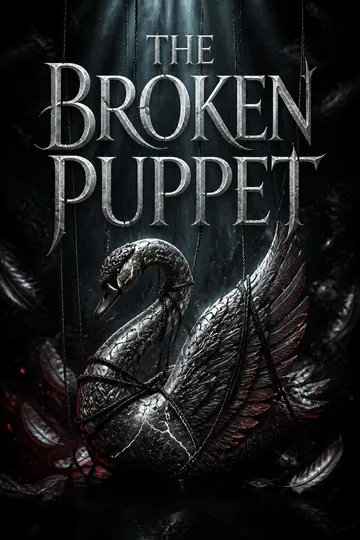
In The Broken Puppet, Amo Jones explores the violence—literal, emotional, and sexual—at the heart of toxic legacy and identity. The novel is a fever dream of shifting alliances, blurred moral lines, and survival against impossible odds. Jones cannily uses the mythology of the Elite Kings Club not just as a secret society but as a metaphor for how power, privilege, and patriarchy breed and sustain intergenerational trauma. Madison's journey is shaped by the collision of love and horror: she wants to belong, to trust, to be safe, but every path to intimacy is mined with betrayal or pain. Her ultimate transformation—from pawn to queen-by-force—is neither clean nor redemptive. Instead, Jones asks what survival looks like for those raised to be sacrifices: how much violence must they absorb or unleash to claim autonomy? In a #MeToo era, the novel's explicit depiction of grooming, complicity, and the long arc of vengeance resonates with the grim reality that for many, reclaiming life after trauma is not about healing, but about becoming the architect of your own legend—no matter how many castles must burn.
Review Summary
The Broken Puppet receives mixed reviews, averaging 4.05/5. Many readers praise its addictive, dark mystery and the compelling chemistry between Madison and Bishop, calling it unputdownable. However, frequent criticisms center on Madison's frustrating decision-making — particularly her refusal to read a book containing crucial answers despite constant urging. Critics also note inconsistencies, editing errors, and a lack of meaningful plot progression. Fans of dark romance appreciate the suspense and intrigue, while detractors find the story repetitive and the heroine insufferably naive.
People Also Read
Characters
Madison Montgomery
Madison is the emotional and narrative center, born as a target—"the Silver Swan"—and marked for death by the secret society of the Kings. Her early sexual trauma, inflicted by Lucan, scars every relationship, leaving her oscillating between bitter vulnerability and fierce self-protection. Madison is both haunted and driven by memories she tries desperately to repress. As she navigates exile, betrayal, fleeting joys, and the ever-present threat of manipulation—romantic, erotic, and violent—she stubbornly constructs autonomy from her pain. Her journey is a battle to reclaim agency, even knowing true safety is a myth. Ultimately, Madison is shaped by the fires she survives, emerging both broken and formidable, no longer content to be anyone's pawn.
Bishop Vincent Hayes
Bishop is both savior and captor; his desire to claim and protect Madison is inseparable from a penchant for violence and dark sexuality. As the son and heir to the Kings' true ruler, he is conditioned to power, secrecy, and emotional detachment—but Madison ruptures his armor. Their love is toxic, tempestuous, at times devastating, yet Bishop's vulnerability (revealed through nightmares and need) complicates his bravado. Driven by duty, rage, and longing, Bishop oscillates between absolute control and desperate intimacy. His role as puppetmaster is challenged, and he is forced to reckon with his own traumas and the costs of his lineage.
Tatum Sinclair
Tatum is Madison's lifeline—a fierce, loyal companion whose flippant humor thinly veils her own pain and isolation. Quick to plunge into self-destruction, drugs, and casual sex, she is haunted by a hunger to belong. Tatum supports Madison unconditionally, even at great risk, but her wildness is both a shield and a trap. Torn between love and self-abandonment, especially with Nate, Tatum's arc explores the collateral damage of brutality—the way some survive by becoming harder, and others, by burning even brighter.
Nate Riverside
Nate represents another kind of forbidden love: both "brother" to Madison (by adoption and Kings' hierarchy) and would-be lover. He is witty, reckless, charming, and dangerous, deeply embedded in the Kings' world but increasingly conflicted by the cost of loyalty. Nate's protection of Madison is fraught with his own darkness, self-doubt, and the pain of loving in a world where every bond is a weapon. When faced with the revelation of their adoption and intertwined traumas, Nate becomes both a source of solace and a reminder of impossible choices. His emotional turmoil, especially regarding Tillie and Tatum, underscores the novel's theme of love that endangers as much as it saves.
Damon / Daemon Montgomery
Madison's secret twin brother, Damon is both mirror and menace: a Lost Boy, trained for violence and emotional detachment from birth, yet inexplicably drawn to protect Madison. His struggle with language and identity reflects his deeper fractures, especially his inability to feel in "normal" ways—a born weapon striving for humanity. Damon's conflicted existence—torn by Katsia's control and the demands of the Kings—embodies the novel's meditation on nature, nurture, and forgiveness. His relationship to Madison is a lifeline as well as a latent threat, their twinness exploring the limits of kinship, trust, and choice.
Brantley Vitiosus
Brantley's relationship with Madison is forged in trauma: as children, they were both abused and manipulated by Lucan. His outward animosity conceals pain and self-loathing, lashing out because intimacy is dangerous. When confronted with Madison's recovered memory and the monstrous reality of their shared past, Brantley's narrative transforms—from foe to vengeful sibling-in-arms. The catharsis of Lucan's death brings peace, but not wholeness. His journey exemplifies survivors' complex negotiations with rage, guilt, and the yearning to reclaim stolen power.
Lucan Vitiosus
Lucan is the specter at the heart of Madison's trauma: once a trusted family "friend," actually a predator and key player in the Kings' cycle of abuse and repression. His manipulations torture Madison and Brantley into acting as his puppets—"Silver" to his "Puppetmaster." Even in death, Lucan lingers as a symbol of generational evil—the violence that is known and yet colluded with by entire communities. Madison's final act of vengeance against him is both a personal exorcism and a symbol of a world sickened by secrets.
Katsia
Descendant of the original protector of the Silver Swans and founder of the Lost Boys, Katsia is elegant, chilling, and calculating. Her motives are entwined with the deepest lore of the Kings—sometimes protector, sometimes orchestrator of violence. She holds power through knowledge, manipulating the board from afar and controlling Damon as both weapon and son. Katsia's ambiguity—haunted by old wars, clinging to ancient rules, driven by her own pain—embodies the seductive, poisonous allure of history when wielded without compassion.
Hector Hayes
Bishop's father and ultimate power behind the Kings, Hector is ice incarnate: charming when it suits, merciless when crossed. His priorities are the dynasty and its preservation, with no sentimentality for love or suffering unless it touches his own. When Madison is brought before him, Hector's only concern is maintaining order and the secrecy of the Kings. He is a study in authority: frightening not for his violence alone, but for his belief that all this is "natural." His revelations about Madison's origins are as casual as they are devastating.
Tillie
Tillie—Nate's former love and Madison's friend—haunts the narrative as the disappeared girl whose fate is treated with chilling ambivalence. The lack of answers about Tillie's fate, and others like her, illustrates how disappearances and pain ripple out, changing everyone in proximity. Tillie represents the loss, silence, and unresolved grief that flow beneath the Kings' world, and her reappearance at a critical moment reminds Madison (and the reader) of how survival is never neat, and closure never complete.
Plot Devices
Narrative Structure and Multiple Timelines
Amo Jones uses non-linear storytelling—flashbacks, diary entries, hallucinatory perspectives from twin/other characters—to mirror Madison's traumatized state and the labyrinthine politics of the Kings. The structure places the reader in Madison's disoriented shoes: memory is unreliable, chronology fluid, and the border between past and present, self and other, is always porous. This device blurs the lines between victim and perpetrator, love and hate, and forces the reader to question every character's motive and reliability.
Erotic Power Dynamics and Consent
Nearly every relationship—especially between Madison and Bishop—is dramatized through explicit, power-laden sexual encounters. These scenes are less about romance than about battle: domination, submission, reclamation of body and autonomy, with the safe word often ignored. The ambiguity of consent both shocks and reflects the characters' desperate attempts to control the only thing they can—their own pleasure, or pain. This device interrogates the thin line between empowerment and exploitation in toxic environments.
Multigenerational Trauma and Legacy
The propulsive force behind the plot is the cruel, secret order of the Elite Kings: daughters are hunted, sons are hardened, and every generation is both player and victim. The motif of "cycles"—initiation, adoption, murder, vengeance—ground the mythology in the inevitability of repetition. The "book"—a cryptic diary chronicling the past—provides both clues and curses. By weaving lineage and fate into every event, the story suggests trauma is not just a personal wound, but a communal, inherited bloodstain.
Unreliable Narrators and Knowledge as Power
Characters guard, distort, or weaponize information. The reader, like Madison, is forced to piece together truth from fragments—and to accept that closure may be impossible. The frequent use of other languages (Latin), cryptic riddles, and hidden documents reinforces that to survive, one must always read "between the lines." Even apparent allies (teachers, parents, lovers) are sketched in shadow, with their full allegiance or history impossible to know until the final moment—if then.
Violent Catharsis and Cyclical Revenge
From visceral sexual domination to literal battles and murder, violence is the only permanent marker in a shifting world. Final acts—Madison's stabbing of Lucan, Brantley's vengeance, Bishop's executions—are not clean victories, but re-negotiations of selfhood. Each act of bloodshed is followed by emotional reckoning, interrogating whether justice or transformation is possible through pain. Instead of resolution, cycles continue; those once broken or manipulated become, themselves, the wielders of violence.
Elite King's Club Series Series
About the Author


Download PDF
Download EPUB
.epub digital book format is ideal for reading ebooks on phones, tablets, and e-readers.








































