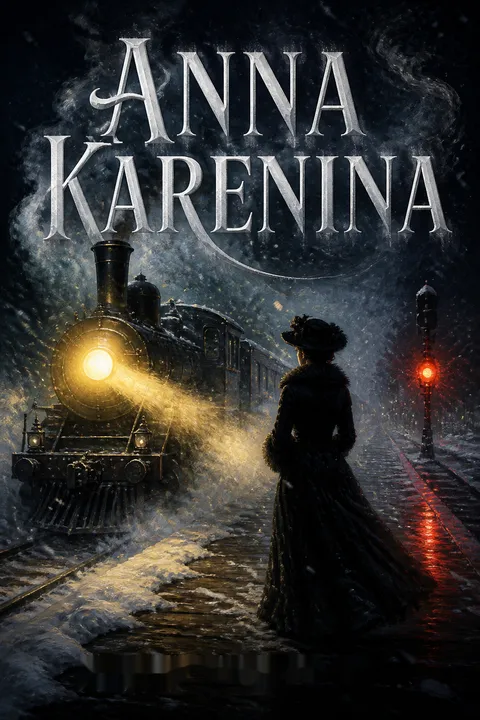
Resumen de la trama
Conflictos Familiares y Expectativas Sociales
El hogar de los Oblonsky se encuentra sumido en el caos tras el descubrimiento por parte de Dolly de la infidelidad de su esposo Stepan. Esta conmoción doméstica refleja un tema más amplio: el choque entre las expectativas sociales y los deseos personales. Stepan, un hombre encantador pero imperfecto, lucha por conciliar sus acciones con las normas sociales de fidelidad y deber familiar. Este conflicto prepara el terreno para la exploración de la novela sobre las complejidades del matrimonio y las presiones sociales que moldean las relaciones personales.
La Llegada de Anna y las Dinámicas Sociales
Anna Karenina llega a Moscú para mediar entre su hermano Stepan y su esposa Dolly. Su belleza y encanto cautivan a quienes la rodean, incluido el conde Vronsky, a quien conoce en la estación de tren. La llegada de Anna introduce una nueva dinámica, pues sus interacciones con Vronsky presagian futuras complicaciones. Este capítulo destaca la intrincada red social y el impacto del atractivo personal en las relaciones, anticipando los conflictos centrales de la novela.
La Persecución de Vronsky y el Dilema de Anna
El conde Vronsky se enamora apasionadamente de Anna y la persigue con fervor. Anna, dividida entre sus deberes como esposa y madre y su creciente atracción hacia Vronsky, enfrenta una lucha interna profunda. Este capítulo explora temas de pasión, tentación y las limitaciones impuestas por la sociedad, preparando el escenario para la crisis moral y emocional que Anna vivirá. La tensión entre deseos personales y obligaciones sociales se convierte en un tema central.
La Vida Rural de Levin y sus Luchas Internas
Konstantin Levin, un terrateniente, lidia con sus sentimientos hacia Kitty y su anhelo de una vida con propósito. Desilusionado por la vida urbana y las expectativas sociales, Levin encuentra consuelo en la sencillez del campo. Sus conflictos internos reflejan temas más amplios de identidad, propósito y la búsqueda de autenticidad en un mundo en constante cambio. El camino de Levin contrasta con las complejidades urbanas de otros personajes, ofreciendo un contrapunto en la exploración de la pasión y las restricciones sociales.
El Desamor de Kitty y las Preocupaciones Familiares
Kitty Shtcherbatsky, herida por la indiferencia de Vronsky y la propuesta de Levin, enfrenta la presión de su familia para hacer un buen matrimonio. Su enfermedad y su tormento emocional evidencian las expectativas sociales impuestas a las mujeres y el costo personal de cumplirlas. Este capítulo aborda temas de amor, rechazo y presiones sociales, ilustrando el paisaje emocional de las jóvenes en la época y el impacto de las normas sociales en sus decisiones personales.
El Conflicto Interno y la Máscara Social de Anna
Anna lucha por mantener su fachada social mientras lidia con sus sentimientos hacia Vronsky. Su conflicto interno se agrava por las expectativas sociales y su rol como esposa y madre. Este capítulo explora la tensión entre deseos personales y obligaciones sociales, resaltando el creciente sentimiento de atrapamiento de Anna y las consecuencias inminentes de sus decisiones. Su historia refleja la lucha del individuo contra las normas sociales.
La Siega de Levin y su Paz Interior
Levin se sumerge en la labor física de segar junto a los campesinos, hallando una profunda sensación de paz y conexión con la tierra. Esta experiencia contrasta con sus anteriores dificultades para gestionar su finca mediante métodos agrícolas modernos. La simplicidad y el ritmo del trabajo le brindan claridad de propósito y un escape temporal de sus dilemas personales, especialmente sus sentimientos no resueltos hacia Kitty.
La Agitación y Decisión de Anna
Tras confesar su aventura a su esposo, Alexey Alexandrovitch, Anna se ve envuelta en una tormenta de emociones. Se siente atrapada entre su amor por Vronsky y sus responsabilidades como madre. La fría y calculadora reacción de su esposo la deja aislada y desesperada. Anna contempla abandonar todo para estar con Vronsky, pero la idea de dejar a su hijo la atormenta, sumiéndola en una parálisis indecisa.
La Resolución y Control de Karenin
Alexey Alexandrovitch, esposo de Anna, inicialmente devastado por la confesión, decide preservar su posición social y el control de la situación. Opta por no divorciarse, prefiriendo mantener la apariencia de matrimonio por el bien de su reputación y de su hijo. La decisión de Karenin está motivada por evitar un escándalo público y castigar a Anna negándole la libertad que busca con Vronsky.
Las Ambiciones de Vronsky y la Influencia de Anna
El conde Vronsky se debate entre su amor por Anna y su carrera militar. Su relación con Anna le ha dado notoriedad, pero también amenaza sus ambiciones. El conflicto interno de Vronsky se intensifica al compararse con el éxito de sus pares, evidenciando sus propias aspiraciones estancadas. Este capítulo examina el impacto de la influencia de Anna en la vida de Vronsky, mientras él lucha por equilibrar deseos personales, expectativas sociales y ambiciones profesionales.
Las Luchas Domésticas y Revelaciones de Levin
Levin se siente insatisfecho con la vida matrimonial, culpando la educación superficial de su esposa Kitty por su falta de intereses profundos. A pesar de amarla, se frustra con la rutina doméstica y su propia incapacidad para mantener independencia. Este conflicto interno resalta la tensión entre deseos personales y roles sociales, mientras Levin navega las complejidades del matrimonio y la identidad propia.
El Anhelo de Anna y las Restricciones Sociales
Anna sufre por la separación de su hijo Seryozha y las limitaciones sociales que le impiden verlo. Sus intentos de reconexión son frustrados por la frialdad de la condesa Lidia Ivanovna y las rígidas estructuras sociales. La lucha interna de Anna refleja su anhelo de felicidad personal y el juicio social que enfrenta, ilustrando la naturaleza trágica de su situación.
La Partida de Vronsky y su Tormento Interno
Tras la trágica muerte de Anna, Vronsky se consume en culpa y desesperación. Decide unirse a la guerra de Serbia, esperando hallar alguna forma de redención. Su madre, la condesa Vronsky, está profundamente preocupada por su estado mental, pues él parece indiferente a la vida. La decisión de Vronsky no nace del patriotismo, sino del deseo de escapar de su tormento interno. Su encuentro con Sergey Ivanovitch en la estación revela su vacío emocional tras la pérdida de Anna.
El Despertar Espiritual de Levin
Levin lucha con preguntas existenciales y el sentido de la vida. A pesar de sus búsquedas intelectuales, no halla respuestas en la filosofía ni en la ciencia. Es a través de una sencilla conversación con un campesino que experimenta un despertar espiritual. Comprende que vivir para Dios y el bien da sentido a la vida. Esta revelación le aporta paz y propósito, transformando su visión de la vida y sus relaciones.
La Desesperación y Decisión Final de Anna
Anna es atormentada por los celos y la creencia de que Vronsky ya no la ama. Su estado mental se deteriora mientras se siente cada vez más aislada e incomprendida. En un momento de desesperación, decide acabar con su vida arrojándose bajo un tren. Su muerte es la culminación de sus luchas internas y las presiones sociales que enfrentó, dejando a Vronsky y a quienes la rodean sumidos en profundo dolor y arrepentimiento.
La Vida Familiar y las Luchas Personales
Levin navega las complejidades de la vida familiar, equilibrando sus responsabilidades como esposo y padre con su búsqueda personal de sentido. Su relación con Kitty y su hijo le brinda alegrías y retos, mientras aprende a conciliar sus inquietudes intelectuales con las demandas de la vida familiar. El crecimiento de Levin destaca la importancia del amor, la familia y la realización personal frente a las incertidumbres de la vida.
Personajes
Stepan Arkadyevitch Oblonsky
Stepan, o Stiva, es un funcionario gubernamental carismático cuya simpatía oculta sus defectos personales. Su aventura con la institutriz desestabiliza a su familia, evidenciando su incapacidad para conciliar las expectativas sociales con sus deseos personales. Su personaje encarna las ambigüedades morales y las presiones sociales de la época, actuando como catalizador para la exploración de la fidelidad y la dinámica familiar en la novela.
Anna Arkadyevna Karenina
Anna es una mujer cautivadora dividida entre su amor por Vronsky y sus responsabilidades como esposa y madre. Su lucha interna refleja la tensión entre deseos personales y restricciones sociales. Anna encarna los temas centrales de la novela: pasión, tentación y las consecuencias de desafiar las normas sociales, mostrando la complejidad de su situación y la naturaleza trágica de sus decisiones.
Alexey Alexandrovitch Karenin
Karenin, esposo de Anna y alto funcionario, prioriza su posición social y reputación. Tras la confesión de Anna, decide mantener la apariencia del matrimonio, motivado por evitar escándalos y castigarla. Su personaje representa las expectativas sociales y la rigidez moral contra las que Anna lucha, sirviendo de contrapunto a su naturaleza apasionada.
Conde Alexey Vronsky
Vronsky es un oficial carismático dividido entre su amor por Anna y sus ambiciones militares. Su relación con Anna le otorga notoriedad pero también pone en riesgo su futuro. Su conflicto interno refleja el tema más amplio de la pasión frente al deber, mientras navega las complejidades del amor y la ambición, ilustrando el impacto del atractivo personal en las relaciones y las expectativas sociales.
Konstantin Dmitrievitch Levin
Levin es un terrateniente que enfrenta preguntas existenciales y el sentido de la vida. A través de un despertar espiritual, encuentra paz y propósito en la fe. Su camino refleja la búsqueda universal de significado y la lucha por reconciliar el entendimiento intelectual con la creencia espiritual. Su personaje destaca la importancia del amor, la familia y la realización personal.
Ekaterina Alexandrovna Shtcherbatskaya (Kitty)
Kitty es la esposa de Levin, quien aporta alegría y desafíos a su vida. Su relación con Levin y su hijo subraya la importancia del amor, la familia y la realización personal. Su personaje encarna los temas de la vida doméstica y las complejidades del matrimonio y la maternidad.
Darya Alexandrovna Oblonskaya (Dolly)
Dolly, cuñada de Anna, administra su hogar y a sus hijos con fortaleza a pesar de la infidelidad de su esposo. Sus interacciones con Levin y sus hijos revelan las complejidades de la vida familiar y los sacrificios personales que realiza por el bienestar de su familia. Su historia subraya el deber familiar y la lucha personal, ofreciendo una perspectiva realista sobre el amor y la fidelidad.
Sergey Ivanovitch Koznishev
Sergey Ivanovitch se involucra profundamente en el movimiento político que apoya a los pueblos eslavos. Encuentra propósito y realización en su trabajo, reflejando el interés social y político en la guerra de Serbia. Su personaje destaca las dinámicas políticas y sociales de la época y el papel de los intelectuales en la formación de la opinión pública.
Recursos Narrativos
Expectativas Sociales y Deseos Personales
La novela explora la tensión entre las expectativas sociales y los deseos personales, especialmente en el contexto del matrimonio y las relaciones. Personajes como Anna y Levin enfrentan las limitaciones impuestas por la sociedad, evidenciando la lucha por conciliar la felicidad personal con las obligaciones sociales. Este tema funciona como un recurso narrativo central que impulsa las acciones de los personajes y la exploración de la novela sobre el amor, la fidelidad y la identidad.
Conflicto Interno y Tormento Emocional
La novela profundiza en los conflictos internos y el tormento emocional que experimentan personajes como Anna y Levin. Estas luchas internas impulsan la trama, influyendo en sus decisiones y relaciones. La exploración del conflicto interno sirve como recurso narrativo para ilustrar la complejidad de las emociones humanas y el impacto de las presiones sociales en las elecciones personales, añadiendo profundidad a los personajes y sus historias.
Búsqueda de Sentido y Redención
La novela aborda la búsqueda de sentido y redención de los personajes ante las incertidumbres de la vida. El despertar espiritual de Levin y la decisión de Vronsky de unirse a la guerra reflejan la búsqueda universal de propósito y la lucha por reconciliar el entendimiento intelectual con la creencia espiritual. Este tema actúa como recurso narrativo central que impulsa las acciones de los personajes y la exploración de la novela sobre el amor, la pérdida y el crecimiento personal.
Análisis
"Anna Karenina" de León Tolstói es una profunda indagación sobre la condición humana, que se adentra en las complejidades del amor, la fidelidad y las expectativas sociales. A través de las vidas entrelazadas de sus personajes, la novela examina la tensión entre deseos personales y obligaciones sociales, destacando las trágicas consecuencias de desafiar las normas establecidas. La historia de Anna funciona como una advertencia sobre los peligros de la pasión sin control, mientras que el camino de Levin ofrece un contrapunto, enfatizando la búsqueda de sentido y autenticidad. La magistral representación del conflicto interno y el tormento emocional por parte de Tolstói resuena en los lectores, ofreciendo reflexiones eternas sobre la experiencia humana y la búsqueda universal de realización y comprensión.
También leyeron








Preguntas frecuentes
Synopsis & Basic Details
What is Anna Karenina about?
- Tragic love and societal pressures: Anna Karenina explores the destructive power of passionate love when it clashes with the rigid social conventions of 19th-century Russia. It follows the story of Anna, a married woman, who embarks on an affair with a dashing officer, Count Vronsky, and the devastating consequences that follow.
- Parallel stories of love and life: The novel also intertwines the story of Konstantin Levin, a landowner searching for meaning in life, love, and family. His journey contrasts with Anna's, highlighting different paths to happiness and fulfillment.
- Exploration of Russian society: Through these characters, Tolstoy provides a panoramic view of Russian society, examining themes of family, marriage, adultery, social class, and the search for personal and spiritual truth.
Why should I read Anna Karenina?
- Complex characters and relationships: Tolstoy masterfully crafts characters with deep psychological complexity, whose motivations and actions are both compelling and relatable. The novel explores the nuances of human relationships, from passionate love to familial duty.
- Profound themes and insights: The novel delves into timeless themes of love, morality, social expectations, and the search for meaning, offering profound insights into the human condition. It raises questions about the nature of happiness, the consequences of choices, and the individual's place in society.
- Rich historical and cultural context: Set in 19th-century Russia, the novel provides a vivid portrayal of the social, political, and cultural landscape of the time. It offers a glimpse into the lives of the Russian aristocracy and peasantry, and the societal pressures that shaped their experiences.
What is the background of Anna Karenina?
- 19th-century Russia: The novel is set against the backdrop of 19th-century Russia, a time of social and political change. The aristocracy, with its rigid social codes and expectations, is a central focus, as are the lives of the peasantry and the emerging middle class.
- Social and political context: The novel reflects the social and political issues of the time, including the debate over serfdom, the role of women in society, and the influence of Western ideas on Russian culture. These issues provide a rich context for the characters' personal struggles and choices.
- Cultural and intellectual influences: Tolstoy's work is influenced by the intellectual and philosophical currents of his time, including realism, existentialism, and the search for spiritual truth. These influences are reflected in the novel's exploration of human nature and the meaning of life.
What are the most memorable quotes in Anna Karenina?
- "Happy families are all alike; every unhappy family is unhappy in its own way.": This opening line encapsulates the novel's exploration of the complexities of family life and the unique nature of individual suffering. It sets the stage for the contrasting stories of the Oblonskys and the Karenins.
- "If you love me, as you say, do so that I may be at peace.": This quote reveals Anna's desperate desire for stability and acceptance in her relationship with Vronsky. It highlights her internal conflict and her yearning for a love that can provide her with peace.
- "It's not love. I've been in love, but it's not that. It's not my feeling, but a sort of force outside me has taken possession of me.": This quote captures Levin's intense and overwhelming feelings for Kitty, highlighting the powerful and often irrational nature of love. It also reflects his struggle to understand his own emotions and their impact on his life.
What writing style, narrative choices, and literary techniques does Leo Tolstoy use?
- Realism and psychological depth: Tolstoy's writing is characterized by its realism and its deep exploration of the characters' inner lives. He uses detailed descriptions and interior monologues to reveal their thoughts, feelings, and motivations, creating a sense of psychological depth and complexity.
- Multiple perspectives and narrative shifts: The novel employs multiple points of view, shifting between the perspectives of Anna, Levin, and other characters. This technique allows Tolstoy to explore different facets of the story and to provide a more comprehensive view of the social and emotional landscape.
- Symbolism and motifs: Tolstoy uses recurring symbols and motifs, such as trains, horses, and the color red, to enhance the novel's themes and to foreshadow future events. These elements add layers of meaning to the narrative and contribute to its overall richness and complexity.
Hidden Details & Subtle Connections
What are some minor details that add significant meaning?
- The broken paper-knife: Early in the novel, Anna plays with a paper-knife, a seemingly insignificant detail. Later, this same paper-knife is clutched in her hands as she grapples with her emotions, symbolizing her internal turmoil and the sharp edges of her situation.
- The red bag: Anna's red bag, which she carries with her, becomes a recurring symbol of her passionate nature and her desire for freedom. It is present at key moments in her story, such as her first meeting with Vronsky and her final moments at the train station.
- The music of the decanter-women: Stepan Arkadyevitch's dream of decanter-women singing "Il mio tesoro" foreshadows the seductive and ultimately destructive nature of his desires. The music, initially delightful, becomes a symbol of his inability to find true happiness.
What are some subtle foreshadowing and callbacks?
- The crushed railway worker: The accidental death of a railway worker at the beginning of the novel foreshadows Anna's tragic end. The incident, initially presented as a minor event, becomes a chilling reminder of the destructive forces at play in the story.
- Levin's dream of a peasant: Levin's dream of a peasant who is both repulsive and familiar foreshadows his later spiritual awakening. The dream, initially unsettling, becomes a symbol of his connection to the land and the simple truths he seeks.
- The mention of "come round": Matvey's phrase "she will come round" when referring to Dolly's anger becomes a recurring motif, highlighting the cyclical nature of relationships and the possibility of reconciliation, even in the face of conflict.
What are some unexpected character connections?
- Levin and Vronsky: Despite their vastly different backgrounds and values, Levin and Vronsky share a common thread of passion and a desire for authenticity. Their brief encounter at the skating rink reveals a mutual respect and a sense of shared humanity, despite their rivalry for Kitty's affection.
- Anna and Dolly: Though their lives take different paths, Anna and Dolly share a deep bond as sisters-in-law. Their conversations reveal a mutual understanding of the challenges and complexities of marriage and motherhood, highlighting the shared experiences of women in 19th-century Russia.
- Stepan Arkadyevitch and Levin: Despite their contrasting personalities and lifestyles, Stepan and Levin share a genuine friendship. Their conversations reveal a mutual respect and a sense of shared humanity, despite their differing views on life and society.
Who are the most significant supporting characters?
- Darya Alexandrovna (Dolly) Oblonskaya: As Stepan's wife, Dolly provides a counterpoint to Anna's passionate nature. Her struggles with infidelity and family life highlight the challenges faced by women in 19th-century Russia. She serves as a voice of reason and compassion, offering a grounded perspective on the novel's exploration of love and marriage.
- Sergey Ivanovitch Koznishev: Levin's intellectual half-brother, Sergey, represents the world of ideas and public service. His conversations with Levin highlight the tension between intellectual pursuits and practical concerns, and his involvement in the Slavonic movement reflects the political and social issues of the time.
- Princess Betsy Tverskoy: A fashionable socialite and Anna's cousin, Betsy embodies the superficiality and hypocrisy of Petersburg society. Her interactions with Anna reveal the social pressures and expectations that contribute to Anna's tragic fate.
Psychological, Emotional, & Relational Analysis
What are some unspoken motivations of the characters?
- Anna's desire for freedom: Beneath her passionate love for Vronsky, Anna yearns for freedom from the constraints of her marriage and societal expectations. Her actions are driven by a desire to live authentically and to experience love without the limitations imposed on her.
- Levin's search for meaning: Levin's immersion in rural life and his intellectual pursuits are driven by a deep-seated desire to find meaning and purpose in a world that often seems chaotic and meaningless. His actions are motivated by a longing for authenticity and a connection to something larger than himself.
- Karenin's need for control: Karenin's rigid adherence to social norms and his desire to maintain control over his life and his family stem from a deep-seated fear of vulnerability and a need to preserve his public image. His actions are driven by a desire to maintain order and to avoid any hint of scandal.
What psychological complexities do the characters exhibit?
- Anna's self-destructive tendencies: Anna's passionate nature and her inability to reconcile her desires with societal expectations lead her down a path of self-destruction. Her internal conflict and her growing sense of despair contribute to her tragic fate.
- Levin's intellectual and emotional struggles: Levin's intellectual curiosity and his deep-seated emotional needs often clash, leading to internal conflict and a sense of dissatisfaction. His journey is marked by a constant struggle to reconcile his reason with his emotions and his spiritual beliefs.
- Vronsky's internal conflict: Vronsky's desire for love and his ambition for social success create an internal conflict that he struggles to resolve. His actions are often driven by a need to maintain his social standing and to avoid any hint of weakness or vulnerability.
What are the major emotional turning points?
- Anna's confession to Karenin: Anna's confession to her husband marks a turning point in her life, as it forces her to confront the consequences of her actions and to acknowledge the impossibility of her situation. This moment sets the stage for her descent into despair and her eventual tragic end.
- Levin's experience mowing with the peasants: Levin's experience mowing with the peasants marks a turning point in his spiritual journey, as he finds a sense of peace and connection to the land. This experience leads him to question his previous assumptions about life and to seek a more authentic path.
- Vronsky's realization of Anna's despair: Vronsky's realization of Anna's despair and her fear of death marks a turning point in his understanding of their relationship. He is forced to confront the consequences of his actions and to acknowledge the depth of her suffering.
How do relationship dynamics evolve?
- Anna and Vronsky's relationship: Their relationship evolves from passionate love to a complex web of dependence, jealousy, and resentment. The initial intensity of their feelings is gradually replaced by a sense of entrapment and a growing awareness of the impossibility of their situation.
- Levin and Kitty's relationship: Their relationship evolves from a tentative courtship to a deep and enduring love. They learn to navigate the challenges of marriage and parenthood, finding strength and solace in their shared experiences and mutual understanding.
- Stepan and Dolly's relationship: Their relationship evolves from a state of turmoil and infidelity to a fragile reconciliation. They learn to coexist, but their relationship is marked by a sense of resignation and a lack of genuine intimacy.
Interpretation & Debate
Which parts of the story remain ambiguous or open-ended?
- Anna's motivations: While the novel provides insight into Anna's thoughts and feelings, her motivations remain complex and open to interpretation. Her actions are driven by a combination of passion, despair, and a desire for freedom, but the precise nature of her inner turmoil remains ambiguous.
- Levin's spiritual journey: Levin's spiritual awakening is presented as a personal and subjective experience, leaving the reader to question the nature of his faith and its implications for his life. The novel does not offer a definitive answer to his existential questions, but rather presents a complex and nuanced exploration of his search for meaning.
- The ending: The novel's ending, with Anna's tragic death and Levin's newfound peace, leaves the reader to ponder the ultimate meaning of their lives and the consequences of their choices. The open-ended nature of the conclusion invites multiple interpretations and encourages reflection on the novel's central themes.
What are some debatable, controversial scenes or moments in Anna Karenina?
- Anna's adultery: Anna's affair with Vronsky is a central point of controversy, raising questions about morality, fidelity, and the nature of love. Readers often debate whether Anna is a victim of societal constraints or a flawed individual who makes destructive choices.
- Karenin's forgiveness: Karenin's decision to forgive Anna is a complex and controversial moment, raising questions about the nature of forgiveness, religious piety, and the limits of human compassion. Some readers see his actions as a sign of genuine magnanimity, while others view them as a form of self-serving control.
- Levin's views on society and progress: Levin's criticisms of modern society and his embrace of traditional values are often debated, raising questions about the nature of progress, the role of the individual in society, and the value of tradition. His views are often seen as a reflection of Tolstoy's own conservative beliefs.
Anna Karenina Ending Explained: How It Ends & What It Means
- Anna's suicide: Anna's suicide is a tragic culmination of her internal struggles and the societal pressures she faced. It is an act of despair and a final attempt to escape the impossible situation in which she finds herself. Her death serves as a powerful commentary on the destructive nature of passion and the limitations imposed on women in 19th-century Russia.
- Levin's spiritual awakening: In contrast to Anna's tragic end, Levin's spiritual awakening offers a glimmer of hope and a path towards personal fulfillment. His newfound faith and his commitment to family and rural life suggest that meaning and purpose can be found in simple, authentic experiences.
- The contrast between Anna and Levin: The contrasting fates of Anna and Levin highlight the different paths available to individuals in the face of life's challenges. Anna's story serves as a cautionary tale about the dangers of defying societal norms, while Levin's journey offers a more optimistic vision of personal growth and spiritual fulfillment.




Descargar PDF
Descargar EPUB
.epub digital book format is ideal for reading ebooks on phones, tablets, and e-readers.








































