
Resumen de la trama
La Puerta Misteriosa
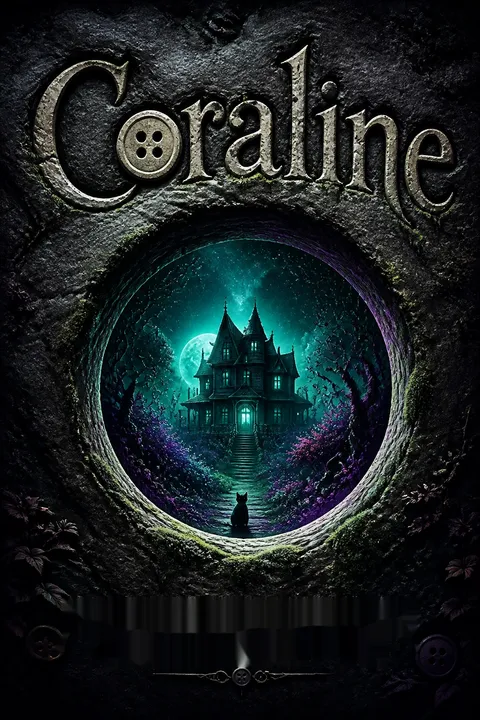
Tras mudarse a una nueva casa, Coraline Jones encuentra una puerta misteriosa que conduce a un muro de ladrillos. Movida por la curiosidad, explora su entorno y conoce a vecinos excéntricos como Miss Spink y Miss Forcible, así como a un hombre peculiar que entrena un circo de ratones. En un día lluvioso, Coraline vuelve a abrir la puerta y descubre que ahora se abre a un mundo paralelo que refleja su propio hogar. En este mundo habitan sus "otros" padres, con botones en lugar de ojos, que parecen ofrecerle todo lo que Coraline desea. A pesar de la atracción, algo no encaja, y Coraline percibe un peligro oculto bajo la superficie.
El Otro Mundo
En el otro mundo, todo parece perfecto al principio. Sus otros padres son atentos y le ofrecen comidas deliciosas, a diferencia de sus padres reales, que suelen estar ocupados. Coraline se siente tentada por las maravillas de este mundo, como un jardín mágico y un teatro dirigido por los equivalentes de sus vecinos. Sin embargo, la insistencia de la otra madre para que Coraline se quede para siempre, con botones cosidos en sus ojos, revela la naturaleza siniestra de este lugar. Coraline comprende que debe escapar, pero la otra madre está decidida a retenerla.
La Madre de Ojos de Botón
Coraline descubre que la otra madre, una entidad cambiante, ha atrapado a sus padres reales y planea conservar a Coraline para sí misma. La verdadera forma de la otra madre es monstruosa, y su mundo comienza a desmoronarse, mostrando su naturaleza artificial. A Coraline se le presenta un desafío: encontrar las almas de tres niños fantasmas y de sus padres para ganar su libertad. Armada con una piedra con un agujero, regalo de sus vecinos del mundo real, Coraline se dispone a descubrir las almas ocultas y burlar a la otra madre.
Los Niños Fantasmas
En su búsqueda, Coraline se topa con los espíritus de tres niños que fueron atraídos al otro mundo y a quienes les robaron sus almas. Ellos la advierten sobre el engaño de la otra madre y la instan a encontrar sus almas para liberarlos. Usando la piedra, Coraline localiza las almas escondidas en diferentes partes de la casa. Cada hallazgo la acerca a comprender el poder de la otra madre y el peligro que enfrenta. Las historias de los niños alimentan la determinación de Coraline para derrotar a la otra madre y salvar a sus padres.
La Guía del Gato
A lo largo de su aventura, Coraline está acompañada por un misterioso gato negro que puede hablar en el otro mundo. El gato le brinda consejos crípticos y la ayuda a sortear los peligros que encuentra. La advierte sobre las trampas de la otra madre y la anima a ser valiente e ingeniosa. La presencia del gato es a la vez reconfortante y desconcertante, pues parece saber más de lo que revela. Coraline aprende a confiar en sus instintos y en la guía del gato mientras se prepara para el enfrentamiento final con la otra madre.
El Desafío Final
Con las almas de los niños fantasmas y el conocimiento del paradero de sus padres, Coraline se enfrenta a la otra madre en un duelo definitivo. Usa su astucia para engañar a la otra madre y hacer que abra la puerta al mundo real, permitiéndole escapar. El mundo de la otra madre se derrumba mientras Coraline huye, pero no sin que la mano cortada de la otra madre la siga hasta el mundo real. El valor y la rapidez de pensamiento de Coraline se ponen a prueba mientras idea un plan para atrapar la mano y garantizar su seguridad.
La Persecución de la Mano
De regreso en el mundo real, Coraline se da cuenta de que la mano de la otra madre sigue tras la llave de la puerta. Prepara una trampa en el viejo pozo, usando un picnic como cebo para atraer la mano. Cuando la mano intenta tomar la llave, cae al pozo, sellando el destino de la otra madre. El coraje y la ingeniosidad de Coraline han salvado a su familia y a los niños fantasmas. Con la amenaza eliminada, Coraline regresa a su vida normal, transformada para siempre por su aventura y la certeza de que puede enfrentar cualquier desafío.
Personajes
Coraline Jones
Coraline es una niña con sed de aventura y un fuerte sentido de curiosidad. Su exploración de la puerta misteriosa la lleva a un mundo paralelo donde debe usar su inteligencia y valentía para salvar a sus padres y a sí misma. A lo largo de la historia, Coraline evoluciona de una niña aburrida y descuidada a una heroína ingeniosa y decidida, aprendiendo a valorar su vida real y a su familia.
La Otra Madre
La otra madre es una entidad cambiante que crea un mundo paralelo para atraer a los niños y atraparlos para siempre. Se muestra amorosa y atenta, pero revela su verdadera naturaleza como una fuerza manipuladora y maligna. Su deseo de poseer a Coraline impulsa el conflicto de la historia, y el desmoronamiento de su mundo refleja su incapacidad para crear amor y felicidad genuinos.
El Gato
El gato negro actúa como guía y aliado de Coraline en el otro mundo. Puede hablar y ofrece consejos crípticos, ayudando a Coraline a sortear los peligros que enfrenta. Sus verdaderas intenciones son inciertas, pero finalmente apoya a Coraline en su misión, simbolizando la importancia de la intuición y el poder de las amistades inesperadas.
Los Niños Fantasmas
Los niños fantasmas son víctimas de la otra madre, atrapados en su mundo tras ser atraídos por falsas promesas. Proporcionan a Coraline información crucial sobre la naturaleza de la otra madre y la ubicación de sus almas. Sus historias evidencian la crueldad de la otra madre y la importancia de la misión de Coraline, motivándola a triunfar donde ellos no pudieron.
Los Padres de Coraline
Los padres reales de Coraline son amorosos pero a menudo están absortos en su trabajo, lo que hace que Coraline se sienta descuidada. Su captura por la otra madre desencadena la aventura de Coraline. A través de su viaje, Coraline adquiere un mayor aprecio por sus padres y el amor imperfecto pero genuino que le brindan.
Miss Spink y Miss Forcible
Estas actrices retiradas viven en la misma casa que Coraline y le entregan la piedra que le ayuda a encontrar las almas de los niños fantasmas. Sus personalidades peculiares y advertencias crípticas enriquecen la historia, y su regalo resulta esencial para el éxito de Coraline.
El Otro Padre
El otro padre es una creación de la otra madre, diseñada para imitar al padre real de Coraline. Al principio es amable, pero finalmente revela su falta de autonomía, recordando el control de la otra madre y la ilusión de perfección del otro mundo.
Mr. Bobo
Conocido por su circo de ratones, Mr. Bobo es una figura misteriosa que proporciona a Coraline mensajes crípticos a través de sus ratones. Su presencia añade un toque de fantasía y misterio a la historia, y sus ratones juegan un papel en advertir a Coraline sobre los peligros del otro mundo.
Recursos Narrativos
El Mundo Paralelo
El otro mundo es un recurso central en la trama, representando los deseos y temores de Coraline. Es una versión retorcida de su vida real, que ofrece todo lo que cree querer pero que finalmente revela su naturaleza siniestra. El desmoronamiento de este mundo refleja la creciente conciencia y determinación de Coraline para escapar.
La Piedra con un Agujero
Entregada a Coraline por Miss Spink y Miss Forcible, la piedra le permite ver verdades ocultas y localizar las almas de los niños fantasmas. Simboliza el poder de la percepción y la intuición, ayudando a Coraline a sortear los engaños del otro mundo y descubrir la realidad bajo la superficie.
La Llave
La llave negra abre la puerta entre el mundo real y el otro mundo. Representa la capacidad de Coraline para moverse entre ambos mundos y la amenaza que supone el deseo de la otra madre de controlarla. El uso final de la llave para atrapar la mano de la otra madre simboliza el triunfo de Coraline y el cierre de su aventura.
Análisis
"Coraline" es un cuento moderno que explora temas como el coraje, la identidad y la naturaleza del amor. A través de su viaje, Coraline aprende a valorar su vida real y el amor imperfecto de sus padres, rechazando la falsa perfección que ofrece la otra madre. La historia subraya la importancia de la valentía ante el miedo y el poder de la autosuficiencia. La aventura de Coraline funciona como una metáfora de los desafíos de crecer y la realización de que la verdadera felicidad nace desde dentro, no de ilusiones externas. La mezcla de fantasía y horror cautiva a lectores de todas las edades, ofreciendo una lección atemporal sobre el valor de la autenticidad y la fuerza que se encuentra al enfrentar los propios miedos.
También leyeron
Preguntas frecuentes
Synopsis & Basic Details
What is Coraline about?
- A girl's parallel world: Coraline discovers a hidden door leading to a seemingly better version of her life, complete with attentive "other" parents.
- Sinister deception unfolds: This perfect world reveals a dark side, as the other mother seeks to trap Coraline and replace her real family.
- Courage and self-discovery: Coraline must use her bravery and wit to escape the other world and save her parents, learning the value of her real life.
Why should I read Coraline?
- Unique blend of genres: It masterfully combines elements of fantasy, horror, and adventure, creating a captivating and unsettling reading experience.
- Exploration of complex themes: The story delves into themes of identity, family, and the dangers of seeking perfection, offering thought-provoking insights.
- Memorable characters and world: The book features a cast of eccentric characters and a vividly imagined parallel world that will stay with you long after you finish reading.
What is the background of Coraline?
- Personal inspiration: Gaiman drew inspiration from his own childhood home, which had a mysterious door leading to a brick wall, sparking the initial idea.
- Written over a decade: The book was started for his daughter Holly, but was finished years later for his younger daughter Maddy, reflecting a long period of development.
- Exploration of childhood fears: The story taps into common childhood anxieties about neglect, boredom, and the fear of the unknown, making it relatable and resonant.
What are the most memorable quotes in Coraline?
- "We have teeth and we have tails...": This chilling song, sung by the rats, foreshadows the sinister nature of the other world and its inhabitants.
- "When you're scared but you still do it anyway, that's brave.": This quote defines Coraline's courage, highlighting that bravery isn't the absence of fear, but action despite it.
- "Mirrors are never to be trusted.": This line emphasizes the deceptive nature of the other world and the importance of looking beyond surface appearances.
What writing style, narrative choices, and literary techniques does Neil Gaiman use?
- Simple yet evocative prose: Gaiman employs a straightforward writing style that is accessible to younger readers, while still creating a rich and atmospheric world.
- Third-person limited perspective: The story is told from Coraline's point of view, allowing readers to experience her fears and discoveries firsthand, enhancing the suspense.
- Foreshadowing and symbolism: Gaiman uses subtle hints and recurring motifs, like buttons and the color green, to foreshadow future events and deepen the story's themes.
Hidden Details & Subtle Connections
What are some minor details that add significant meaning?
- The color green: The other world is often associated with green, a color that can symbolize envy, sickness, and the unnatural, highlighting its deceptive nature.
- The other father's vagueness: His increasingly vague features and lack of autonomy reveal the other mother's control and the artificiality of her world.
- The changing house: The house's transformation into a flat, two-dimensional drawing symbolizes the other mother's diminishing power and the unreality of her creation.
What are some subtle foreshadowing and callbacks?
- The rats' song: The rats' song, "We are small but we are many," is repeated in both worlds, foreshadowing their role as spies and the other mother's manipulative nature.
- Miss Spink's warning: Her advice to "not wear green in your dressing room" foreshadows the danger Coraline faces in the other world, which is filled with green.
- The cat's sarcasm: The cat's dry, sarcastic tone hints at its knowledge of the other world and its true nature, which is revealed later in the story.
What are some unexpected character connections?
- The other Spink and Forcible: Their transformation into young, button-eyed performers reveals the other mother's ability to twist and control even minor characters.
- The other father's plea: His desperate warning to Coraline in the cellar shows that even the other mother's creations can possess a spark of resistance.
- Mr. Bobo's mice: The mice's messages to Coraline, though cryptic, reveal a connection between the real world and the other world, suggesting a shared awareness of the danger.
Who are the most significant supporting characters?
- The black cat: It acts as a guide and ally, offering cryptic advice and helping Coraline navigate the dangers of the other world, highlighting the importance of intuition.
- Miss Spink and Miss Forcible: They provide Coraline with the stone, a crucial tool for her quest, and their eccentric nature adds a layer of whimsy to the story.
- The ghost children: Their stories and pleas for help motivate Coraline to fight the other mother, emphasizing the importance of empathy and justice.
Psychological, Emotional, & Relational Analysis
What are some unspoken motivations of the characters?
- The other mother's loneliness: Her desire to keep Coraline stems from a deep-seated loneliness and a need for control, rather than genuine love.
- Coraline's need for attention: Her initial attraction to the other world is driven by a desire for attention and engagement that she feels is lacking in her real life.
- The cat's independence: Its aloofness and sarcasm mask a genuine concern for Coraline, revealing a complex and nuanced character.
What psychological complexities do the characters exhibit?
- Coraline's bravery and fear: She displays both courage and fear, making her a relatable and realistic protagonist who grows throughout the story.
- The other mother's manipulation: Her ability to mimic love and care while harboring sinister intentions highlights the complexity of her psychological manipulation.
- The ghost children's longing: Their desire for freedom and peace reveals the lasting psychological impact of the other mother's actions.
What are the major emotional turning points?
- The button eyes reveal: The moment Coraline sees the other mother's button eyes, she realizes the true nature of the other world, shifting from curiosity to fear.
- The mirror scene: When Coraline sees her parents in the mirror, she understands the other mother's deception, solidifying her determination to save them.
- The children's stories: Hearing the ghost children's stories fuels Coraline's resolve to fight the other mother, adding an emotional weight to her quest.
How do relationship dynamics evolve?
- Coraline and her parents: Her journey leads to a deeper appreciation for her real parents, highlighting the importance of imperfect but genuine love.
- Coraline and the cat: Their relationship evolves from wary alliance to a form of friendship, demonstrating the power of unlikely connections.
- Coraline and the other mother: Their relationship shifts from a deceptive bond to a fierce battle, emphasizing the importance of resisting manipulation and control.
Interpretation & Debate
Which parts of the story remain ambiguous or open-ended?
- The cat's true nature: The cat's origins and motivations remain unclear, leaving its role as a guide and ally open to interpretation.
- The other mother's origins: The story doesn't fully explain the other mother's origins or her reasons for trapping children, adding to her mystique and horror.
- The nature of the other world: The exact nature of the other world and its connection to the real world is left ambiguous, allowing for multiple interpretations.
What are some debatable, controversial scenes or moments in Coraline?
- The other mother's offer: Her offer to sew buttons into Coraline's eyes is a disturbing and controversial moment, highlighting the story's dark themes.
- The treatment of the other father: His transformation into a grotesque creature raises questions about the other mother's cruelty and the nature of her creations.
- The ending's finality: While Coraline defeats the other mother, the lingering presence of her hand raises questions about whether the threat is truly gone.
Coraline Ending Explained: How It Ends & What It Means
- The hand's defeat: Coraline lures the other mother's hand into the well, symbolizing her final triumph over the other world's influence.
- Return to normalcy: Coraline returns to her real life, having learned to appreciate her family and the imperfect but genuine love they offer.
- Lingering unease: The story's ending, while hopeful, leaves a sense of unease, suggesting that the other world's influence may not be entirely gone, and that vigilance is always necessary.


Descargar PDF
Descargar EPUB
.epub digital book format is ideal for reading ebooks on phones, tablets, and e-readers.








































