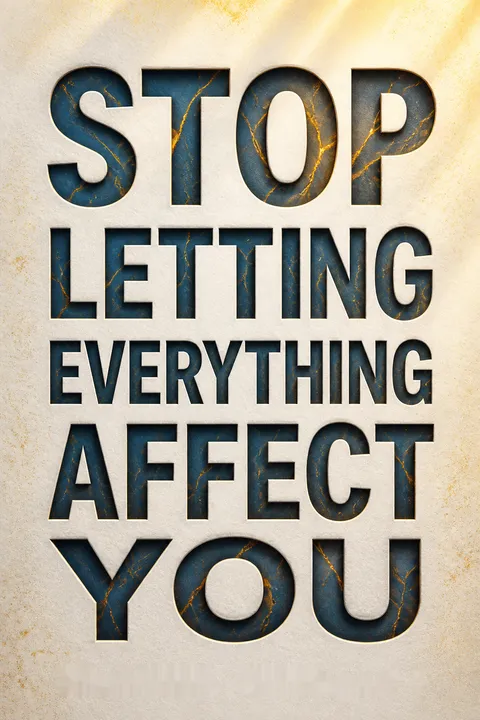

重要ポイント
1. 自分の感情反応の深い根源を理解する
感受性が強い人にとって、人生はただ通り過ぎるものではなく、深く吸収するものだ。
生まれつきの感受性。 一部の人は遺伝や幼少期の経験により、感情をより強く感じる傾向がある。この鋭敏な感受性は、あらゆる交流や瞬間を深く吸収し、深い繋がりを生む一方で、感情的な疲弊も招く。高感受性者(HSP)に関する研究では、人口の約20%が感覚や感情の刺激をより深く処理する神経系を持つとされている。
認知的過負荷。 現代社会は絶え間ない情報と要求の流れにより、敏感な神経系を圧倒する。この「認知負荷」により、些細なストレスでも耐え難く感じられ、脳の処理能力が急速に消耗される。未処理の感情は消えずに蓄積し、何らかの形で表面化しようとし、小さなきっかけに対して過剰な反応を引き起こすことが多い。
思考の牢獄。 心はコントロールを得ようとして、不安のループに陥りがちだ。心配事に固執し、シナリオを繰り返すことで、脳は恥や拒絶といった脅威に焦点を当てる。この否定的バイアスは生存のための仕組みだが、実際には平穏を奪い、精神的エネルギーを消耗させる。
2. 視点を変えて明晰さと平穏を得る
私たちは、知っている中で最も美しい惑星で、無駄にストレスを抱えて人生を浪費している。
宇宙的視点。 日々のストレスにとらわれたときは、視野を広げて宇宙の広大さを思い出すことが重要だ。広い視点から見ると、SNSの承認欲求や小さな恥ずかしさなど、多くの不安は取るに足らないものに思える。この視点は、地球での限られた貴重な時間を強調し、些細な心配よりも「今ここ」に集中することを促す。
時間は有限。 人生は儚く、ストレスに費やす時間は失われる時間だ。過去に乗り越えた困難を振り返ることで、自分の強さと回復力を再認識し、現在の「小さな」悩みが軽く感じられる。この習慣は、完璧でなくとも今の状況を感謝し、成長を実感させてくれる。
未知を受け入れる。 多くの不安はコントロール欲求と視野の狭さから生まれる。ヨブの物語は、苦難や予期せぬ出来事の背後にある大きな目的を理解できないことを示している。手放し、意味があるかもしれないと信じることは、内なる平和と受容への深い変化をもたらす。
3. 内面の反応に焦点を当ててコントロールを取り戻す
ストレスの本質は、起こる出来事そのものではなく、それに対してどれだけ自分がコントロールを感じているかにある。
外部コントロールの錯覚。 日常の多くのストレスは、交通や他人の行動など外部の状況を自分でコントロールできるという誤った信念から生じる。期待と異なる事態が起こると脅威反応が引き起こされ、ストレスが増幅される。つまり、ストレスは出来事自体よりも、コントロール感の欠如に起因する。
内的統制感。 コントロール感の研究によれば、自分が環境に影響を与えられると信じることは、ストレス軽減と感情調整の向上につながる。制御不能な外部要因から、解釈や反応、エネルギー配分といった内面の反応に焦点を移すことで、ストレス体験が変わる。この内的主体性こそが回復力の基盤だ。
実践的なコントロール。 圧倒されたときは、一瞬立ち止まり、今自分がコントロールできる小さなことを一つ見つける。呼吸や状況の解釈、解決に向けた小さな行動などだ。この習慣はストレスの連鎖を断ち切り、理性的な脳の再起動を促し、些細な不快感が大きな感情的混乱に発展するのを防ぐ。
4. 拒絶の傷を癒し、内なる自己価値を築く
最も深く愛した人に最もひどい仕打ちを受けると、人は変わる。
拒絶は身体的痛み。 社会的拒絶は身体的な痛みと同じ神経経路を活性化し、生存への脅威のように感じられる。この原始的な恐怖は、過剰分析や自己証明、承認欲求といったコントロール行動を引き起こし、痛みの源に縛られる悪循環を生む。
「勝利」の幻想。 拒絶後、脳は成功や復讐、外部承認による「ドーパミンの快感」を求めることが多い。しかしこの一時的な高揚は傷を癒さず、外部承認への依存を強めるだけで、本当の自己価値の成長を妨げる。真の癒しは、他者の承認を必要とせず「十分だ」と感じることから始まる。
個人的に受け取らない。 他者の選択、特に拒絶や不当な扱いは、多くの場合その人自身の未解決の問題や過去の経験、内面世界の反映である。彼らの行動はあなたの本質的価値とは無関係だ。彼らの認識や行動をコントロールしようとする必要を手放すことで、自分の力と価値への信頼を取り戻せる。
5. 境界線を設けて他者の感情的負担を背負わない
あなたは周囲のすべての人の感情のゴミ捨て場になるために存在しているわけではない。
過剰な与えの代償。 共感的で思いやりのある人は、他者の問題や感情、期待を吸収しやすく、感情的・身体的に疲弊する。支援の選択が義務感に変わり、「共感疲労」や自己喪失を招くこともある。この自己放棄は健康にとって積極的に害となる。
罪悪感の強い束縛。 境界を設けることは、沈没費用の誤謬や他者を不快にさせる恐れから生じる罪悪感に阻まれがちだ。この罪悪感は自分のニーズを優先する権利を疑わせ、過剰な説明や過度の自己犠牲を招く。しかし、真の成長は「成長の悲しみ」を伴い、自分の変化に合わない関係を手放すことを意味する。
限界を守る。 人はあなたが守る境界線だけを尊重する。明確な限界を設けなければ、悪意がなくとも利用され続ける。真にあなたを思う人は境界に順応し、不快感を示す人はあなたの境界の欠如から利益を得ていた可能性が高い。
6. 静寂を受け入れ、成長を過剰に説明しない
時には、ただ終わりにするだけでいい。怒りでも悲しみでもなく、ただ終わりに。
正当化の罠。 多くの人は決断や境界、成長を過剰に説明し、外部の承認を求める。この衝動は、すべての選択に他者に納得してもらう理由が必要だという条件付けから生まれる。しかし、これが無限の議論や感情的消耗を招き、操作的な相手は説明を受け入れないことが多い。
沈黙は力。 不必要なドラマに巻き込まれず、選択を正当化しないことで、心の平穏を取り戻し、操作する相手の力を奪う。沈黙は言葉以上の意味を持ち、相手に自らの行動とあなたの感情反応の欠如を直視させる。時に痛みを伴うが、あなたの価値を深く理解させることにつながる。
古い自分を手放す。 真の解放は、人を手放すだけでなく、過剰に考え、人に迎合し、平穏を犠牲にしてきた古い自分を手放すことでもある。この過程は恐ろしいこともあるが、成長は失う感覚を伴いながらも、自由への道を開くために不可欠だ。
7. 操作的な関係性を見抜き、距離を置く
ナルシストに自分を弁護しようとしてはいけない。彼らはあなたが正しいことを知っていて、ただあなたを狂わせようとしているだけだ。
ガスライティングの巧妙さ。 操作はしばしば微妙に始まり、自分の思考や感情、記憶を疑わせるガスライティングを用いる。この手法は自己信頼を蝕み、「過剰反応している」「妄想だ」と感じさせ、操作する側が物語を支配し責任を回避することを可能にする。
加害者が被害者を演じる。 被害を与えた者が自らを被害者として装うのはよくある操作手法だ。これにより責任を回避し、物語をコントロールし、あなたの共感を利用する。彼らは自分の嘘を信じ込んでいることも多く、理性で説得したり責任を問うことは困難だ。
決定的な離脱。 操作を現実の侵食として認識することが第一歩だ。次に、決断を明確にし、離脱計画を立て、「コミュニケーションの最小化」を実践する。説明や交渉を避けることで、操作側の「消滅バースト」(一時的な良い行動)による引き戻しを防ぐ。
8. 成長の悲しみと自己再生を乗り越える
成長して関係が離れていくときの深い悲しみについて、誰も教えてくれない。
分岐の悲しみ。 成長するにつれて、いくつかの関係は必然的に離れていく。これは喪失ではなく、自分の本質に合わなくなった繋がりから意識的に距離を置く「成長の悲しみ」と呼べる独特の悲しみだ。裏切りではなく、人間関係の自然な進化である。
自己同一性の解体。 関係を手放すだけでなく、古い自己が溶けていく「空白の空間」が生まれる。この混乱は再生に不可欠であり、自分の自己認識がどれほど適応や防衛に基づいていたかを直視する場だ。この段階は「より良い自分」になることではなく、すべてのアイデンティティを超えた意識を認識することにある。
空白を受け入れる。 この空白の不快感により、古いパターンに戻りたくなることが多いが、それは突破口の兆しでもある。古い自己を尊重し、日課や自然との繋がりといった「移行のアンカー」を作り、「新たな自己の育成」を実践することで、過去の制限に縛られない真の本質が花開く。
9. エゴの限界に挑み、停滞を克服する
実は、あなたは決して本当に行き詰まっているわけではない。常に選択肢はある。
行き詰まりの錯覚。 「行き詰まった」と感じるのは、多くの場合、失敗や評価、未知への恐怖による心の構築物だ。特にエゴは、リスクよりも無行動の方が安全だと説得し、満たされない慣習に閉じ込める。
エゴの静かな策略。 エゴの主な目的は幸福ではなく安全であり、不安や自己疑念を煽ってあなたを小さく保つ。失敗の一時的な痛みよりも挑戦しなかった後悔を好む。エゴを防衛機制と認識し、真の自己ではないと理解することで、恐怖ではなく充足に基づく決断が可能になる。
動きがエネルギーを生む。 繰り返しのルーティンによる停滞は思考のループや閉塞感を生む。環境を変えること、短い旅行や自然散策でも、新たな視点をもたらし、不安の反芻を断ち切る心理的余裕を作る。物理的な距離は心理的距離となり、前進を促す。
10. 一時的な幸福の追求を超え、内なる平和を求める
幸福を追い求めるのではなく、もっと深く、持続可能な何かを求めたらどうだろうか。
幸福は神話。 現代の絶え間ない幸福追求は誤った探求だ。幸福は儚く、状況に左右され、その必死の追求は失望を招く。真の充足は、永続的な喜びではなく、人生の喜びと悲しみの全体を理解し受け入れる深い状態にある。
不完全さを受け入れる。 人間であることは、間違いを犯し、不完全な過程を通じて学ぶことを意味する。過去の過ちや自己破壊的なパターンに囚われることは不安を増幅させる。自分の人間性を受け入れ、過ちに寛容になり、抵抗せずに前進することが日々の平和と真の成長に不可欠だ。
幸福より理解を。 究極の目標は幸福ではなく理解であり、人生の喜びと苦しみ、安らぎと闘いを意味あるものとして受け入れる状態だ。すべてをコントロールしようとする必要を手放し、自分の旅を信頼し、感情を抵抗なく流すことが、この深い受容をもたらす。この受容が外的状況を超えた持続可能な内なる平和へと導く。
レビューまとめ
申し訳ございませんが、翻訳する内容が提供されておりません。翻訳をご希望のテキストをお送りいただけますでしょうか。
他の人が読んだ本






よくある質問
What’s "Stop Letting Everything Affect You" by Daniel Chidiac about?
- Core Focus: The book addresses why some people are deeply affected by everyday events, emotions, and the actions of others, and offers practical strategies to break free from overthinking, emotional chaos, and self-sabotage.
- Personal Growth Journey: It guides readers through understanding their emotional patterns, setting boundaries, and reclaiming control over their mental and emotional wellbeing.
- Holistic Approach: Chidiac combines psychological research, personal anecdotes, and actionable exercises to help readers move from emotional reactivity to inner peace and self-empowerment.
- Not About Numbness: The book emphasizes that the goal is not to become emotionless, but to learn how to manage what deserves your energy and attention.
Why should I read "Stop Letting Everything Affect You" by Daniel Chidiac?
- For Highly Sensitive People: If you find yourself easily overwhelmed, overthinking, or emotionally drained by others, this book offers validation and solutions.
- Practical Tools: The book provides step-by-step practices for breaking mental loops, setting boundaries, and managing emotional overload.
- Science-Backed Insights: Chidiac references psychological studies and neuroscience to explain why we react the way we do and how to change these patterns.
- Empowerment and Clarity: Readers gain a sense of agency over their emotions and learn to prioritize their own wellbeing without guilt.
What are the key takeaways from "Stop Letting Everything Affect You"?
- Emotional Reactivity Is Learned: Over-sensitivity and overthinking are habits that can be unlearned, not fixed traits.
- Boundaries Are Essential: Setting and maintaining boundaries is crucial for emotional health and is not selfish.
- Thoughts Aren’t Facts: Most anxiety and rumination stem from mental stories, not reality; learning to witness and distance from thoughts is transformative.
- Growth Involves Discomfort: True change requires letting go of old identities, tolerating temporary emptiness, and embracing new ways of being.
What are the main concepts and methods introduced in "Stop Letting Everything Affect You"?
- The Witness Practice: Learning to observe and label emotions rather than becoming them, creating space between feeling and reaction.
- Attention Restoration: Creating “attention sanctuaries” to reset your mental energy and prevent overwhelm.
- Thought Containment: Scheduling “worry time” and using structured journaling to prevent rumination from taking over your day.
- Boundary Reinforcement: Preparing, communicating, and maintaining boundaries without succumbing to guilt or over-explaining.
- Reality Anchoring: Documenting and validating your experiences to counteract manipulation and gaslighting.
How does Daniel Chidiac explain why some people are more affected by everything?
- Highly Sensitive Wiring: Some people are naturally more attuned to emotions and environmental cues, often due to genetics and upbringing.
- Absorbing Others’ Emotions: Empathetic individuals often take on the feelings and problems of those around them, leading to emotional exhaustion.
- Overthinking and Guilt: Deep feelers tend to overanalyze interactions and feel responsible for others’ happiness, which drains their energy.
- Unprocessed Emotions: When emotions aren’t processed as they arise, they accumulate and make even small stressors feel overwhelming.
What is the "Thought Prison" and how does it relate to overthinking in "Stop Letting Everything Affect You"?
- Mental Loops Defined: The “Thought Prison” refers to cycles of rumination where the mind tries to gain control by overanalyzing, but only ends up reinforcing anxiety.
- Negativity Bias: The brain is wired to focus on threats and negative experiences, making overthinking a default mode for many.
- Pain Becomes Familiar: People can become attached to emotional pain, replaying past hurts as a way to feel in control, even if it’s harmful.
- Breaking the Cycle: Recognizing that thoughts are not reality and practicing techniques like thought diffusion and containment are key to escaping these loops.
How does "Stop Letting Everything Affect You" address boundaries and emotional detachment?
- Compassionate Detachment: The book teaches how to care for others without absorbing their emotional burdens, using visualization and verbal boundaries.
- Energy Exchange Audit: Readers are encouraged to track which relationships drain or energize them, and adjust their involvement accordingly.
- Boundary Reinforcement System: Setting, communicating, and maintaining boundaries is presented as a skill that can be developed, even in the face of guilt.
- Letting Go of Over-Explaining: The book advocates for minimal explanations when asserting boundaries, emphasizing that not everyone deserves access to your inner world.
What does Daniel Chidiac say about manipulation, gaslighting, and reclaiming your reality?
- Recognizing Gaslighting: The book details how manipulators make you doubt your own perceptions and feelings, often by rewriting history or playing the victim.
- Reality Preservation Protocol: Chidiac recommends documenting interactions and seeking external validation to anchor your sense of reality.
- Cognitive Protection: When manipulation is detected, the book suggests pausing, creating distance, and affirming your own perceptions rather than engaging in debate.
- Definitive Departure: Strategies are provided for making a clean break from manipulative relationships, including planning, minimal communication, and resisting the urge to explain.
How does "Stop Letting Everything Affect You" help readers break free from the need for control, validation, and the fear of rejection?
- Control Inventory: The book teaches readers to distinguish between what they can and cannot control, focusing energy on actionable areas.
- Values Alignment Practice: Building self-worth based on personal values rather than external validation helps reduce sensitivity to rejection.
- Redirection Protocol: Instead of seeking to “win” or prove oneself after rejection, readers are guided to pursue meaningful, self-directed goals.
- Emotional Circuit Breaker: Techniques are provided to regulate the threat response before reacting to perceived rejection or loss of control.
What does Daniel Chidiac say about growth, grief, and the process of letting go in "Stop Letting Everything Affect You"?
- Grief of Growth: Outgrowing relationships and old identities can bring sadness, but it’s a necessary part of transformation.
- Creative Void: The “empty space” after letting go is described as a fertile ground for authentic self-discovery, not something to be feared.
- Honoring the Past: The book encourages gratitude for the old self and relationships, while also embracing the need to move forward.
- Emergence of Authentic Self: True freedom comes from living in alignment with your values and needs, not from maintaining outdated roles or connections.
What is Daniel Chidiac’s perspective on forgiveness and happiness in "Stop Letting Everything Affect You"?
- Forgiveness Is Personal: The book challenges the idea that forgiveness is always necessary for healing, emphasizing that authentic healing can occur on your own timeline.
- No Forced Forgiveness: Premature or pressured forgiveness can impede healing; it’s okay to prioritize your own recovery first.
- Beyond Happiness: Chidiac argues that the pursuit of constant happiness is unrealistic; instead, he advocates for understanding, acceptance, and embracing the full spectrum of human emotions.
- Inner Peace Over Perfection: True peace comes from accepting imperfection, learning from mistakes, and letting go of the need for perpetual positivity.
What are the best quotes from "Stop Letting Everything Affect You" by Daniel Chidiac and what do they mean?
- “The problem with being empathetic is that you even feel sorry for people who hurt you.” – Highlights the double-edged sword of empathy and the need for boundaries.
- “You can’t keep getting mad at people for sucking the life out of you if you keep giving them the straw. Protect your peace… leave.” – Emphasizes personal responsibility in maintaining boundaries and protecting your energy.
- “Growth feels like loss before it feels like freedom.” – Reminds readers that discomfort and grief are natural parts of personal transformation.
- “You are not lost. You are not broken. You are not someone who needs to be fixed. You are someone who is finally allowing your true nature to emerge.” – Encourages self-acceptance and the idea that authenticity is about uncovering, not fixing, yourself.
- “The peace you feel without their presence in your life, is worth being the villain in their story.” – Validates the difficult but necessary choice to prioritize your own wellbeing, even if others misunderstand or judge you.
PDFをダウンロード
EPUBをダウンロード
.epub digital book format is ideal for reading ebooks on phones, tablets, and e-readers.








































